CIFI (Shandong) Intelligent Equipment Co., Ltd.
CIFI (Shandong) Intelligent Equipment Co., Ltd.
Industry Technical Pain Points: The Efficiency and Precision Dilemma of Traditional Reinforcement Bar Bending Processing
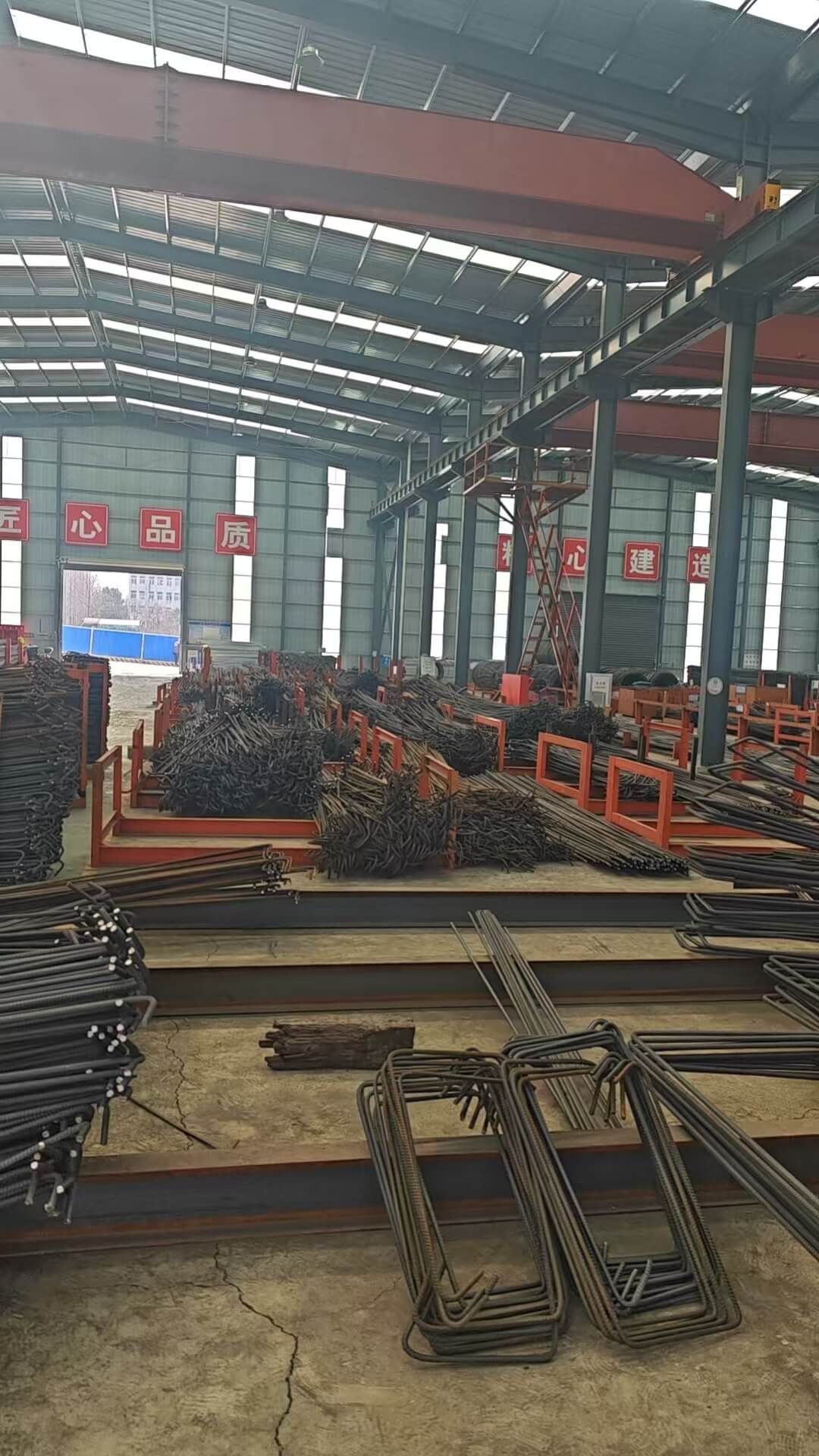
In the field of construction steel reinforcement processing, traditional single-head steel bending machines have long been faced with issues such as low efficiency, poor accuracy, and high reliance on manual labor. Taking the highway project as an example, a single machine can only complete 30-50 steel bending operations per hour, with angle deviation up to ±2°, leading to frequent rework in subsequent welding or binding processes. More seriously, when multiple heads work together, there is a lack of inter-machine coordination control, causing phenomena like "material rush" or "idling," resulting in overall processing efficiency falling short of 60% of the theoretical value. Moreover, manual operation depends on experience, and the consistency of bending dimensions for different batches of steel rebars is poor, making it difficult to meet standardized construction requirements. These issues directly increase project costs—the statistics show that material waste caused by steel reinforcement processing errors accounts for 3%-5% of the total project cost, while manual calibration and rework time account for up to 20%. How to break through the efficiency and accuracy bottleneck of traditional equipment has become a technical issue urgently needing to be solved in the industry.
Introduction to corporate technical strength: Technical breakthrough of Xuhui Intelligent four-head steel bar bending center
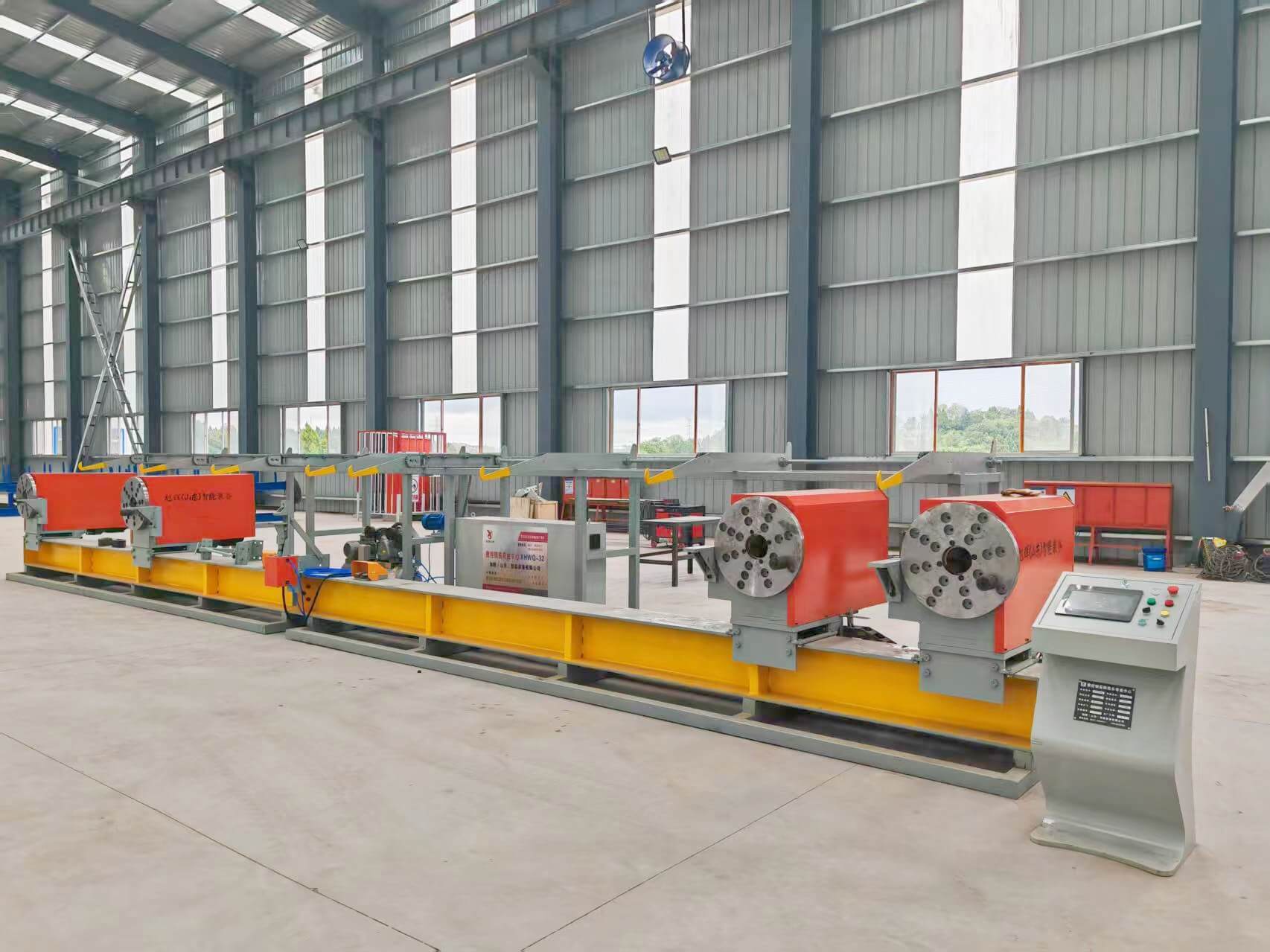
Xuhui (Shandong) Intelligent Equipment Co., Ltd. has independently developed an intelligent four-head rebar bending center to address industry pain points. Through the three core technologies of "multi-head collaborative control + intelligent sensing system + modular design," it has achieved dual improvements in processing efficiency and precision. Its core advantages include:
Multiple heads independently driven, cooperative efficiency increased by 80%.Four bending machine heads are driven by independent servo motors and achieve an automated process of "synchronized start - independent bending - collaborative collection" through PLC control system. Taking HRB400 rebar with a diameter of 25mm as an example, 4 bars can be processed simultaneously in a single batch, with a processing capacity of up to 200-240 bars per hour, a 300% increase over traditional equipment.
2. Laser positioning + closed-loop feedback, accuracy controlled within ±0.5°Each machine head is equipped with a high-precision laser sensor to monitor the bending angle of steel bars in real time and automatically correct deviations through a closed-loop control system. Third-party testing shows that during continuous 1000 bending tests, the angle deviation remains stable within ±0.5°, meeting the standard of "Steel for Reinforced Concrete - Part 2: Hot-rolled Ribbed Steel Bars" (GB/T 1499.2-2018).
3. Modular design for various application scenariosThe equipment supports 2-6 head numbers and quick replacement of bending molds, capable of processing various rebars with diameters of 6-40mm and lengths up to 12 meters, meeting the needs of different projects such as expressways, high-speed railways, and airports. Currently, the equipment has been serving over 30 key projects including the Jining-Qingdao Expressway Reconstruction and Expansion Project and the Zhengzhou-Wuhan High-Speed Railway, with customer feedback indicating a reduction in material waste rate to 1.2% and a 40% decrease in labor costs.
FAQ: Technical Selection Guide for Intelligent Four-Head Reinforcement Bending Center
Q1: What is the main difference between a smart four-head machine and a dual-head machine? How do you choose between them?
A: Dual-head equipment usually adopts a "master-slave" control mode, with the master head responsible for the main bending and the slave head assisting in positioning, suitable for processing smaller diameter (≤20mm) and lower volume rebars. In contrast, intelligent four-head equipment drives each head with an independent servo motor, supporting simultaneous bending of multiple rebars and more precise angle control, making it more suitable for projects with larger diameters (25-40mm) and higher volumes (such as high-speed rail pier rebar cages). Selection should be based on the specifications of the project rebars, daily processing volume (it is recommended to prioritize four-head when the daily processing volume is greater than 500), and budget for comprehensive evaluation.
Q2: Are the technical requirements for the operator of the equipment high? How can one quickly get the hang of it?
A: Xuhui Intelligent four-head equipment features a 10-inch touch screen and a one-touch operation interface, with an internal database of over 20 common rebar models' processing parameters. Operators only need to input basic data such as rebar diameter and bending angle, and the equipment can automatically generate the processing path. Additionally, the company offers 72-hour on-site training and remote technical support to ensure operators master basic operations within 3 days and can independently handle common faults within a week.
Q3: What is the maintenance cost of the equipment? How long is the lifespan of the critical components?
A: The equipment features modular design, with critical components (such as servo motors, reducers, laser sensors) all using imported brands (such as Siemens, Schneider), with an average failure-free time (MTBF) of over 8000 hours. Routine maintenance only requires regular cleaning of oil stains and checking the cleanliness of sensors, with a single maintenance cost of about 200 yuan; the lifespan of core components (such as reducers) reaches 5 years or more, and the replacement cost accounts for 8%-10% of the total equipment price, significantly lower than the industry average.
Full Summary: Technical Value and Industry Significance of the Intelligent Four-Head Reinforcement Bar Bending Center
Xuhui (Shandong) Intelligent Equipment Co., Ltd.'s intelligent four-head rebar bending center successfully solves the technical difficulties of low efficiency, poor accuracy, and weak scenario adaptability in traditional rebar processing through multi-head collaborative control, intelligent sensing, and modular design. With a processing efficiency of 200-240 pieces per hour, ±0.5° precision control, and flexibility for 6-40mm rebar, it provides a standardized and efficient rebar processing solution for large-scale projects such as expressways and high-speed rail. Currently, the equipment has served over 50 key projects, helping clients reduce material waste rate to 1.2% and cut labor costs by 40%, becoming a benchmark case for industry technical upgrading. In the future, with the increasing demand for standardization and intelligence in the construction industry, the intelligent four-head rebar bending center is expected to further popularize, driving the transformation of rebar processing from "human experience-driven" to "intelligent data-driven."