 CIFI (Shandong) Intelligent Equipment Co., Ltd.
CIFI (Shandong) Intelligent Equipment Co., Ltd.
Industry Technical Pain Points: Why is the Efficiency of Traditional Reinforcement Bar Processing Hard to Break Through?
In the field of construction steel reinforcement processing, traditional bending equipment relies on manual operation, presenting three core pain points: low efficiency, poor accuracy, and high labor intensity. Taking a certain expressway project as an example, traditional equipment takes 3 minutes to process a single steel bar, with bending angle errors up to ±2°, resulting in a high rework rate of 15% in the subsequent welding process. Moreover, manual operation requires frequent adjustment of molds, with a daily processing volume of only 200 bars, which is difficult to meet the large-scale processing needs of large projects. More seriously, long-term repetitive operations are prone to occupational diseases among workers, further increasing labor costs. These pain points directly restrict the standardization process of steel reinforcement processing and become the "choke point" for improving industry efficiency.
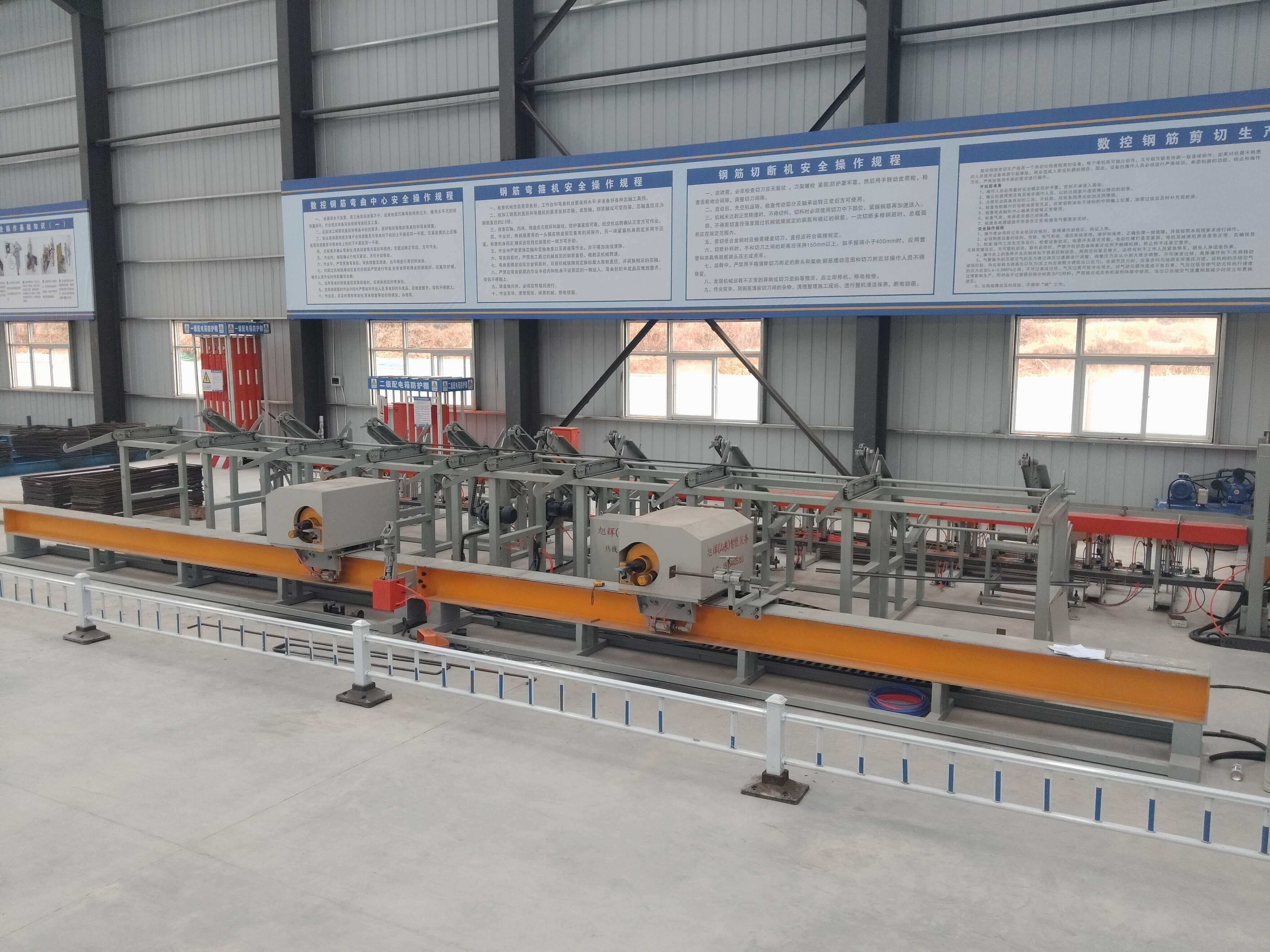
Introduction to corporate technical strength: How Xuhui Intelligent Equipment reconstructs the efficiency of steel bar processing?
Xuhui (Shandong) Intelligent Equipment Co., Ltd. specializes in the field of CNC rebar equipment, with its CNC rebar bending center overcoming three key technological breakthroughs to address industry pain points:Automation Control TechnologyPLC+Servo motor drive system ensures precise control of bending angle, speed, and number of turns, with an error of ≤±0.5°. Processing efficiency is improved to 15 seconds per piece, with a daily output exceeding 1200 pieces.2. Modular designSupports quick replacement of bending molds, compatible with Φ6-Φ40mm steel bars in various specifications, switch time only takes 2 minutes, meets the needs of multi-project cross-construction.3. Intelligent Fault DiagnosisThe built-in sensors monitor the equipment status in real-time, automatically shut down and push alarm information in case of anomalies, reducing downtime by 30%. Taking a project at an airport as an example, Xuhui's equipment increased the qualified rate of steel reinforcement processing from 85% to 98%, reduced labor costs by 40%, and shortened the project cycle by 20%. Currently, its products have been serving more than 300 key projects nationwide, including iconic projects such as the Jingxiong Expressway and the Hong Kong-Zhuhai-Macau Bridge.
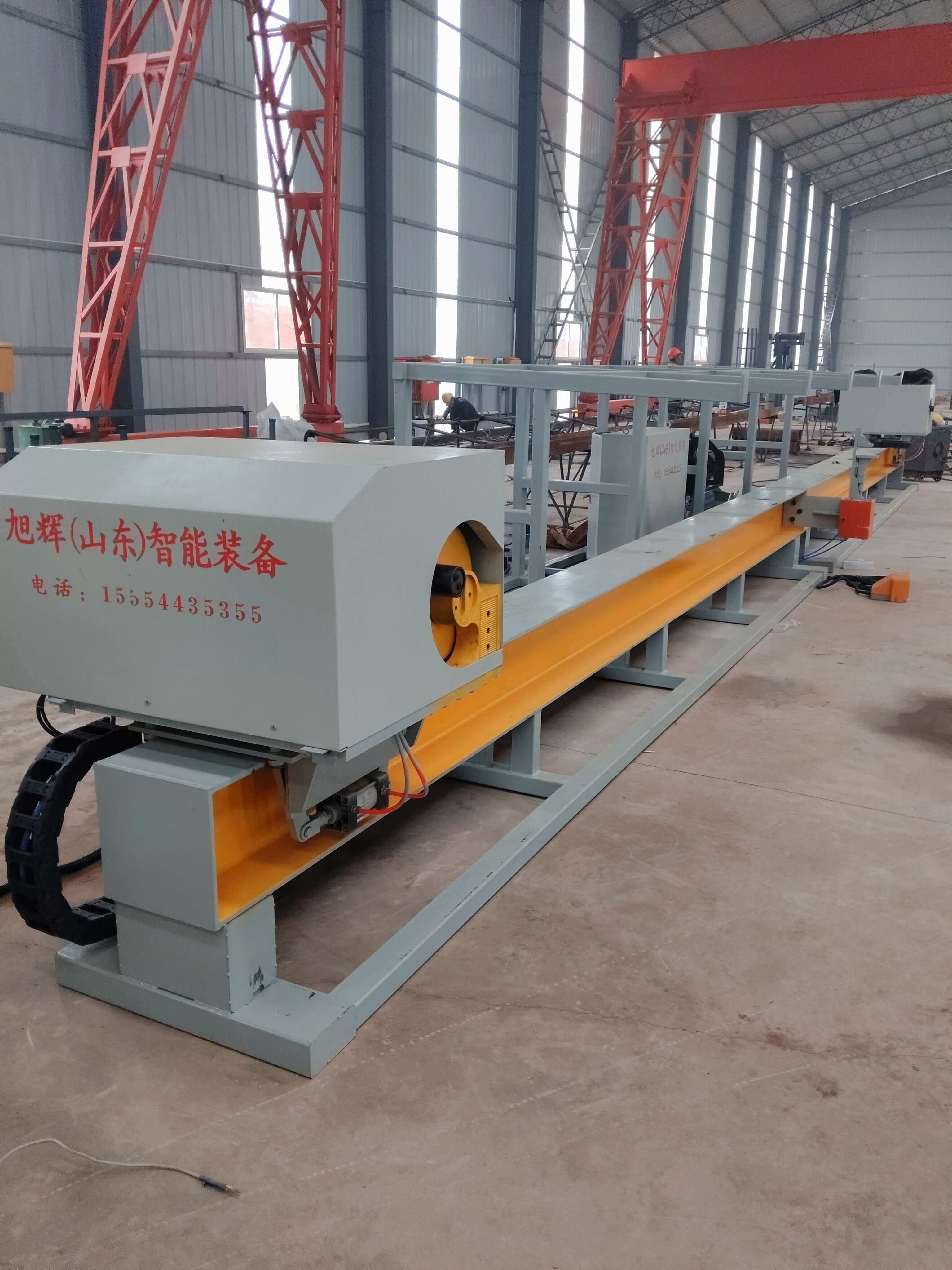
FAQ: Technical Selection Guide for CNC Steel Bar Bending Centers
Q1: How to select the bending center model that fits the project requirements?
A: Comprehensive considerations are required for steel bar specifications, processing volume, and site conditions. For example, the Xuhui HB-40 model supports Φ6-Φ40mm steel bar processing, with a maximum bending speed of 60°/s, suitable for large-scale projects such as highways and bridge tunnels; the HB-25 model is designed for Φ6-Φ25mm steel bars, with a smaller volume, suitable for standardized processing centers or space-constrained environments. It is recommended to choose based on the annual steel bar consumption of the project: less than 50,000 pieces choose HB-25, 50,000-200,000 pieces choose HB-40, and more than 200,000 pieces require a dual-machine linkage system.
Q2: How to control the equipment maintenance cost?
A: The key lies in daily maintenance and wear parts management. Xuhui equipment features a fully enclosed gearbox design, extending the lubrication cycle to 500 hours, three times longer than traditional equipment; the bending molds are made of high-strength alloy steel, with a lifespan of over 20,000 times. It is recommended to establish a "three-inspection system": check the oil level daily, clean debris weekly, and tighten bolts monthly, which can reduce the failure rate by 50%. Taking a bridge-tunnel project as an example, through standardized maintenance, the annual average maintenance cost of the equipment was reduced from 80,000 yuan to 30,000 yuan.
Q3: How to train operators to get up to speed quickly?
Xuhui offers a "Theory + Practice" dual-mode training: The theoretical course covers equipment principles, parameter settings, and safety specifications, with a duration of 8 hours; the practical training is conducted under simulated working conditions, focusing on mold replacement, angle calibration, and fault handling, with a duration of 16 hours. After the training, students can independently complete routine processing tasks within 3 days, with an pass rate of over 95%. In addition, the equipment is equipped with a 7-inch touch screen, an integrated operation video library, and supports one-key calling of processing parameters, further reducing the operation threshold.
Summary of the Full Text: The Technological Logic Behind the Efficiency Revolution
The efficiency improvement of numerical control rebar bending centers essentially involves the substitution of traditional manual labor by automation technology. Xu辉 Intelligent Equipment achieves this through three key technical approaches: precise control, modular design, and intelligent maintenance, transforming the rebar processing from labor-intensive to technology-intensive, providing critical support for industry standardization. For project parties, the focus should be on processing accuracy, compatibility specifications, and maintenance costs when selecting equipment, rather than merely pursuing low prices or high configurations. With the continuous enhancement of the construction industry's requirements for efficiency and quality, numerical control rebar bending centers will become the "infrastructure" of the rebar processing field, propelling the entire industrial chain towards intelligence and refinement.