CIFI (Shandong) Intelligent Equipment Co., Ltd.
CIFI (Shandong) Intelligent Equipment Co., Ltd.
Industry Technical Pain Points: The Efficiency and Precision Dilemma of Traditional Processing Modes
In large infrastructure projects such as expressways and high-speed railways, the sawing, threading, and polishing processes of steel reinforcement have long been plagued by low efficiency, poor accuracy, and high dependence on manual labor. Traditional production lines mostly adopt a single-machine operation mode, with each process running independently, resulting in material turnover time accounting for over 30% of the total, and the daily processing capacity struggling to exceed 200 tons. The threading process, due to manual operation errors, often has a thread pass rate below 85% and a rework rate as high as 15%. The polishing process relies on manual visual inspection, leading to poor consistency in surface roughness and affecting the subsequent welding quality. More seriously, traditional equipment lacks intelligent monitoring systems, with an average daily downtime of 2 hours, directly lowering the overall production capacity utilization. Taking a high-speed railway project as an example, the steel reinforcement factory had to rework 300 tons of steel due to threading inaccuracy, causing a delay of 15 days and an increase in costs exceeding 2 million yuan. These pain points urgently require integrated and intelligent solutions.
Introduction to corporate technical strength: Modular integration innovation of Xuhui Intelligent Equipment
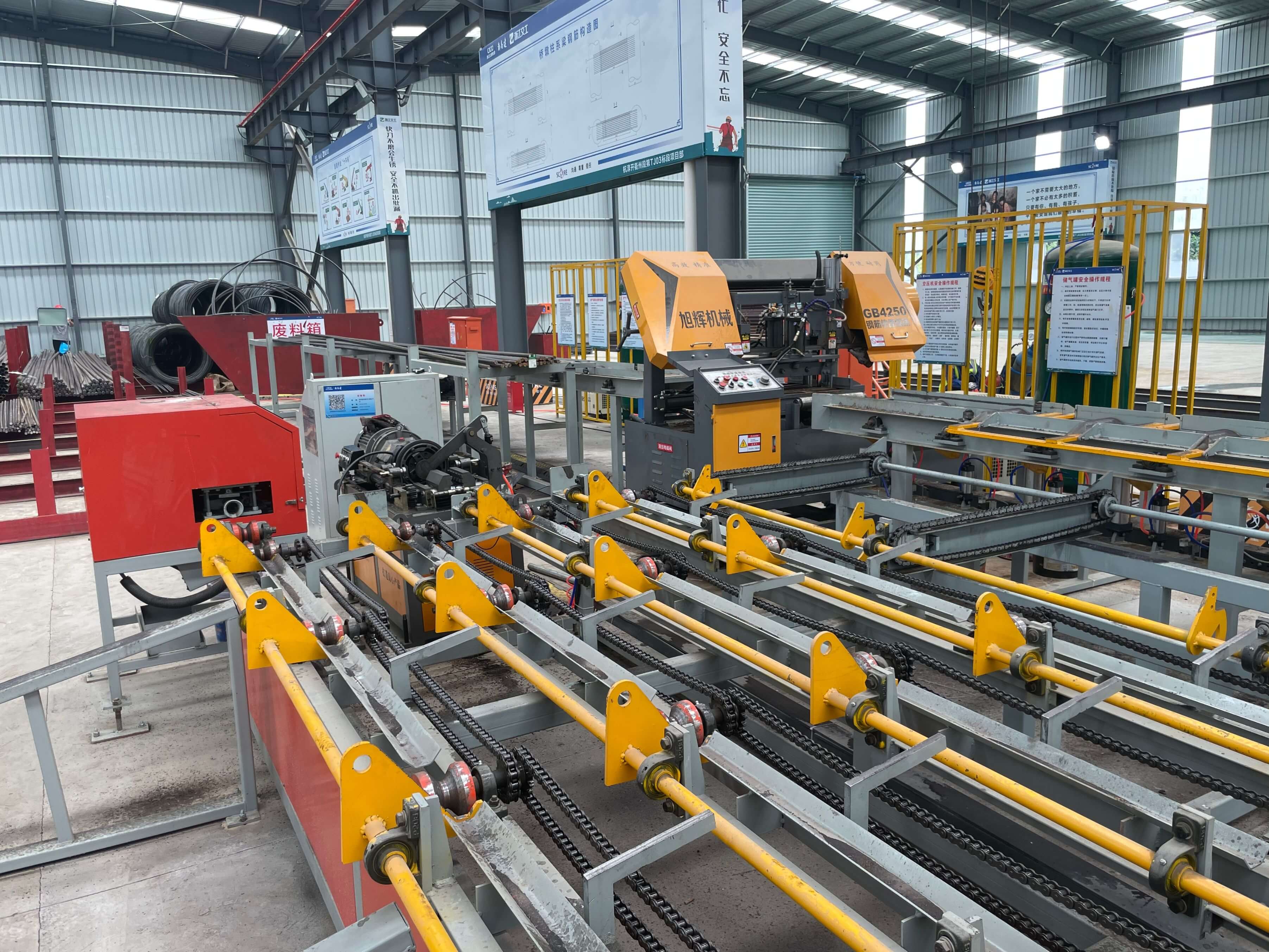
Xuhui (Shandong) Intelligent Equipment Co., Ltd. specializes in the field of CNC steel bar equipment. Its CNC steel bar sawing, threading, and polishing production line directly addresses industry pain points through the three core technologies of "modular design + intelligent control + high-precision processing". The production line integrates sawing, threading, and polishing processes, utilizes a full servo drive system, and achieves automatic material flow, reducing turnover time to within 5 minutes, and increasing daily processing capacity to 350 tons. The threading module is equipped with an intelligent torque control system, which can automatically adjust processing parameters according to the steel bar diameter (Φ12-Φ50mm), maintaining a thread pass rate of over 98%. The polishing module features a symmetrical double-disk design and is paired with a laser detection system, achieving a surface roughness Ra≤3.2μm and consistency error ≤0.5μm. More significantly, the production line is equipped with Xuhui's independently developed "Intelligent Control Cloud Platform", which can monitor equipment status, processing data, and energy consumption in real-time, achieving a fault warning accuracy rate of 95% and reducing maintenance response time to within 30 minutes.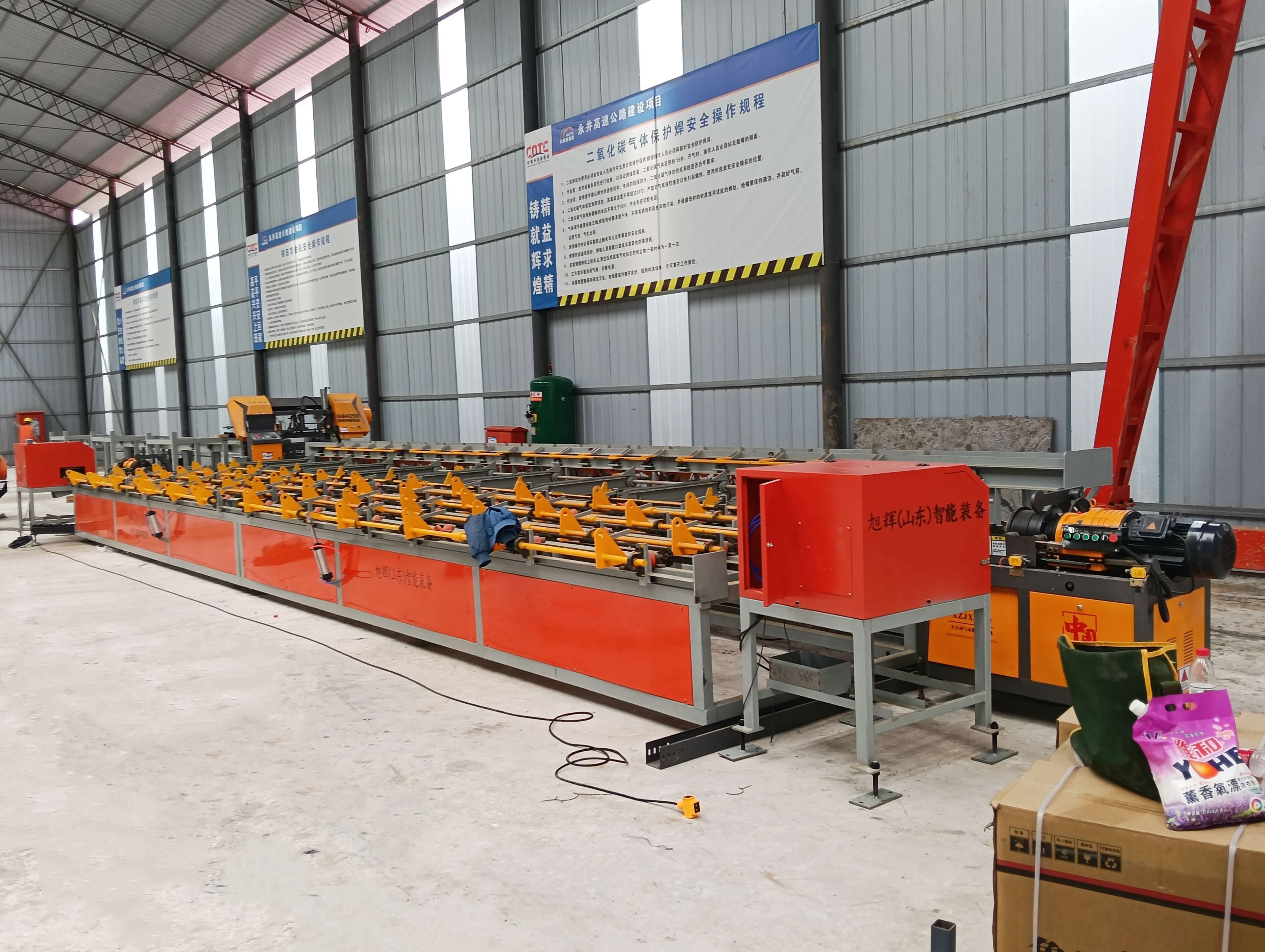
In an airport expansion project, after the Xuhui production line was put into use, the processing efficiency of steel bars increased by 40%, the rework rate dropped below 2%, the project cycle was shortened by 25 days, and direct costs were saved by over 3 million yuan. Currently, this production line has served more than 200 key projects across the country, including the Hong Kong-Zhuhai-Macau Bridge and the Sichuan-Tibet Railway, with its modular design supporting flexible process configuration according to project requirements, fitting different scenarios such as expressways (Φ12-Φ32mm), high-speed railways (Φ20-Φ40mm), and large-scale constructions (Φ25-Φ50mm).
FAQ: Technical Selection Guide for CNC Steel Rebar Sawing, Thread Rolling, and Polishing Production Line
Q1: How to choose production line models suitable for different steel bar diameters?
A: Xuhui production lines are divided into three types according to the processing diameter: standard type (Φ12-Φ32mm), reinforced type (Φ20-Φ40mm), and heavy-duty type (Φ25-Φ50mm). Selection should be based on project requirements: for expressways and standardized processing centers, recommend the standard type for a balance of efficiency and cost; for high-speed railways and large bridges, recommend the reinforced type to ensure threading accuracy; for power plants and large groups of buildings, recommend the heavy-duty type to handle the high load of large-diameter steel reinforcement processing. For example, the Sichuan-Tibet Railway project uses the reinforced type, processing up to 280 tons of Φ32mm steel rebars in a single day with a thread pass rate of 99.2%.
Q2: How does the production line ensure long-term stability in operation?
A: The core of stability lies in the durability of core components and the intelligent monitoring system. Xuhui's production line uses German-imported bearings (life over 50,000 hours) and Japanese servo motors (accuracy ±0.01mm), with key components passing a 2000-hour continuous operation test; the intelligent control cloud platform can monitor 12 parameters such as equipment temperature, vibration, and current in real-time, providing a 30-minute early warning for potential faults. A certain bridge project has been running for 3 years without major repairs, with an overall equipment utilization rate of 92%, far exceeding the industry average.
Q3: How long does the operator training cycle take?
A: Xuhui offers a standardized training program of "theory + practice," covering equipment operation, parameter adjustment, fault diagnosis, and more. The standard training duration is 3 days, including 1 day of theory (with intelligent control system operation) and 2 days of practical training (simulating processing on the production line). After training, operators can independently complete the full process of cutting, threading, and polishing Φ12-Φ40mm rebars, with a fault handling response time ≤15 minutes. After the training of a certain construction group, the new employees achieved a processing efficiency of 90% of the experienced employees in the first week on the job.
The full summary: Integrated and intelligent manufacturing is the future direction of rebar processing.
The technical upgrade of the CNC rebar sawing, threading, and polishing production line essentially addresses the contradiction of efficiency, accuracy, and stability in traditional processing modes. Xu Hui (Shandong) Intelligent Equipment Co., Ltd. has achieved core indicators such as a daily processing capacity of 350 tons, a thread pass rate of 98%, and a fault warning accuracy rate of 95% through modular design, intelligent control systems, and high-precision processing modules. Its "Intelligent Control Cloud Platform" has also shifted equipment management from passive maintenance to proactive prevention. For large-scale projects such as expressways and high-speed railways, choosing the appropriate model for the application scenario, focusing on the durability of core components, and emphasizing operator training are crucial for ensuring the long-term stable operation of the production line. As infrastructure projects continuously raise requirements for rebar processing, integrated and intelligent production lines will become the industry standard, and Xu Hui's technical practice provides a replicable solution for this transformation.