 CIFI (Shandong) Intelligent Equipment Co., Ltd.
CIFI (Shandong) Intelligent Equipment Co., Ltd.
Industry Technical Pain Points: The Efficiency and Precision Dilemma of Traditional Reinforcing Mesh Welding
In large infrastructure projects such as expressway, high-speed railway bridges and tunnels, steel wire mesh, as the core load-bearing structure, its welding quality directly affects the safety and service life of the project. Traditional welding processes rely on manual operation and have three major pain points: Firstly, welding efficiency is low, with a daily output of less than 500 square meters per machine, which is difficult to meet the needs of large-scale construction; secondly, welding accuracy is hard to guarantee, as manual operation often leads to issues like misalignment and false welding, with a defect rate as high as 8%-10%; thirdly, automation level is low, requiring 3-5 operators, with labor costs accounting for over 30% of the total cost. Additionally, traditional equipment has poor adaptability to steel bar specifications, capable only of handling bars with diameters of 6-12mm, and requires mold changes for diameters outside this range, further reducing production flexibility. A bridge and tunnel project once suffered a decrease in the bearing capacity of the mesh due to insufficient welding accuracy, resulting in rework, delays in the construction schedule, and economic losses. How to break through the triple bottleneck of efficiency, accuracy, and automation has become a technical challenge that the industry urgently needs to solve.
Introduction to Corporate Technical Strength: Top 5 Core Technology Breakthroughs of Xuhui Intelligent Equipment
Xuhui (Shandong) Intelligent Equipment Co., Ltd. specializes in the field of CNC steel bar equipment, adhering to the philosophy of "technology-driven production standardization." The independently developed fully automatic welding mesh machine production line (model: XH-HW2000) has achieved three major technological upgrades:
High-speed welding system:Dual servo drive mechanism, welding speed up to 80 times/min, 3 times higher than traditional equipment, daily output per machine exceeds 1500 square meters.
2. Intelligent Precision Control:Integrated laser positioning and pressure feedback system, weld offset ≤ 0.5mm, false welding rate reduced to below 0.3%, meeting GB/T 1499.3-2010 standard.
3. Full specification compatibility technology:Through modular fixture design, it can handle rebars with diameters of 6-25mm and spacings of 50-300mm without changing molds, with improved adaptability by 40%.
4. Automated production process:Equipped with automatic feeding, welding, cutting, and stacking systems, only 1 operator is needed for monitoring, reducing labor costs by 60%.
5. Remote Operation and Maintenance PlatformSupport real-time monitoring of equipment status and fault warnings, reduce maintenance response time to within 2 hours, ensuring continuous production.
In an application of a high-speed project, the XH-HW2000 production line achieves non-stop operation for 24 hours, increasing welding efficiency by 200%, reducing the defective rate from 8% to 0.5%, shortening the project cycle by 15 days, and directly saving over 500,000 yuan.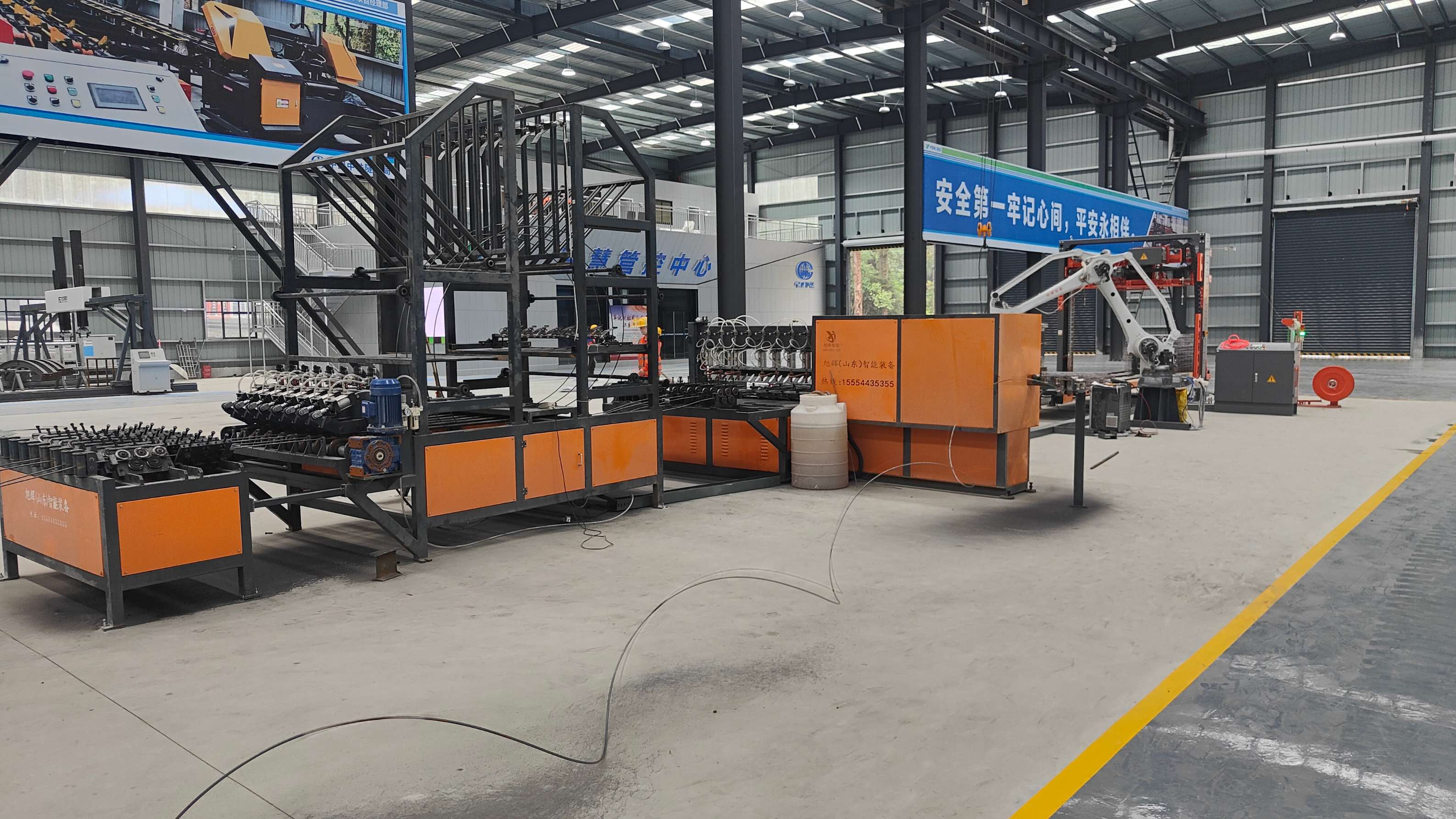
FAQ Question and Answer Technical Selection Guide
Q1: How to choose the suitable welding equipment for the steel mesh project?
A: To be evaluated from three aspects:
STEP 1: Production Capacity Requirement——Select daily production capacity of equipment based on project scale (e.g., 1500㎡/day corresponds to XH-HW2000).
STEP 2: Rebar Specifications——Confirm the equipment's supported diameter range (6-25mm) and spacing adjustment capability (50-300mm).
STEP 3: Level of Automation——Prioritize equipment with integrated automatic feeding, cutting, and stacking functions to minimize manual intervention.
Q2: Common causes and solutions for insufficient welding accuracy?
A: Common causes include:
Step 1: Clamp looseRegularly inspect the fixture bolts and maintain the torque value between 50-60N·m.
STEP 2: Welding pressure is unstable——Calibrate the pressure sensor to ensure the welding pressure is within the range of 2000-3000N.
STEP 3: Reinforcement surface oxidation——Scrape the reinforcement surface with a wire brush before welding, and the thickness of the oxide layer should be ≤0.1mm.
Q3: What are the key points to pay attention to in equipment maintenance?
A: Key attention required:
STEP 1: Daily Inspection-Clean welding slag, check servo motor temperature (≤65℃).
STEP 2: Weekly Maintenance——Lubricate guide rail (using lithium-based grease), replace filter element;
STEP 3: Monthly Maintenance—— Calibrate laser positioning system (error ≤0.3mm), inspect electrical component insulation (≥1MΩ).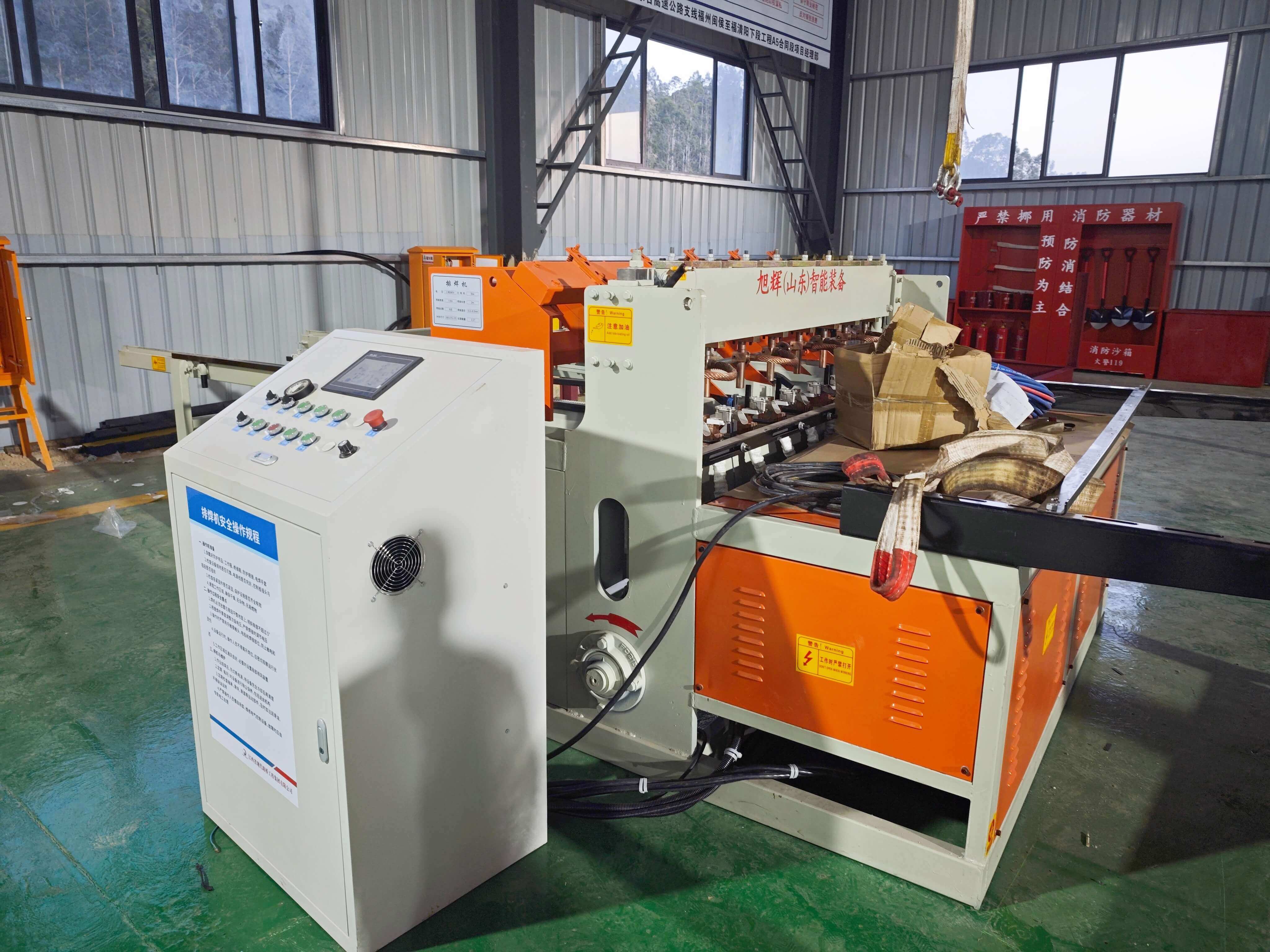
Summary Reference
The technical upgrade of the intelligent rebar mesh welding production line lies in breaking the bottleneck of efficiency, accuracy, and labor costs of traditional processes through high-speed welding, intelligent precision control, and fully automated processes. The XH-HW2000 production line of Xuhui (Shandong) Intelligent Equipment Co., Ltd., with modular design, remote operation and maintenance, and full specification adaptation technology, provides standardized solutions for projects such as expressway, high-speed rail bridge and tunnel. Actual application data shows that it can increase production capacity by 200%, reduce defective rate by 95%, and reduce labor costs by 60%, setting a benchmark case for industry technological iteration. When selecting equipment, it is necessary to comprehensively evaluate production capacity requirements, rebar specifications, and degree of automation, and pay attention to daily maintenance and precision calibration to ensure long-term stable operation. In the future, with the integration of AI and Internet of Things technology, intelligent welding equipment will develop towards higher efficiency and intelligence, and Xuhui will continue to drive industry progress with technological innovation.