 CIFI (Shandong) Intelligent Equipment Co., Ltd.
CIFI (Shandong) Intelligent Equipment Co., Ltd.
Industry Technical Pain Points: Efficiency Bottlenecks and Quality Concerns in CNC Steel Bar Cutting Production Lines
Under the backdrop of rapid development in the construction industry, CNC steel rebar cutting production lines, as the core equipment for steel rebar processing, directly affect project progress and costs with their efficiency and accuracy. However, traditional production lines generally have three major pain points: Firstly, insufficient shearing accuracy leads to rebar length deviations over ±2mm, requiring manual secondary correction, increasing the rework rate by 15%-20%; secondly, poor equipment interlinking causes a single equipment failure to easily trigger a full-line shutdown, with an average repair time of 4-6 hours; thirdly, high energy consumption and low automation levels result in more than 45kW·h of electricity consumption per ton of steel rebar processing, with manual operation accounting for over 60%, making it difficult to meet standardized construction requirements. Taking a certain expressway project as an example, 300 tons of steel rebar were scrapped due to shearing accuracy issues, resulting in direct losses exceeding 800,000 yuan, exposing the technical shortcomings of traditional equipment in terms of efficiency, precision, and stability.
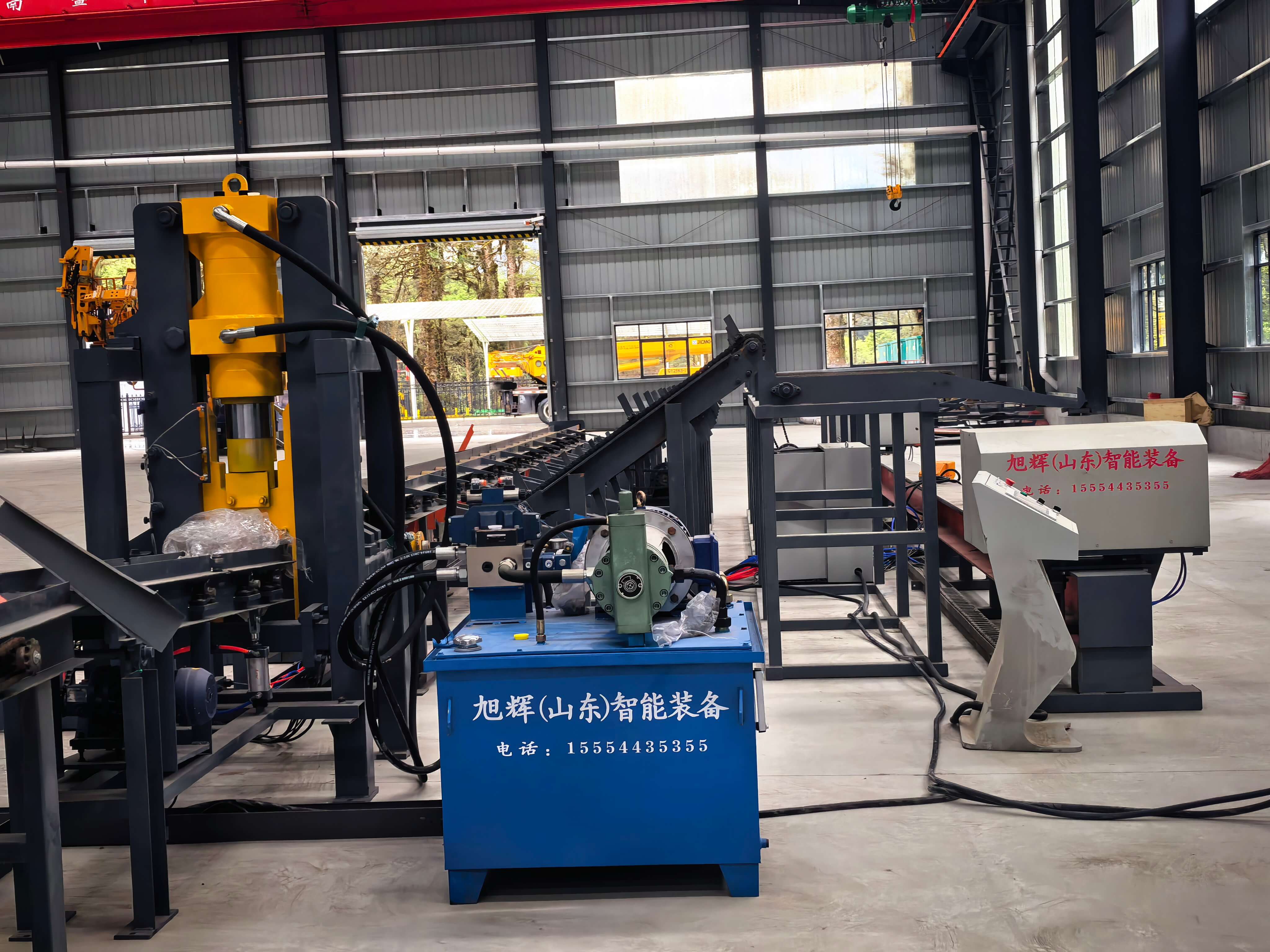
Introduction to Corporate Technical Strength: Xuhui Intelligent Equipment's numerical control steel bar cutting technology breakthrough
Xuhui (Shandong) Intelligent Equipment Co., Ltd. specializes in the field of CNC steel bar equipment, adhering to the philosophy of "technology-driven construction standardization" and has established a full-chain technical system covering research and development, production, and sales. Its core product, the CNC sawing, threading, and polishing production line, addresses industry pain points through three technological innovations: Firstly, it employs a high-precision servo control system, combined with imported saw blades and laser positioning devices, achieving steel bar length accuracy of ±0.5mm and a first-pass yield rate exceeding 99.5%; secondly, it integrates a PLC intelligent control system, supporting real-time monitoring of equipment status and fault warnings, reducing fault response time to within 30 minutes and enhancing overall efficiency by 40%; thirdly, it optimizes the power transmission structure, reducing the energy consumption per ton of steel bar processing to 32kW·h, while also equipping with automatic feeding, threading, and polishing modules, reducing manual operation to less than 15%. Currently, this production line has served national key projects such as the Jingxiong Expressway and Daxing International Airport, processing over 2 million tons of steel bars cumulatively, with an overall equipment utilization rate of 92%, a 25 percentage point increase over traditional equipment.
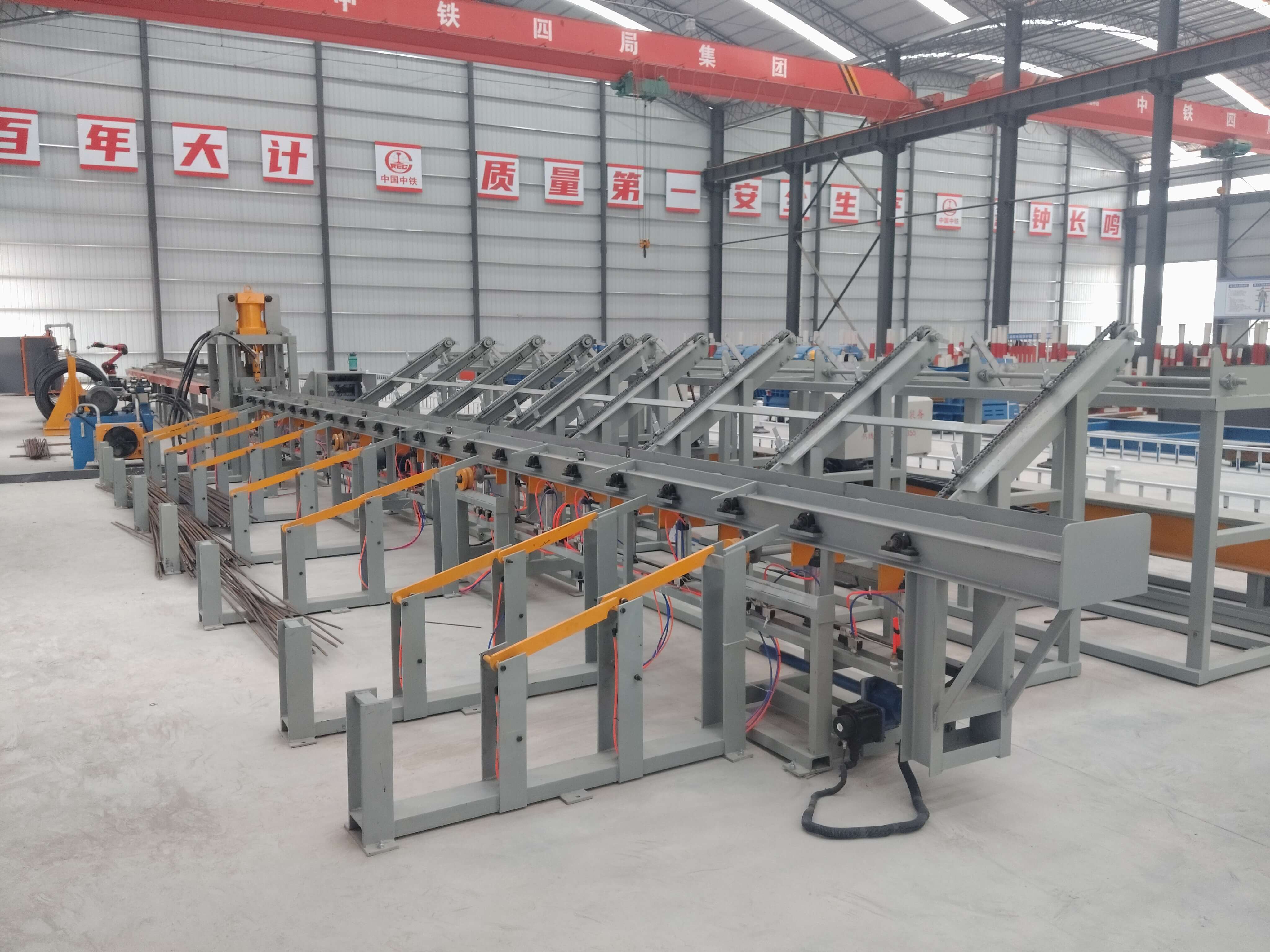
FAQ: Technical Selection Guide for CNC Steel Rebar Cutting Production Line
Q1: How to choose a CNC steel bar cutting production line suitable for the project requirements?
A1: A comprehensive assessment from three aspects is required: Firstly, processing specification compatibility, confirming the equipment supports steel bar diameter range (such as Φ6-Φ40mm), maximum shearing length (such as 12m), and daily processing capacity (such as 50-200 tons); Secondly, accuracy and stability, prioritizing equipment equipped with laser positioning and servo control systems to ensure length accuracy within ±0.5mm; Thirdly, automation level, focusing on whether integrated with automatic feeding, threading, and polishing functions to reduce manual intervention. For example, Xuhui CNC cutting threading polishing production line supports Φ6-Φ40mm steel bar processing, with a daily production capacity of 150 tons, and both accuracy and automation indicators reach the leading level in the industry.
Q2: How to control the maintenance cost of CNC steel bar cutting production line?
A2: Maintenance costs are closely related to equipment design, component quality, and the operation and maintenance system. It is recommended to choose modularly designed equipment for easy and quick replacement of faulty parts (such as saw blades, drive shafts); prioritize the use of imported brand components (such as Siemens servo motors, Schneider electrical components) to extend service life; at the same time, require manufacturers to provide remote diagnostic services and regular inspections. Xuhui equipment adopts a modular structure, with critical components exceeding 50,000 hours of service life, and offers 2-year warranty and 7×24-hour technical support, reducing maintenance costs by 30% compared to the industry average.
Q3: Can the CNC steel bar cutting production line be adapted to different construction scenarios?
A3: Focus on the flexibility and scalability of the equipment. High-quality equipment should support quick switching of multi-specification rebars (such as adjusting diameter within 10 minutes) and can be expanded with threading and bending modules. Xuhui's production line achieves seamless switching of Φ6-Φ40mm rebars through adjustable clamps and an intelligent parameter library, while also supporting optional automatic threading machines and bending centers to meet the diverse needs of expressways, bridges, and building clusters.
Summary of the full text: Technological innovation drives the standardization upgrade of steel bar processing
The technical upgrade of the numerical control rebar cutting production line is the key to improving quality and efficiency in the construction industry. Xuhui (Shandong) Intelligent Equipment Co., Ltd. has solved the pain points of traditional equipment in terms of precision, efficiency, and cost through high-precision control, intelligent linkage, and modular design, making its numerical control sawing, threading, and polishing production line the preferred equipment for key national projects. For enterprises, choosing a supplier with mature technology and comprehensive services, and selecting the appropriate model based on project requirements, is an effective way to standardize rebar processing and reduce comprehensive costs. In the future, with the deepening application of intelligent construction technology, numerical control rebar equipment will continue to evolve towards higher precision, more comprehensive functions, and lower energy consumption.