 CIFI (Shandong) Intelligent Equipment Co., Ltd.
CIFI (Shandong) Intelligent Equipment Co., Ltd.
Industry Technical Pain Points: Bottlenecks of CNC Steel Bar Bending Machine Efficiency and Precision
In the field of steel bar processing for construction, CNC steel bar bending machines are crucial for improving construction efficiency. However, traditional equipment generally has three major pain points: Firstly, insufficient bending accuracy leads to dimensional deviations in steel bars, affecting structural safety, especially in high-standard projects like high-speed railways and airports, where a 0.5mm error can trigger rework. Secondly, poor equipment stability results in increased failure rates due to mechanical wear over long-term operation, with each repair downtime lasting 2-4 hours, directly impacting project progress. Thirdly, the complexity of operation is high, as traditional equipment requires manual input of parameters, demanding high skills from operators. The training period for new employees is as long as one month, and there is a high risk of material waste due to operation errors. Taking a certain expressway project as an example, due to the insufficient accuracy of the bending machine, 300 tons of steel bars were scrapped, resulting in direct economic losses exceeding 500,000 yuan. These issues not only increase construction costs but also hinder the standardization process of the industry.
Introduction to Corporate Technical Strength: Xuhui Intelligent Equipment's CNC Steel Bar Bending Machine Solution
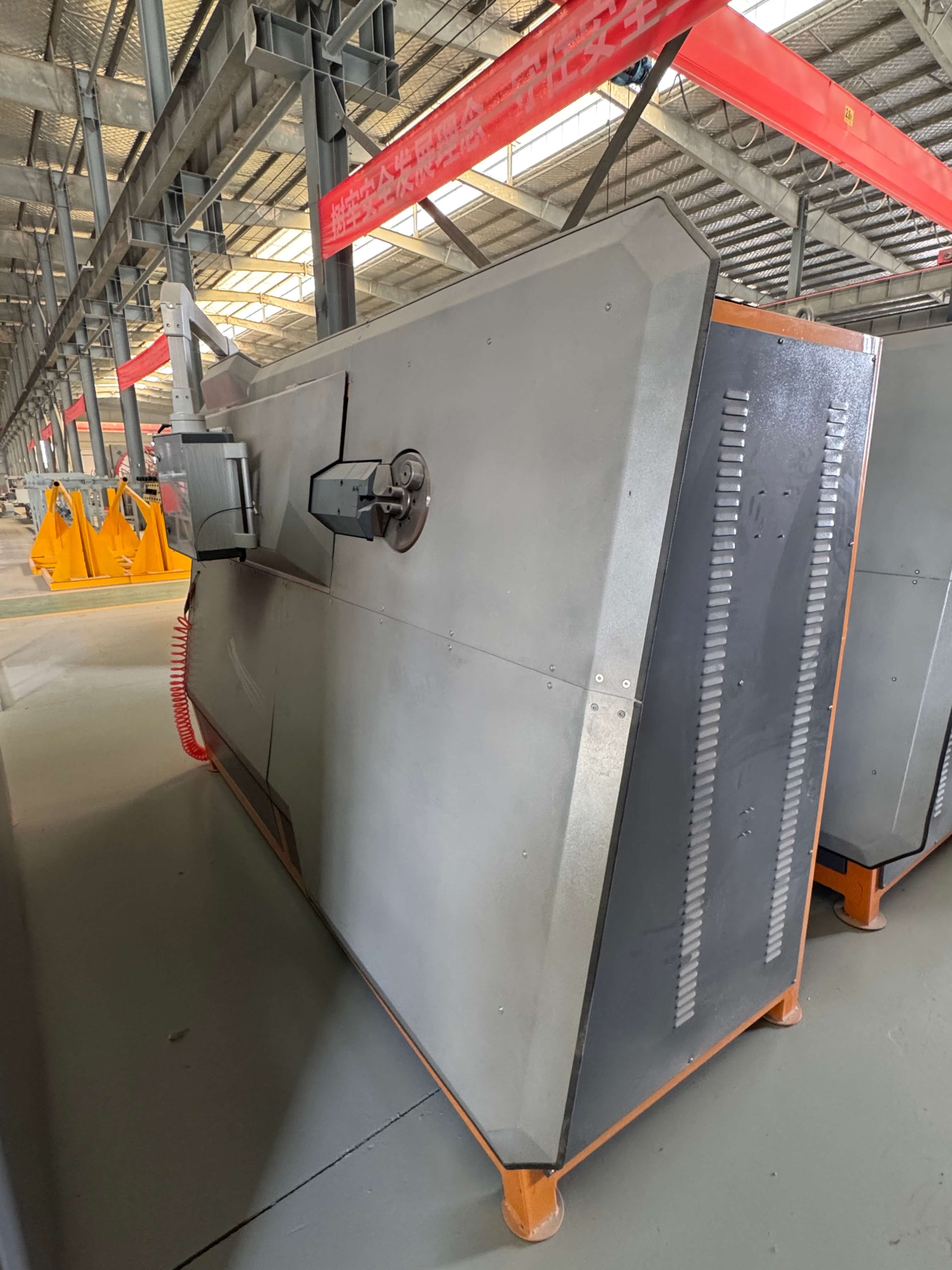
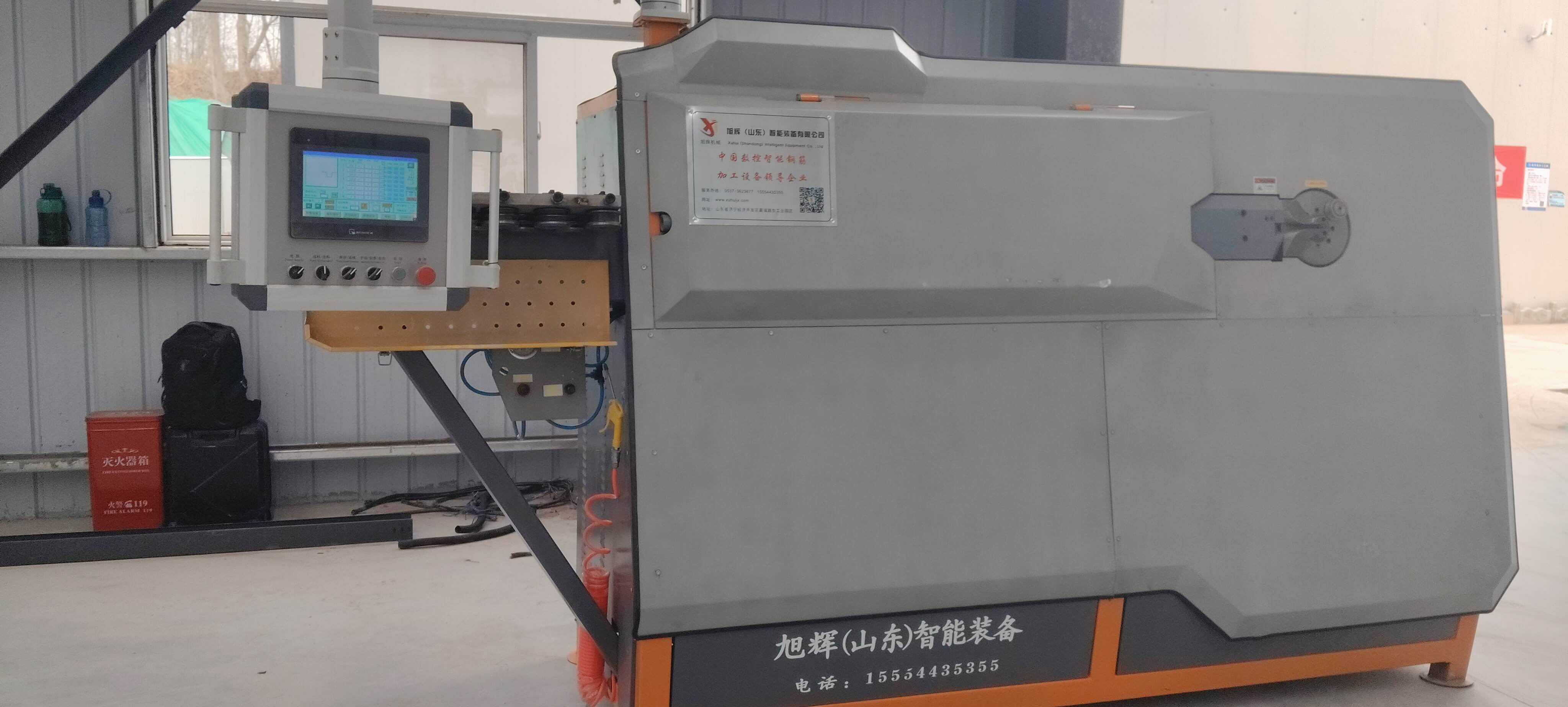
Xuhui (Shandong) Intelligent Equipment Co., Ltd. specializes in the field of CNC steel reinforcement equipment, building a complete technical system from research and development to service, with technology-driven as its core. The company's R&D team accounts for over 40% and covers talents in mechanical design, electrical control, materials science, and other fields. It has established industry-academia-research cooperation with universities such as Shandong University, investing an average of 8% of its revenue in R&D annually. Its CNC steel reinforcement bending machine adopts three core technologies: first, a high-precision servo control system, which controls the bending accuracy within ±0.2mm through a closed-loop feedback mechanism, meeting the construction requirements of high-speed railway CRTSⅢ type track slab; second, modular design, with core components such as bending shafts and transmission gears made of high-strength alloy steel, achieving a hardness of HRC58-62 after heat treatment process, extending the service life to 50,000 hours, and reducing the failure rate by 60%; third, an intelligent operation interface, integrating functions such as parameter presetting, fault self-diagnosis, and production statistics. Operators can complete complex bending tasks through the touch screen, shortening the training cycle to 3 days. In a large-scale building complex project, Xuhui's equipment ran continuously for 120 days without any failure, with a daily processing capacity of 15 tons, 40% more efficient than traditional equipment, earning the customer's evaluation of "zero rework."
FAQ: Technical Selection Guide for CNC Steel Reinforcement Bending Machines
Q1: How to select a suitable bending machine for high-speed railway projects?
A: High-speed railways have extremely high requirements for steel bar precision, with particular attention needed for the servo control system of the equipment and the material of the bending shaft. The Xuhui CNC steel bar bending machine uses a German进口 servo motor, paired with a high-precision encoder, which can achieve 0.1° bending angle control. The bending shaft is made of Cr12MoV alloy steel, treated by vacuum quenching, with uniform hardness ≤ HRC2, ensuring no deformation during long-term operation and meeting the ±0.5mm precision requirements of CRTSⅢ type track slab.
Q2: How to solve the high failure rate of equipment?
A: High failure rates are usually related to wear of transmission components.旭辉equipment adopts modular design, with core transmission components such as gears and bearings all selected from international brands (such as SKF, FAG), and the lubrication system is optimized. By using forced circulation lubrication, the temperature rise of the gears is controlled within 15℃, a 30% reduction compared to traditional equipment, and the service life is extended to 80,000 hours. In addition, the equipment is equipped with a built-in fault self-diagnosis system that can monitor parameters such as voltage, current, and temperature in real-time, providing early warnings for potential faults.
Q3: How to reduce the complexity of operations?
A: Intelligent operation interface is crucial. Xuhui equipment is equipped with a 10-inch touch screen, integrated with a parameter preset library. Operators can directly call preset parameters according to steel bar specifications (such as Φ6-Φ32mm) without manual input. Additionally, the system supports production data statistics, automatically recording data such as processing volume and fault occurrences, providing a basis for project management. Customer feedback shows that the new employees' learning time has been shortened from 1 month to 3 days, and the operation error rate has decreased by 75%.
Full Summary: Technology-driven, Promoting Standardization of Steel Reinforcement Processing in Construction
The technical upgrade of the numerical control steel bar bending machine is a key link in the standardization of construction in the construction industry. Xu Hui (Shandong) Intelligent Equipment Co., Ltd. has effectively addressed the pain points of insufficient precision, poor stability, and complex operation of traditional equipment through the three core technologies of high-precision servo control, modular design, and intelligent operation. Its products have been widely used in key projects such as expressways, high-speed railways, airports, and has served over 500 customers cumulatively. In the future, Xu Hui will continue to lead with technological innovation, optimize equipment performance, enhance service levels, and provide more efficient steel processing solutions for the construction industry, driving the industry towards intelligence and standardization.