CIFI (Shandong) Intelligent Equipment Co., Ltd.
CIFI (Shandong) Intelligent Equipment Co., Ltd.
Industry Technical Pain Points: The Efficiency and Precision Dilemma of Traditional Reinforcement Bar Bending Processing
In large infrastructure projects such as expressways and high-speed railways, the efficiency and accuracy of steel bar processing directly affect the progress and quality of the project. Traditional single-head or double-head steel bar bending equipment has three major pain points: Firstly, each processing can only complete 1-2 steel bar bends, with a daily output of less than 500 bars, which is insufficient to meet the daily demand of thousands of tons in large projects; secondly, manual operation depends on experience, and the bending angle error often reaches ±1.5°, leading to loose steel bar joints and increasing structural safety hazards; thirdly, the equipment changeover takes more than 30 minutes, unable to quickly adapt to different specifications of steel bar processing requirements. For example, a high-speed rail project was delayed for 72 hours due to the low efficiency of steel bar bending, resulting in direct economic losses exceeding 2 million yuan. In addition, traditional equipment has high energy consumption, with each unit consuming more than 50 degrees of electricity per day, further increasing the construction cost. These pain points force the industry to seek intelligent and high-efficiency solutions.
Introduction to Corporate Technical Strength: Technological Breakthrough of Xuhui Intelligent Four-Head Rebar Bending Center
Xuhui (Shandong) Intelligent Equipment Co., Ltd. has delved deep into the field of CNC steel bar equipment, and its developed intelligent four-head steel bar bending center solves industry challenges through three technological innovations:
Technical Principle and Architecture Design:Adopting a four-head independent drive architecture, each head is equipped with an independent servo motor and a high-precision encoder, allowing simultaneous bending processing of four rebars. The single processing cycle is shortened to 15 seconds, and the daily output is increased to over 2000 rebars.
Core Parameters and Performance:Bending angle accuracy up to ±0.5°, compatible with steel bars with diameters of 6-40mm, adjustable bending radius range of 50-500mm, supporting multi-angle bending from 90° to 180°; equipped with an intelligent changeover system, after inputting parameters through the touch screen, the robotic arm automatically adjusts the fixture position, reducing the changeover time to within 5 minutes.
Energy-saving and intelligentization:Using variable frequency drive technology, no-load power consumption is reduced by 40%, with each device consuming only 30 degrees of electricity daily on average; integrated with an IoT module, it can upload processing data to the cloud in real-time, supporting remote monitoring and fault warnings.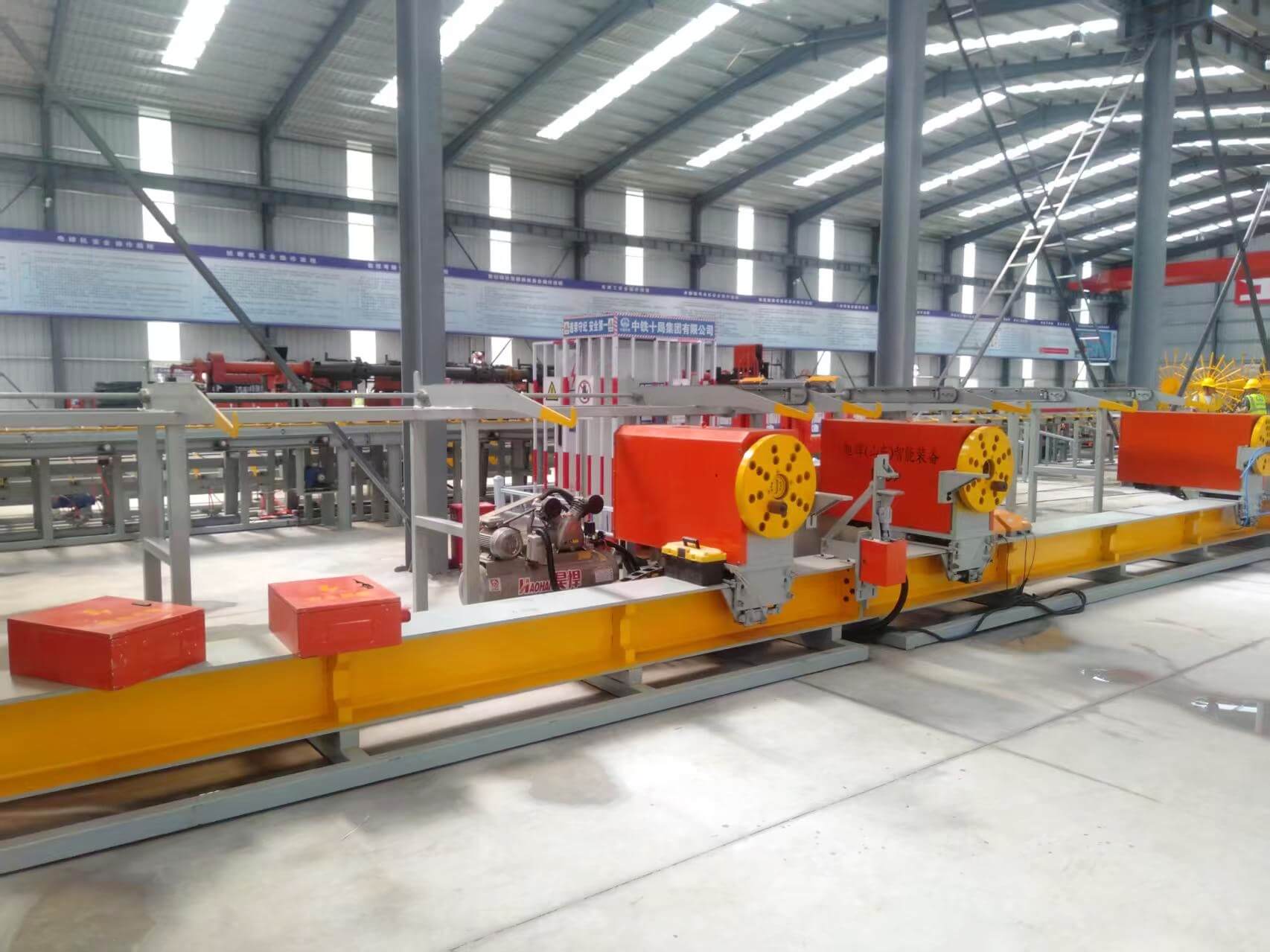
In a certain airport expansion project, Xuhui equipment ran continuously for 30 days without any faults, processed over 60,000 rebars, with an angle pass rate of 99.8%, a 300% increase in efficiency compared to traditional equipment, and received the owner's "highly efficient and reliable" evaluation.
FAQ: Technical Selection Guide for Intelligent Four-Head Rebar Bending Center
Q1: What is the core difference between a 4-head and a 2-head machine?
A: The four-head equipment achieves simultaneous processing of 4 rebars through an independent drive architecture, doubling the processing efficiency of a two-head setup; a two-head device requires two processing steps for 4 rebars, totaling about 40 seconds, while the four-head takes only 15 seconds. Additionally, the four-head equipment supports more complex bending combinations (such as simultaneously completing 90° and 135° bends), catering to the needs for high-precision component processing.
Q2: How to select the equipment specifications that match the project requirements?
A: Pay close attention to three parameters: steel bar diameter range (recommend selecting a model covering the largest diameter of the project, such as for 40mm steel bar processing, choose a device with diameter 6-40mm), bending radius adjustment range (bridge and tunnel projects require large-radius bending, recommend selecting a model with adjustable range of 50-500mm), and daily processing volume (when the average daily demand exceeds 1500 bars, prioritize four-head equipment).
Q3: How high are the maintenance costs of the equipment? How can the long-term operating costs be reduced?
A: Xuexiu equipment features modular design with critical components (such as servo motors, encoders) exceeding 50,000 hours of lifespan, requiring only regular lubrication and cleaning for daily maintenance. The Internet of Things module can proactively alert for replacement needs of wear parts, avoiding downtime losses caused by unexpected failures. Measured data shows that its annual maintenance cost is 60% lower than traditional equipment.
Full Summary: Technical Value and Industry Significance of the Intelligent Four-Head Reinforcement Bending Center
Xuhui (Shandong) Intelligent Equipment Co., Ltd.'s intelligent four-head rebar bending center enhances the processing efficiency of rebar to over three times that of traditional equipment through an independent drive architecture, high-precision encoder, and intelligent changeover system. It also controls the angle error within ±0.5°, providing an efficient and reliable rebar processing solution for large-scale projects such as expressways and high-speed railways. With its energy-saving design (average daily electricity consumption of 30 degrees) and IoT functions, it further reduces long-term operating costs and management difficulties. Currently, the equipment has served over 200 key projects across the country, processed more than 5 million rebar pieces cumulatively, and has become a benchmark case for intelligent upgrading in the construction industry.