 CIFI (Shandong) Intelligent Equipment Co., Ltd.
CIFI (Shandong) Intelligent Equipment Co., Ltd.
Industry Technical Pain Points: How to Balance Efficiency and Precision in Processing Various Specifications of Reinforcing Bars?
In large infrastructure projects such as highways and high-speed railways, steel bar processing must meet the requirements of multiple specifications (e.g., Φ12-Φ40mm), various bending angles (90°-180°), and high precision (±0.5mm). Traditional single-head equipment requires frequent mold changes, with each steel bar taking 3-5 minutes to process, and manual operation prone to angle deviation, resulting in a high rework rate of up to 15%. While four-head equipment can process in parallel, without intelligent collaborative control, there are still issues such as interference between heads and conflicts in bending sequence, resulting in an overall efficiency increase of less than 30%. Moreover, when processing mixed specifications of steel bars, the equipment needs to be compatible with different diameters of steel bars' bending moment (e.g., Φ12mm requires 500N·m, Φ40mm requires 5000N·m), and traditional hydraulic systems are difficult to match accurately, easily causing overloading or underloading, affecting processing quality and equipment lifespan.
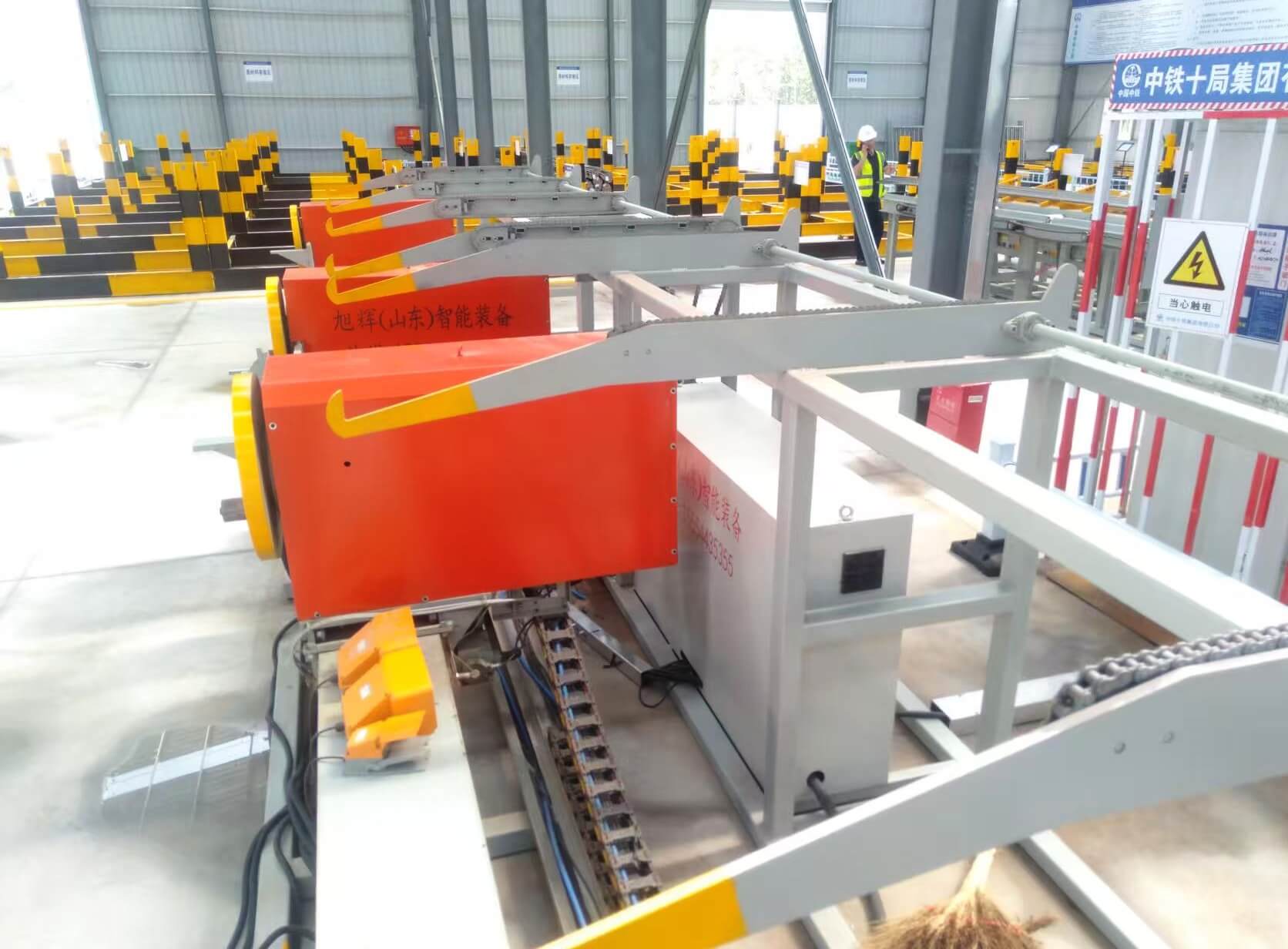 Introduction to Corporate Technical Strength: Technological Breakthrough of Xuhui Intelligent Four-Head Rebar Bending Center
Xuhui (Shandong) Intelligent Equipment Co., Ltd., leveraging the industrial advantages of the Jining Engineering Machinery Manufacturing Base in Shandong Heze, focuses on the research and development of CNC steel bar equipment. Its intelligent four-head steel bar bending center solves the pain points of the industry through three major technological layouts:
Modular head design, compatible with multi-specification processing: Adopting independent drive modules, each machine head is equipped with adjustable bending molds (compatible with Φ12-Φ40mm rebar), controlled by servo motors (power 2.2kW/unit) for precise bending angle adjustment (0.1° adjustable), reducing the processing time per rebar to 1.2 minutes, with efficiency increased by 60%.
2. Intelligent cooperative control system, optimized processing pathBased on the PLC+industrial computer architecture, develop multi-head collaborative algorithms that can automatically plan bending sequences (such as bending large diameter rebars first to avoid interference) and real-time monitor the load of each head (sampling frequency of 100Hz), dynamically adjust the bending torque (range of 500-5000N·m), ensuring processing stability.
3. Customized services, tailored to project requirementsFor high-speed railway bridge and tunnel projects, we offer integrated "equipment + process" solutions, such as a custom bending center for a high-speed railway project. By adding an automatic feeding device (adjustable feeding speed of 0.5-2m/min) and a finished product collection rack, the whole process from steel reinforcement feeding to finished product stacking is automated. The processing capacity per shift (8 hours) reaches 120 tons, a 3-fold increase compared to traditional equipment.
Currently, Xuhui equipment has served more than 30 high-speed railway projects across the country (such as the Zhengwan High-Speed Railway, Beijing-Xiongcheng Intercity Railway), with a failure rate below 0.5% and a customer repurchase rate of 85%.
FAQ: Technical Selection Guide for Intelligent Four-Head Rebar Bending Center
Q1: What is the essential difference in efficiency between a four-head machine and a single-head machine?
A1: A single-head machine requires sequential operations such as bending, returning to original position, and mold change, with each steel bar processing taking 3-5 minutes. A four-head machine achieves parallel processing (bending 4 steel bars simultaneously) with intelligent path planning, reducing the processing time per bar to 1.2 minutes. Taking a daily processing volume of 200 steel bars as an example, a single-head machine requires 10 hours, while a four-head machine needs only 2.5 hours, achieving a 300% efficiency increase. However, attention must be paid that lack of coordinated control among the heads can lead to decreased efficiency, thus it is necessary to choose brands with intelligent algorithms (such as Xuhui).
Q2: How to determine if the equipment is compatible with the required steel bar specifications for the project?
A2: Focus on the bending mold compatibility range and driving system performance of the equipment. Taking Xuhui's equipment as an example, its bending mold supports Φ12-Φ40mm rebar processing through a quick change structure (change time ≤5 minutes), and each head is equipped with an independent servo motor (power 2.2kW), capable of outputting 500-5000N·m of bending torque, covering the needs of fine bending for small diameters (such as Φ12mm) and high-strength bending for large diameters (such as Φ40mm). If the project involves oversized rebars (such as Φ50mm), it is necessary to communicate with the manufacturer in advance for customized molds.
Q3: What are the main reasons for high equipment failure rates? How can they be reduced?
A3: High failure rate is usually associated with hydraulic system leakage and aging of electrical components. Xuhui equipment uses all-electric drive (replacing the traditional hydraulic system), eliminating the risk of hydraulic oil leakage, and the key electrical components (such as servo drives, PLC) are selected from brands like Siemens and Schneider, with an average time between failures (MTBF) of 8000 hours. In addition, the equipment is equipped with an automatic diagnostic system that can monitor motor temperature, load current, and other parameters in real-time, providing early warnings for potential failures, keeping the failure rate below 0.5%.
Full Summary: Technical Value and Application Prospects of the Intelligent Four-Head Rebar Bending Center
The intelligent four-head rebar bending center effectively solves the difficulties of efficiency, accuracy, and compatibility in processing various specifications of rebar through modular design, intelligent collaborative control, and customized services. Taking Xuhui (Shandong) Intelligent Equipment Co., Ltd. as an example, its equipment achieves a processing capacity of 120 tons per shift in the high-speed railway project, with a failure rate below 0.5%, becoming an important support for the standardization of rebar processing in infrastructure projects. In the future, with the further improvement of processing efficiency and quality requirements for infrastructure projects, four-head equipment with intelligent algorithms, full electric drive, and rapid mold change capabilities will become mainstream, and manufacturers providing integrated "equipment + process" solutions (such as Xuhui) will have greater market competitiveness.