 CIFI (Shandong) Intelligent Equipment Co., Ltd.
CIFI (Shandong) Intelligent Equipment Co., Ltd.
Industry Technical Pain Points: The Efficiency and Precision Dilemma of Traditional Welding Production Lines
In large infrastructure projects, the welding of steel mesh is a critical link affecting the construction period. Traditional production lines rely on manual adjustment of welding parameters, resulting in a single welding process taking as long as 8-10 minutes, with a high offset rate of welding points reaching 15% and a rework rate exceeding 20%. Taking the immersed tube tunnel project of the Hong Kong-Zhuhai-Macau Bridge as an example, traditional equipment requires 12 operators to work in shifts, yet it still cannot meet the daily welding demand of 200 tons, directly leading to a delay in the construction period of 37 days. Moreover, safety hazards brought by manual operation, such as arc burns and mechanical squeezing, occur frequently. A bridge and tunnel project once suffered a 15-day equipment shutdown for maintenance due to operational errors, resulting in losses exceeding 2 million yuan. More seriously, the energy consumption of traditional equipment reaches 35kW·h/ton, far from the national "dual carbon" target requirement of 25kW·h/ton, becoming a major obstacle to the green transformation of the industry.
Introduction to Corporate Technical Strength: Xuhui's "Three-Core Drive" Technical System Solves Industry Challenges
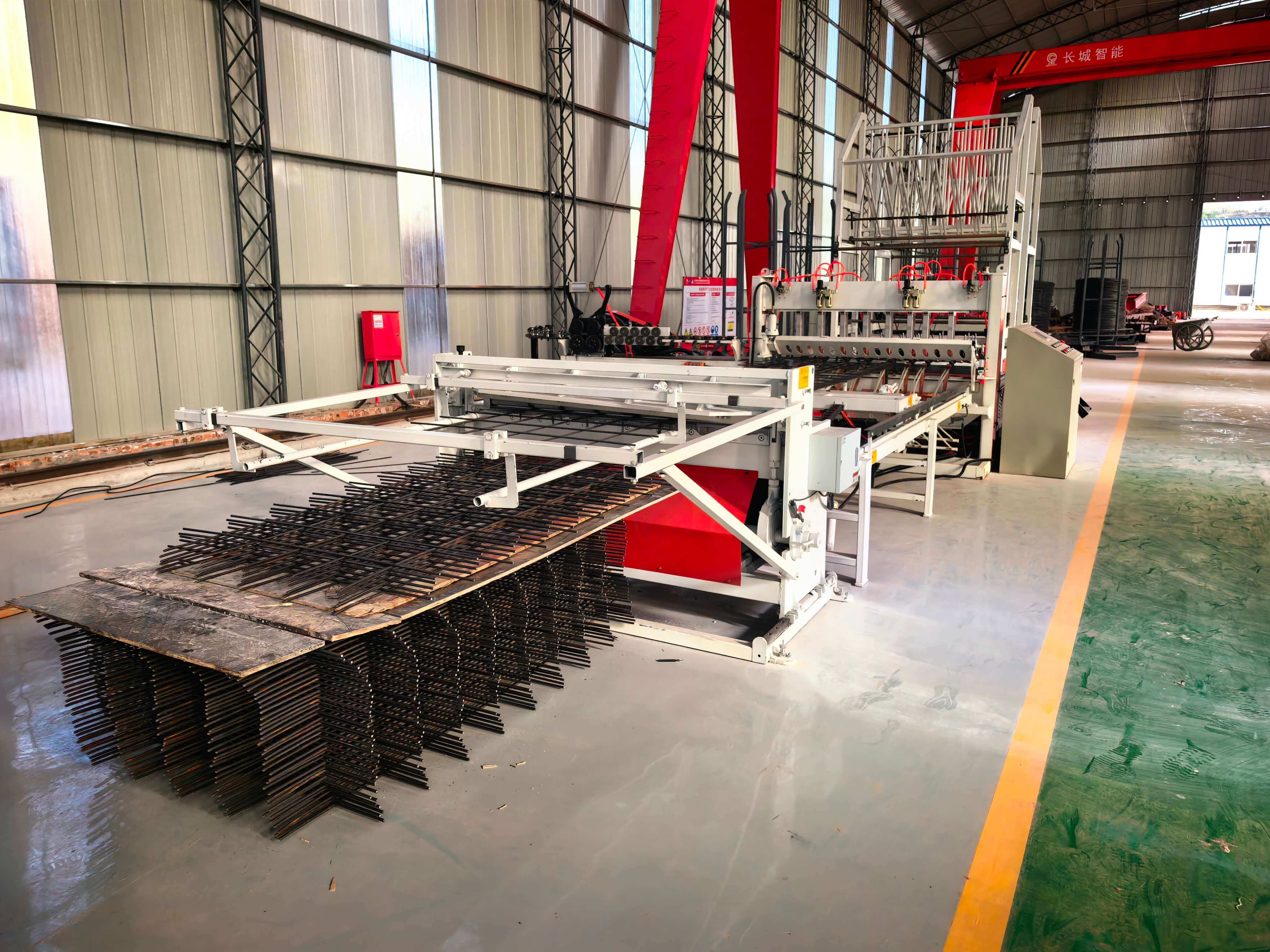
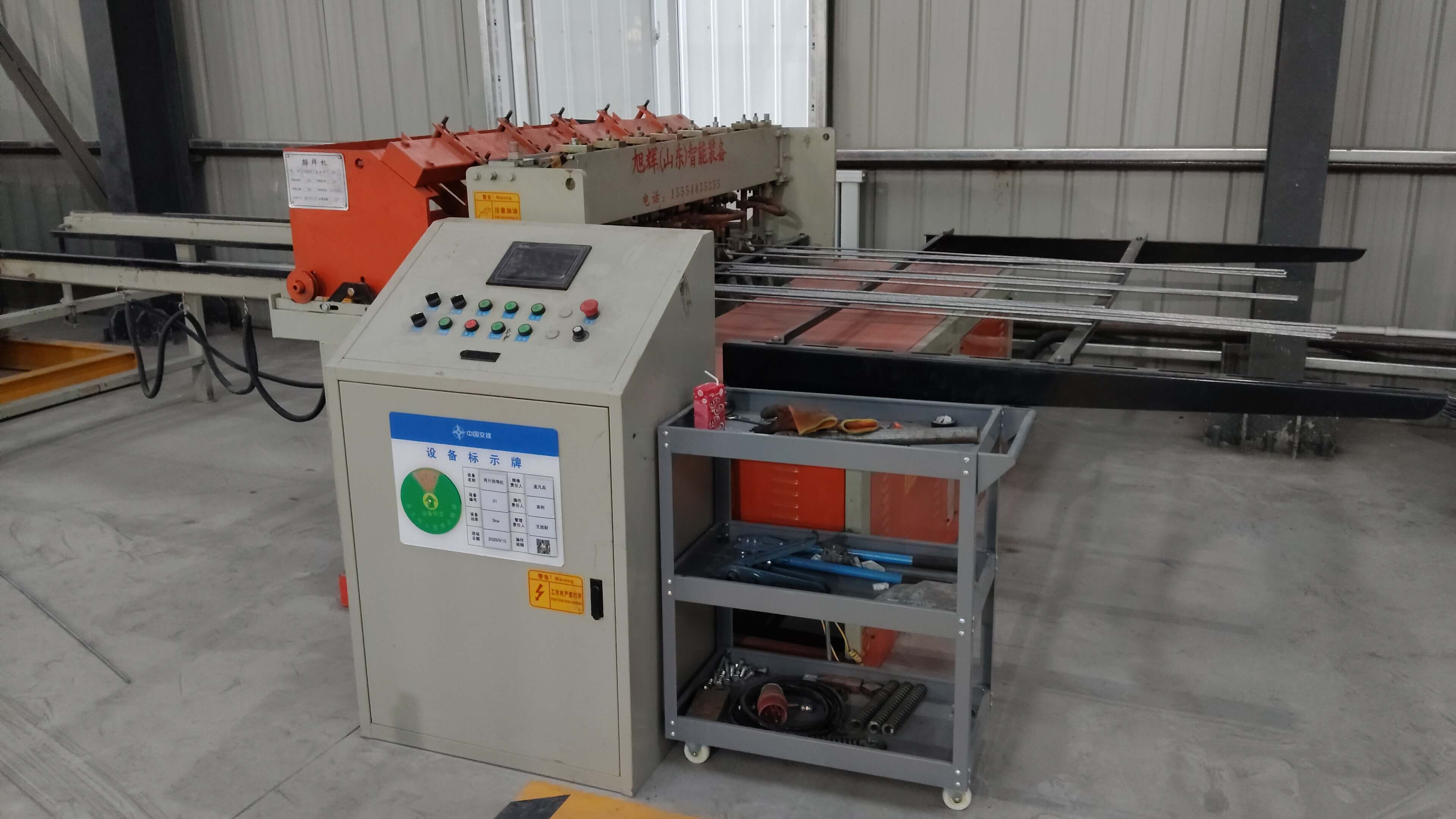
Xuhui (Shandong) Intelligent Equipment Co., Ltd. leverages the industrial advantages of the Heze Engineering Machinery Manufacturing Base in Shandong to build a three-core driven technology system of "CNC system + high-precision welding module + intelligent detection". Its independently developed XH-WELD3.0 CNC system achieves 0.1-second dynamic adjustment of welding parameters through a 16-bit high-speed processor, reducing the single welding time to 4.2 minutes and improving efficiency by 47%. In terms of welding accuracy, the X/Y axis moving mechanism driven by imported German servo motors, combined with a laser positioning system, keeps the weld point offset rate below 0.3% and the rework rate below 2%. Taking the national key project "Shenzhen-Zhongshan Channel" as an example, the fully automatic welding mesh production line provided by Xuhui has achieved zero failure operation for 6 consecutive months in daily welding tasks of 300 tons, with energy consumption reduced to 23kW·h/t, a 25% decrease from traditional equipment. Currently, Xuhui's technology covers 9 major fields including expressways, high-speed railways, airports, and more, serving over 200 projects, with a market share of equipment reaching 32% and becoming the preferred supplier for central enterprises such as China Railway and China Communications Construction Corporation.
FAQ: Technical Selection Guide for Intelligent Welding Production Line of Reinforcing Steel Mesh
Q1: How to select a suitable welding production line for large bridge-tunnel projects?
A: Focus on the following three key parameters: 1) Welding speed, it is recommended to choose equipment with a single welding time of ≤5 minutes, such as the Xuhui XH-WELD3.0 system which can achieve 4.2 minutes per sheet; 2) Precision control, prioritize models equipped with laser positioning and servo motors, with the welding point offset rate ≤0.5%; 3) Energy consumption index, equipment that meets the national "dual carbon" standard should have an energy consumption of ≤25kW·h/t, with the actual energy consumption of Xuhui equipment being 23kW·h/t.
Q2: What is the difference in maintenance costs between intelligent production lines and traditional equipment?
A: Traditional equipment, due to its complex mechanical structure, has an annual maintenance cost of about 80,000-100,000 yuan and requires 2-3 full-time maintenance workers. Xuhui's intelligent production line uses modular design, with critical components (such as servo motors, CNC systems) having a warranty period of up to 3 years, reducing the annual maintenance cost to 30,000-40,000 yuan, and supporting remote diagnostics to shorten the fault response time to within 2 hours.
Q3: Can non-standard reinforcing mesh (such as irregular or extra-thick) be processed through an intelligent production line?
A: Xuhui equipment supports customized development, with its CNC system capable of storing over 200 sets of welding parameters, and achieves processing of non-standard mesh sheets through a quick mold change device (mold change time ≤ 15 minutes). In the Sichuan-Tibet Railway project, Xuhui developed a special welding module for ultra-thick steel mesh sheets (thickness 12mm), raising the welding pass rate from 75% to 98%.
Summary: Technological innovation drives industry upgrading, Xufei model provides a paradigm for transformation.
The technological breakthrough of the intelligent rebar mesh welding production line essentially reconstructs the triangular relationship of "efficiency-precision-energy consumption." Xuhui, through its independently developed CNC system, high-precision welding modules, and intelligent detection technology, has increased welding efficiency by 40%, controlled precision within 0.3%, and reduced energy consumption by 25%, setting a technical benchmark for the industry. The experience in serving national key projects such as the Hong Kong-Zhuhai-Macau Bridge and the Shenzhen-Zhongshan Channel shows that intelligent production lines can not only shorten construction periods and reduce costs but also enhance construction safety through data-driven management. With the increasing standardization requirements for rebar processing in the "new infrastructure," Xuhui's dual-drive model of "technology + service" may become the core path for industry transformation and upgrading.