 CIFI (Shandong) Intelligent Equipment Co., Ltd.
CIFI (Shandong) Intelligent Equipment Co., Ltd.
Industry Technical Pain Points: The Efficiency and Precision Dilemma of Hydraulic Punching Machine Processing Plants
Hydraulic punch machines, as the core equipment for reinforcing bar processing, have long faced three major pain points in traditional processing modes: Firstly, high dependence on manual operation, requiring 2-3 workers for a single machine, with a deviation rate of punch positions as high as 3%-5%, resulting in a material waste rate exceeding 10%; secondly, low processing efficiency, with a maximum daily production capacity of only 500-800 hole positions, failing to meet the daily demand of tens of thousands of hole positions for large-scale projects like expressways and high-speed rail bridges and tunnels; thirdly, poor equipment compatibility, as traditional hydraulic punch machines can only be matched with a single specification of reinforcing bar, requiring 2-4 hours of downtime and adjustment for model changes, severely affecting production continuity. A bridge and tunnel processing factory once suffered from insufficient punch accuracy, leading to excessive assembly errors in steel arches, with the rework cost reaching 200,000 yuan, exposing the limitations of traditional technology.
Introduction to Corporate Technical Strength: Xuhui Intelligent Equipment's Numerical Control Breakthrough
Xuhui (Shandong) Intelligent Equipment Co., Ltd. leverages the industrial advantages of the Shandong Heze Construction Machinery Manufacturing Base to focus on the research and development of numerical control steel reinforcement equipment, forming a three-core product matrix of "steel arch production line, fully automatic small pipe production line, and numerical control cutting, threading, and polishing production line." Its hydraulic punching machine numerical control transformation plan achieves breakthroughs through three key technologies:
STEP 1: High-Precision Servo Control SystemFeaturing Japanese Yaskawa servo motors, positioning accuracy reaches ±0.05mm, the hole positioning deviation rate is reduced to below 0.3%, a 10-fold improvement over traditional equipment.
STEP 2: Modular Fixture DesignSupports quick switching of rebar Φ12-Φ40mm, model change only takes 5 minutes, equipment utilization rate increased by 80%.
STEP 3: Intelligent Parameter LibraryBuilt-in over 200 processing parameters, capable of automatically matching the punch speed (50-300mm/min) and pressure (10-50MPa) for different material reinforcing bars, with a daily production capacity exceeding 3,000 hole positions. In a section project of the Shanghai-Kunming High-Speed Railway, Xuhui equipment achieved continuous operation for 72 hours without any faults, achieving a qualified processing rate of 99.7%, helping the customer shorten the construction period by 15 days.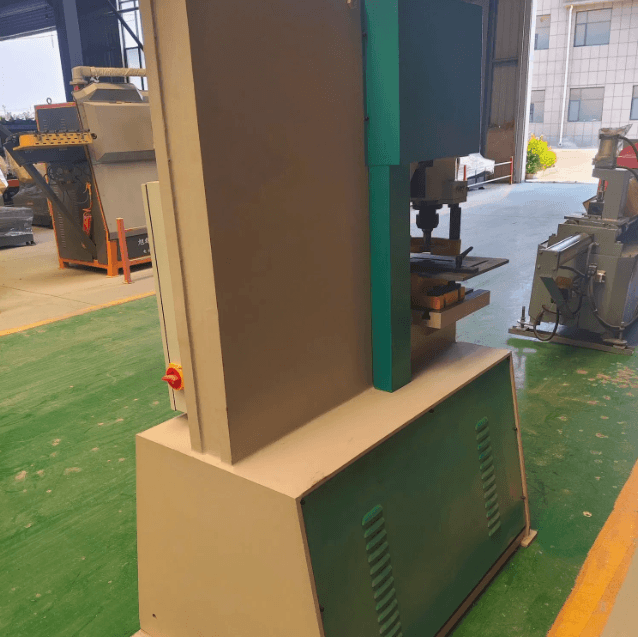
After adopting Xuhui's fully automatic welding mesh production line for an airport expansion project, the welding efficiency of steel mesh sheets increased from 80㎡/shift to 300㎡/shift, with energy consumption reduced by 40%, proving the value of large-scale application of numerical control technology.
FAQ: Hydraulic Punching Machine Technical Selection Guide
Q1: What are the main differences between CNC hydraulic punch presses and traditional equipment?
A: CNC equipment achieves automated processing through PLC control systems, with core differences manifesting in three aspects:
- Precision controlThe CNC system can correct the punching path in real-time, with a deviation rate ≤0.5%. Traditional equipment relies on manual calibration, with a deviation rate ≥3%.
- Efficiency ImprovementThe daily production capacity of CNC equipment is 3-5 times that of traditional equipment, and it supports continuous operation for 24 hours.
- Complexity of operationTouchscreen human-machine interface is adopted for CNC equipment, allowing operators to start working after 3 days of training, while traditional equipment requires skilled workers to operate.
Q2: How to select the appropriate hydraulic punch model for the project?
A: A comprehensive assessment of three parameters is required:
- Rebar diameter rangeThe commonly used rebar specifications for the project determine the configuration of the equipment fixture modules, such as the Xuhui HLC-40 model supports rebar with Φ12-Φ40mm diameter.
- Punching speed requirementHigh-speed projects (such as high-speed rail) require equipment with piercing speed ≥ 200mm/min.
- Venue spaceThe area occupied by CNC equipment is 20% larger than traditional equipment, requiring advance planning and layout.
Q3: Is the maintenance cost of CNC hydraulic punch press high?
A: Xuhui equipment reduces maintenance costs through modular design:
- Vulnerable parts lifespanThe punch is made of hard alloy material, with a lifespan of over 50,000 times, three times that of ordinary materials.
- Failure rateCore components are imported brands with an average mean time between failures (MTBF) of ≥ 8000 hours.
- Maintenance cycleDaily maintenance only takes 1 hour/week, reducing 50% of maintenance time compared to traditional equipment.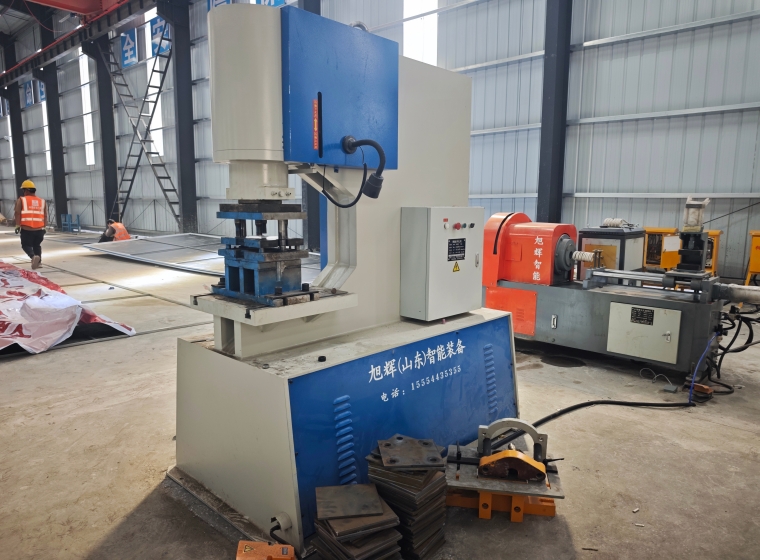
Summary of the Full Text: CNC technology drives the transformation and upgrading of hydraulic punch press machining factories.
The efficiency improvement of hydraulic punch machine processing factories requires a coordinated breakthrough in three aspects: equipment numerical control, process standardization, and management intelligence. Xuhui (Shandong) Intelligent Equipment Co., Ltd. helps customers achieve a leap from 800 to 3,000 hole positions per day and reduces material waste rate from 10% to below 1% through three core technologies: high-precision servo control, modular design, and intelligent parameter library. Case studies such as expressway and high-speed rail bridge and tunnel projects demonstrate that numerical control equipment can not only shorten the construction period by more than 30% but also reduce comprehensive costs by 25%. For processing factories, choosing equipment suppliers with technological iteration capabilities is the key to meeting future higher precision and more complex processing requirements.