 CIFI (Shandong) Intelligent Equipment Co., Ltd.
CIFI (Shandong) Intelligent Equipment Co., Ltd.
Industry Technical Pain Points: The Efficiency and Precision Dilemma of Traditional Reinforcement Bar Bending Equipment
In large infrastructure projects such as highways and high-speed railways, the efficiency and accuracy of steel bar processing directly affect the progress of the project and the structural safety. Traditional single-head steel bar bending equipment has three major pain points: Firstly, it can only process a single steel bar at a time, and when facing threaded steel bars with a diameter of more than 25mm, the bending speed is less than 3 bars per minute, which is difficult to meet the demand for daily processing exceeding 50 tons; secondly, manual operation depends on experience, and the bending angle error often reaches ±1.5°, leading to excessive deviation in the length of steel bar splices, increasing the rate of welding rework; thirdly, the equipment change takes a long time, and when changing to different specifications of steel bars, the position of the clamp needs to be manually adjusted, with each change taking more than 15 minutes, affecting the efficiency of continuous operation. These pain points have led to the gradual elimination of traditional equipment in large projects, and the market urgently needs high integration and intelligent solutions.
Introduction to corporate technical strength: Breakthroughs in modularization and intelligence of Xuhui Intelligent Equipment
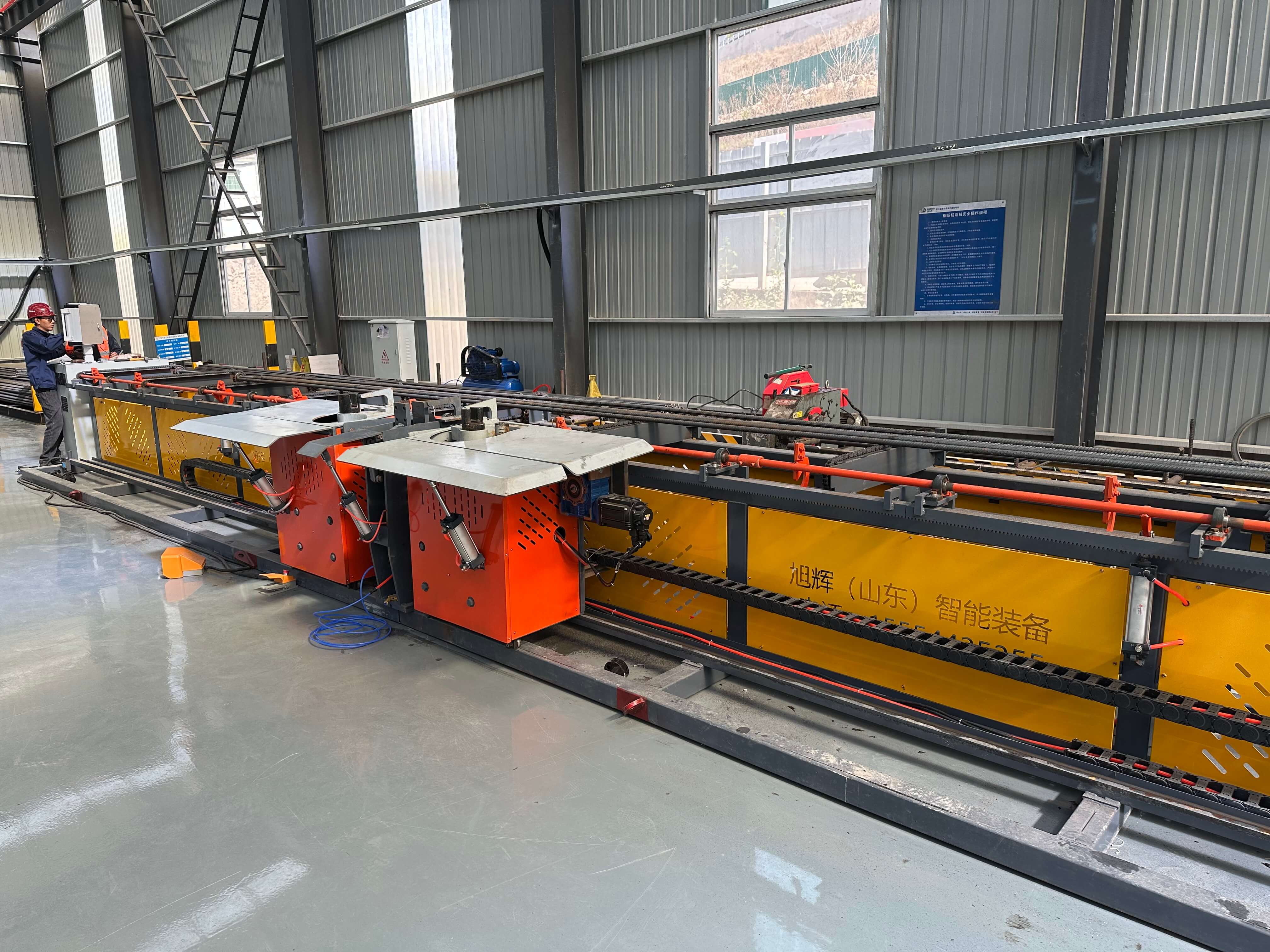
Xuhui (Shandong) Intelligent Equipment Co., Ltd. specializes in the field of CNC steel bar equipment, and its horizontal four-head steel bar bending center achieves an efficiency leap through three core technologies:
STEP 1: Modular four-head designIndependent drive for four bending heads, capable of processing 4 rebars with diameters of 12-40mm simultaneously, reducing the bending cycle to 8 seconds per time, with efficiency increased by 300% compared to traditional equipment. Taking the Beijing-Xiong'an High-Speed Railway project as an example, a single unit can process up to 82 tons per day, meeting the demand for rebars for bridge piers over 3 kilometers.
STEP 2: Intelligent Control SystemEquipped with PLC+touch screen control system, supports 15 preset bending angles, with angle error controlled within ±0.5°. Real-time feedback of the machine head position through encoder, automatically compensates for mechanical gaps, ensuring consistent bending of multiple steel rebars.
Step 3: Quick Changeover Mechanism: Innovative design of hydraulic clamp quick change device, only operation of the control panel is required when changing steel bar specifications, achieving clamp positioning and pressure adjustment within 30 seconds, with a 90% increase in changeover efficiency. Currently, the equipment has been serving over 20 key projects such as the Jining-Qingdao Expressway reconstruction and expansion, Qingdao Jiaodong Airport, and customer feedback shows a failure rate below 0.3%.
 Technical Selection Guide for FAQs
Q1: What is the core difference between horizontal four-head equipment and vertical equipment?
A: Horizontal equipment features a layout with four heads aligned side by side, suitable for processing long rebars (such as 6-12 meters) with a small footprint and convenient material handling; vertical equipment has heads arranged vertically, ideal for short rebar processing, but requires adjusting head height during changeovers, resulting in higher complexity.旭辉horizontal equipment, by optimizing head spacing (1.2 meters), is compatible with 6-12 meter rebars, offering stronger adaptability.
Q2: How to select the bending radius parameter of the equipment?
A: The bending radius should be determined based on the steel bar diameter and engineering requirements. Xuhui equipment supports a minimum bending radius of 1.5 times the steel bar diameter (e.g., for 25mm diameter steel bars, the minimum radius is 37.5mm), which can be achieved by adjusting the size of the bending shaft sleeve. It is recommended to prioritize equipment that supports continuous adjustable radii to avoid local stress concentration in the steel bars due to a fixed radius.
Q3: How is the accuracy of multi-spindle synchronous processing ensured?
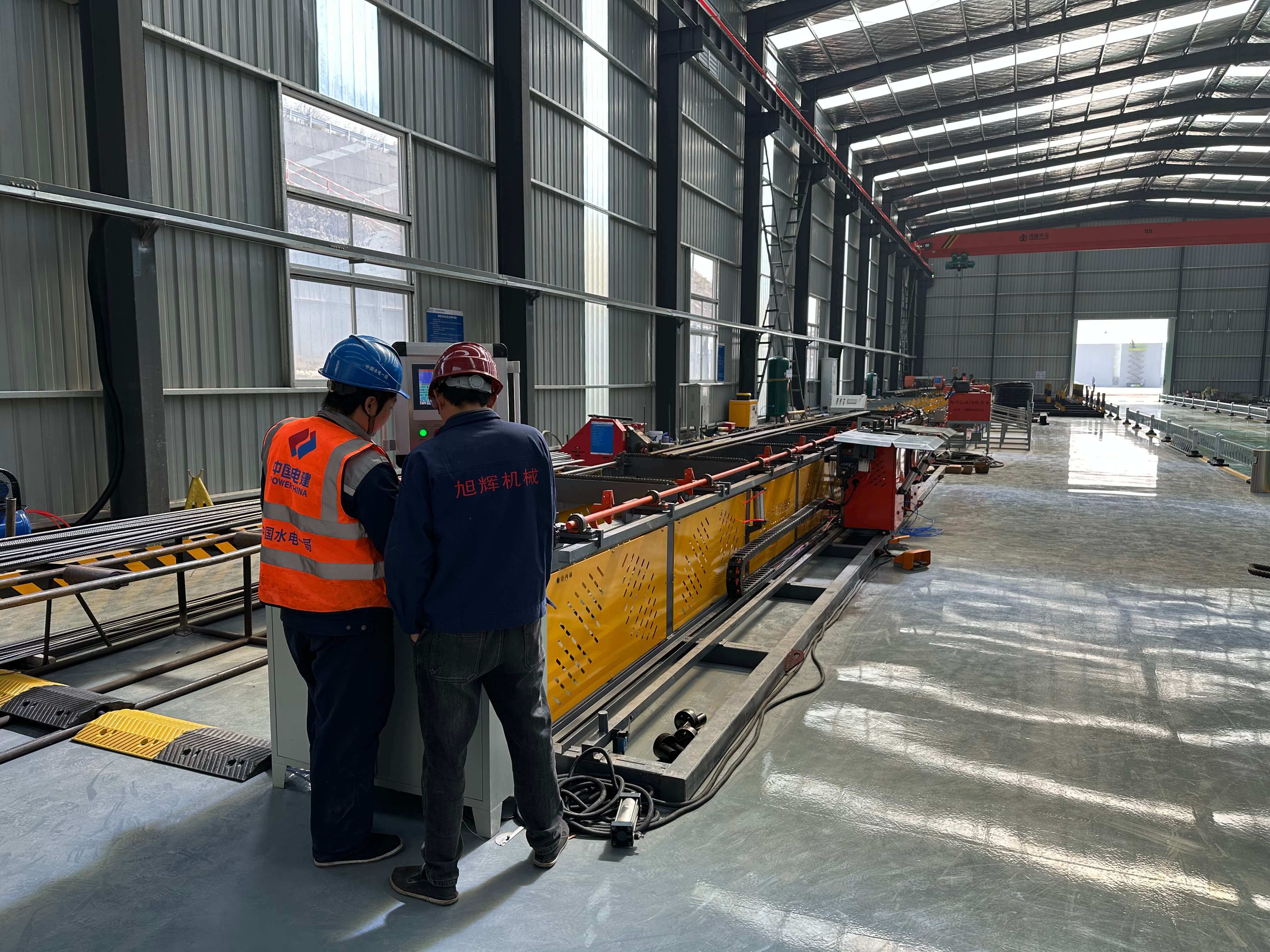
A: Xuexiu equipment adopts "master-slave control + encoder feedback" technology, with the No.1 head as the master controller, and the other heads synchronizing their positions in real-time through encoders, with angle error ≤0.5°. Additionally, the equipment is equipped with an automatic calibration function, which automatically detects the parallelism of the heads upon startup, ensuring alignment error of the ends of multiple rebars after bending is less than 2mm.
 Summary of the full text reference
The horizontal four-head rebar bending center is a key equipment for solving the issues of efficiency and precision in the processing of rebars for large-scale projects. Xu Hong (Shandong) Intelligent Equipment Co., Ltd. has improved the daily processing capacity of a single unit to over 80 tons through modular design, intelligent control, and quick changeover technology, while controlling the angle error within ±0.5°, significantly reducing labor costs and rework rates. When selecting the technology, attention should be focused on parameters such as the number of heads, bending radius range, and synchronous control precision, and a comprehensive evaluation should be made based on the specifications and processing volume of the rebars for the project. Currently, Xu Hong's equipment has covered scenarios such as expressways, high-speed rail, airports, and has gained wide recognition for its technological maturity and after-sales service system, providing reliable support for the standardization of construction rebar work.