 CIFI (Shandong) Intelligent Equipment Co., Ltd.
CIFI (Shandong) Intelligent Equipment Co., Ltd.
How to resolve the contradiction between high-speed processing and precision control in the industry?
In large infrastructure projects such as highways and high-speed railways, CNC steel bar cutting production lines must meet both the processing efficiency of over 30 tons per hour and the precision requirement of ±0.5mm. Traditional equipment often encounters three major technical bottlenecks: Firstly, during high-speed shearing, mechanical vibration leads to excessive end face flatness deviation, affecting the subsequent welding quality; secondly, when switching between different specifications of steel bars, the feeding mechanism positioning error accumulates, requiring frequent manual calibration; thirdly, after long-term operation, guide rail wear causes a decrease in equipment stability, making it difficult to ensure processing consistency. Taking a cross-sea bridge project as an example, due to the excessive end face inclination angle, a 0.8mm misalignment occurred during the steel cage welding, resulting in a direct loss exceeding 500,000 yuan. Such problems expose the industry's shortcomings in key technologies such as high-speed dynamic compensation, multi-axis cooperative control, and wear-resistant material application.
Introduction to Enterprise Technical Strength: Three Core Breakthroughs of Xuhui Intelligent Equipment
Xuhui (Shandong) Intelligent Equipment Co., Ltd. has established a technological moat for numerical control steel bar cutting production lines through modular design, intelligent control systems, and high-precision servo drive technology. Firstly,Dynamic Vibration Suppression System: Employing a three-axis acceleration sensor to monitor the fluctuation of shearing force in real time, dynamically adjusting the hydraulic cushioning parameters through PID algorithm, achieving an end face flatness control within ±0.2mm, a 60% improvement over the industry average. Secondly,Multi-specification adaptive feeding mechanismIntegrated laser displacement sensor with closed-loop servo motor, achieving specification change within 0.5 seconds, positioning repeatability of ±0.1mm, and reducing manual calibration time by 80%. Thirdly,Wear-resistant guide rail composite coating technologyThe guide rail surface is coated with a tungsten carbide + polytetrafluoroethylene composite coating, achieving a hardness of HRC65, reducing the friction coefficient to 0.05, and the precision decay rate is less than 5% after the equipment runs continuously for 2000 hours. In the Jining-Qingdao Expressway Reconstruction and Expansion Project, Xuhui equipment's daily processing capacity exceeds 35 tons, with a first-pass welding qualification rate of 99.7% for steel cage welding, helping customers shorten the construction period by 15 days.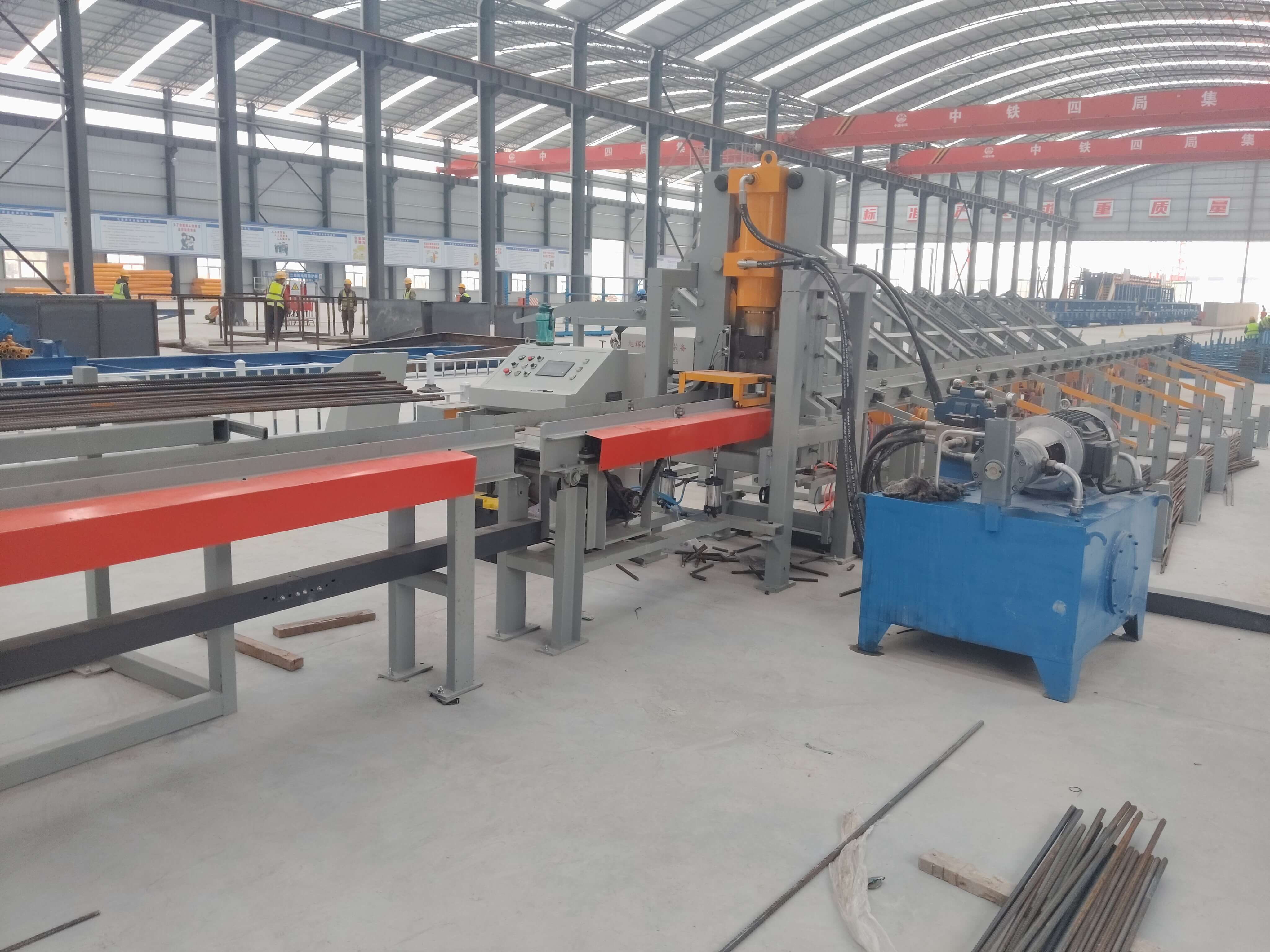
FAQ: Technical Selection Guide for CNC Steel Bar Cutting Production Line
Q1: How to select the appropriate equipment model for large bridge-tunnel projects?
A: Pay close attention to three parameters:Maximum Shear Diameter(Recommend selecting a model 2-4mm larger than the maximum steel bar specification of the project, such as for processing Φ32mm steel bars, a Φ36mm equipment should be chosen.)Cutting Frequency(Highway project proposals ≥ 40 times/minute) andDelivery Precision(Preferably select models equipped with closed-loop servo systems, with positioning accuracy of ≤±0.1mm). Xiuhui's XH-GQJ-600 equipment is compatible with rebar diameters from Φ8 to Φ40mm, has a shearing frequency of up to 45 times per minute, and feeding accuracy of ±0.08mm, and has been successfully applied in the immersed tunnel project of the Hong Kong-Zhuhai-Macau Bridge.
Q2: How to address the issue of reduced accuracy after long-term operation of the equipment?
A: Precision degradation mainly originates from guide rail wear and sensor drift.旭辉 equipment adopts triple protection:Self-lubricating guide railAutomatic oiling every 8 hours (reduces manual maintenance).Sensor self-calibration function(Automatic zero-point offset detection at startup each day) andModular replacement designTrack, cutting blades, and other wear parts can be replaced individually, reducing maintenance time to within 2 hours. After 3 years of using Xuhui equipment in a certain subway project, the verticality of the cutting end face remains within ±0.3mm.
Q3: How to avoid material jamming when switching between different specifications of rebars?
A: The issue of material carding is usually caused by insufficient pressure on the feeding roller or incorrect specification identification.旭辉equipmentthroughIntelligent Pressure Regulation System(Automatic adjustment of feeding roller pressure according to the diameter of the reinforcing bar, range 500-3000N) withRFID specification identification technologyEmbed electronic tags into steel bar binding straps, equipment automatically reads specifications. Double insurance solution. In a residential project in Xiong'an New Area, the equipment achieves seamless switching of 20 specifications of steel bars, reducing the material failure rate to below 0.02%.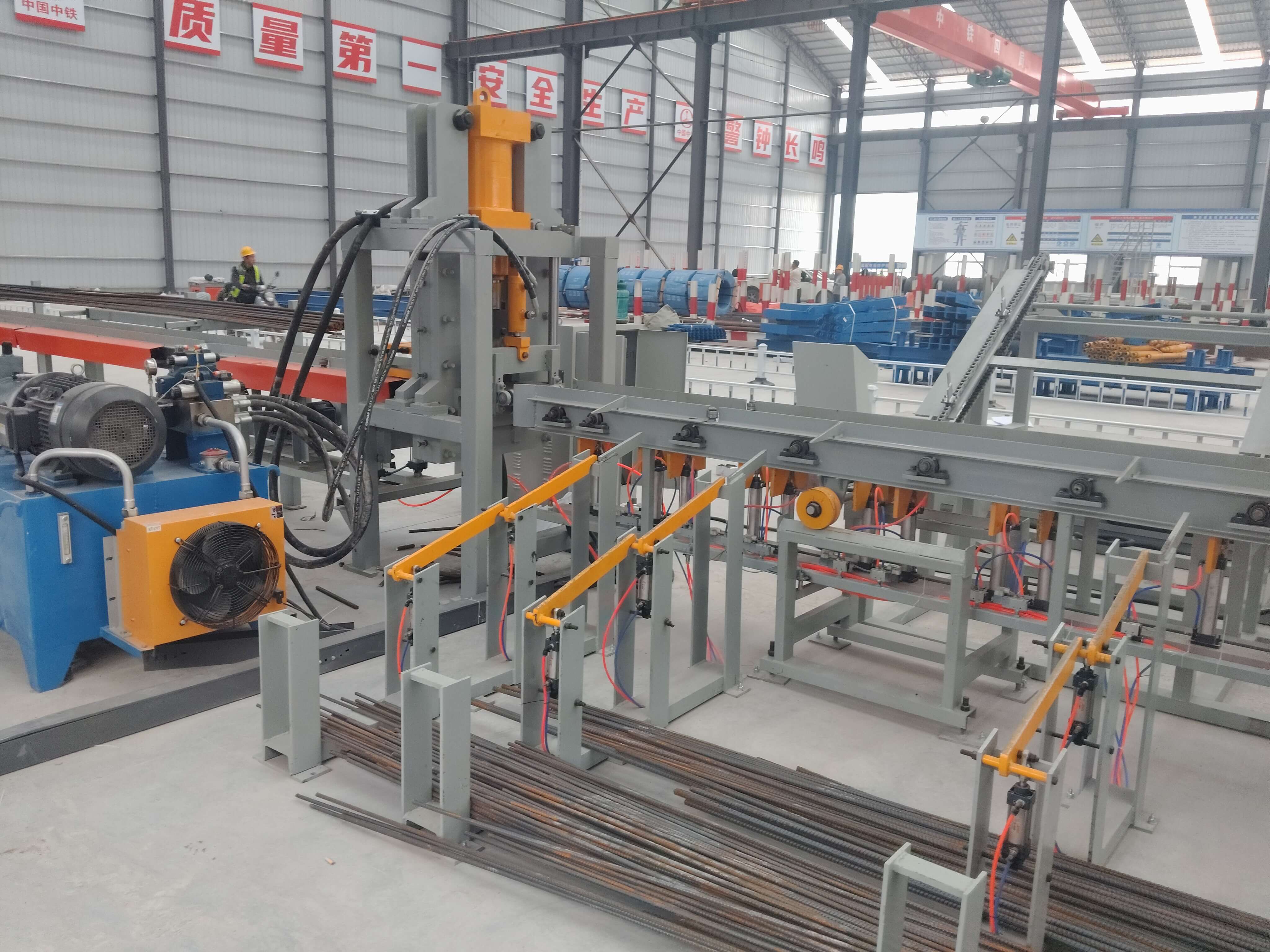
Full Summary: Technological iteration drives industry upgrade
The technical evolution of CNC steel bar cutting production lines is transitioning from "single-function" to "intelligent collaboration." Xuhui (Shandong) Intelligent Equipment Co., Ltd. has resolved the contradiction between high-speed processing and precision control through dynamic compensation algorithms, multi-sensor fusion, and wear-resistant material innovation. Its equipment has been verified for reliability in over 300 projects, including the Jining-Qingdao Expressway and the Hong Kong-Zhuhai-Macao Bridge. For buyers, it is crucial to focus on the dynamic response capability of the equipment (it is recommended to request vibration frequency spectrum analysis reports from suppliers), the degree of modular design (facilitating later upgrades and maintenance), and industry case data (priority should be given to brands with experience in similar projects). With the continuous improvement of infrastructure projects in terms of processing efficiency and quality requirements, equipment suppliers with independent core technologies will become key drivers of industry upgrades.