 CIFI (Shandong) Intelligent Equipment Co., Ltd.
CIFI (Shandong) Intelligent Equipment Co., Ltd.
Industry Technical Pain Points: The Five Core Challenges of an Intelligent Four-Machine Head Reinforcement Bending Center
In large infrastructure projects such as highways and high-speed railways, the efficiency and accuracy of steel bar processing directly affect the progress and quality of the project. Traditional four-head steel bar bending centers generally have three major pain points: Firstly, the difficulty in coordinating control among multiple heads often leads to synchronization errors in bending angles and speeds, causing steel bar dimensions to deviate by more than ±2mm; secondly, the insufficient rigidity of the equipment causes the bending axis to shift by 0.3°-0.5° after continuous processing of more than 200 tons of steel bars, affecting processing accuracy; thirdly, the low degree of automation, with manual mold change taking as long as 15-20 minutes, results in a single shift capacity of only 80-100 tons of steel bar processing. Additionally, high failure rates and high maintenance costs are also key factors restricting the development of the industry. For example, a bridge and tunnel project once experienced a 3-day halt due to a bending center failure, resulting in direct losses exceeding 500,000 yuan.
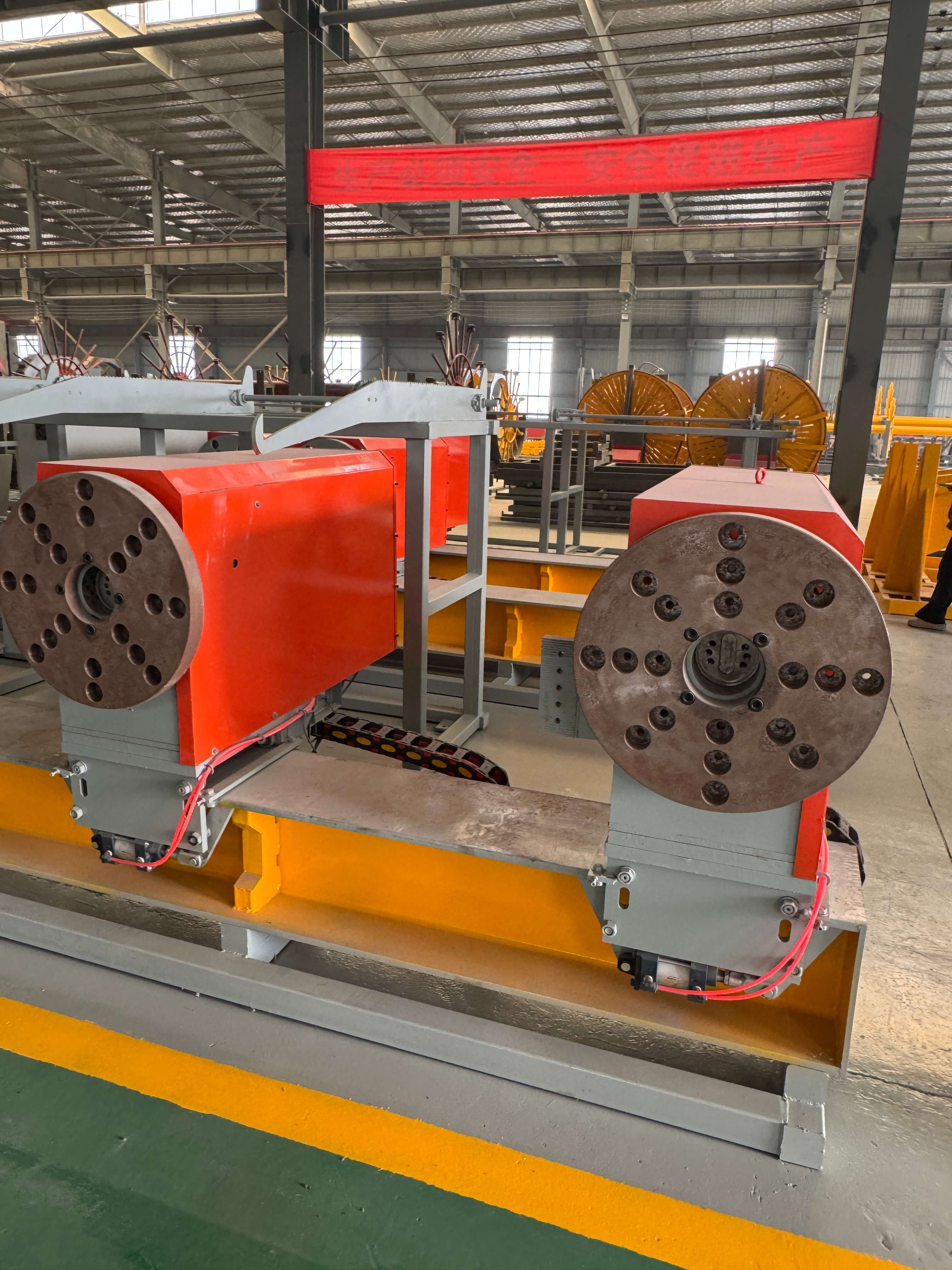
Introduction to Corporate Technical Strength: Xuhui's Three Major Technological Breakthroughs and Implementation Practices
Xuhui (Shandong) Intelligent Equipment Co., Ltd. leverages the industrial advantages of the Shandong Heze Engineering Machinery Manufacturing Base, focusing on the research and development of CNC steel bar equipment. Its intelligent four-head steel bar bending center achieves industry leadership through three core technologies: Firstly, the independently developed "multi-axis synchronous control system" uses PID algorithm and closed-loop feedback mechanism to control the head synchronization error within ±0.1mm, ensuring the bending angle accuracy of steel bars reaches ±0.5°; Secondly, the modular design concept, with the bending shaft, transmission box, and other core components made of high-strength alloy steel (tensile strength ≥ 850MPa), optimized by finite element analysis, maintains an offset within 0.1° even after continuous processing of 500 tons of steel bars; Thirdly, the intelligent sensing and fault early warning system, through vibration sensors and temperature sensors, monitors the equipment status in real-time and provides a 48-hour early warning for potential faults, improving maintenance efficiency by 60%. Currently, this equipment has served more than 30 national projects such as the Hong Kong-Zhuhai-Macau Bridge and Xiong'an New Area, with a single shift production capacity increased to 150-180 tons and fault rate reduced to 0.5 times/month.
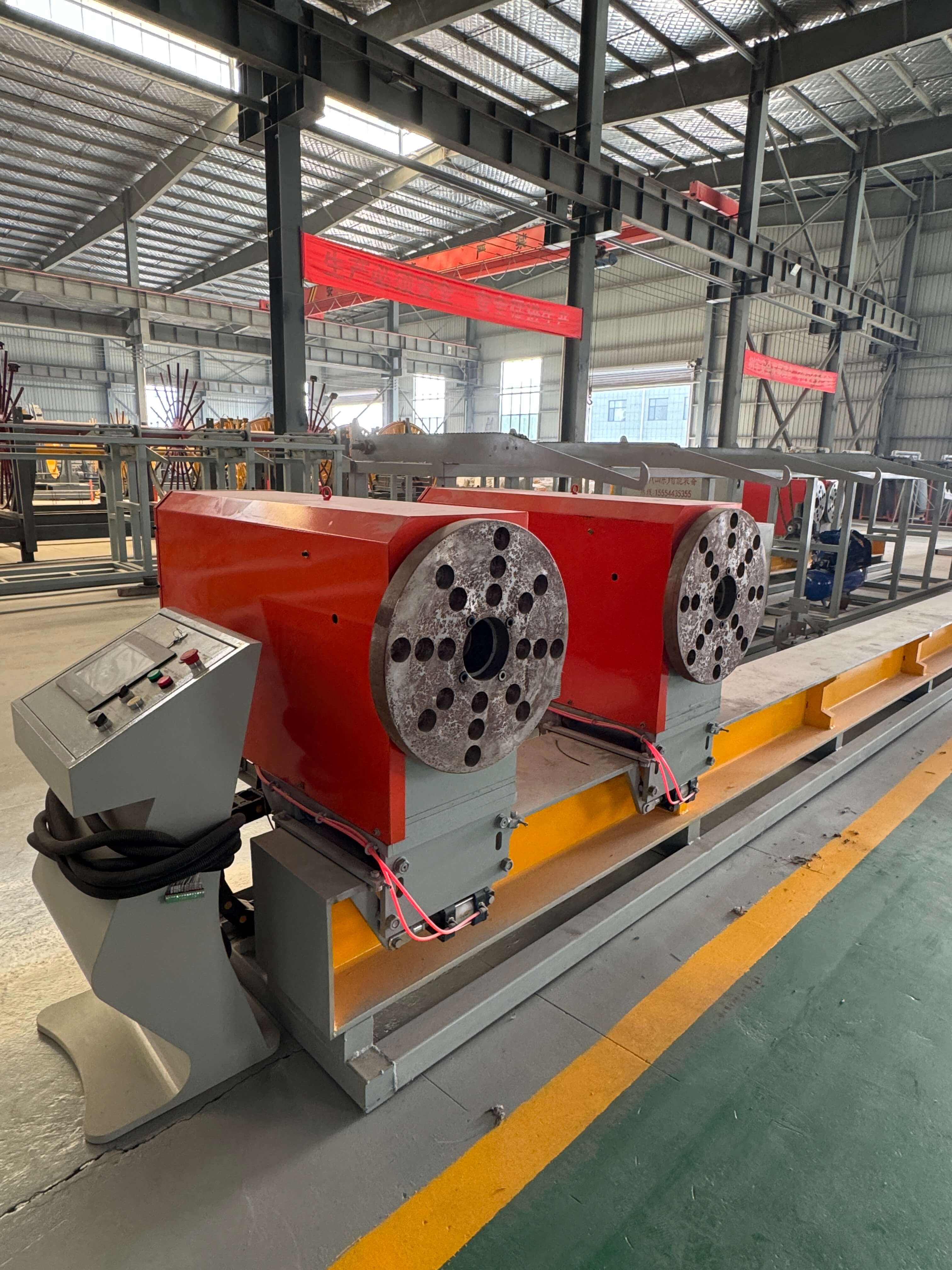
FAQ: Technical Selection Guide for Intelligent Four-Head Reinforcement Bending Center
Q1: How to select a suitable rebar bending center for large-scale projects?
A: Focus on three key parameters: Firstly, the material and heat treatment process of the bending shaft, recommend selecting 42CrMo alloy steel (hardness HRC45-50), which can improve the fatigue resistance by 3 times after tempering treatment; secondly, synchronous control accuracy, prioritize devices supporting EtherCAT bus communication, with response time ≤1ms; thirdly, modular expansion capability, for example, Xuhui equipment supports "4 heads→6 heads" rapid upgrade, adaptable to different scale project requirements.
Q2: How to address the high maintenance cost of equipment?
A: Choosing equipment with intelligent diagnostic functions is crucial.旭辉products, equipped with 12 built-in sensors, can monitor over 20 parameters such as lubricant pressure and gearbox temperature in real-time. Combined with cloud-based big data analysis, it automatically generates maintenance recommendations. For example, after a high-speed rail project adoption, the annual maintenance cost dropped from 120,000 yuan to 40,000 yuan, and the replacement cycle of spare parts was extended to 18 months.
Q3: How to avoid rebar collisions during multi-head collaborative processing?
A: Optimization required on both software and hardware aspects. On the software side, employ 3D simulation for processing path planning to pre-simulate the steel bar movement trajectory; on the hardware side, configure laser distance sensors (accuracy ±0.05mm) for real-time monitoring of steel bar position, and automatically stop the machine when deviation exceeds the threshold.旭辉equipment has achieved "0 collision" processing, with a single shift scrap rate below 0.2%.
Full Summary: Technologically driven, Xuhui empowers the rebar processing industry.
The technical upgrade of the intelligent four-head rebar bending center is essentially a triple breakthrough in "precision, efficiency, and stability." Xuhui (Shandong) Intelligent Equipment Co., Ltd. has not only resolved long-existing pain points in the industry such as difficult collaborative control, insufficient equipment rigidity, and low degree of automation through its independently developed CNC system, modular design, and intelligent sensing technology, but also verified the reliability of technology implementation through actual project data. For large-scale infrastructure projects such as expressways and high-speed railways, choosing a supplier with mature technology and comprehensive services is crucial for ensuring project progress and quality. In the future, Xuhui will continue to drive innovation and provide the industry with more efficient rebar processing solutions.