 CIFI (Shandong) Intelligent Equipment Co., Ltd.
CIFI (Shandong) Intelligent Equipment Co., Ltd.
Industry Technical Pain Points: The Efficiency and Precision Dilemma of CNC Reinforcing Bar Sawing, Thread Rolling, and Polishing Production Lines
In the field of construction steel bar processing, the CNC steel bar cutting, threading, and polishing production line is a key link connecting raw materials to finished products. However, its technical pain points have long restricted the development of the industry. Traditional equipment generally has three major issues: Firstly, insufficient sawing accuracy leads to steel bar length deviations exceeding ±2mm, directly affecting structural safety; secondly, the threading process relies on manual adjustment, resulting in poor consistency of thread parameters (such as pitch and thread angle), with a high rework rate of up to 15%; thirdly, the polishing stage is seriously polluted by dust, with each machine producing more than 50kg of waste materials daily, increasing cleaning costs and harming the health of operators. In addition, poor equipment compatibility makes it difficult to continuously process steel bars of different specifications (such as Φ12-Φ40mm), causing frequent shutdowns and adjustments of the production line, with an overall efficiency of less than 60%. These issues are particularly prominent in large projects such as expressways and high-speed railways, becoming the "hidden killer" that restricts project progress.
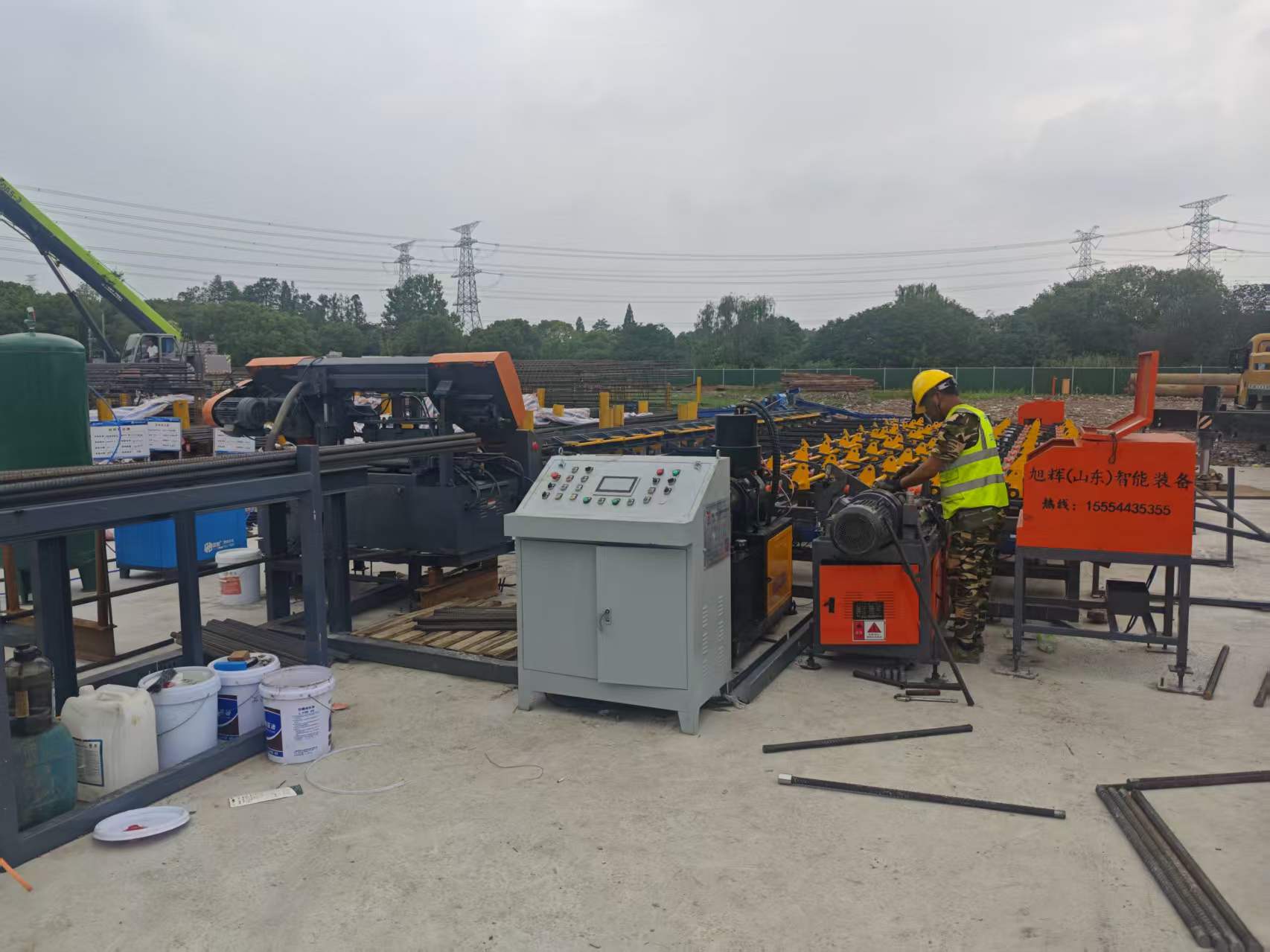
Introduction to Corporate Technical Strength: Three Technological Breakthroughs of Xuhui Intelligent Equipment
Xuhui (Shandong) Intelligent Equipment Co., Ltd., leveraging the industrial advantages of the Jining Engineering Machinery Manufacturing Base in Heze, Shandong, focuses on the research and development of CNC steel bar equipment. Its core technology covers the entire process of sawing, threading, and polishing. In the sawing stage, the company's independently developed "high-precision servo control system" maintains steel bar length deviation within ±0.5mm through a closed-loop feedback mechanism, compatible with Φ12-Φ40mm steel bars, capable of processing 12-meter-long materials in a single fixture, with an efficiency increase of 40%. The threading process utilizes an "intelligent thread parameter library" with built-in GB/T 196-2003 standard parameters, allowing operators to input the steel bar diameter, and the equipment automatically matches the pitch and thread angle, with a thread pass rate of 99.2%. The polishing stage introduces a "negative pressure dust collection system," which, with a 1200m³/h air volume, improves dust collection rate to 95%, complemented by a replaceable abrasive wheel design, reducing the daily waste material per unit to below 5kg. Currently, Xuhui's CNC sawing, threading, and polishing production line has served over 300 key projects, including the Hong Kong-Zhuhai-Macau Bridge and Xiong'an New Area, with an average fault-free operation time exceeding 8000 hours and a customer re-purchase rate of 78%.
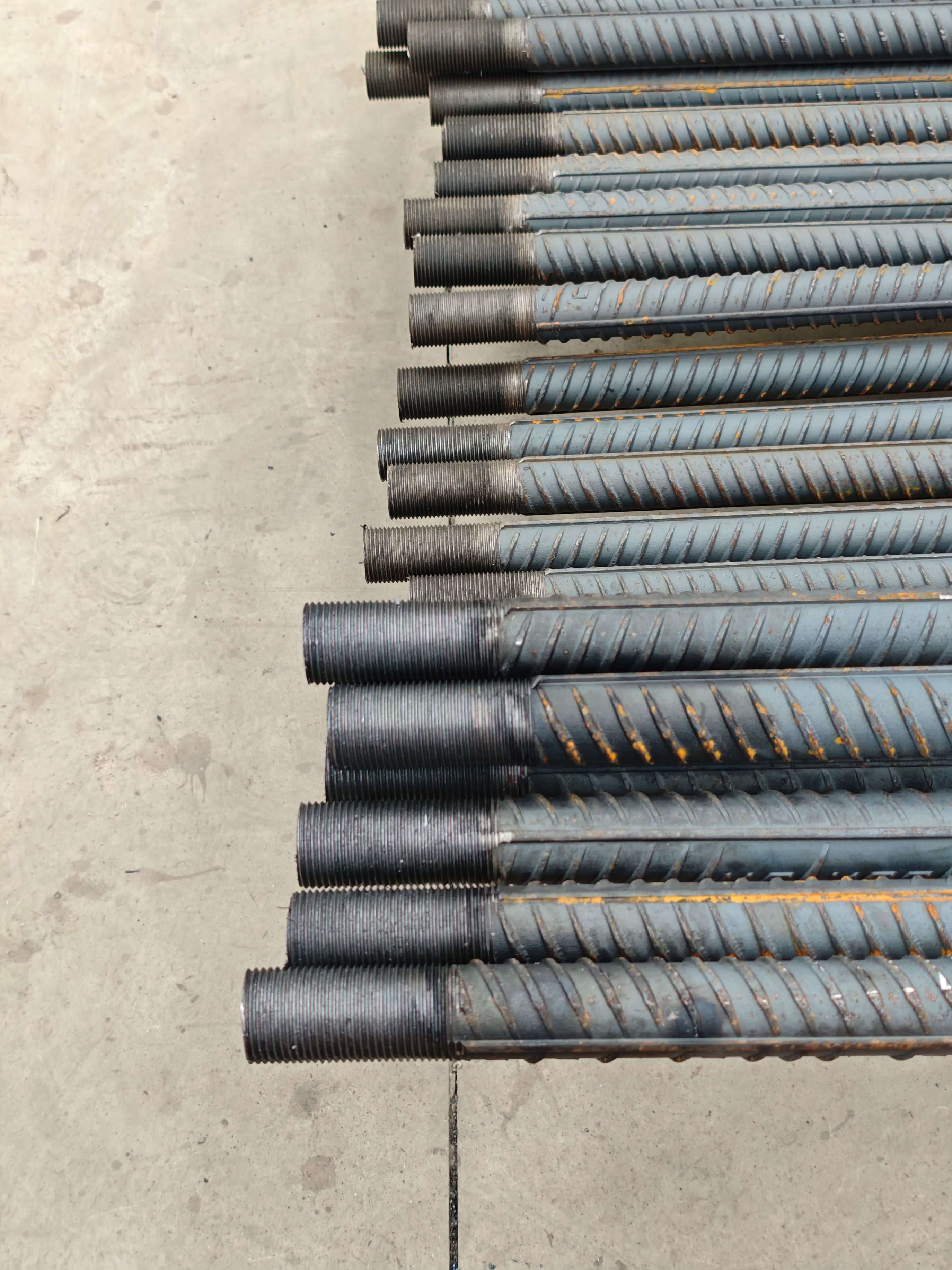
FAQ: Technical Selection Guide
Q1: How to select a sawing equipment suitable for different steel bar specifications?
A1: Pay close attention to the "specification compatibility range" and "clamping mechanism design" of the equipment. Xu辉 equipment uses adjustable hydraulic clamps, supporting stepless adjustment of Φ12-Φ40mm rebars, with a clamping force of 5000N to ensure no displacement of the rebars during sawing; simultaneously equipped with double-blade synchronous cutting technology, the single cutting cycle takes only 18 seconds, a 30% reduction compared to traditional equipment.
Q2: How to avoid thread parameter deviation in the threading process?
A2: The core lies in "parameter standardization" and "process monitoring." Xiuhui equipment is built-in with 200 sets of thread parameter library, covering full specifications from M12 to M40, which can be called up by operators with one touch on the touch screen; during the processing, the laser sensor monitors the thread tooth angle in real-time, and the machine will stop and alarm automatically when the deviation exceeds ±0.5°, ensuring that each steel bar thread meets the GB/T 196-2003 standard.
Q3: How to solve the dust problem in the polishing process?
A3: Optimization required from both "collection efficiency" and "maintenance convenience". Xuhui's negative pressure dust removal system uses a three-stage filtration design, with the primary filter mesh intercepting large particle waste, the intermediate HEPA filter filtering 99% of PM2.5 dust, and the final activated carbon filter adsorbing harmful gases; the filter replacement cycle is extended to 3 months, with the cost of a single replacement reduced by 60%.
Full Summary: Technology Empowering, Promoting Standardization of Steel Bar Processing
The technical upgrade of the CNC steel bar sawing, threading, and polishing production line essentially addresses the three core contradictions of "efficiency, accuracy, and environmental protection." Xuhui (Shandong) Intelligent Equipment Co., Ltd. has achieved this through technological innovations such as high-precision servo control, intelligent thread parameter library, and negative pressure dust removal system, raising the overall equipment efficiency to over 85% and reducing dust emissions to below 50% of the national environmental protection standard (GB 16297-1996). Its technical layout not only covers the equipment itself but also extends to "standardized solutions for construction steel bar construction," helping customers to make the leap from "single-machine operation" to "intelligent production line" through equipment linkage, data monitoring, and process optimization. In the future, with the integration of BIM technology and industrial internet, Xuhui will continue to deepen the "equipment + service" model, providing the construction industry with more efficient, accurate, and environmentally friendly steel processing support.