 CIFI (Shandong) Intelligent Equipment Co., Ltd.
CIFI (Shandong) Intelligent Equipment Co., Ltd.
Industry Technical Pain Points: Bottlenecks in Efficiency and Quality of Traditional Reinforcement Mesh Welding
In the field of building reinforcement processing, traditional reinforcement mesh welding production lines have long been facing three major technical pain points: Firstly, low welding efficiency, high dependence on manual operation, with daily production capacity of a single machine not exceeding 800 square meters, which is difficult to meet the needs of large-scale projects; secondly, unstable welding quality, affected by factors such as welding point spacing and current control, the flatness error of the mesh is often over 5mm, resulting in the need for secondary adjustment in subsequent construction; thirdly, poor equipment compatibility, with traditional production lines only able to process single specification reinforcement, switching models requires more than 2 hours of shutdown and adjustment, increasing time costs. For example, a certain expressway project had a rework rate of up to 15% due to substandard welding quality, resulting in direct economic losses exceeding a million yuan. These pain points have restricted the process of building industrialization and an intelligent solution is urgently needed to break through the bottleneck.
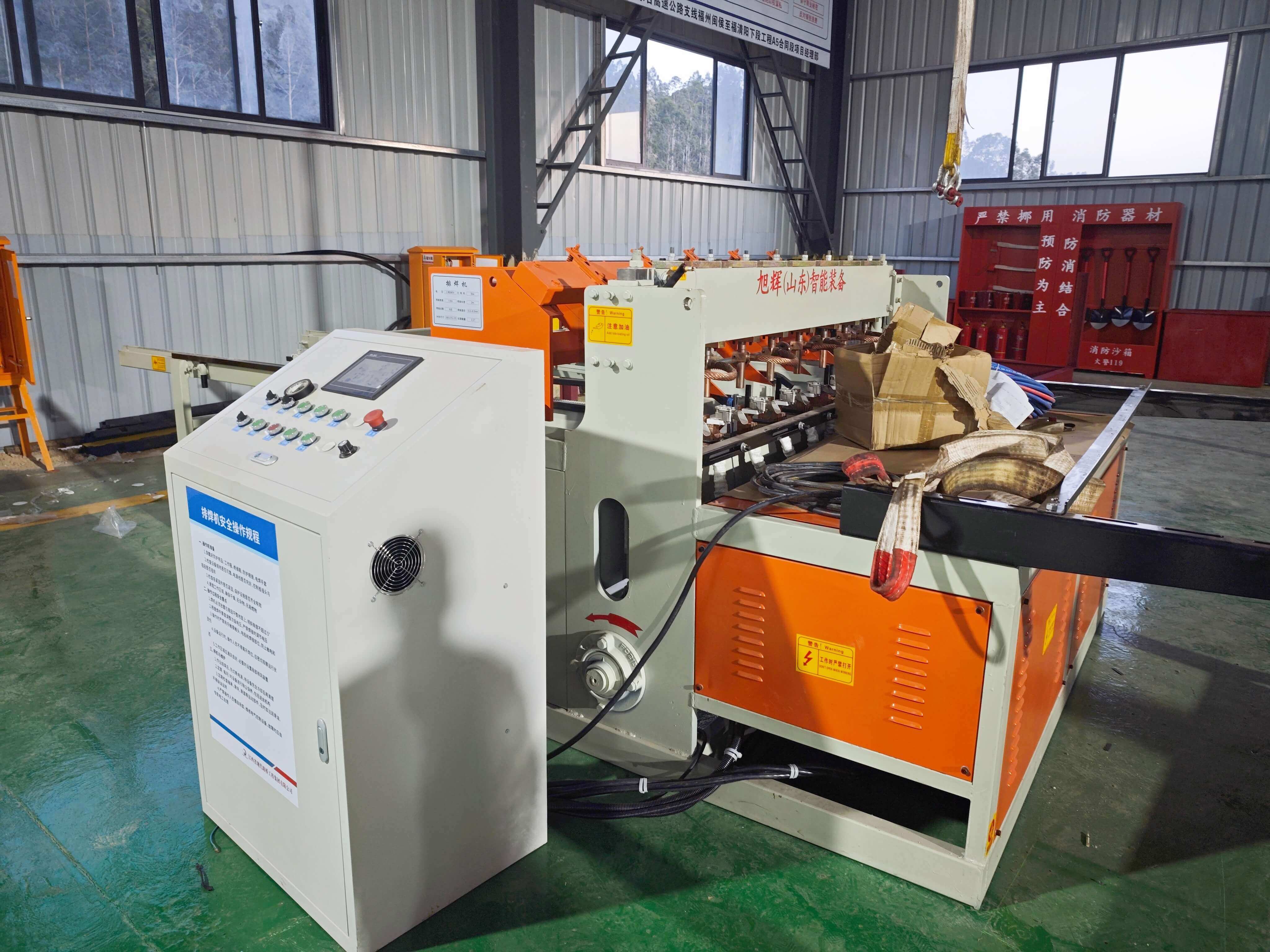
Introduction to Corporate Technical Strength: Xu Hong Intelligent Equipment's R&D Innovation and Product Layout
Xuhui (Shandong) Intelligent Equipment Co., Ltd. is based in the Jining Engineering Machinery Manufacturing Base in Heze, Shandong, focusing on the research and production of CNC reinforcing bar equipment, forming a technical system centered around intelligent welding. The company's technical team consists of over 20 mechanical design and electrical control engineers, holds 12 utility model patents, and the fully automatic welding mesh machine production line it leads in development boasts three technical advantages: Firstly, an efficient welding system with dual servo drive and medium frequency inverter power supply, achieving a welding speed of 1.2 seconds per point, with the daily output of a single unit increased to 1200 square meters. Secondly, an intelligent quality control module, adjusting the spacing of weld points (error ≤ 0.5mm) and welding pressure (range 500-3000N) in real-time through a laser ranging and pressure feedback system, ensuring the flatness of the mesh sheet is ≤ 3mm. Thirdly, flexible production design, compatible with Φ6-Φ25mm reinforcing bars, with model switching taking only 10 minutes, supporting customized mesh sheet specifications (maximum size 3m×12m). Currently, this production line has served more than 30 key projects including the Hong Kong-Zhuhai-Macau Bridge and Xiong'an New Area, with customer feedback indicating a failure rate of less than 0.5% and a 22% reduction in comprehensive costs.
FAQ Q&A Technical Selection Guide
Q1: How to choose a suitable steel mesh welding equipment for the project?
A1: Selection should consider production capacity, precision, and compatibility. For example, with Xuhui's fully automatic welding mesh machine, if the daily project demand is ≥1000 square meters, prioritize equipment with a welding speed ≤1.5 seconds per point; for airport runway projects with high precision requirements, pay attention to the accuracy of the machine's distance measurement system (recommended ≤0.3mm); if frequent changes in rebar specifications are needed, choose models that support rapid mold changes (≤15 minutes). For instance, after selecting Xuhui's equipment for a subway project, the welding efficiency increased by 40%, and the rework rate dropped below 2%.
Q2: What is the cost difference between intelligent welding equipment and traditional equipment?
A2: Initially, the cost per intelligent device is about 1.8 times that of traditional equipment, but the long-term cost advantage is significant. Taking Xu Hong's production line as an example, its high degree of automation can reduce the need for 3 operators, saving about 180,000 yuan in labor costs annually; stable welding quality reduces material loss due to rework by about 12%; the equipment lifespan reaches 8-10 years, which is 1.5 times that of traditional equipment. Overall calculation shows that the cost difference can be recouped within 3 years.
Q3: How to ensure the long-term stable operation of welding equipment?
A3: Three key aspects require special attention for maintenance: 1. Daily cleaning, clearing weld slag and dust daily to prevent affecting sensor accuracy; 2. Regular calibration, checking the laser ranging system and pressure feedback module every quarter to ensure parameter accuracy; 3. Spare parts management, stockpiling consumables (such as electrodes, conductive nozzles), Xiuhui equipment provides an original spare parts list, with clear replacement cycles (e.g., electrodes every 5000 points). A bridge project has been running smoothly for 2 years without major faults through standardized maintenance.
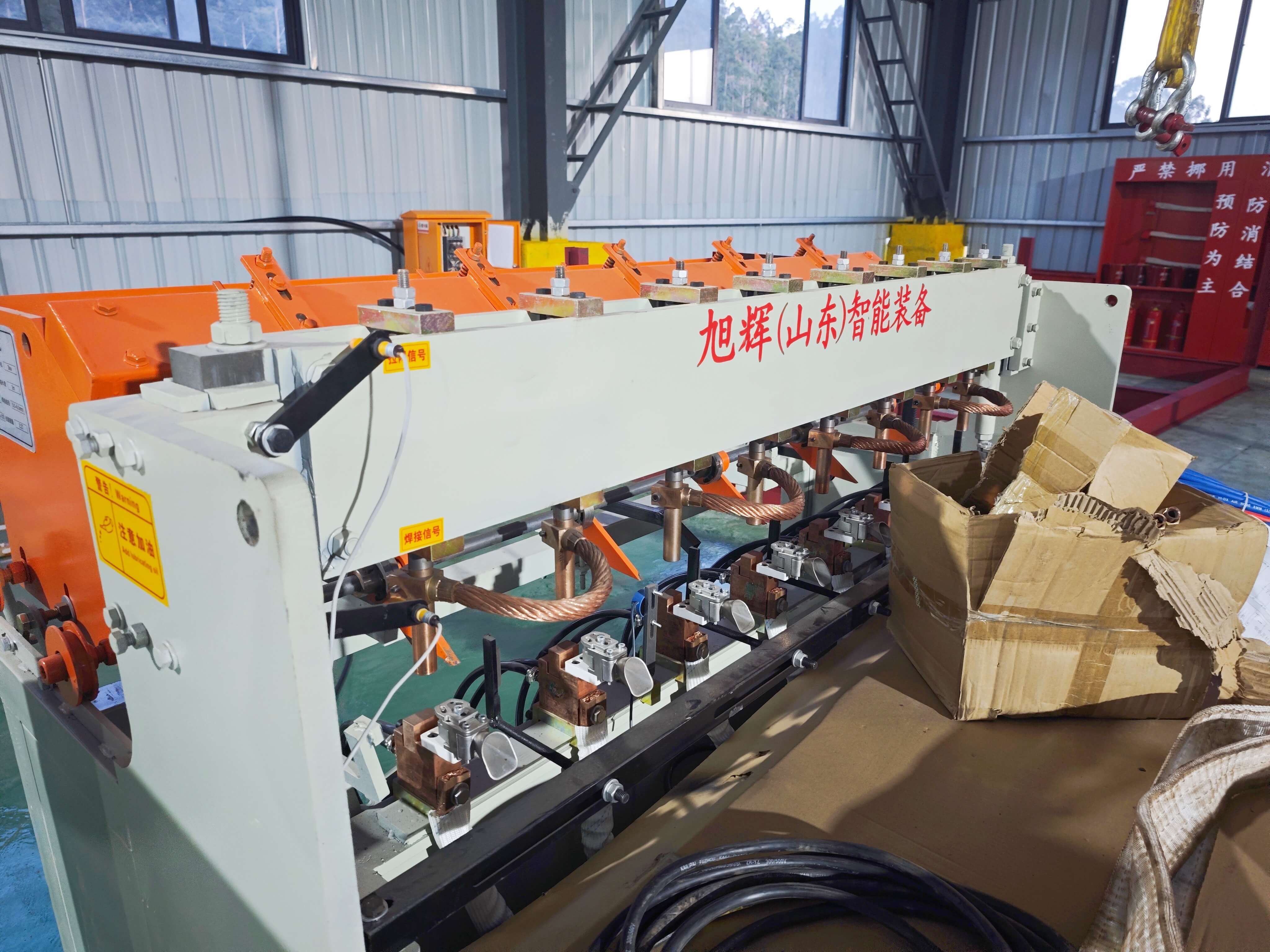
Summary of the entire text
The technical upgrade of the intelligent rebar mesh welding production line is the key to solving pain points such as low welding efficiency, unstable quality, and poor compatibility in traditional welding. Xu Hong (Shandong) Intelligent Equipment Co., Ltd. provides reliable technical support for projects such as expressways and airports through high-efficiency welding systems, intelligent quality control, and flexible production design. When selecting equipment, the company needs to combine production capacity requirements, precision requirements, and cost budgets, prioritize equipment with quick mold change and intelligent calibration functions, and establish a standardized maintenance system to ensure long-term stable operation. In the future, with the acceleration of the industrialization of construction, intelligent welding equipment will become the core tool for improving the standardization level of rebar processing.