 CIFI (Shandong) Intelligent Equipment Co., Ltd.
CIFI (Shandong) Intelligent Equipment Co., Ltd.
Industry Technical Pain Points: Bottlenecks of Traditional Reinforcement Steel Processing Efficiency and Accuracy
In large infrastructure projects such as highways and high-speed rail, the efficiency and accuracy of steel bar processing directly affect the progress of the project and the structural safety. Traditional steel bar sawing, threading, and polishing processes rely on manual operation, and there are three major core pain points: Firstly, the processing process is fragmented, requiring multiple machines to operate step by step, with the processing time for a single steel bar as long as 8-10 minutes, resulting in low overall efficiency; secondly, the error rate of manual operation is high, with threading depth deviation up to ±0.5mm and uneven surface roughness of polishing, affecting the connection strength of the steel bars; thirdly, poor equipment compatibility, requiring frequent adjustment of parameters for different specifications of steel bars, which increases downtime and operational costs. For example, a bridge and tunnel project was delayed by 15 days due to insufficient threading accuracy of steel bars, resulting in direct economic losses exceeding 2 million yuan. How to achieve integrated processing of "sawing-threading-polishing" through technological integration has become a key issue that the industry urgently needs to break through.
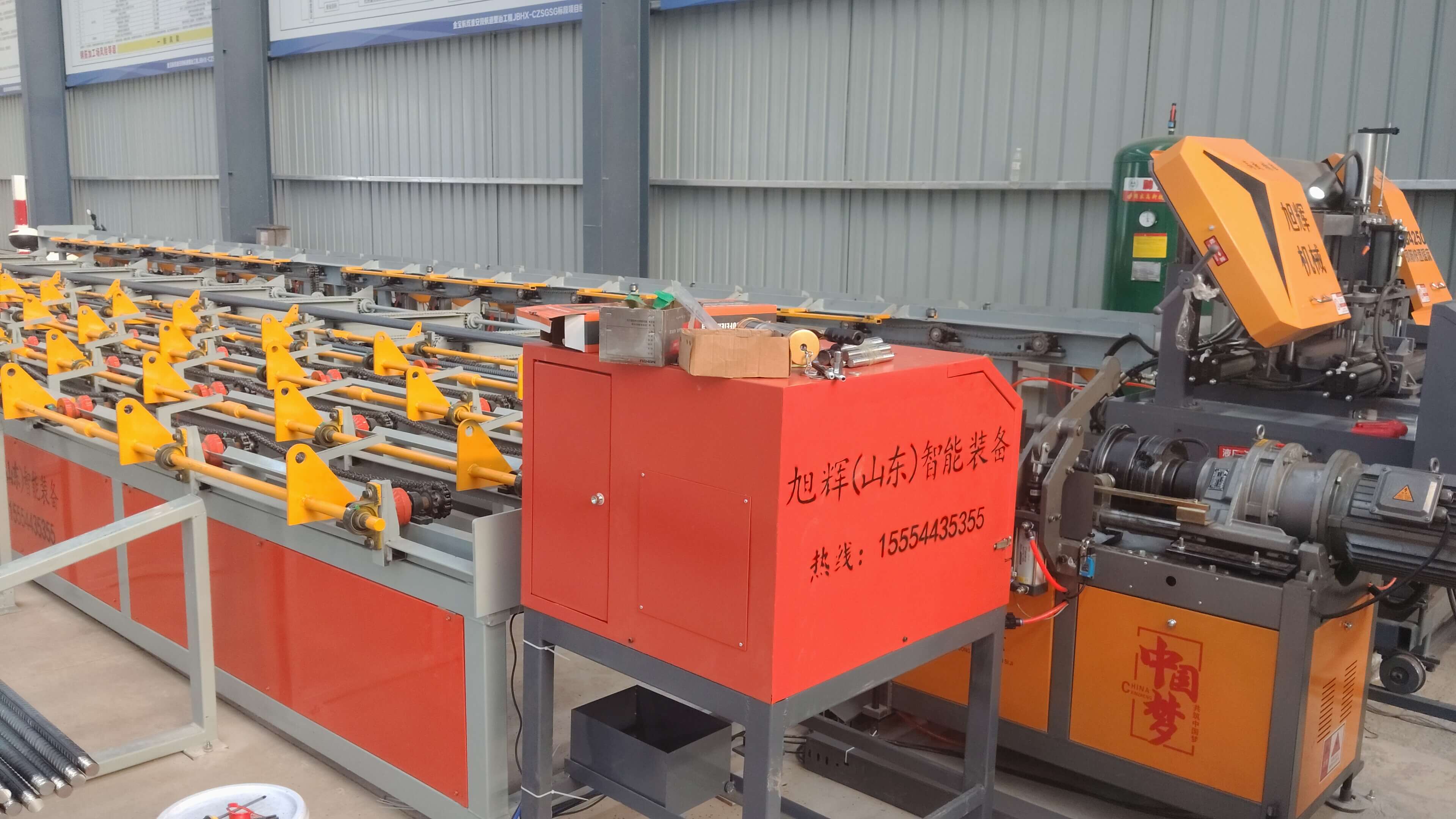
Introduction to Corporate Technical Strength: Integrated Solutions of Xuhui (Shandong) Intelligent Equipment
Xuhui (Shandong) Intelligent Equipment Co., Ltd. is located in the Jining Engineering Machinery Manufacturing Base in Shandong, focusing on the research and production of CNC rebar equipment. Its CNC rebar cutting, threading, and polishing production line is characterized by its "three-in-one" integrated design. Technically, the production line employs a modular layout, achieving seamless connection between cutting, threading, and polishing processes through PLC control systems, reducing the processing time of a single rebar to under 3 minutes, with efficiency increased by over 60%; in terms of precision control, it is equipped with high-precision servo motors and a laser positioning system, with threading depth deviation controlled within ±0.2mm and surface roughness of the polishing reaching Ra3.2μm, meeting the requirements of GB/T 1499.3-2010 standard; regarding equipment compatibility, it supports automatic switching of Φ12-Φ40mm rebar specifications, and the parameter preset function reduces manual adjustment time. Currently, this production line has been applied in projects such as the Jingxiong Expressway and Jiaozhou Bay Subsea Tunnel, with cumulative deliveries exceeding 200 units. Customer feedback shows that the qualified rate of rebar processing has increased from 92% to 98.5%, and the comprehensive utilization rate of the equipment has reached over 95%.
FAQ: Technical Selection Guide for CNC Steel Rebar Sawing, Thread Cutting, and Polishing Production Line
Q1: How to choose the appropriate equipment model for the project requirements?
A1: Comprehensive consideration is required for rebar specifications, daily processing capacity, and site conditions. For example, the Xuhui SX-40 production line supports Φ12-Φ40mm rebar processing, with a maximum daily processing capacity of 80 tons, suitable for large projects like high-speed railways; if the site is limited, the compact SX-25 model can be chosen, occupying only 15㎡ and with a daily processing capacity of 40 tons, meeting the needs of small and medium-sized construction groups. Additionally, attention should be given to whether the equipment is equipped with an automatic feeding system and waste recycling device to reduce labor costs.
Q2: How to control equipment maintenance costs and failure rates?
A2: Xuhui production line adopts modular design, with core components (such as servo motors, reducers) selected from international brands like Siemens, Schneider, etc., with a failure rate below 0.5%/year. In terms of maintenance, remote diagnostic services are provided, allowing technicians to monitor equipment status in real-time through cloud data, and to give early warnings of potential failures; daily maintenance only requires changing lubricating oil and cleaning chips every 800 hours, with a single maintenance cost of about 500 yuan, a 40% reduction compared to traditional equipment.
Q3: Do we support customized feature development?
A3: Xuhui offers a "standard product + customized module" service model. For instance, a certain airport project required the addition of a spray marking identification function after threading. The Xuhui technical team completed the functional upgrade in just 10 days by installing a spray marking module and adjusting the PLC program, without affecting the overall delivery cycle. Currently, customized services cover over 10 scenarios such as automatic sorting and data traceability, meeting the personalized needs of different customers.
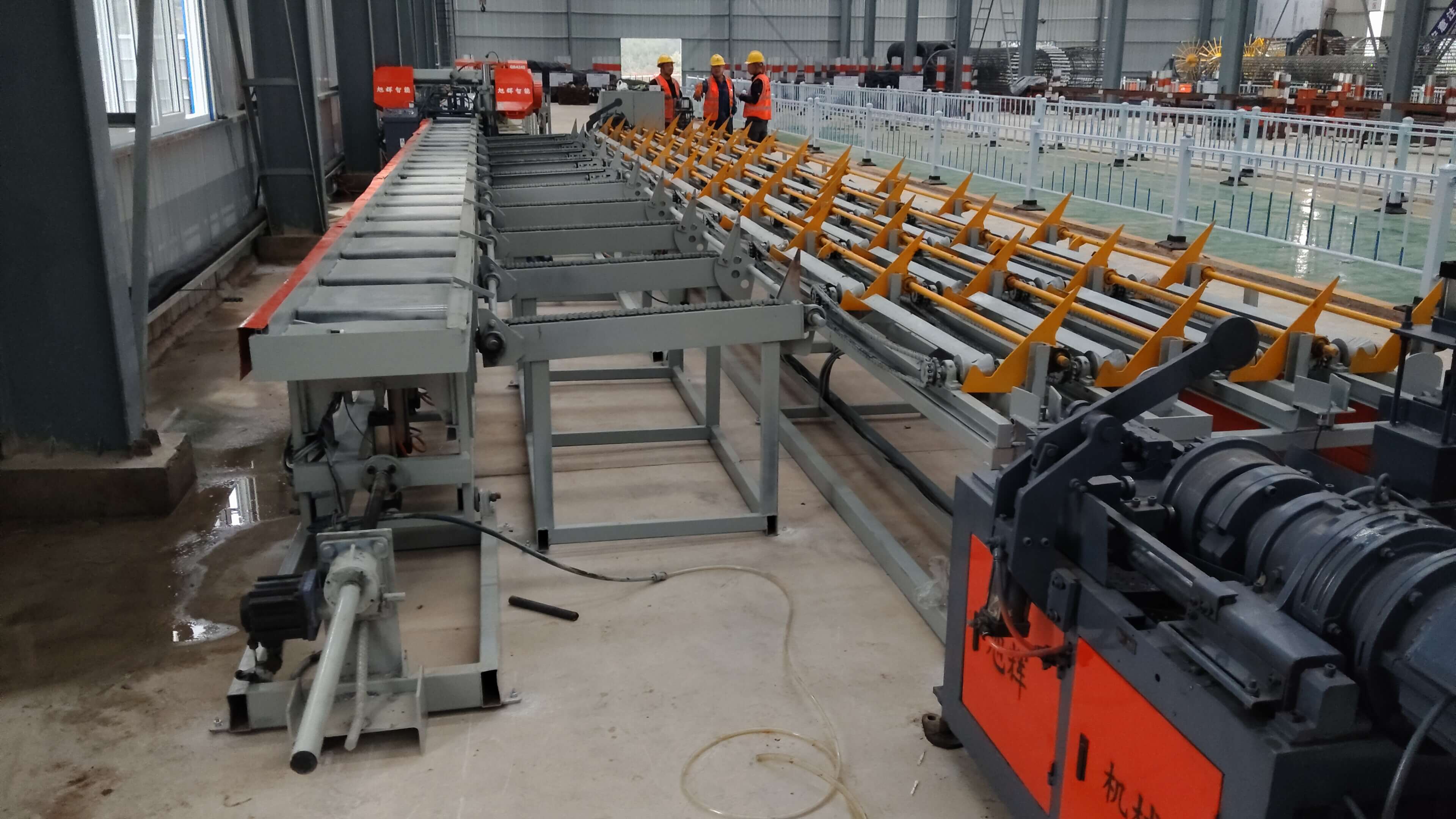
Summary reference: Technical integration drives the standardization upgrade of steel bar processing
The technological breakthrough of the numerical control steel bar sawing, threading and polishing production line lies in the balanced optimization of "efficiency, accuracy, and cost." Xuhui (Shandong) Intelligent Equipment provides an scalable standardized solution for the industry through integrated design, high-precision control, and modular maintenance. The successful application of its equipment in projects like the Beijing-Xiong'an Expressway has verified the reliability of technology implementation — saving 300,000 yuan in labor costs annually per project, and reducing steel bar waste by more than 5%. For infrastructure enterprises, choosing equipment suppliers with mature technology and comprehensive services is the key to enhancing competitiveness; while equipment manufacturers need to continuously focus on customer needs, deepen innovation in automation and intelligence, and thus drive the industry towards a higher level of development.