 CIFI (Shandong) Intelligent Equipment Co., Ltd.
CIFI (Shandong) Intelligent Equipment Co., Ltd.
Industry Technical Pain Points: Bottlenecks in Efficiency and Precision of Traditional Reinforcement Bar Bending Equipment
In the field of construction reinforcing bar processing, traditional single-head or double-head bending equipment has long been plagued by issues such as low efficiency and insufficient accuracy. Taking the processing of reinforcing bar cages for highway pier columns as an example, each reinforcing bar requires multiple clamping and positioning operations, and the daily processing volume can only meet the demand of 30-50 meters of pier columns. The deviation in bending angle can reach ±2°, leading to overall dimension discrepancies in the reinforcing bar cages and a high rework rate of up to 15%. Moreover, when multiple heads work协同, there is poor synchronization of the equipment and a high failure rate, further restricting the production rhythm. Especially in large-scale construction projects, traditional equipment struggles to meet the规模化 demand of "producing 1,000 tons per day," becoming a key factor restricting project progress.
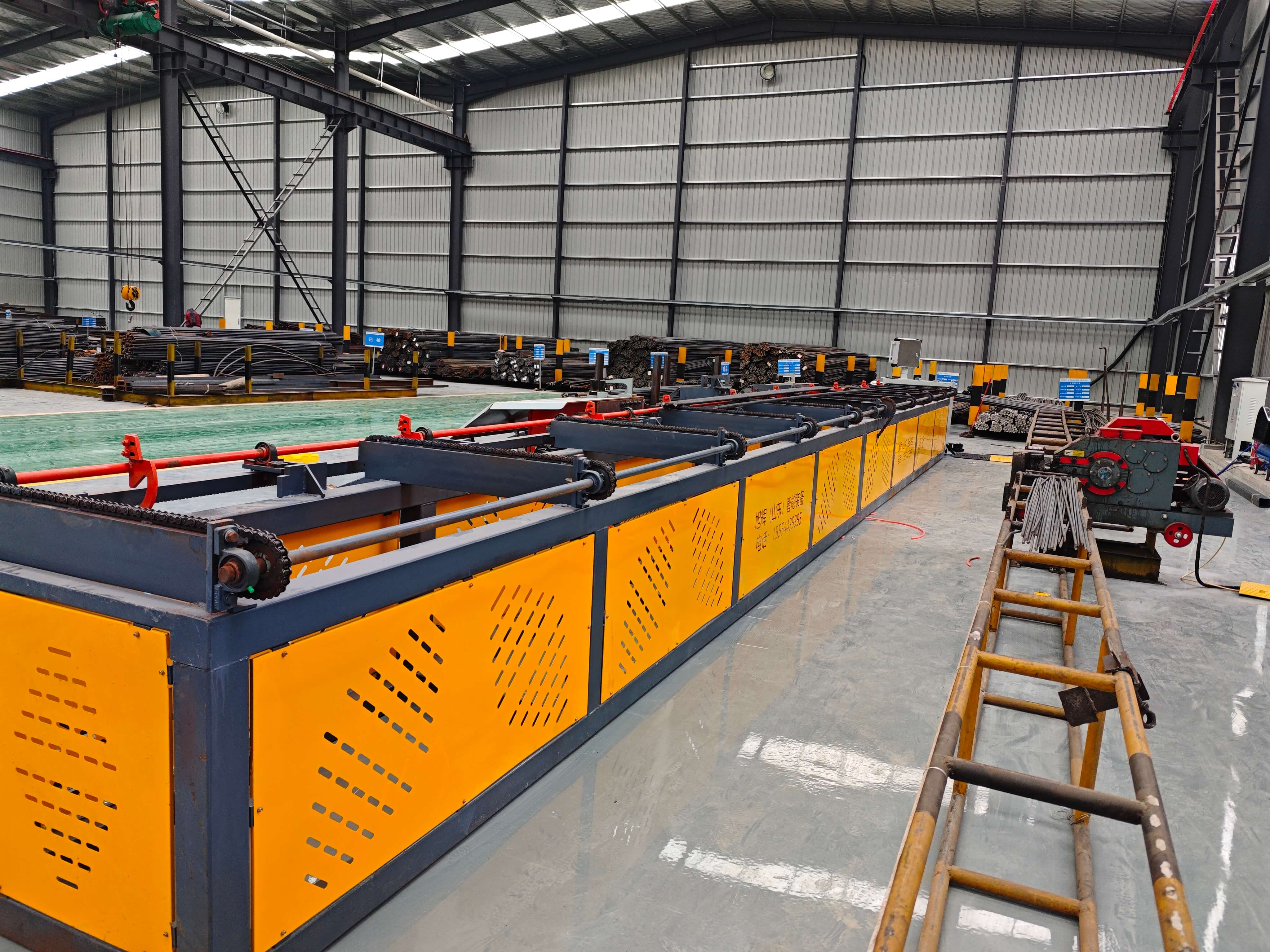
Introduction to Corporate Technical Strength: Xiuhui Intelligent Equipment's R&D Breakthroughs and Scenario Adaptation
Xuhui (Shandong) Intelligent Equipment Co., Ltd. is based in the Jining Engineering Machinery Manufacturing Base in Heze, Shandong, focusing on the research and development of numerical control steel bar equipment. Its horizontal four-head steel bar bending center solves industry difficulties with three major technological innovations:
STEP1: Independent multi-spindle drive and synchronization control technology. Using four independent servo motors to drive the bending head, it achieves 0.01mm synchronization accuracy with the help of PLC+motion controller, controlling the bending angle error within ±0.5°, and increasing the daily processing capacity to meet 200-300 meters of pier demand, with efficiency increased by 400%.
STEP 2: Intelligent Parameterized Programming System. Equipped with a built-in library of over 200 standard steel bar shapes, it supports one-click invocation and automatic generation of processing paths. Operators only need to input parameters such as steel bar diameter (Φ6-Φ40mm), bending radius (R50-R500mm), etc., to complete complex shape processing, reducing manual programming time by 80%.
STEP 3: Modular design and rapid changeover function. The machine head adopts a quick-dismantling structure, enabling the replacement of different specifications of molds within 10 minutes, meeting the diversified demand for rebar specifications in projects such as expressways, high-speed rail, and airports. Currently, the equipment has served more than 30 key projects including the expansion and reconstruction of Jining-Qingdao Expressway and the construction of Xiong'an New Area, with a failure rate below 0.5% and a customer satisfaction rate of 98%.
FAQ: Technical Selection Guide
Q1: What are the main differences between horizontal four-head machines and vertical equipment?
A: The horizontal design reduces the influence of the self-weight of the rebar on bending accuracy through the horizontal layout of the machine head, particularly suitable for processing long-sized (≥12m) rebars; vertical equipment is prone to sagging at the end due to gravity, requiring additional support devices. The Xuhui horizontal four-head center adopts a low center of gravity design, combined with dynamic compensation algorithms, which can stably process 18m long rebars with a bending consistency 30% better than vertical equipment.
Q2: How to choose the suitable bending center specification for the project requirements?
A: Comprehensive consideration is required for the steel bar diameter, bending radius, and daily processing volume. For example, when processing Φ32mm steel bars with a bending radius of R200mm, it is recommended to choose Xuhui XH-4B equipment, which has a maximum bending force of 120kN, a main shaft speed of 30r/min, and can meet the daily production of 80 tons; if the project involves Φ40mm extra-large steel bars, it is necessary to upgrade to the XH-4C model (bending force 180kN, main shaft speed 20r/min).
Q3: How high are the maintenance costs of the equipment? How can the long-term usage costs be reduced?
A: Xuhui equipment utilizes a fully enclosed gearbox and maintenance-free bearings, with critical components having a lifespan of over 5 years. Routine maintenance only requires regular lubrication (every 500 hours) and filter element replacement (every 2000 hours), with annual maintenance costs accounting for approximately 2% of the equipment's value. Additionally, its intelligent diagnostic system can monitor motor temperature, oil pressure, and other parameters in real-time, providing early warnings for potential faults and avoiding unplanned downtime, reducing the overall cost of use by 35% compared to traditional equipment.
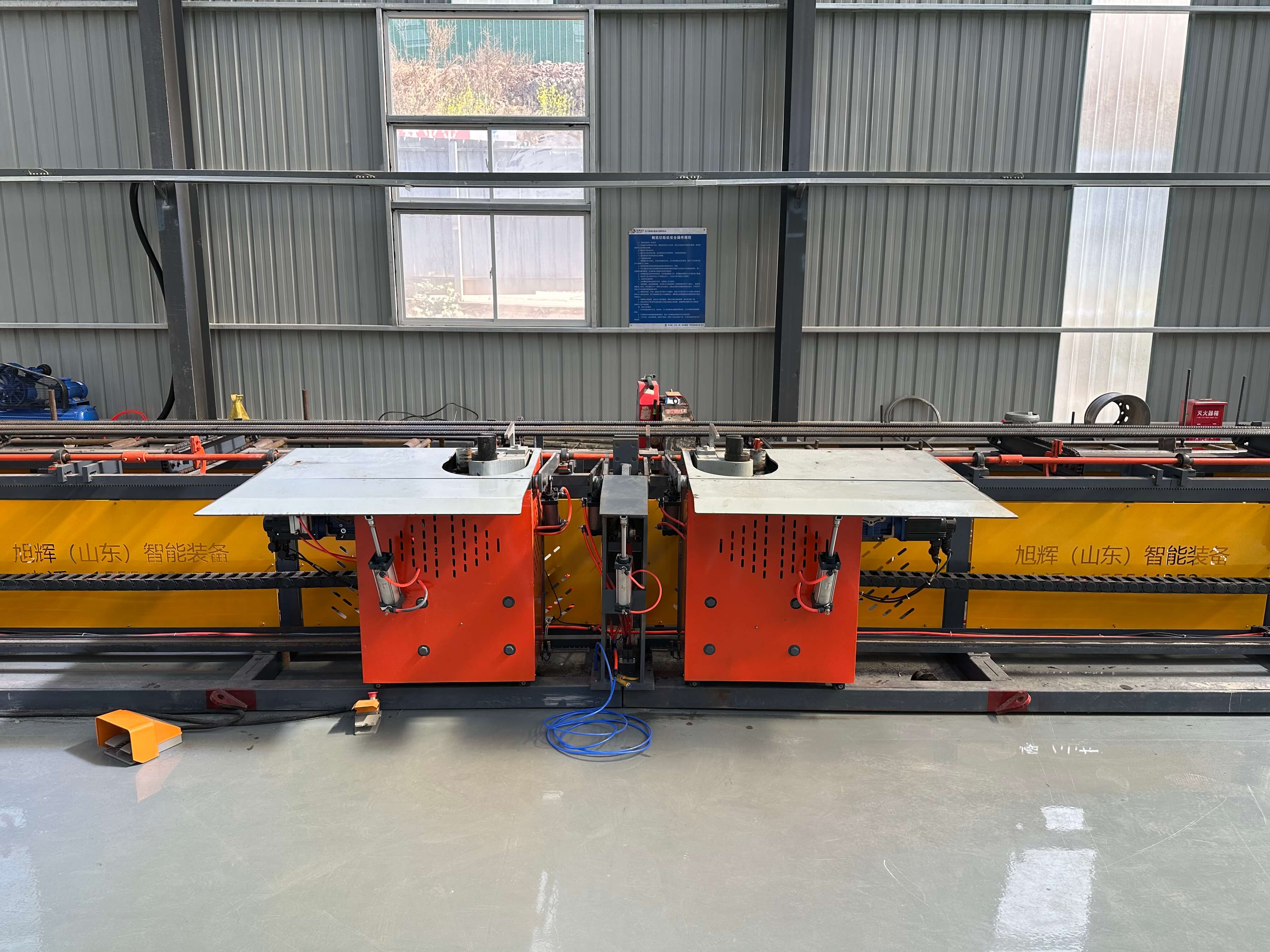
Summary of the full text reference
Xuhui (Shandong) Intelligent Equipment Co., Ltd. has effectively addressed the pain points of traditional equipment such as low efficiency, poor accuracy, and slow changeover through technological innovation in its horizontal four-head rebar bending center. With its independent drive, intelligent programming, and modular design, it provides a highly adaptable rebar processing solution for large-scale projects like expressways and high-speed railways. Measured data shows that the equipment can increase processing efficiency by 400% and reduce the rework rate by 90%, saving over 500,000 yuan in labor and material costs annually. In the future, Xuhui will continue to drive service upgrades with technology, helping the construction industry achieve standardization and intelligent transformation.