 CIFI (Shandong) Intelligent Equipment Co., Ltd.
CIFI (Shandong) Intelligent Equipment Co., Ltd.
Industry Technical Pain Points: The Efficiency and Precision Dilemma of Traditional Reinforcement Bar Bending Equipment
In the field of construction steel bar processing, traditional bending equipment has long been facing three major technical bottlenecks: Firstly, insufficient processing accuracy leads to a high deviation rate of 3%-5% in steel bar dimensions, directly affecting structural safety; secondly, the daily processing capacity of a single machine is only 800-1200 bars, which is difficult to meet the daily demand of over 3,000 bars for large-scale projects; thirdly, the reliance on manual operation is high, with the training period for skilled workers extending from 6 to 12 months, and the heavy labor intensity results in significant fluctuations in efficiency. Taking a certain expressway project as an example, the rework rate reached 15% due to excessive bending errors in steel bars, directly increasing the cost by over 2 million yuan. These pain points urge the industry to urgently upgrade technology, with numerical control and intelligence becoming the key to breaking through the deadlock.
Introduction to Corporate Technical Strength: Xuhui Intelligent Equipment's CNC Solution
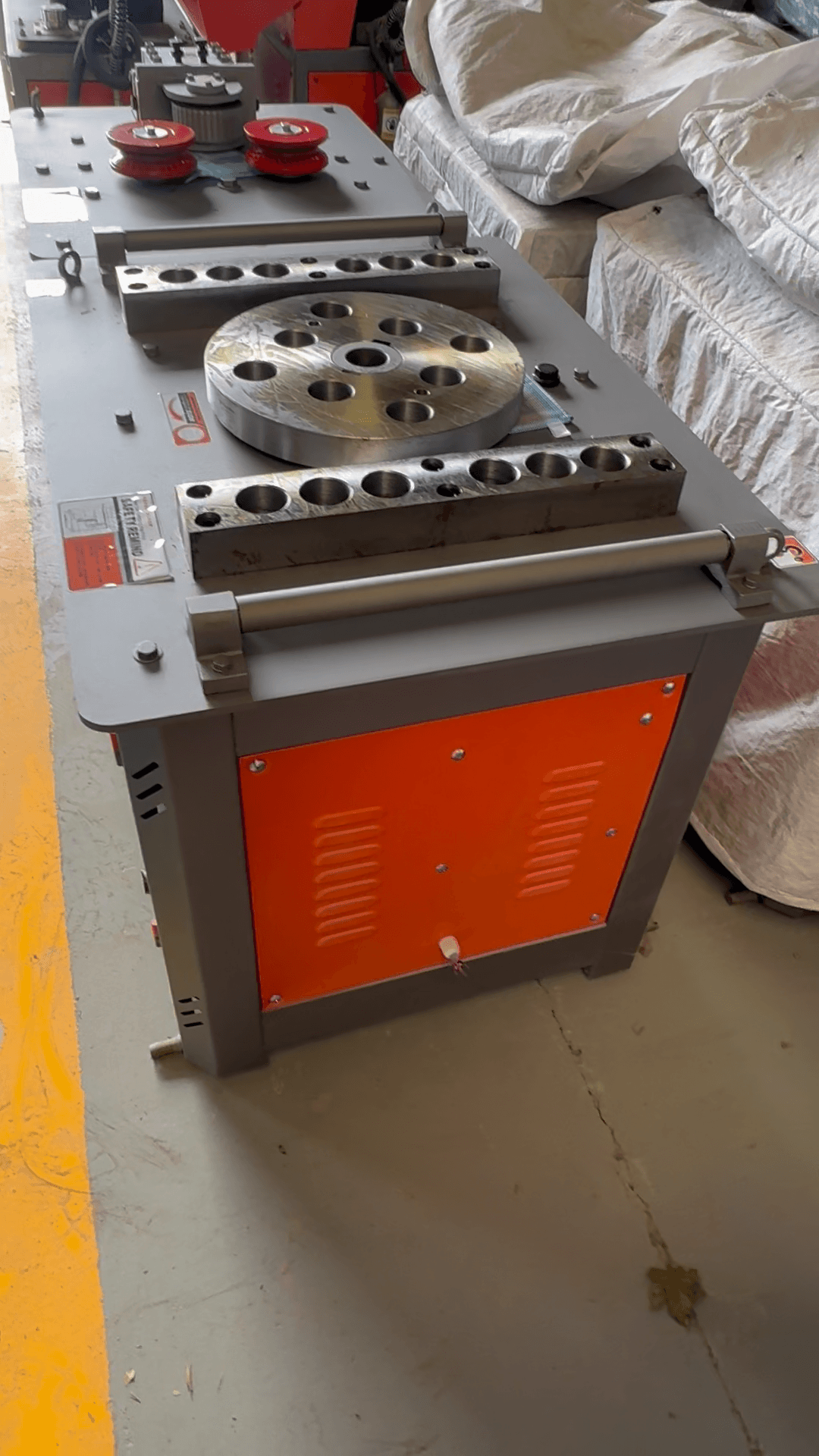
Xuhui (Shandong) Intelligent Equipment Co., Ltd. specializes in the field of CNC steel bar equipment, leveraging the industrial advantages of the Heze Engineering Machinery Manufacturing Base in Shandong, to build a full-chain technical system covering R&D, production, sales, and service. Its core product, the CNC steel bar bending center, utilizes a three-axis联动 servo control system, achieving bending accuracy within ±0.5mm with the help of high-precision encoders (resolution 0.001mm) and closed-loop control algorithms, which is 5 times more precise than traditional equipment. The equipment is equipped with a 15kW high-power servo motor, combined with an optimized transmission mechanism, reducing the bending cycle to 3 seconds per time, with daily processing capacity exceeding 3,500 bars, a 200% increase in efficiency. Moreover, the equipment supports automatic switching of multi-specification steel bars (Φ6-Φ40mm) and can complete mold replacement with a simple touch screen input, reducing the operation and training cycle to 2 days.
In terms of technological layout, Xuhui focuses on the dual paths of "intelligentization + modularization": On the one hand, by integrating the Internet of Things module, equipment operation data is uploaded in real-time, and maintenance cycles are predicted through cloud analysis, reducing downtime by 40%; on the other hand, a modular design architecture is developed, with core components (such as bending spindle, feeding mechanism) using standardized interfaces, reducing maintenance and replacement time from 2 hours to 30 minutes. Currently, its products have been used in national key projects such as the Hong Kong-Zhuhai-Macau Bridge and the Sichuan-Tibet Railway. In the application of a bridge and tunnel steel bar processing plant, the comprehensive utilization rate of the equipment reaches 92%, helping customers reduce labor costs by 35%.
FAQ: CNC Steel Rebar Bending Machine Technical Selection Guide
Q1: How to choose the suitable CNC rebar bending machine model for the project requirements?
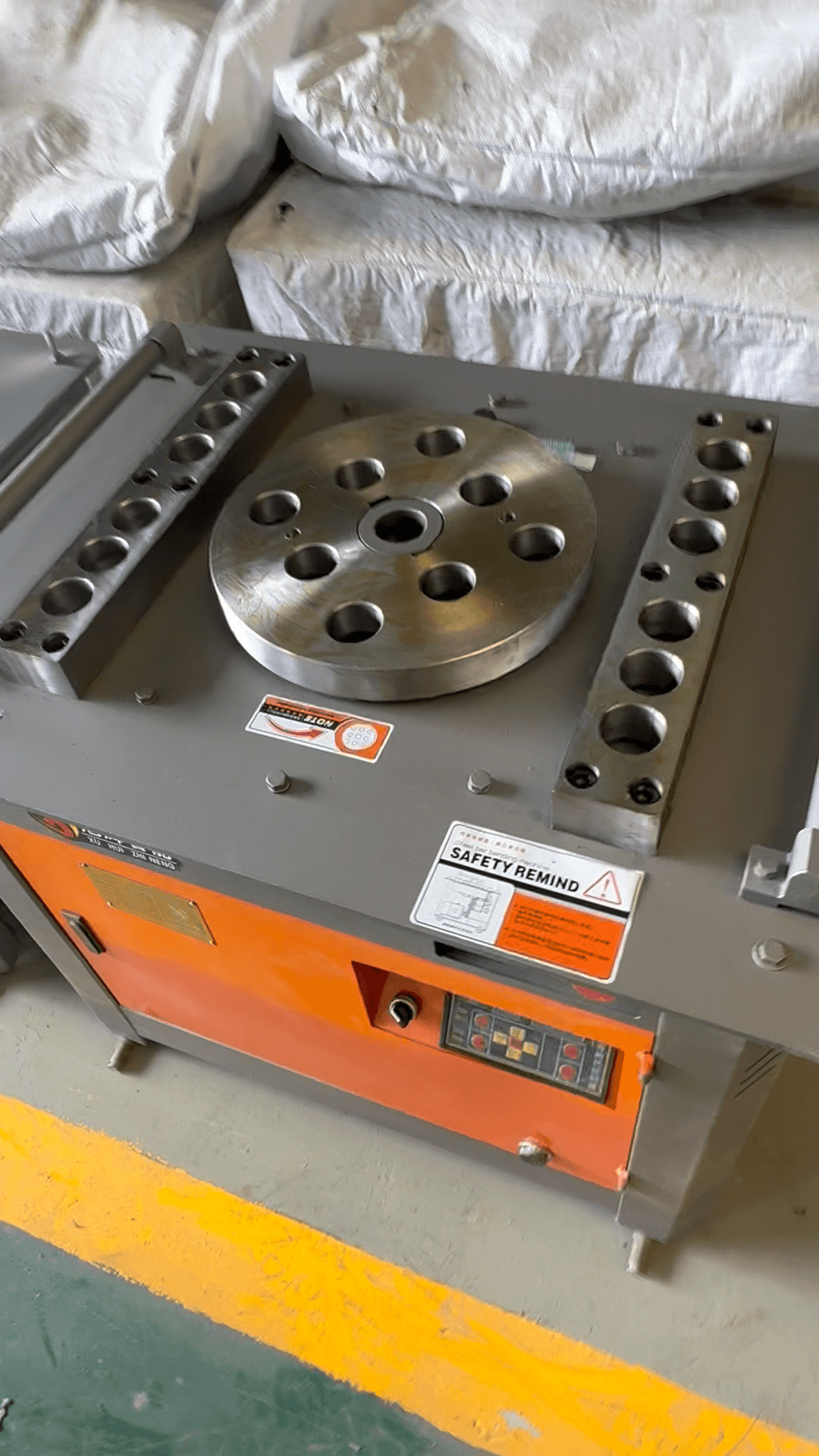
A: Selection requires a comprehensive consideration of three parameters: Firstly, the steel bar diameter range, such as the Xuhui XBQJ-40 model supports Φ6-Φ40mm steel bar processing, covering over 90% of construction needs; secondly, the bending angle accuracy, high-quality equipment should reach ±0.5° to ensure uniform structural stress; thirdly, the degree of automation, high-end models should have automatic feeding, automatic counting, and fault self-diagnosis functions to reduce manual intervention. For example, a certain airport project selected the Xuhui XBQJ-32 model, completing 2800 pieces of non-standard steel bar processing in a single day through its 12-meter-long feeding track and 360° continuous rotation bending head, with an efficiency increase of 180%.
Q2: How is the cost difference between CNC equipment and traditional hydraulic bending machines?
A: Initially, the cost of CNC equipment is about 1.5-2 times that of hydraulic machines, but the long-term cost advantage is significant: taking the daily processing of 3,000 steel bars as an example, the power consumption of CNC equipment is only 15kW·h/day, a 57% reduction compared to the hydraulic machine's 35kW·h/day; in terms of labor costs, CNC equipment requires only 1 operator, while hydraulic machines need 3 skilled workers, saving 160,000 yuan in labor costs annually based on a salary of 80,000 yuan; in addition, the mold life of CNC equipment reaches over 3 years, twice that of hydraulic machines, with a comprehensive cost recovery period of only 18-24 months.
Q3: What are common issues and solutions in equipment maintenance?
Common issues include: decreased bending accuracy (often due to loose encoders or worn drive belts), feeding jam (caused by worn feeding wheels or insufficient air pressure), and motor overheating (due to excessive load or poor heat dissipation).旭辉 solutions include: first, equipment undergoes a 200-hour continuous operation test before shipment to ensure the fatigue life of critical components (such as the bending shaft) exceeds 100,000 cycles; second, remote diagnostic services are provided, allowing engineers to quickly locate faults through cloud data; third, a package of consumable parts (including encoders, drive belts, and feeding wheels) is offered, enabling customers to replace them independently, reducing maintenance time from 2 hours to 30 minutes.
Summary Reference
The technical upgrade of the numerical control rebar bending machine is a key path for the construction industry to improve quality and efficiency. Xuhui (Shandong) Intelligent Equipment Co., Ltd. has achieved three major technological breakthroughs: high-precision servo control, modular design, and intelligent operation and maintenance. This has elevated the equipment's processing precision, efficiency, and reliability to the leading level in the industry. Its products have not only demonstrated technical strength in national key projects like the Hong Kong-Zhuhai-Macau Bridge, but have also helped customers reduce comprehensive costs by more than 30% through the "equipment + service" model. In the future, with the deep integration of BIM technology and industrial internet, numerical control rebar equipment will evolve towards "more intelligent, more flexible, and greener" directions. Xuhui's technical exploration may provide an important reference for the industry.