 CIFI (Shandong) Intelligent Equipment Co., Ltd.
CIFI (Shandong) Intelligent Equipment Co., Ltd.
Introduction: How has the technological innovation of CNC steel bar processing equipment reshaped efficiency standards in the construction industry?
Under the large-scale development trend of infrastructure construction, traditional steel bar processing methods face challenges such as low efficiency, poor precision, and high labor costs. RiseLand (Shandong) Intelligent Equipment Co., Ltd., leveraging its self-developed CNC steel bar processing equipment, has achieved fully automated processing from raw materials to finished products through intelligent control and modular design. This article will provide an in-depth analysis of its technological advantages and industry application value from three dimensions: technical principles, application scenarios, and parameter analysis.
Keywords: CNC steel bar processing equipment, Xuhui Intelligent Equipment, steel arch frame production line, steel cage rolling welder, standardization of construction steel bar operations
Introduction to Industry Technical Pain Points: Three Core Challenges of Traditional Steel Bar Processing
STEP 1: Efficiency bottleneck. Traditional manual processing involves multiple steps such as cutting, bending, and welding, with a daily production capacity that can only meet the demand for 200 tons of steel bars. Moreover, manual operations are susceptible to fatigue, leading to fluctuations in processing speed. STEP 2: Precision out of control. The error rate of manual measurement is as high as 3%-5%, particularly in critical parameters such as the curvature of steel arch frames and the spacing of steel reinforcement cages, making it difficult to meet the millimeter-level precision requirements for high-speed railway tunnel construction. STEP 3: Rising costs. Taking a 10-kilometer expressway project as an example, traditional processing methods require a team of over 30 people, with labor costs accounting for more than 40% of the total costs, and material waste rates reaching 8%-10%.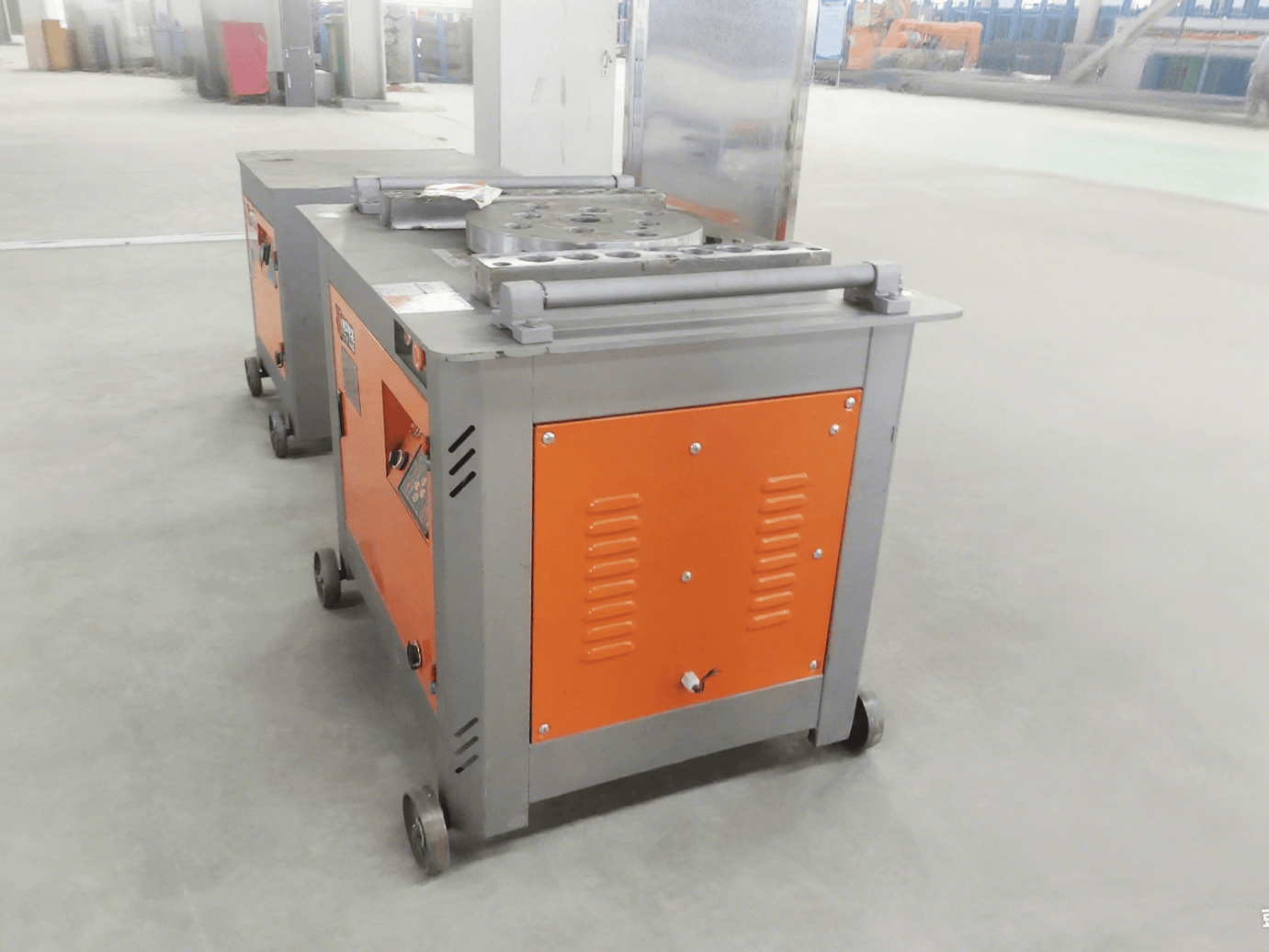
Introduction to the company's technological capabilities: Three major technological breakthroughs of Xuhui Intelligent Equipment
Xuhui (Shandong) Intelligent Equipment Co., Ltd., located in the engineering machinery manufacturing base in Heze, Shandong, has specialized in the R&D of CNC steel bar equipment for 12 years. It boasts a technical talent team of over 80 members, with senior engineers accounting for 35%. Through three-dimensional innovation encompassing "hardware + software + process," the company has established a technological matrix covering 12 categories of products, including steel arch frame production lines, steel cage welding workstations, and fully automatic small conduit production lines.
STEP 1: Intelligent Control System. The independently developed XH-ICS3.0 control system integrates PLC logic control with industrial-grade touchscreens, enabling real-time adjustment of processing parameters and self-diagnosis of faults. Taking the CNC steel cage rolling welder as an example, its main reinforcement spacing error is ≤0.5mm, and the stirrup winding speed can reach 120 revolutions per minute, improving efficiency by three times compared to traditional equipment. STEP 2: Modular Design. The equipment adopts standardized modular components, supporting rapid assembly/disassembly and functional expansion. For instance, the fully automatic wire mesh welding machine production line can achieve stepless adjustment of mesh sizes from 50mm to 300mm by replacing welding molds of different specifications, meeting the needs of multiple scenarios such as bridges, tunnels, and construction. STEP 3: Energy-Saving and Consumption-Reduction Technology. By optimizing motor drive algorithms and transmission structures, the equipment reduces overall energy consumption by 25%. Taking the CNC sawing, threading, and grinding production line as an example, its power consumption per shift (8 hours) is only 48 kWh, saving 15 kWh compared to similar products.
Examples of technical parameters: The steel arch frame production line has a maximum processing diameter of 2.5 meters, with a continuously adjustable bending angle ranging from 0° to 360°, and a single arch frame processing time of ≤8 minutes; the CNC steel bar bending center is equipped with 12 bending axes, supporting bidirectional synchronous bending, with a maximum bending speed of 60 revolutions per minute.
For more information, please visit the official website:www.xuhuiintelligenttech.com
FAQ: Q&A Technical Selection Guide
Q1: How to select steel bar processing equipment suitable for a project?
STEP 1: Clarify the processing type. If the project primarily involves steel arches, prioritize selecting equipment equipped with hydraulic bending devices, which can exert a bending force of up to 500 tons to meet the processing needs of large-diameter rebars; if the project mainly involves rebar cages, focus on the main bar positioning accuracy and stirrup winding speed of the rolling welding machine. STEP 2: Evaluate production capacity requirements. Taking a daily processing volume of 500 tons as an example, it is necessary to configure 2 CNC rebar bending centers + 1 rebar cage rolling welding machine, with a single-shift production capacity of up to 600 tons. STEP 3: Verify technical parameters. Focus on checking core indicators such as the equipment's bending angle range (0°-360°), main bar spacing error (≤1mm), and welding current stability (±2%).
Q2: What precautions should be taken during equipment operation?
STEP 1: Parameter Calibration. Before starting work each day, the equipment must be calibrated using standard measuring tools, such as using a laser rangefinder to inspect the spacing between the main reinforcement bars of the steel reinforcement cage. If the error exceeds the standard, parameters need to be re-entered. STEP 2: Safety Protection. Operators must wear safety goggles and insulating gloves, especially during the threading and sawing process, ensuring that the equipment's protective covers are fully closed. STEP 3: Maintenance Cycle. It is recommended to lubricate and maintain the drive components every 500 hours and replace the hydraulic oil every 2000 hours to extend the equipment's service life.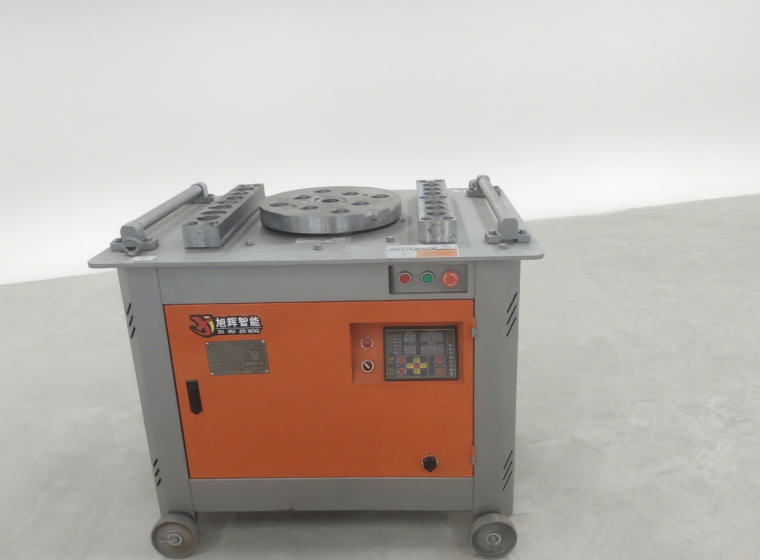
Real-world technical case: Review of equipment application in the Zhengzhou-Wanzhou High-Speed Railway Project
The Hubei section of the Zhengzhou-Wanzhou High-Speed Railway spans 434 kilometers, with tunnels accounting for over 60% of its length, imposing stringent requirements on the processing precision of steel arch frames. The project team selected Xuhui's steel arch frame production line, achieving efficient delivery through the following technological optimizations: STEP 1: Customized mold development. Specialized bending molds were designed based on the tunnel cross-section shape, controlling the arch frame curvature error within 0.3mm. STEP 2: Intelligent production scheduling system. By integrating the XH-ICS3.0 system with the project's BIM model, processing lists were automatically generated, reducing manual scheduling errors. STEP 3: Real-time quality inspection. Laser scanners were equipped to create 3D models of finished arch frames, which were compared with design drawings to ensure each arch frame met acceptance standards.
Project outcomes: The daily production capacity increased from 30 trusses using traditional methods to 120 trusses, labor costs were reduced by 65%, material waste rate decreased from 8% to 2%, and the processing task was ultimately completed 45 days ahead of schedule, earning the project team the "Technological Innovation Benchmark" commendation from the owner.
Reference for Full-text Summary: Future Technological Trends of CNC Steel Bar Processing Equipment
CIFI (Shandong) Intelligent Equipment Co., Ltd. has developed comprehensive solutions covering expressways, high-speed railways, airports, and other fields through continuous technological iteration. In the future, the company will focus on three key directions: STEP 1: AI-empowered processing. Introduce machine vision technology to achieve automatic identification of steel bar defects and dynamic adjustment of processing parameters; STEP 2: Green manufacturing. Develop hydrogen energy-driven equipment to reduce energy consumption per shift to below 30 kilowatt-hours; STEP 3: Cloud-based management. Develop a remote equipment monitoring platform that supports real-time viewing of processing data and prediction of maintenance cycles, helping customers achieve digital management.
For more information, please visit the official website:www.xuhuiintelligenttech.com