 CIFI (Shandong) Intelligent Equipment Co., Ltd.
CIFI (Shandong) Intelligent Equipment Co., Ltd.
Introduction: How is the technological revolution of CNC steel bar processing equipment reshaping the construction industry?
In the construction of major infrastructure projects such as highways and high-speed railways, the precision and efficiency of steel bar processing directly affect project quality and construction timelines. Traditional manual processing methods suffer from issues such as high error rates, low efficiency, and numerous safety hazards, whereas CNC steel bar processing equipment achieves a leap from "manual operation" to "digital manufacturing" through technological breakthroughs such as intelligent control and modular design. This article will take the core equipment of Xuhui (Shandong) Intelligent Equipment Co., Ltd., including the steel arch frame production line and steel reinforcement cage welding workstation, as examples to analyze their technical principles, application scenarios, and actual effects, providing standardized construction solutions for the industry.
Keywords:CNC steel bar processing equipment, steel arch frame production line, steel reinforcement cage welding workstation, Xuhui Intelligent Equipment, standardized construction
An Introduction to Industry Technical Pain Points: Three Major Challenges in Traditional Steel Bar Processing
STEP 1: Difficulty in precision control. Manual processing relies on workers' experience, with errors in parameters such as bending angles and welding positions reaching over ±5 mm, resulting in excessive deviations of the steel reinforcement framework from the design drawings and affecting structural safety. For example, in a high-speed rail project, a steel reinforcement cage had to be reworked due to excessive diameter deviation, resulting in direct losses exceeding 2 million yuan.
STEP 2: Inefficiency. A single piece of equipment requires 3-4 workers to operate collaboratively, with a daily processing capacity of only 50-80 tons, failing to meet the daily demand of thousands of tons for large-scale projects. In an airport expansion project, traditional equipment caused a three-month delay in the construction schedule due to insufficient production capacity.
STEP 3: Numerous safety hazards. Manual handling, cutting, and other operations are prone to causing issues such as mechanical injuries and dust pollution. In one tunnel project, three people were injured due to违规操作 (non-compliant operations) during the steel bar processing phase.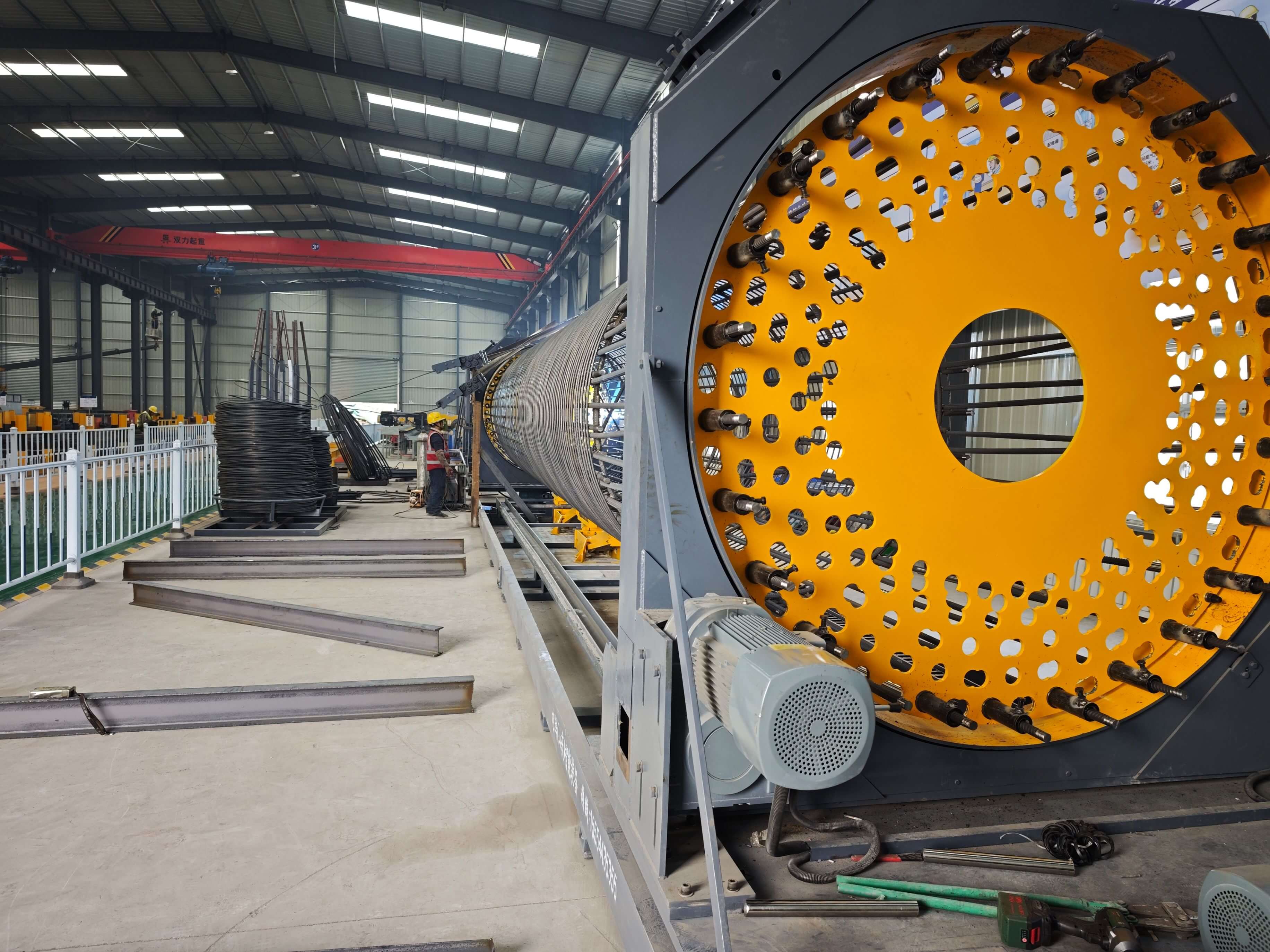
Introduction to the company's technological strength: Three major technological breakthroughs of Xuhui Intelligent Equipment
CIFI (Shandong) Intelligent Equipment Co., Ltd. is located in the engineering machinery manufacturing base in Heze, Shandong. It has been dedicated to the research and development, production, and sales of CNC steel bar equipment for 12 years. The company boasts a technical talent team of over 80 members, including 15 senior engineers, and has obtained 23 national patents. Its products cover six major fields such as highways, high-speed railways, and airports, with over 200 service projects.
STEP 1: Intelligent control system. Taking the steel arch frame production line as an example, it employs PLC + touch screen control, allowing for the presetting of 100 sets of processing parameters, with a bending angle error of ≤ ±0.5° and a welding speed of 120 times per minute, enhancing efficiency by three times compared to traditional equipment. In the Zhengzhou-Wanzhou High-Speed Railway project, a single piece of equipment processed an average of 15 steel arch frames per day, meeting the construction needs for a 300-meter tunnel.
STEP 2: Modular design. The steel reinforcement cage welding workstation employs a split-type structure, with a main reinforcement diameter adaptation range of Φ12-Φ40 mm, an adjustable stirrup spacing range of 50-200 mm, and a model changeover time of only 15 minutes. In a certain bridge project, continuous production of steel reinforcement cages of different specifications was achieved through rapid model changeovers, reducing equipment downtime by 40%.
STEP 3: Safety protection technology. The fully automatic small conduit production line is equipped with six layers of safety devices, including infrared sensors and emergency stop buttons. Operators are isolated from the processing area, with a dust concentration of ≤8 mg/m³ (national standard ≤10 mg/m³). In a certain tunnel project, the equipment operated for two years without any safety incidents and was awarded the title of "Provincial Safe Production Demonstration Project."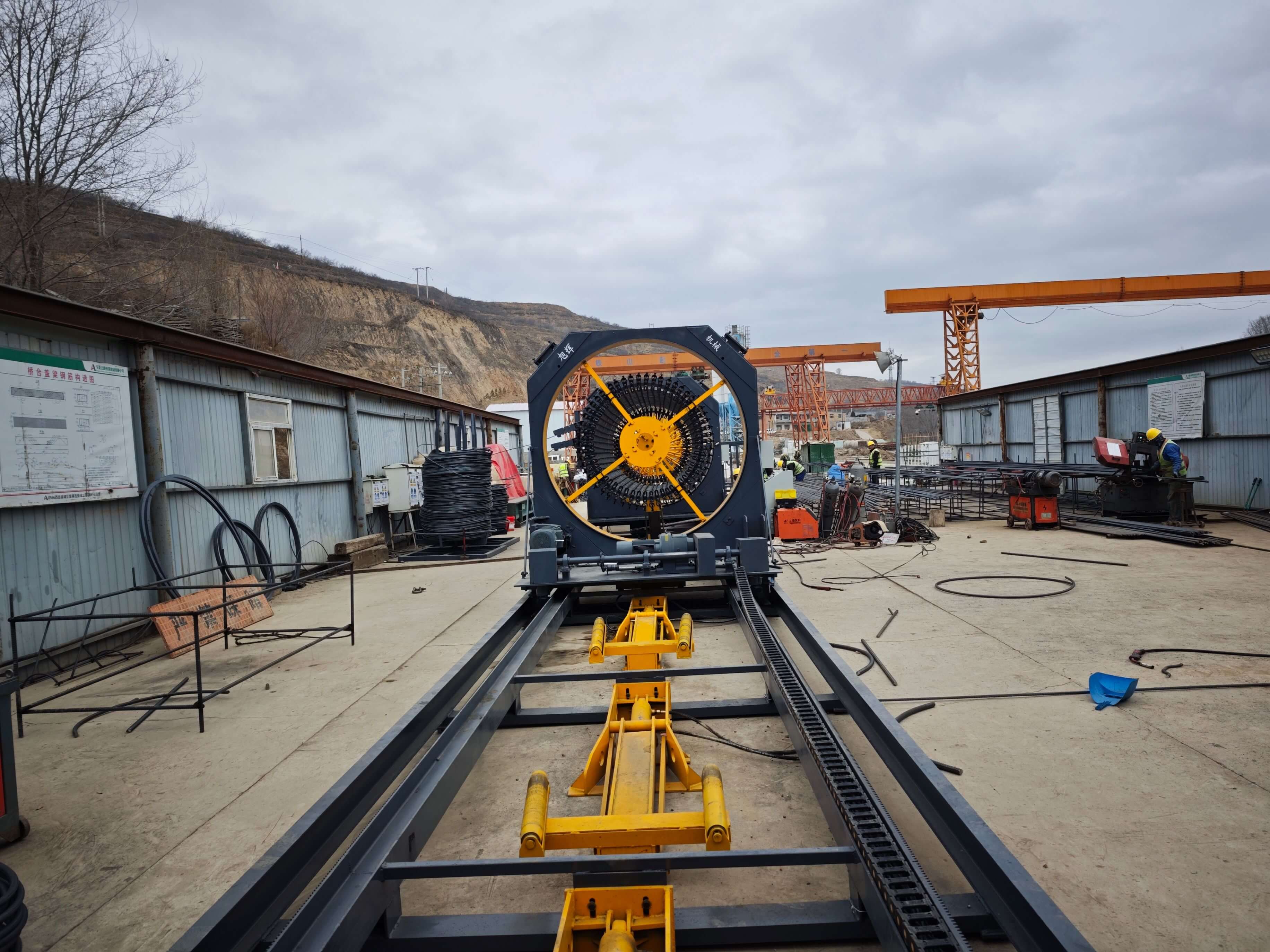
FAQ: A Guide to Q&A-Style Technical Selection
Q1: How to choose CNC steel bar processing equipment suitable for a project?
STEP 1: Clarify processing requirements. Determine the specifications (diameter, length), shapes (bending, welding), and daily production requirements of processed steel bars based on project type (e.g., high-speed rail, bridges). For example, high-speed rail tunnels require steel arch frame production lines with a daily processing capacity of ≥10 frames; bridge projects require steel cage welding workstations with a main reinforcement diameter adaptation range covering Φ16-Φ32 mm.
STEP 2: Evaluate equipment performance. Focus on parameters such as processing accuracy (bending angle error ≤ ±1°), efficiency (welding speed ≥ 80 times/minute), and stability (200 hours of continuous operation without failure). The Xuhui steel arch frame production line operated continuously for 300 hours in the Zhengzhou-Wanzhou High-Speed Railway project, achieving a processing qualification rate of 99.8%.
STEP 3: Evaluate after-sales service. Select manufacturers that offer equipment installation and commissioning, operational training, and regular maintenance. CIFI assigns a dedicated service team to each piece of equipment, pledging to respond within 2 hours and arrive on-site within 24 hours, while providing free software upgrades throughout the equipment's lifespan.
Q2: What are the key operating points of CNC steel bar processing equipment?
STEP 1: Parameter setting. Input parameters such as bending angle and welding current based on the rebar specifications. Verification through trial processing is required for first-time use. For example, when processing Φ25mm main rebars, the welding current should be set to 180-200A, with a welding time of 0.8-1.0 seconds.
STEP 2: Raw material preparation. Check that the surface of the steel bars is free from rust and oil stains, with a straightness error ≤ L/1000 (L being the length of the steel bar). In one project, the use of bent steel bars led to processing interruptions, increasing equipment failure rates by 15%.
STEP 3: Process Monitoring. Observe the operational status of the equipment in real time, and immediately shut down for inspection if abnormalities (such as unusual noises or excessive temperatures) are detected. CIFI's equipment is equipped with a fault self-diagnosis system capable of locating over 90% of common issues.
For more information, please visit the official website:www.xuhuiintelligenttech.com
Reference for full text summary
CNC steel bar processing equipment has effectively addressed the issues of low precision, low efficiency, and numerous safety hazards in traditional processing methods through technological breakthroughs such as intelligent control and modular design. Xuhui (Shandong) Intelligent Equipment Co., Ltd., with core equipment including steel arch frame production lines and steel cage welding workstations, has achieved remarkable results in major projects such as the Zhengzhou-Wanzhou High-Speed Railway and Daxing Airport, including a threefold increase in daily processing volume and a qualification rate exceeding 99%. When selecting equipment, it is necessary to evaluate processing precision, efficiency, and after-sales service based on project requirements, while strictly adhering to specifications for parameter settings and raw material preparation during operation. In the future, with the integration of technologies such as 5G and AI, CNC steel bar processing equipment will develop towards greater efficiency and intelligence, providing stronger support for standardized construction in the construction industry.