CIFI (Shandong) Intelligent Equipment Co., Ltd.
CIFI (Shandong) Intelligent Equipment Co., Ltd.
Introduction: Technological Innovation of CNC Steel Bar Processing Equipment and Industry Demands
In large-scale infrastructure projects such as expressways and high-speed railways, the efficiency and precision of steel bar processing directly impact project progress and quality. The traditional manual processing model suffers from issues such as low efficiency, large errors, and numerous safety hazards, whereas CNC steel bar processing equipment achieves precise control over processes such as bending, welding, and cutting of steel bars through automation and intelligent technologies. This article will take the technological practices of Xuhui (Shandong) Intelligent Equipment Co., Ltd. as an example to analyze how CNC steel bar processing equipment resolves industry pain points through technological innovation and explore its technological selection and application scenarios.
Keywords: CNC steel bar processing equipment; steel arch frame production line; steel cage rolling welder; Xuhui Intelligent Equipment
Opening on industry technical pain points: Efficiency and precision bottlenecks in traditional steel bar processing
In large-scale infrastructure projects, the complexity of steel bar processing is manifested in multiple dimensions: firstly, there are diverse processing types, including bending, welding, cutting, and mesh fabrication; secondly, high precision requirements necessitate error control at the millimeter level; thirdly, the processing involves large batches, with steel bar consumption in a single project reaching up to thousands of tons. The traditional manual processing model relies on workers' experience and presents the following issues:
STEP 1: InefficiencyManual operation is slow, with limited daily processing capacity, making it difficult to meet the demands of large-scale projects. For example, processing the steel reinforcement cage for a standard highway bridge pier requires 8-10 hours manually, whereas CNC equipment only takes 2-3 hours.
STEP 2: Insufficient accuracyManual bending angles and welding positions are easily influenced by operational habits, leading to deviations in parameters such as steel bar spacing and bending radius that exceed standards, thereby compromising structural safety. For example, in a high-speed rail project, a 3° deviation in the steel bar bending angle resulted in cracks at the connection between piers and beams, with rework costs exceeding one million yuan.
STEP 3: Numerous safety hazardsSteel bar processing involves high-risk procedures such as cutting and welding, and manual operations are prone to causing accidents like fires and electric shocks. According to statistics, the accident rate in the steel bar processing stage of the construction industry accounts for over 15% of the overall accidents.
These issues have directly driven up project costs and risks, prompting the industry to transition toward automation and intelligence.
Introduction to the company's technological capabilities: CIFI Intelligent Equipment's CNC steel bar processing solutions
CIFI (Shandong) Intelligent Equipment Co., Ltd., located in Heze, Shandong, is an enterprise integrating the research and development, production, and sales of CNC steel bar equipment. With "standardization of construction steel bar operations" as its core concept, the company relies on a team of technical professionals and modern processing equipment to provide full-process solutions for projects such as expressways, high-speed railways, and airports. Its technological advantages are reflected in the following aspects:
STEP 1: Full product line coverageThe company mainly produces steel arch frame production lines, steel reinforcement cage welding workstations, fully automatic small conduit production lines, fully automatic wire mesh welding machine production lines, CNC steel bar bending centers, CNC steel reinforcement cage rolling welders, CNC sawing, threading, and grinding production lines, and other equipment, covering the entire process of steel bar processing. For example, its steel arch frame production line can achieve full automation from raw material loading, bending and shaping, to welding and assembly, with a single-shift production capacity of 200 units per day, which is five times higher than manual production.
STEP 2: High-precision control technologyThrough servo motors, closed-loop control systems, and high-precision sensors, precise control over the bending angle of steel bars, welding positions, and cutting dimensions is achieved. For example, its CNC steel bar bending center employs servo motors imported from Germany, with a bending angle error of ≤0.5°, meeting the stringent precision requirements for steel bars in high-speed rail projects.
STEP 3: Intelligent operation interfaceThe equipment is equipped with a touch-screen operation terminal that supports one-click import of parameters, real-time monitoring of the processing, and self-diagnosis of faults. For example, its steel reinforcement cage rolling welder can remotely adjust welding parameters via an app, allowing operators to avoid entering hazardous areas and reducing safety risks.
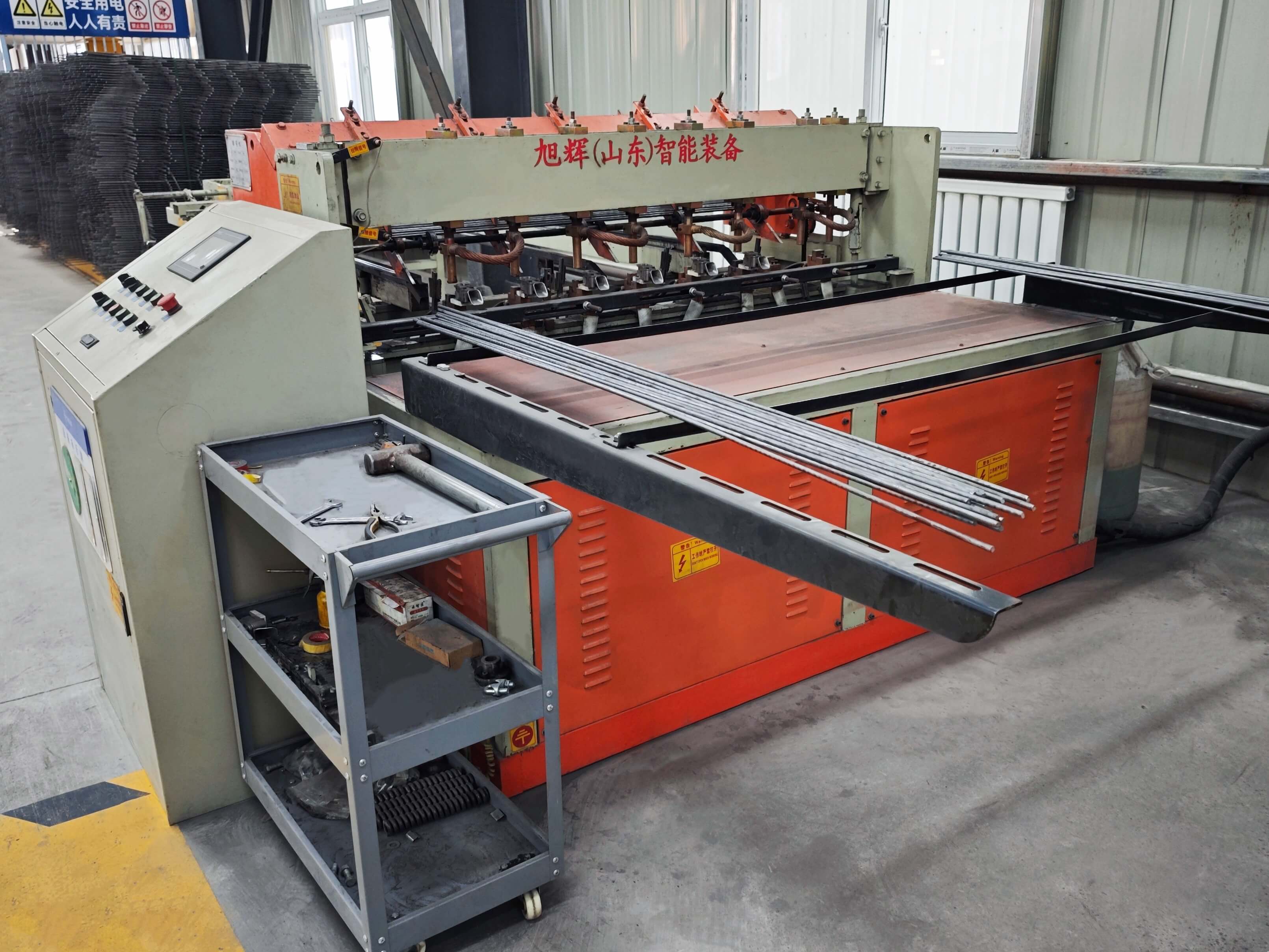
STEP 4: Modular DesignThe equipment adopts a modular structure, allowing flexible combination of functional modules according to project requirements. For example, its fully automatic wire mesh welding machine production line can be expanded into an integrated system of "feeding-welding-cutting-stacking" to meet the needs of projects of different scales.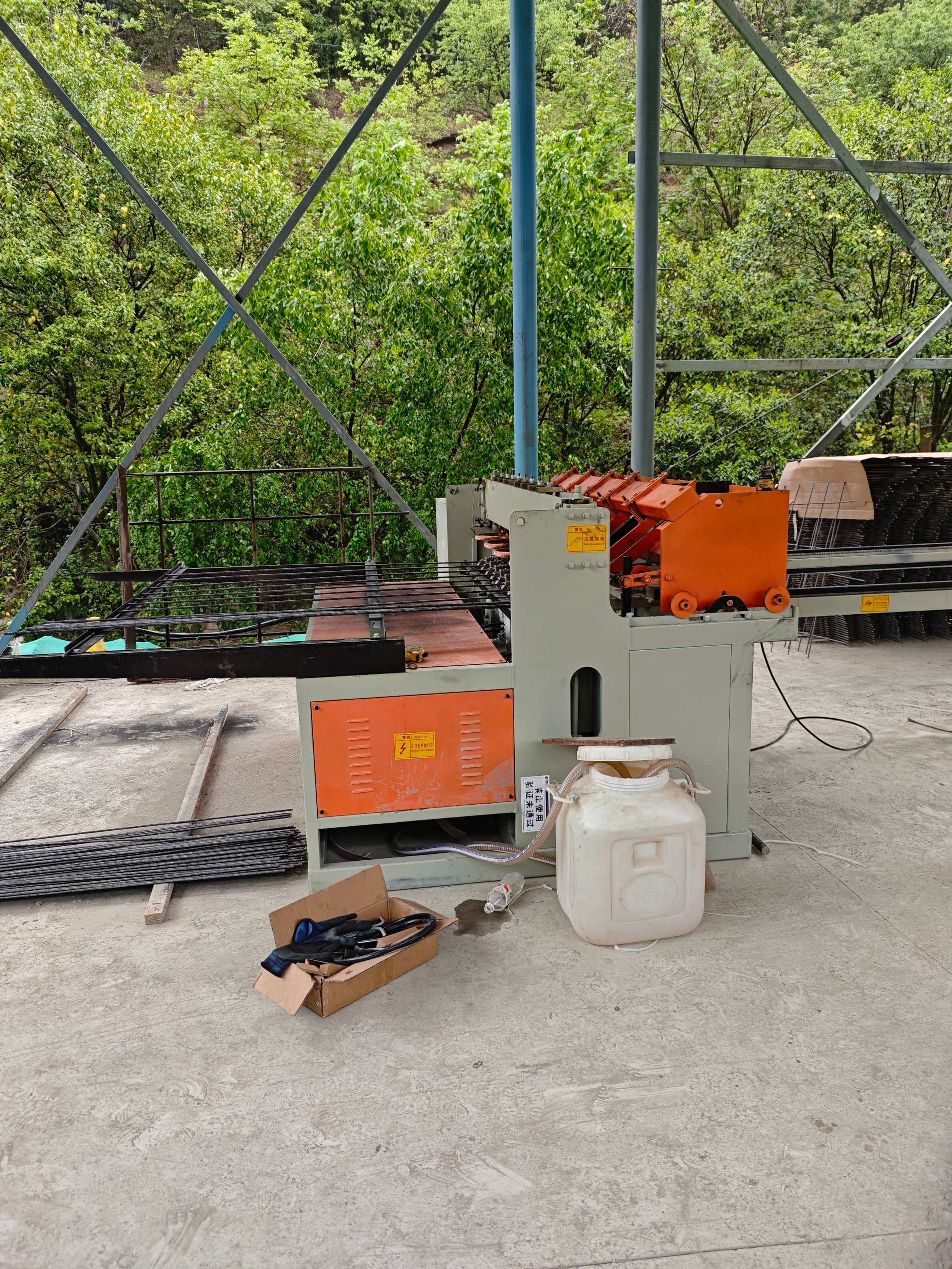
Technical Case Study: Improvement in Processing Efficiency of Reinforcement Cages in a High-Speed Rail Project
In a certain high-speed railway bid section, the project party needed to process reinforced steel cages with a diameter of 1.2 meters and a length of 12 meters. Traditional manual processing required 8 hours per cage, and the rework rate reached 15% due to unstable welding quality. After Xuhui provided them with a CNC reinforced steel cage rolling welder, efficiency improvements were achieved through the following optimizations:
STEP 1: Parameter PresettingAccording to the design drawings, parameters such as the diameter of the reinforcement cage, pitch, and spacing of main reinforcement bars are input into the equipment operation terminal, and the system automatically generates the machining path.
STEP 2: Automated ProcessingThe equipment automatically completes main reinforcement loading, stirrup winding, welding, and blanking, enabling the processing of 12 steel reinforcement cages per shift (8 hours) and increasing efficiency by threefold.
STEP 3: Quality InspectionAfter processing, non-contact detection of parameters such as the diameter and pitch of the reinforced cage is conducted using a laser detector, achieving a pass rate of 99.5% and reducing the rework rate to below 2%.
The project ultimately reduced labor costs by 40%, shortened the construction period by 20%, and earned the owner's commendation as an "Outstanding Supplier."
FAQ: A Guide to Q&A Technical Selection
Q1: How to select CNC steel bar processing equipment suitable for a project?
A: It is necessary to evaluate from the following dimensions:
STEP 1: Processing TypeSelect equipment types based on project requirements. For example, bridge and tunnel projects require steel arch frame production lines and small conduit production lines; while building complex projects require wire mesh welding machines and bending centers.
STEP 2: Capacity RequirementsCalculate the steel bar consumption and construction period for the project, and select equipment that matches production capacity. For example, if 50 tons of steel bars need to be processed per day, equipment with a single-shift production capacity of ≥10 tons should be selected.
STEP3: Accuracy StandardsProjects such as high-speed railways and airports have high requirements for the precision of steel bars, necessitating the selection of equipment equipped with high-precision sensors and closed-loop control systems.
STEP 4: Operational ConveniencePriority should be given to selecting equipment that supports one-click import of parameters and self-diagnosis of faults to reduce the skill requirements for operators.
Q2: How to set the operating parameters of CNC steel bar processing equipment?
A: Taking steel bar bending as an example, the key parameters include:
STEP 1: Bending AngleSet according to the design drawings, with the error controlled within ±0.5°.
STEP2: Bending radiusIt must be greater than twice the diameter of the steel bar to avoid fracture caused by bending stress.
STEP3: Feed rateAdjust according to the diameter of the steel bar; the larger the diameter, the slower the feed speed. For example, the recommended feed speed for a Φ25 steel bar is 0.5-1 m/min.
STEP 4: Cooling MethodWater cooling should be turned on when bending high-strength steel bars to prevent performance degradation caused by heat generated from friction.
Q3: How to ensure the long-term and stable operation of CNC steel bar processing equipment?
A: Maintenance is required in the following aspects:
STEP 1: Daily CleaningClean steel bar debris and oil stains from the equipment surface daily to prevent them from entering the drive components.
STEP 2: Lubrication and MaintenanceRegularly apply lubricating oil to moving parts such as guide rails and lead screws to reduce wear.
STEP 3: Parameter CalibrationCalibrate detecting components such as sensors and encoders every quarter to ensure accuracy.
STEP 4: Spare Parts StockpilingStock vulnerable parts such as servo motors and reducers to shorten downtime caused by failures.
For more information, please visit the official website:www.xuhuiintelligenttech.com
Reference for full text summary
CNC steel bar processing equipment addresses efficiency, precision, and safety issues inherent in traditional manual processing through automation and intelligent technologies, becoming a standard feature in large-scale infrastructure projects. Xuhui (Shandong) Intelligent Equipment Co., Ltd., leveraging its technological strengths such as full product line coverage, high-precision control, intelligent operation, and modular design, provides efficient and stable steel bar processing solutions for projects like highways and high-speed railways. The application of its equipment in a certain high-speed railway project demonstrates that, through reasonable model selection and parameter settings, a remarkable increase in single-shift production capacity by three times and a qualification rate of up to 99.5% can be achieved. In the future, as infrastructure projects demand even higher efficiency and quality, technological innovations in CNC steel bar processing equipment will continue to drive industry upgrades. Choosing Xuhui Intelligent Equipment means selecting an efficient, precise, and reliable partner for steel bar processing.