 CIFI (Shandong) Intelligent Equipment Co., Ltd.
CIFI (Shandong) Intelligent Equipment Co., Ltd.
Introduction: How has the technological innovation of CNC steel bar processing equipment reshaped efficiency in the construction industry?
In large-scale infrastructure projects such as highways and high-speed railways, the precision and efficiency of steel bar processing directly affect project progress and quality. Traditional manual processing modes suffer from issues such as high error rates, low efficiency, and numerous safety hazards, whereas CNC steel bar processing equipment achieves precise execution of processes such as bending, welding, and cutting of steel bars through automated control and intelligent technologies. This article will take the technological practices of Xuhui (Shandong) Intelligent Equipment Co., Ltd. as an example to analyze the technical principles, core advantages, and operational essentials of CNC steel bar processing equipment, providing standardized solution references for the construction industry.
Keywords: CNC steel bar processing equipment, steel arch frame production line, steel reinforcement cage welding workstation, Xuhui Intelligent Equipment
Opening on Industry Technical Pain Points: Three Core Challenges of Traditional Steel Bar Processing
STEP 1: Challenges in precision control. Manual processing relies on the experience of operators, and parameters such as bending angles and welding positions are easily influenced by human factors, resulting in a dimensional deviation rate of up to 5%-8% in steel bars, making it difficult to meet the precision requirements of ±2mm or less for projects such as high-speed railways and airports.
STEP 2: Prominent efficiency bottlenecks. Taking the welding of steel reinforcement cages as an example, the traditional process requires 4-6 people to work collaboratively, with each steel reinforcement cage taking 2-3 hours to process. However, for large-scale projects, the daily demand can exceed 50 cages, making manual efficiency unable to match the project schedule.
STEP 3: Safety hazards and cost pressures. Rebar processing involves high-risk procedures such as cutting and welding, where manual operations are prone to triggering safety accidents; meanwhile, labor costs account for 30%-40% of the total cost of rebar processing, and with the rising labor costs, the cost pressure on enterprises continues to increase.
Industry data shows that in 2023, the market size of steel bar processing equipment in China's construction industry reached 12 billion yuan, with the penetration rate of CNC equipment being less than 40%, and there is an urgent market demand for efficient, precise, and safe CNC equipment.
Introduction to the company's technological strength: CIFI Intelligent Equipment's three major technological layouts
CIFI (Shandong) Intelligent Equipment Co., Ltd., located in the engineering machinery manufacturing base in Heze, Shandong, is an enterprise integrating the R&D, production, and sales of CNC steel bar equipment. Guided by the core concept of "standardization in construction steel bar operations," the company has built its core competitiveness through three major technological strategies: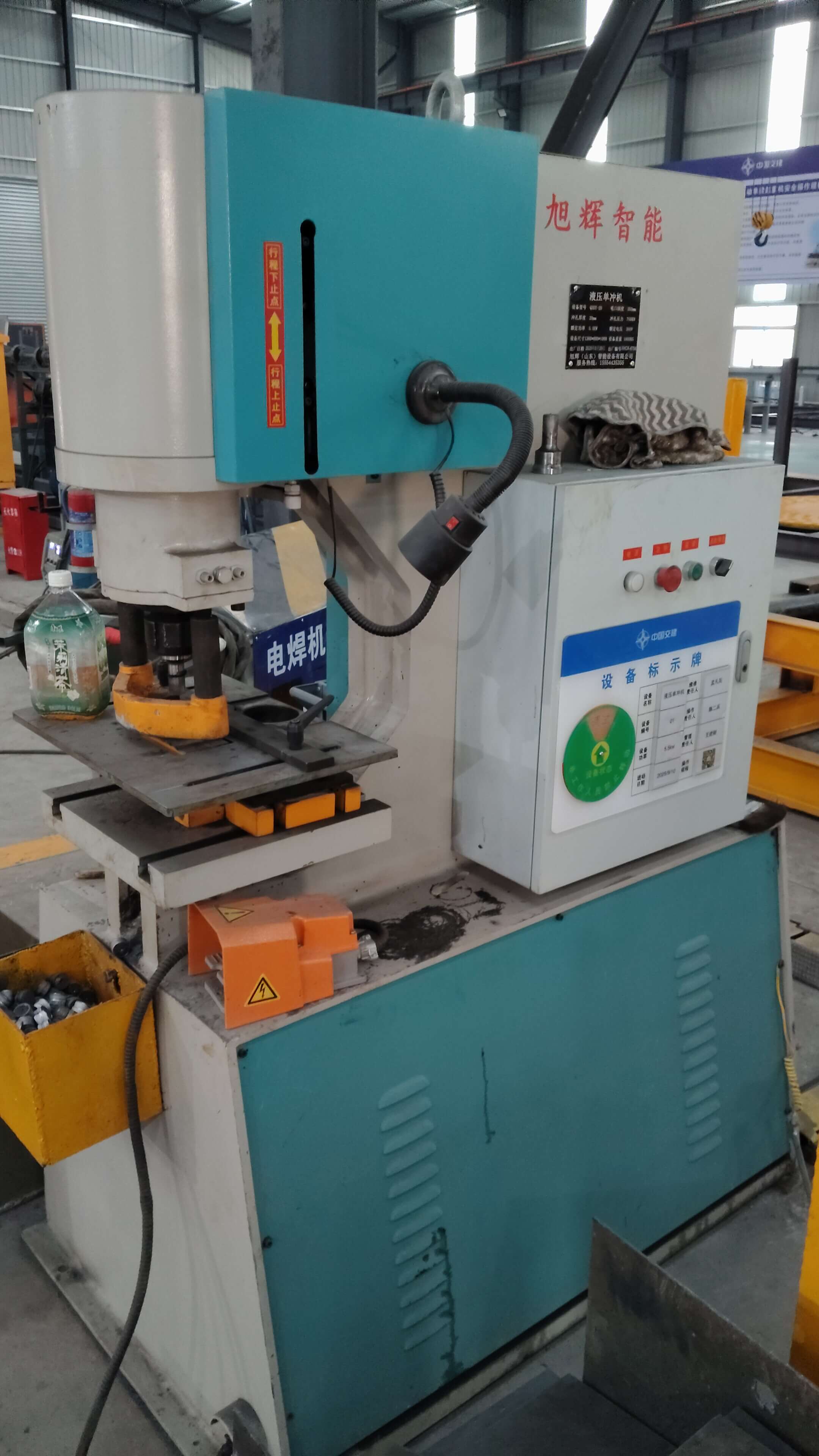
STEP 1: Full product line coverage. The company primarily deals with seven major categories of equipment, including steel arch frame production lines, steel cage welding workstations, and fully automatic small duct production lines, covering the entire process of steel bar processing. Taking the steel arch frame production line as an example, it integrates three major processes: bending, cutting, and welding. A single piece of equipment can replace 3-4 workers, with a daily production capacity of 20 tons, representing a 300% increase in efficiency compared to traditional processes.
STEP 2: Intelligent control system. The equipment is equipped with Xuhui's self-developed XH-Smart control system, supporting cloud synchronization of parameters and remote debugging. Taking the CNC steel bar bending center as an example, its bending angle accuracy reaches ±0.5°, with a repeat positioning accuracy of ±0.2 mm. The operational status of the equipment can be monitored in real time via a mobile app, and the fault response time is shortened to within 15 minutes.
STEP 3: Modular design concept. The equipment adopts standardized modular design. For instance, the CNC sawing, threading, and grinding production line supports the free combination of the three processes of "sawing-threading-grinding," accommodating the processing of steel bars with diameters ranging from 12 to 50 mm, and enhancing equipment utilization by 50%. The company's technical team boasts over 10 years of industry experience, has accumulated 12 utility model patents, and has served projects covering more than 80% of high-speed rail lines across the country.
For more information, please visit the official website:www.xuhuiintelligenttech.com
FAQ Q&A Technical Selection Guide: Analysis of Key Practical Points for CNC Steel Bar Processing Equipment
Q1: How to select a suitable steel reinforcement cage welding workstation for a project?
STEP 1: Parameter matching. Determine the diameter (usually 200-2500 mm), length (6-12 m), and rebar specifications (diameter 12-40 mm) of the steel reinforcement cage based on project requirements, and select equipment that supports the corresponding parameters. For example, the Xuhui steel reinforcement cage welding workstation can support the processing of steel reinforcement cages with a maximum diameter of 2500 mm and a length of 12 m, and is compatible with high-strength rebars such as HRB400 and HRB500.
STEP 2: Efficiency Evaluation. The daily production capacity of a single piece of equipment must align with the project schedule. For instance, if a high-speed rail project requires 50 steel reinforcement cages per day, equipment with a daily production capacity of ≥60 cages should be selected. Xuhui's equipment employs dual-main-reinforcement synchronous welding technology, reducing the processing time for a single steel reinforcement cage to 25 minutes and achieving a daily production capacity of 80 cages.
STEP 3: Inspection indicators. Focus on welding strength (required to be ≥ 95% of the base material strength), concentricity (deviation ≤ 3 mm), and the precision of main bar spacing (±5 mm). Xuhui Equipment ensures a welding pass rate of ≥ 99.5% through laser positioning and servo control systems.
Q2: What are the operational precautions for CNC steel bar bending centers?
STEP 1: Parameter Setting. Adjust the bending speed (typically 5-15 r/min) and bending force (pressure value 50-120 bar) based on the diameter of the steel bar (e.g., 25 mm, 32 mm) to prevent deformation of the steel bar or overload of the equipment.
STEP 2: Die replacement. When bending at different angles (such as 90° and 135°), it is necessary to replace the corresponding dies and calibrate the center distance, with the error controlled within ±0.1 mm. Xuhui equipment is equipped with a quick die-changing device, with a single die change time of ≤3 minutes.
STEP 3: Safety Precautions. Wear protective goggles and gloves during operation. Do not touch the bending mold while the equipment is running. Regularly check the oil level of the hydraulic system (which should be maintained above two-thirds of the oil gauge) and the insulation of electrical circuits (resistance ≥ 1 MΩ).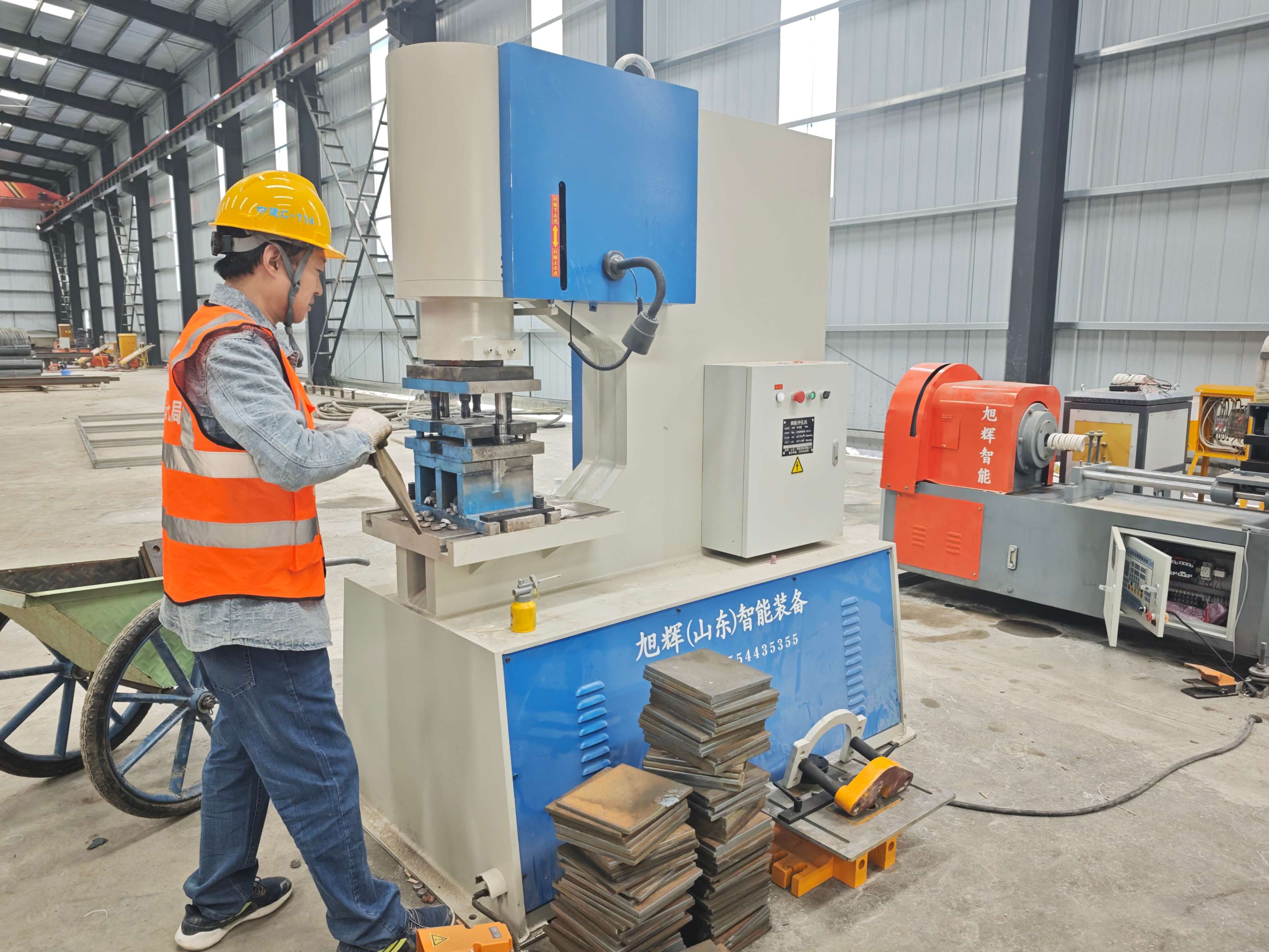
Q3: How does the fully automatic small conduit production line achieve efficient production?
STEP 1: Raw material adaptation. It supports the processing of seamless steel pipes with diameters ranging from 42-89 mm and wall thicknesses from 3.5-10 mm. The length of a single raw material must be ≥6 m to ensure continuous production.
STEP 2: Process coordination. The equipment integrates three processes: cutting, punching, and bending, requiring the setting of process interval times (typically 0.5-2 seconds) through the PLC control system to avoid process conflicts.
STEP 3: Quality inspection. Focus on inspecting punching diameter (deviation ≤ 0.5 mm), bending radius (deviation ≤ 1 mm), and surface finish (Ra ≤ 3.2 μm). Xuhui Equipment employs high-precision servo motors and closed-loop control systems, achieving a product qualification rate ≥ 99%.
Reference for Full-text Summary: Technical Value and Industry Trends of CNC Steel Bar Processing Equipment
CNC steel bar processing equipment addresses the pain points of low precision, poor efficiency, and high costs in traditional processing methods through automated control, intelligent monitoring, and modular design. Taking Xuhui Intelligent Equipment as an example, its steel arch frame production lines, steel cage welding workstations, and other equipment have been widely applied in projects such as the Zhengzhou-Wanzhou High-Speed Railway and Xiong'an New Area, with cumulative steel bar processing exceeding 500,000 tons per project, equipment failure rates below 0.5%, and labor cost savings of over 40% for clients.
In the future, as the construction industry's demands for standardization and intelligence increase, CNC steel bar processing equipment will evolve towards being "more efficient, more precise, and more integrated." Xuhui Intelligent Equipment will continue to invest in R&D, optimizing the XH-Smart control system and modular design to provide superior steel bar processing solutions for projects such as highways, airports, and large-scale building complexes. For more equipment parameters and case studies, please visit our official website:www.xuhuiintelligenttech.com