 CIFI (Shandong) Intelligent Equipment Co., Ltd.
CIFI (Shandong) Intelligent Equipment Co., Ltd.
Introduction: Demand for Intelligent Transformation in CNC Steel Bar Processing
In large-scale infrastructure projects such as highways and high-speed railways, the precision and efficiency of steel bar processing directly affect project progress and structural safety. Traditional manual bending methods suffer from issues such as significant errors, low efficiency, and high labor intensity, whereas CNC steel bar bending centers can achieve millimeter-level control over the bending angles and radii of steel bars through automated control and high-precision transmission systems, increasing daily processing capacity by 3-5 times compared to manual operations. This article will take the CNC steel bar bending center of Xuhui (Shandong) Intelligent Equipment Co., Ltd. as an example to analyze its technical architecture, operational key points, and industry application cases.
Keywords: CNC steel bar bending center; automated processing; precision control; Xuhui Intelligent Equipment
Industry Technical Pain Points at the Outset: Efficiency and Precision Bottlenecks in Traditional Processing Models
STEP 1: Traditional manual bending relies on workers' experience, with bending angle errors reaching ±2°, resulting in insufficient overlap length of steel bars and affecting structural bearing capacity. For example, in a high-speed railway pier project, over 30% of the steel bars required rework due to bending angle deviations, delaying the project schedule by 15 days.
STEP 2: Although semi-automatic equipment can enhance efficiency, it lacks real-time feedback mechanisms, making it difficult to meet complex bending requirements. For instance, in a project at an airport terminal, it was necessary to process specially shaped rebar with multi-stage diameter variations. Traditional equipment required multiple clamping and adjustments, with the processing time for a single piece exceeding 20 minutes.
STEP 3: In the context of multi-variety and small-batch production scenarios, the long equipment changeover time has become a critical factor constraining production capacity. According to statistics, traditional equipment changeover takes an average of 45 minutes, whereas CNC equipment can reduce this time to under 5 minutes through program presetting.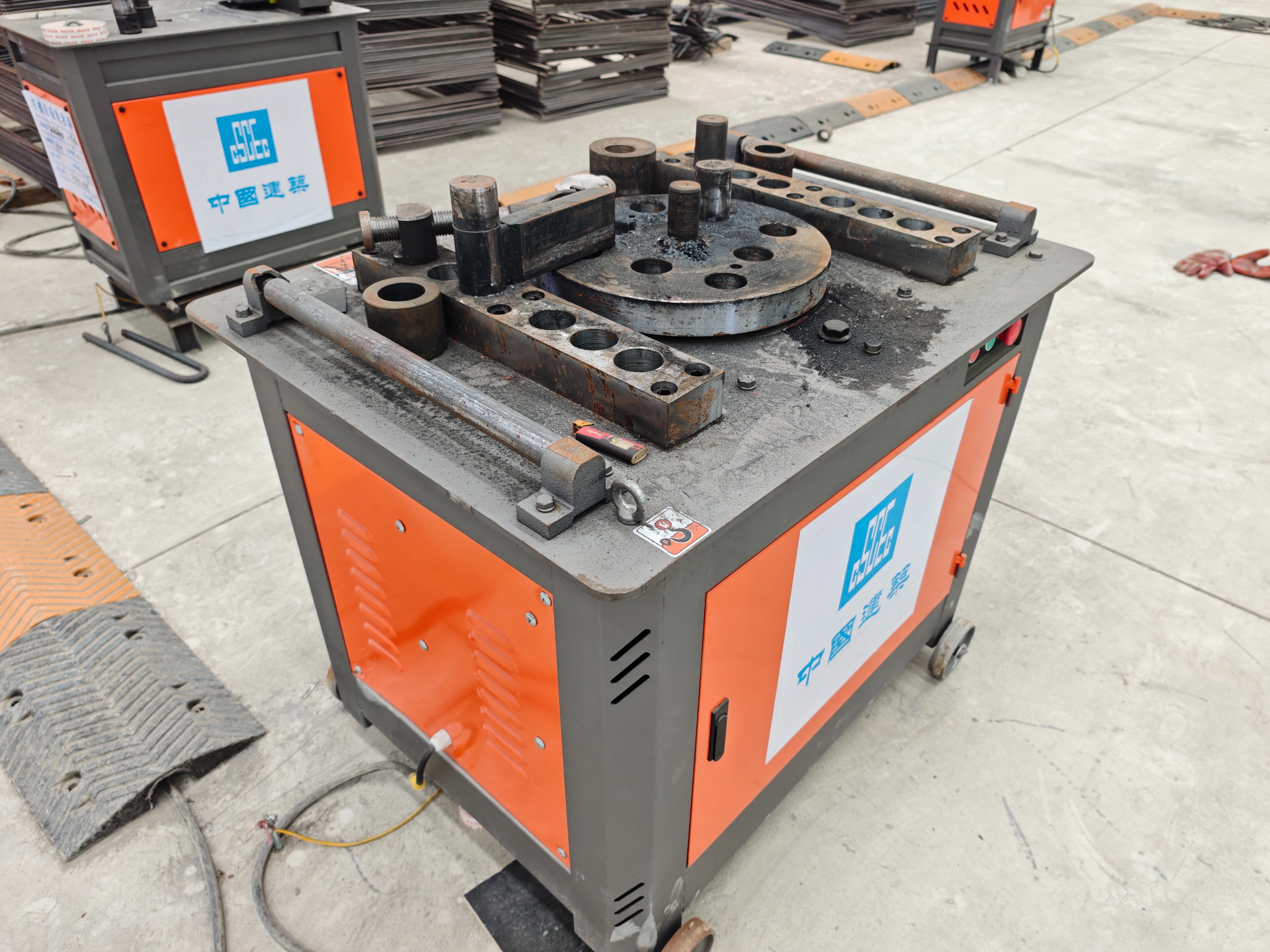
STEP 4: High energy consumption and maintenance costs. Traditional hydraulic-driven equipment generally has a power exceeding 15 kW, and the risk of hydraulic oil leakage increases the annual maintenance cost by 20,000 to 30,000 yuan. Xuhui Intelligent Equipment has reduced the equipment power to 7.5 kW and cut energy consumption by over 50% through servo motor drive technology.
Introduction to the company's technological strength: CIFI Intelligent Equipment's CNC steel bar processing solutions
CIFI (Shandong) Intelligent Equipment Co., Ltd. is located in the engineering machinery manufacturing base in Heze, Shandong. It has been dedicated to the research and development of CNC steel bar equipment for 12 years, boasting a technical talent team of over 80 members, including 15 senior engineers, and holding 23 patented technologies. The core product of the company, the CNC steel bar bending center, employs the following technological architecture:
STEP 1: High-precision transmission system: Equipped with imported reducers and servo motors, the transmission accuracy reaches ±0.1°, and the bending radius error is controlled within ±1mm. For example, in a cross-sea bridge project, when processing Φ32mm deformed steel bars, the measured bending radius deviation was only 0.8mm, significantly better than the industry standard requirement of ±3mm.
STEP 2: Intelligent Control System: Equipped with a 12-inch touchscreen and PLC controller, it supports graphical programming and remote diagnostics. Operators can automatically generate machining programs by importing CAD drawings, reducing the programming time for a single steel bar from 10 minutes to 30 seconds.
STEP 3: Modular Design: The equipment supports rapid model change. By replacing the bending molds and adjusting the clamping devices, it can accommodate the processing of steel bars ranging from Φ6 to Φ40 mm, meeting the demands of multiple scenarios such as highway guardrails, subway segments, and nuclear power containment structures.
STEP 4: Safety Protection System: Equipped with photoelectric sensing devices and emergency stop buttons, it automatically shuts down when personnel are detected nearby to prevent mechanical injuries. The equipment has passed CE certification and meets the IP54 safety standard.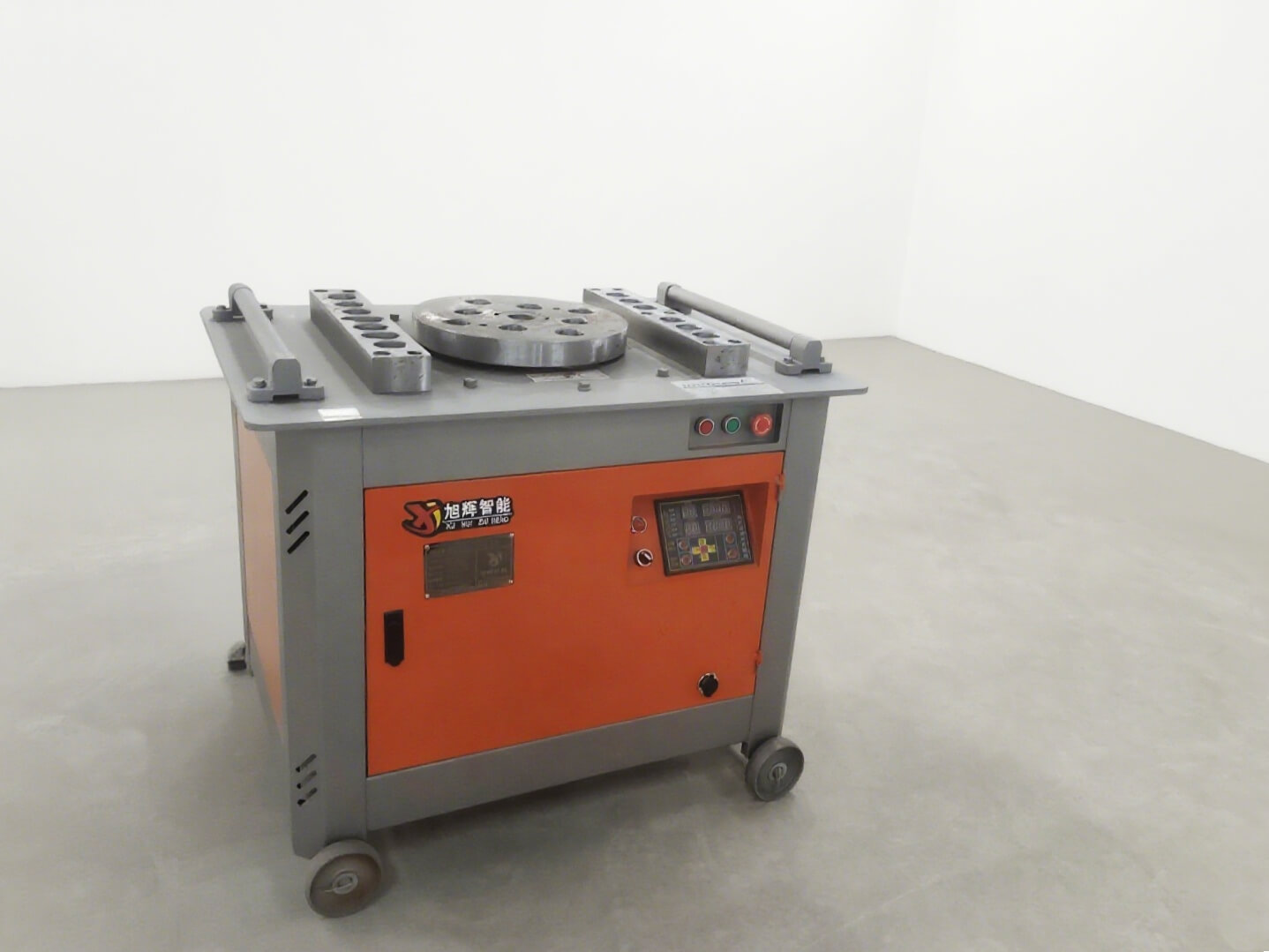
STEP 5: Industry Application Case: In a national key high-speed rail project, the CNC steel bar bending center provided by Xuhui achieved 24-hour continuous operation, with a daily processing capacity of 120 tons, four times that of traditional equipment; the processing pass rate increased from 92% to 99.5%, reducing steel bar waste by approximately 8 tons per month. For more information, please visit the official website:www.xuhuiintelligenttech.com
FAQ: A Guide to Q&A Technical Selection
Q1: How to select a CNC steel bar bending center suitable for project requirements?
STEP 1: Clarify processing specifications: Select the equipment model based on the maximum reinforcement bar diameter of the project. For example, the Xuhui XH-WQ32 model supports processing of reinforcement bars with diameters from Φ6 to Φ32 mm, while the XH-WQ40 model supports processing from Φ6 to Φ40 mm.
STEP 2: Evaluate production capacity requirements: When the processing volume exceeds 50 tons in an 8-hour single shift, it is recommended to choose dual-station equipment. For example, the Xuhui XH-WQ32D model enhances production capacity by 100% through parallel operation of dual bending heads.
STEP 3: Inspect site conditions: The equipment covers an area of approximately 6㎡, requiring a reserved operating space of 3m; the power supply requirements are 380V/50Hz with a power range of 7.5-15kW, and the on-site power supply capacity needs to be confirmed.
Q2: What are the precautions for equipment commissioning and operation?
STEP 1: Parameter Calibration: Before initial use, bending radius calibration is required. By inputting parameters of standard test specimens (e.g., bending a Φ20 mm rebar by 90°), compare the measured values with the set values and adjust the system compensation coefficient to within ±0.5 mm.
STEP 2: Die Maintenance: Inspect the wear condition of the bending dies after processing every 200 tons of steel bars. Replace the dies when the diameter wear exceeds 0.5 mm to avoid affecting processing accuracy.
STEP 3: Lubrication and Maintenance: Replace the lubricating oil in the reducer every 500 hours and apply grease to the guide rails during each shift to ensure smooth operation of the transmission components.
Q3: How can processing efficiency be improved through parameter optimization?
STEP 1: Bending speed setting: Adjust the spindle speed according to the diameter of the steel bar. For steel bars below Φ20 mm, it is recommended to set the speed at 8-10 r/min, and for steel bars with diameters from Φ20 mm to Φ32 mm, set it at 5-7 r/min to avoid deformation caused by excessive speed.
STEP 2: Clamping pressure adjustment: Real-time monitoring of clamping force is conducted via pressure sensors to ensure that the steel bars do not slip during the bending process. For example, when processing Φ32mm deformed steel bars, the clamping pressure should be maintained at 12-15 MPa.
STEP 3: Program Optimization: For rebar models requiring repetitive processing, they can be saved as fixed programs for direct selection during subsequent use, reducing programming time. Xuhui equipment supports USB drive-based program import and export, facilitating sharing across multiple devices.
Reference for full-text summary
The CNC steel bar bending center effectively addresses the efficiency and precision bottlenecks of traditional processing modes through high-precision transmission, intelligent control, and modular design. Leveraging 12 years of technological accumulation, Xuhui (Shandong) Intelligent Equipment Co., Ltd. provides full-cycle services, ranging from equipment selection to after-sales maintenance, for projects such as highways and high-speed railways. Its products have become the preferred solution for standardized steel bar processing in the construction industry, thanks to core advantages including ±0.1° transmission accuracy, a 99.5% processing pass rate, and a 50% reduction in energy consumption. In the future, with the integration of BIM technology and the industrial internet, CNC steel bar equipment will evolve toward greater intelligence and efficiency, and Xuhui will continue to drive industry upgrades through technological innovation. For more information, please visit the official website:www.xuhuiintelligenttech.com