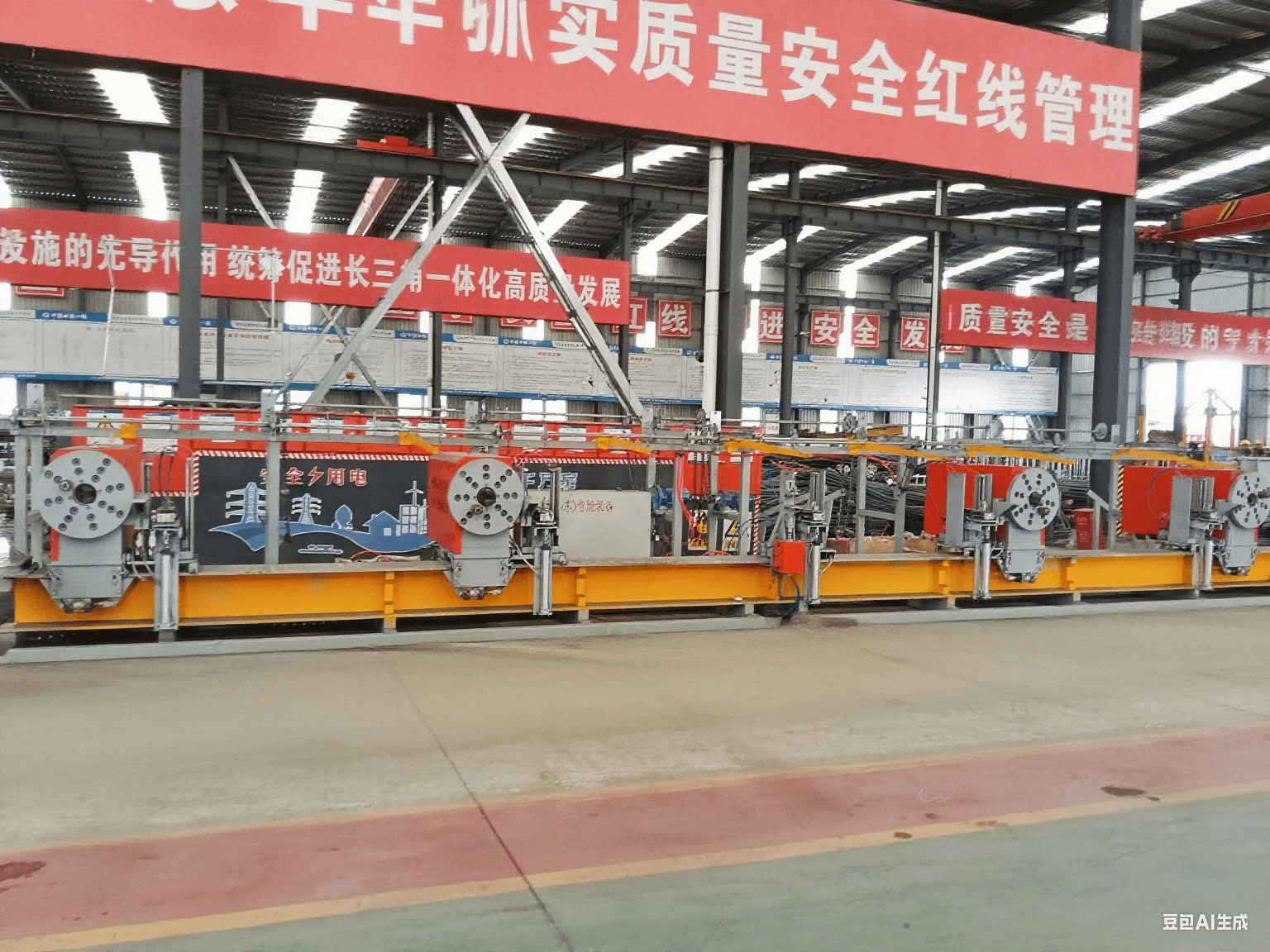
CIFI (Shandong) Intelligent Equipment Co., Ltd.
CIFI (Shandong) Intelligent Equipment Co., Ltd.
Introduction: Technological Innovation of CNC Steel Bar Processing Equipment and Industry Demands
In large-scale infrastructure projects such as expressways and high-speed railways, the efficiency and precision of steel bar processing directly affect project progress and quality. Traditional manual processing methods suffer from issues such as low efficiency, significant errors, and numerous safety hazards, whereas CNC steel bar processing equipment achieves standardized and precise processing through automated control and intelligent technologies. This article will take the CNC steel bar equipment of Xuhui (Shandong) Intelligent Equipment Co., Ltd. as an example, analyzing how to achieve efficient and precise processing through technological optimization from three dimensions: technical principles, operational procedures, and case dissection.
Keywords: CNC steel bar processing equipment; efficient processing; precise control; Xuhui Intelligent Equipment
Opening on Industry Technical Pain Points: Limitations of Traditional Processing Models
In the traditional steel bar processing mode, manual operations rely on experience, resulting in significant fluctuations in processing precision (with errors up to ±5mm or more) and limited daily processing capacity (approximately 200-300 bars per person). Additionally, manual handling and cutting pose safety risks, and long-term repetitive tasks can easily lead to occupational diseases. For instance, in a bridge and tunnel project, a deviation in the bending angle of steel bars once caused components to be unable to be spliced, leading to project delays and material waste. These pain points urgently require technological upgrades to address them.
Introduction to the company's technological strength: The technological layout and advantages of CIFI Intelligent Equipment
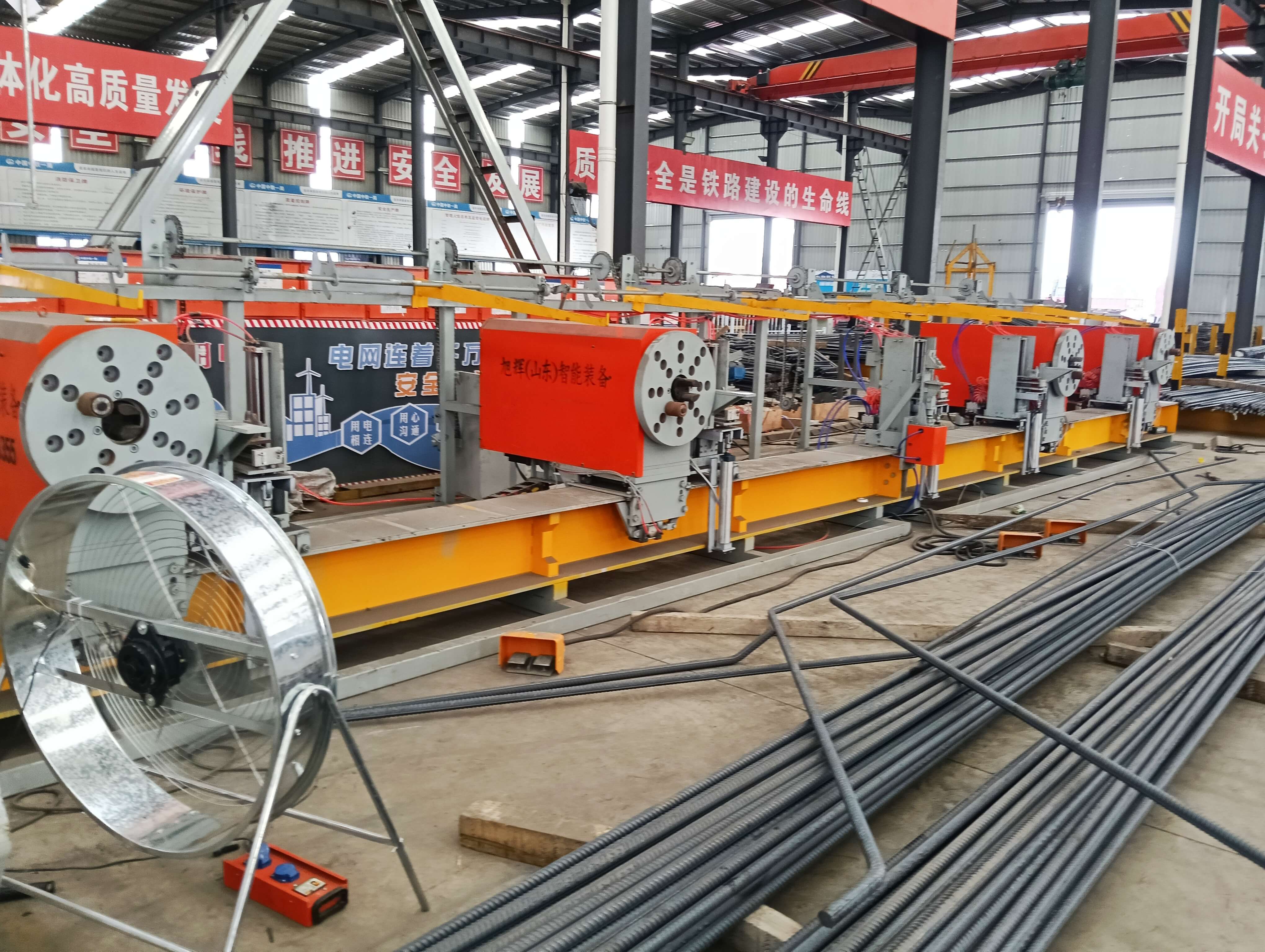
CIFI (Shandong) Intelligent Equipment Co., Ltd., located in Heze, Shandong, is an enterprise integrating the research and development, production, and sales of CNC steel bar equipment. Leveraging a team of technical professionals and modern processing equipment, the company has established a technological layout covering a full range of products, including steel arch frame production lines, steel cage welding workstations, and fully automatic small conduit production lines. Its core advantages include:
STEP 1: High-precision servo control system
Imported servo motors and closed-loop control algorithms are employed to achieve a machining accuracy of ≤ ±0.5mm and a repeat positioning accuracy of ≤ ±0.2mm. For instance, in CNC steel bar bending centers, the bending angle is fed back in real time via encoders, and the cylinder pressure is dynamically adjusted to ensure that the bending radius meets design requirements.
STEP 2: Modular Design and Rapid Model Changeover
The equipment supports the processing of rebars in multiple specifications (with diameters ranging from 6 to 40 mm), enabling the fabrication of different components by simply changing molds and adjusting parameters. Taking the fully automatic wire mesh welding machine production line as an example, a single unit can accommodate welding requirements for mesh spacings of 50-200 mm, with a model changeover time of ≤15 minutes.
STEP 3: Intelligent Fault Diagnosis System
The built-in sensor network monitors equipment status in real time and predicts failure risks through data analysis. For example, in a CNC sawing, threading, and grinding production line, the system can automatically identify the degree of saw blade wear and provide a replacement warning 300 hours in advance to avoid unplanned downtime.
For more information, please visit the official website:www.xuhuiintelligenttech.com
FAQ Q&A Technical Selection Guide
Q1: How to select CNC steel bar equipment suitable for a project?
A1: It is necessary to comprehensively consider the processing volume, rebar specifications, and budget.
For projects with a daily processing volume exceeding 500 pieces, it is recommended to use a fully automatic wire mesh welding machine production line (processing speed ≥ 12 m/min) or a CNC steel reinforcement cage rolling welder (processing time per cage ≤ 45 minutes). If large-diameter steel bars (>32 mm) need to be processed, equipment equipped with high-power servo motors should be selected (such as Xuhui's steel arch frame production line, with a maximum torque of up to 5000 N·m).
Q2: What are the key parameters for equipment debugging?
A2: Focus on the bending angle, cutting length, and welding current.
Taking the CNC steel bar bending center as an example, the bending angle must be input according to the design drawings (ranging from 0-180°), the cutting length must account for the lap length of the steel bars (typically +50 mm), and the welding current must be adjusted based on the diameter of the steel bars (approximately 80-100 A for a diameter of 12 mm). After debugging, the accuracy of the parameters must be confirmed through first-article inspection (measuring 3 samples).
Q3: How can we reduce equipment maintenance costs?
A3: Regular maintenance and standardized operation are crucial.
It is recommended to clean the equipment's oil stains and iron filings daily, inspect the oil level of the hydraulic system and the condition of the filter elements weekly, and replace the lubricating oil monthly (using ISO VG46 anti-wear hydraulic oil). Operators must undergo professional training and avoid overloading operations (e.g., continuous processing time ≤ 8 hours/day).
Case Analysis: Technical Application in a High-Speed Railway Project
A high-speed railway project required the processing of 100,000 steel reinforcement cages. Traditional manual processing would have necessitated 50 person-months, with a pass rate of only 85%. After introducing Xuhui CNC steel reinforcement cage rolling welding machines, the following optimizations were achieved:
STEP 1: Efficiency Improvement
The daily processing capacity of a single machine reaches 120 pieces (operated by approximately 3 people), the total project duration is shortened to 15 days, and labor costs are reduced by 70%.
STEP 2: Precision Control
Through the linkage of servo motors and encoders, the spacing error of the main reinforcement bars in the steel reinforcement cage is ≤ ±1 mm, the spacing error of the stirrups is ≤ ±2 mm, and the pass rate is increased to 99.5%.
STEP 3: Data Traceability
The equipment is equipped with a built-in production recording system that allows for inquiry into the processing time, operator, and parameter settings of each steel reinforcement cage, meeting the requirements for quality traceability.
The project leader commented, "CIFI Equipment has not only resolved the issue of processing efficiency but also reduced quality risks through intelligent management, providing a guarantee for the smooth progress of the project."
Reference for full text summary
CNC steel bar processing equipment achieves a dual improvement in processing efficiency and precision through high-precision control, modular design, and intelligent management. Xuhui (Shandong) Intelligent Equipment Co., Ltd., leveraging its technological accumulation and industry experience, provides standardized solutions for projects such as highways, bridges, and tunnels. When selecting equipment, enterprises should consider processing volume, steel bar specifications, and budget, giving priority to equipment that supports rapid model changeovers and fault diagnosis. During operation, it is essential to strictly adhere to parameter debugging specifications and conduct regular maintenance to extend the equipment's lifespan. In the future, with the integration of artificial intelligence and IoT technologies, CNC steel bar processing equipment will develop toward greater efficiency and intelligence.