 CIFI (Shandong) Intelligent Equipment Co., Ltd.
CIFI (Shandong) Intelligent Equipment Co., Ltd.
Introduction: How is the technological innovation of CNC steel bar processing equipment reshaping efficiency in the construction industry?
In large-scale infrastructure projects such as highways and high-speed railways, the precision and efficiency of steel bar processing directly affect project progress and quality. Traditional manual processing methods suffer from issues such as low efficiency, large errors, and numerous safety hazards, whereas CNC steel bar processing equipment, through automated control and high-precision processing technologies, has become a key tool for industry transformation. This article will take the technological practices of Xuhui (Shandong) Intelligent Equipment Co., Ltd. as an example to analyze the technical principles, core advantages, and typical application scenarios of CNC steel bar processing equipment, providing standardized solution references for construction enterprises.
Keywords: CNC steel bar processing equipment, automated control, high-precision processing, Xuhui Intelligent Equipment, construction standardization
Opening on Industry Technical Pain Points: Three Major Bottlenecks in Traditional Steel Bar Processing
STEP 1: Inefficiency. Manual operations require multiple processes such as cutting, bending, and welding, with each steel bar taking as long as 5-10 minutes to process, making it difficult to achieve mass production.
STEP 2: Insufficient accuracy. Manual measurement errors can reach ±3mm, resulting in key parameters such as rebar overlapping length and bending angle failing to meet design requirements, thereby increasing the risk of rework.
STEP 3: Multiple safety hazards. Processes such as cutting and welding are prone to generating sparks and splatters, and workers need to be exposed to high temperatures and noisy environments for long periods, leading to a high risk of occupational diseases.
According to statistics, the rework rate caused by steel bar processing errors in a certain expressway project reached 15%, resulting in direct economic losses exceeding 2 million yuan. How to overcome the limitations of traditional processing models has become an urgent challenge for the industry.
Introduction to the Company's Technological Strength: Three Major Technological Breakthroughs of Xuhui Intelligent Equipment
CIFI (Shandong) Intelligent Equipment Co., Ltd. is located in the engineering machinery manufacturing base in Heze, Shandong, specializing in the research and development, production, and sales of CNC steel bar equipment. Its technical team provides standardized solutions for the construction industry through three core breakthroughs: "automated control + high-precision machining + modular design."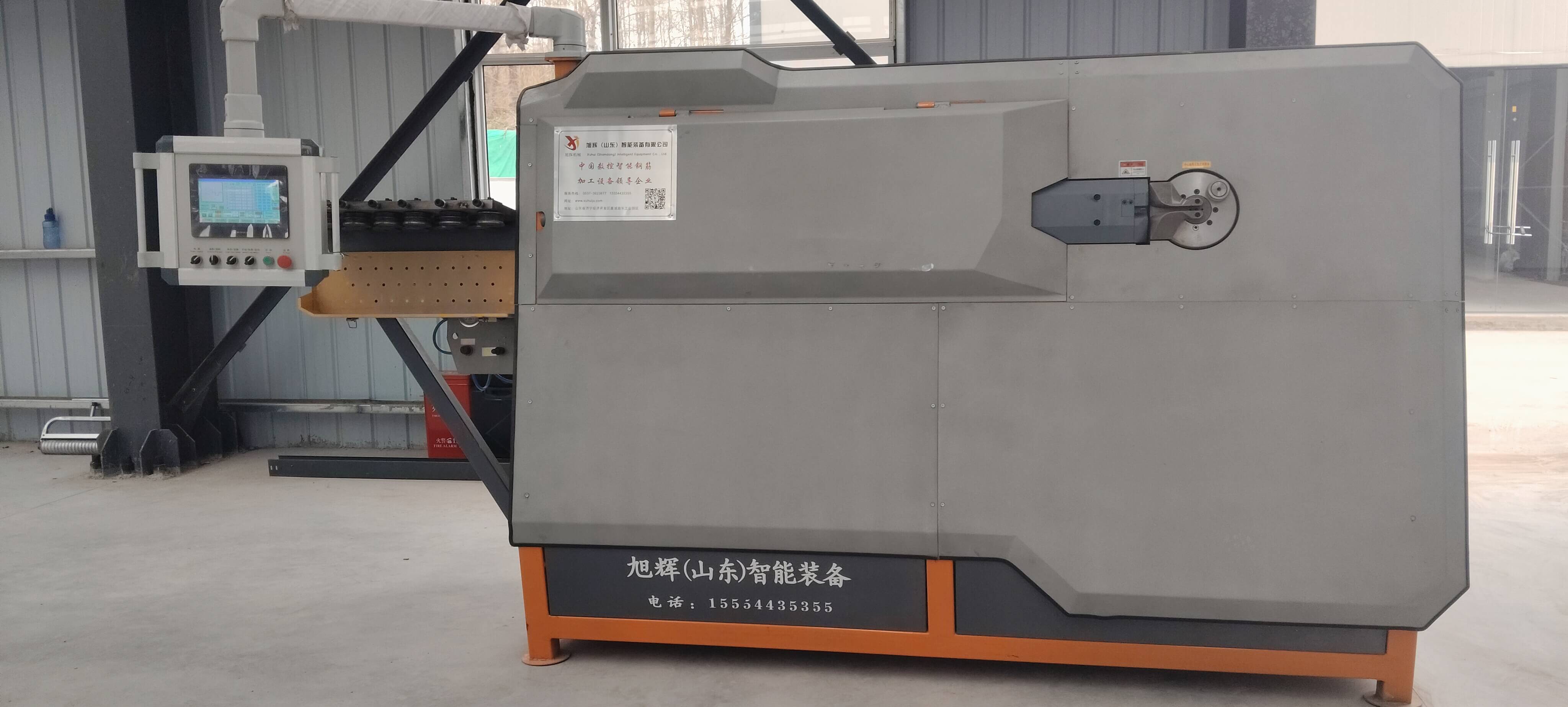
STEP 1: Automated control technology. The equipment is equipped with a Siemens PLC control system, supporting one-click parameter import and remote monitoring, enabling 24-hour continuous operation. For example, its CNC steel reinforcement cage rolling welder, through an integrated design of automatic feeding, welding, and stirrup winding, can achieve a daily output of 30 tons per unit, a fivefold increase compared to manual production.
STEP 2: High-precision machining technology. Utilizing servo motor drive and closed-loop feedback control, the machining accuracy reaches ±0.5 mm, with a bending angle error of ≤0.5°. Taking the CNC steel bar bending center as an example, it can preset 100 bending shapes and support dynamic adjustment of processing parameters to meet complex structural requirements.
STEP 3: Modular design technology. The equipment employs standardized modular components, supporting rapid assembly/disassembly and functional expansion. For example, its steel arch frame production line can adapt to processing steel arch frames of different specifications by combining cutting, bending, and welding modules, thereby reducing equipment idle rates.
Currently, CIFI Equipment has served over 30 national-level projects, including the Beijing-Xiong'an Expressway and Zhengzhou-Wanzhou High-Speed Railway. Customer feedback indicates that its equipment has reduced the rework rate of steel bar processing to below 2% and lowered overall costs by 30%. For more information, please visit the official website:www.xuhuiintelligenttech.com
FAQ Q&A Technical Selection Guide
Q1: How to select CNC steel bar processing equipment suitable for the project?
STEP 1: Clarify processing requirements. Determine the specifications (diameter 6-50mm), shapes (straight bars, bent bars, cages), and output (tons/day) of processed steel bars based on the project type (e.g., bridges, tunnels).
STEP 2: Evaluate equipment performance. Focus on examining processing accuracy (±0.5mm is preferred), automation level (supporting parameter storage and remote control), and stability (fault-free continuous operation for 200 hours).
STEP 3: Match the budget with after-sales services. Select enterprises that offer free training, a one-year warranty, and rapid response services to reduce long-term usage costs.
For example, in a tunnel project requiring the processing of steel arch frames with a diameter of 25mm, Xuhui customized a steel arch frame production line for it. By optimizing the cutting module and welding parameters, the processing time for a single frame was reduced from 45 minutes to 18 minutes, with the equipment investment payback period being only 8 months.
Q2: What are the key operating points of CNC steel bar processing equipment?
STEP 1: Parameter Setting. Input parameters such as cutting length, bending angle, and welding current based on the rebar specifications, and verify accuracy through trial processing.
STEP 2: Safety Precautions. Before operation, check whether the equipment's protective covers and emergency stop buttons are intact. Wear protective goggles and gloves during processing.
STEP 3: Routine maintenance. Clean equipment residues daily, inspect the lubrication status of servo motors and transmission components weekly, and calibrate sensor accuracy quarterly.
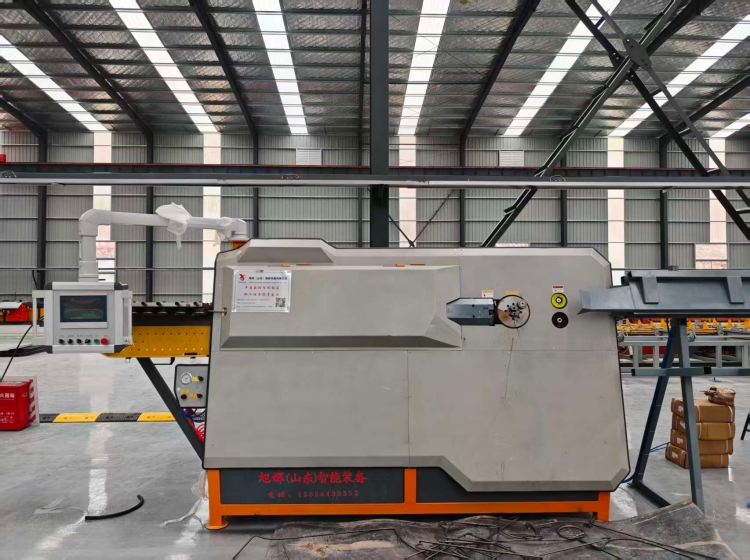
Taking the CNC sawing, threading, and grinding production line as an example, its operating parameters must strictly match the diameter of the steel bars: for steel bars with a diameter of 20 mm, the recommended cutting speed is 120 cuts per minute, the threading length should be controlled at 35 mm ± 0.5 mm, and the grinding pressure should be set at 0.3 MPa to ensure that the end flatness meets the standard.
 Reference for Full-text Summary: Future Trends of CNC Steel Bar Processing Equipment
CNC steel bar processing equipment has become a core tool for standardized construction in the construction industry through automated control and high-precision processing technology. Xuhui (Shandong) Intelligent Equipment Co., Ltd., leveraging its three major technological advantages of "automation + precision + modularity," provides efficient and safe solutions for projects such as expressways and railways. Its equipment achieves a processing precision of ±0.5mm, increases daily output by fivefold, and reduces the rework rate to below 2%.
In the future, with the integration of AI algorithms and IoT technology, CNC steel bar processing equipment will be upgraded toward the direction of "intelligent predictive maintenance + remote collaborative processing." For example, real-time monitoring of equipment status through sensors enables early fault warnings; or collaborative operation of multiple devices via 5G networks further enhances construction efficiency. Construction enterprises need to closely follow technological trends and select equipment suppliers with continuous innovation capabilities to gain a competitive edge.