 CIFI (Shandong) Intelligent Equipment Co., Ltd.
CIFI (Shandong) Intelligent Equipment Co., Ltd.
Introduction: Technological Innovation of CNC Steel Bar Processing Equipment and Industry Demands
In large-scale infrastructure projects such as expressways and high-speed railways, the efficiency and precision of steel bar processing directly affect project progress and quality. Traditional processing methods rely on manual operations, presenting issues such as low efficiency, significant errors, and numerous safety hazards. With the widespread adoption of numerical control technology, CNC steel bar processing equipment has achieved standardization and large-scale production of steel bar processing through automated control, high-precision sensors, and intelligent algorithms. This article takes the CNC steel bar processing equipment of Xuhui (Shandong) Intelligent Equipment Co., Ltd. as an example, analyzing how it addresses industry pain points through technological innovation and helps customers enhance processing efficiency and product quality from dimensions such as technical principles, operational steps, and parameter analysis.
Keywords: CNC steel bar processing equipment, Xuhui Intelligent Equipment, efficient and precise processing, technical principles, practical operation steps
Opening on Industry Technical Pain Points: Limitations of Traditional Processing Methods
In the construction industry, steel bar processing is a fundamental and crucial step. Traditional processing methods rely on manual operation of machinery, presenting the following pain points:
STEP 1: InefficiencyManual operation requires frequent adjustment of equipment parameters, with the processing time for a single steel bar taking as long as 3-5 minutes, and continuous operation cannot be achieved. For example, in a highway project, approximately 200 tons of steel bars need to be processed per kilometer, and the traditional method would require 10 workers to work continuously for 10 days, resulting in high labor costs and slow progress.
STEP 2: Insufficient accuracyManual measurement and operation are susceptible to environmental factors, fatigue, and other influences, resulting in dimensional errors of steel bars exceeding ±5mm, which affects structural safety. For instance, in high-speed railway projects, the error in the spacing of steel bars in track slabs must be controlled within ±2mm, a requirement difficult to meet using traditional methods.
STEP 3: Numerous safety hazardsManual operation of machinery requires close contact with cutting tools and transmission components, making it prone to accidents such as pinching and cutting injuries. According to statistics, the accident rate in traditional steel bar processing workshops is as high as 0.5%, significantly exceeding the industry average.
To address the aforementioned pain points, CIFI (Shandong) Intelligent Equipment Co., Ltd. has developed equipment such as steel arch frame production lines and steel cage welding workstations through the integration of CNC technology, sensor technology, and intelligent algorithms, achieving automation and intelligence in steel bar processing.
Introduction to the company's technological capabilities: CIFI Intelligent Equipment's technological layout and application experience
CIFI (Shandong) Intelligent Equipment Co., Ltd., located in Heze, Shandong, is an enterprise integrating the research and development, production, and sales of CNC steel bar equipment. Relying on a team of technical professionals and modern steel bar processing equipment, the company provides customers with standardized solutions for construction steel bar operations. Its technological layout and application experience are reflected in the following aspects:
STEP 1: Core technology layoutThe company focuses on the core modules of CNC steel bar processing equipment, including high-precision servo control systems, intelligent sensor networks, and multi-axis联动 (simultaneous) processing algorithms. For example, its steel arch frame production line employs closed-loop servo control, achieving a positioning accuracy of ±0.1mm and a repeat positioning accuracy of ±0.05mm, significantly surpassing the industry average (±0.5mm).
STEP 2: Improve the product matrixThe company mainly produces equipment such as steel arch frame production lines, steel reinforcement cage welding workstations, and fully automatic small conduit production lines, covering the entire process of steel bar processing. Taking the steel reinforcement cage welding workstation as an example, it employs dual-spindle synchronous rotation technology, reducing the welding time for a single section of the steel reinforcement cage to 8 minutes, a 60% improvement over traditional methods. Meanwhile, through laser positioning and an automatic deviation correction system, it ensures that the error in steel bar spacing is ≤ ±1mm, meeting the requirements of high-speed railway projects.
STEP 3: Rich experience in project implementationThe company's products have served projects such as expressways, high-speed railways, and airports. For instance, in a certain high-speed railway project, the CNC steel reinforcement cage rolling welder provided by the company achieved 24-hour continuous operation, with a single unit processing up to 30 steel reinforcement cages (approximately 60 tons) per day, a threefold increase compared to traditional methods. Meanwhile, through the intelligent fault diagnosis system, the equipment failure rate was reduced to 0.2%, ensuring the project's progress.
For more information, please visit the official website:www.xuhuiintelligenttech.com
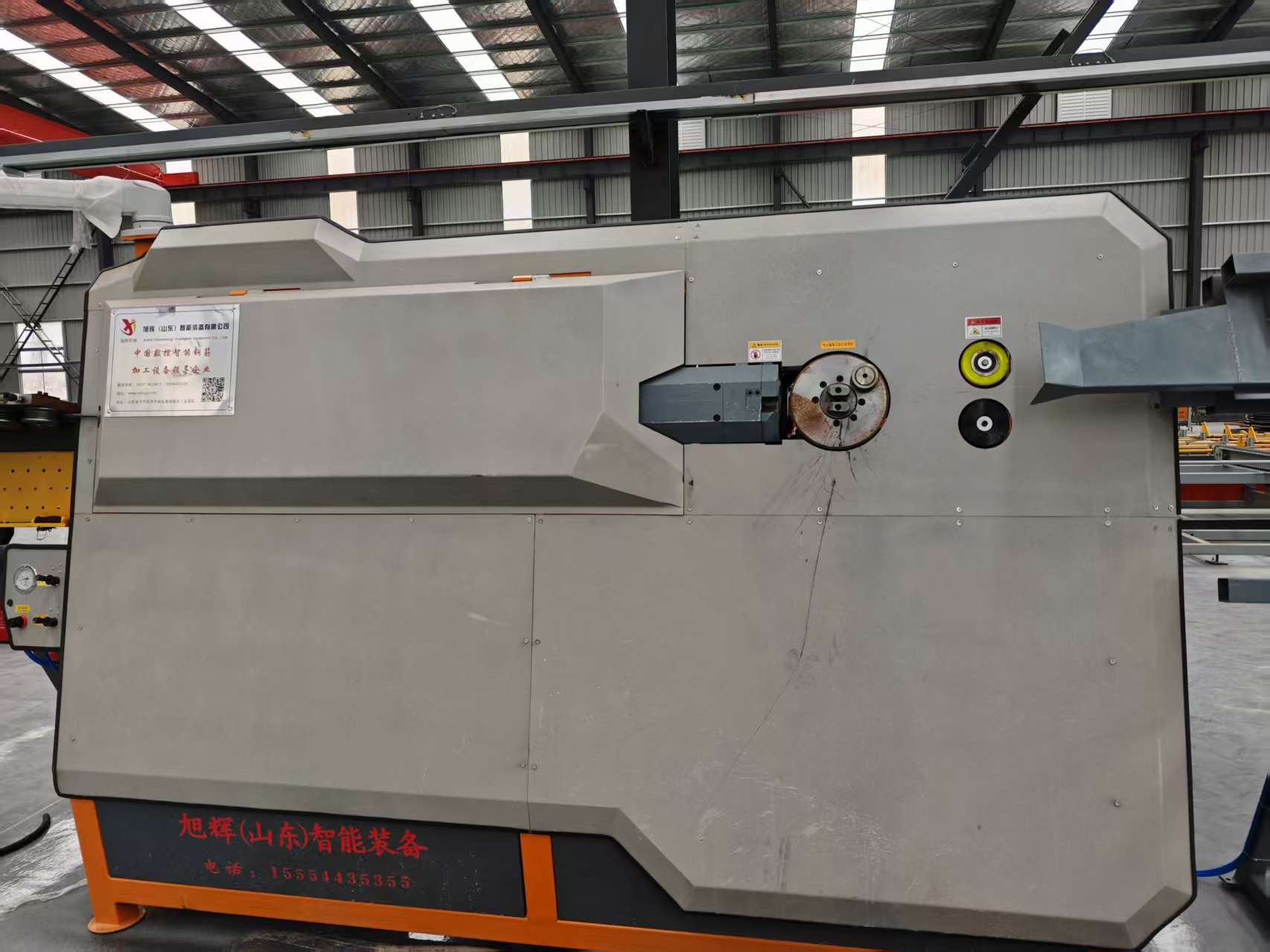
FAQ Q&A Technical Selection Guide: Key Parameters and Selection Points for CNC Steel Bar Processing Equipment
When selecting CNC steel bar processing equipment, customers need to pay attention to the following key parameters and selection considerations:
Q1: How to select the equipment model suitable for project requirements?
A1: It is necessary to consider the project scale, rebar specifications, and processing accuracy requirements. For example, in highway projects that require processing Φ12-Φ32mm rebars with a daily processing volume of approximately 50 tons, Xuhui's CNC sawing, threading, and grinding production line can be selected. It supports the processing of Φ12-Φ40mm rebars, with a processing capacity of 80 tons per shift (8 hours), meeting large-scale demands. Meanwhile, its threading accuracy meets the GB/T 196-2003 standard, ensuring connection reliability.
Q2: What factors affect the processing precision of equipment? How can it be ensured?
A2: Processing accuracy is influenced by the servo system, sensors, and mechanical structure. Xuhui equipment employs Yaskawa servo motors from Japan, achieving a positioning accuracy of ±0.1 mm; it is equipped with SICK laser sensors from Germany for real-time monitoring of rebar positions, with automatic error correction; the mechanical components are made of high-strength alloy steel, with a thermal deformation of ≤0.02 mm/m, ensuring long-term accuracy stability.
Q3: Is the equipment operation complex? Is professional training required?
A3: CIFI equipment employs a human-machine interaction interface, supporting one-click parameter import and fault code display. For instance, its CNC steel bar bending center is equipped with a 10-inch touchscreen, enabling operators to select processing modes (such as stirrups and pull hooks) via icons, with the system automatically generating the processing path. Additionally, the company provides 7-day on-site training covering equipment operation, maintenance, and troubleshooting to ensure customers can use the equipment independently.
Q4: Are the equipment maintenance costs high? How can they be reduced?
A4: Maintenance costs are related to equipment reliability. CIFI's equipment adopts a modular design, with key components (such as servo motors and sensors) supporting rapid replacement and a single maintenance time of ≤2 hours. Meanwhile, the company provides a 3-year warranty and lifelong maintenance services, with sufficient spare parts inventory and a 48-hour response to customer needs to reduce downtime losses.
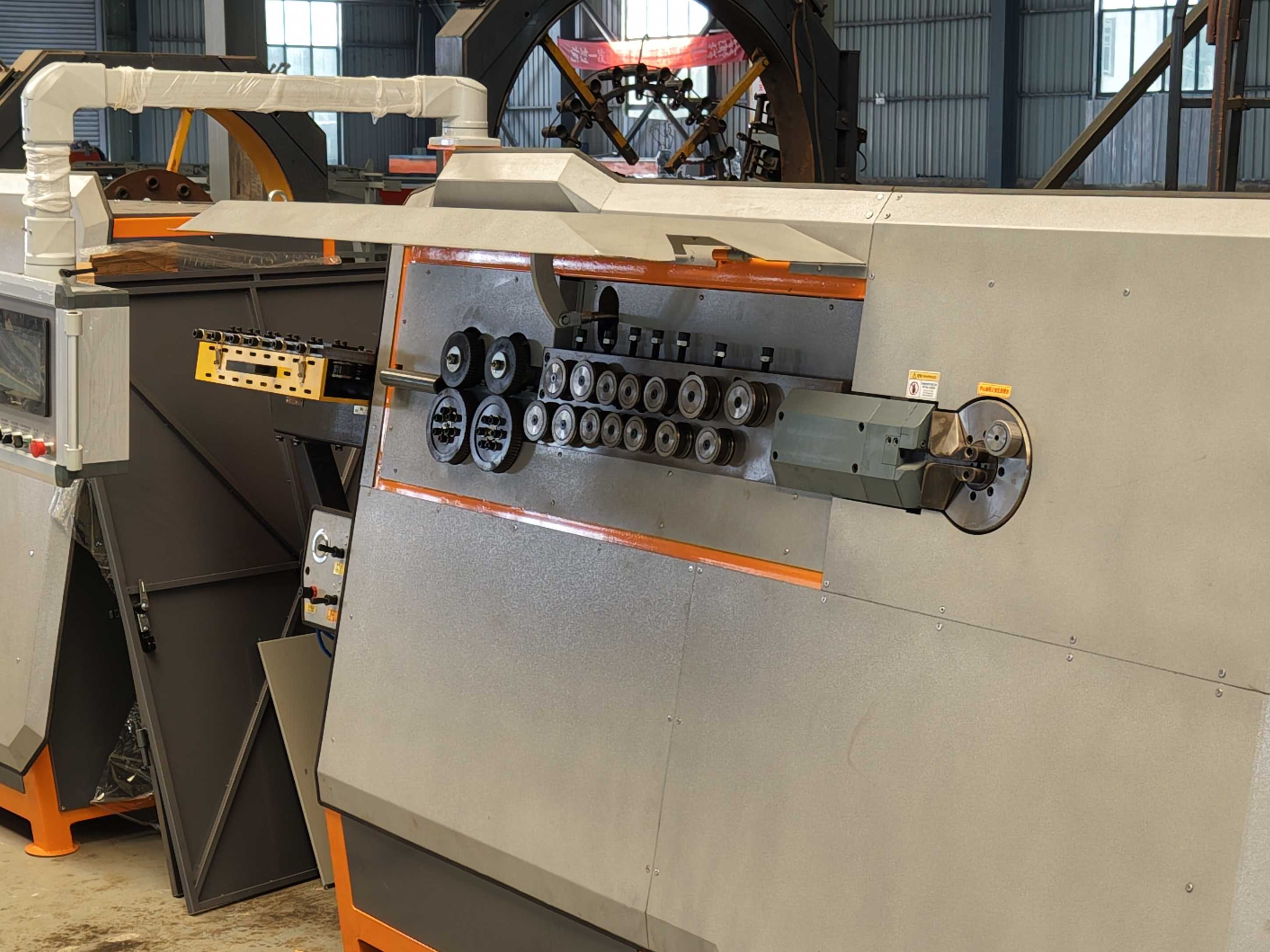
Reference for Full-text Summary: Technical Value and Industry Trends of CNC Steel Bar Processing Equipment
The CNC steel bar processing equipment resolves issues such as low efficiency, inadequate precision, and numerous safety hazards in traditional processing methods through the integration of automated control, high-precision sensors, and intelligent algorithms. Xuhui (Shandong) Intelligent Equipment Co., Ltd. provides customers with efficient and precise steel bar processing solutions leveraging its core technological layout, a comprehensive product matrix, and extensive project experience. For instance, parameters such as the positioning accuracy of ±0.1mm for its steel arch frame production line, an 8-minute processing time per section for the steel cage welding workstation, and an 80-ton processing capacity per shift for the CNC sawing, threading, and grinding production line all demonstrate its technological advantages.
In the future, as infrastructure projects demand higher quality and efficiency, CNC steel bar processing equipment will evolve towards greater intelligence and integration. Xuhui will continue to uphold technological innovation, optimize product performance and services, help customers enhance their competitiveness, and jointly create a better future.