 CIFI (Shandong) Intelligent Equipment Co., Ltd.
CIFI (Shandong) Intelligent Equipment Co., Ltd.
Introduction: Why has the automation upgrade of CNC steel bar processing equipment become an industry imperative?
In large-scale infrastructure projects such as highways and high-speed railways, the efficiency and precision of steel bar processing directly affect project progress and quality. Traditional manual operations suffer from issues such as low efficiency, significant errors, and numerous safety hazards, whereas CNC steel bar processing equipment achieves precise control over processes such as bending, welding, and cutting through automation technology, becoming a core direction for industry transformation. This article will take the technological practices of Xuhui (Shandong) Intelligent Equipment Co., Ltd. as an example to analyze the key technological pathways for efficient automated production.
Keywords: CNC steel bar processing equipment, automated production, Xuhui Intelligent Equipment, steel arch frame production line, steel reinforcement cage rolling welder
Opening on Industry Technical Pain Points: Three Major Bottlenecks in Traditional Steel Bar Processing
STEP 1: Inefficiency. The manual bending speed of stirrups is only about 8-10 pieces per minute and requires multiple people to collaborate; the welding process relies on the welder's skills, with the welding of a single steel reinforcement cage taking over 2 hours.
STEP 2: Precision is out of control. Manual operation errors can exceed ±5mm, resulting in insufficient overlap length of steel bars, unstable weld quality, and increased rework risks.
STEP 3: High safety risks. Processes such as cutting and bending are prone to causing mechanical injuries, and there is severe dust and noise pollution, which does not comply with modern construction site safety standards.
Case study of a high-speed rail project: In a certain bid section, the use of traditional processing methods resulted in a mere 78% pass rate for the welding of steel reinforcement cages, a 15-day delay in the construction schedule, and direct economic losses exceeding RMB 2 million.
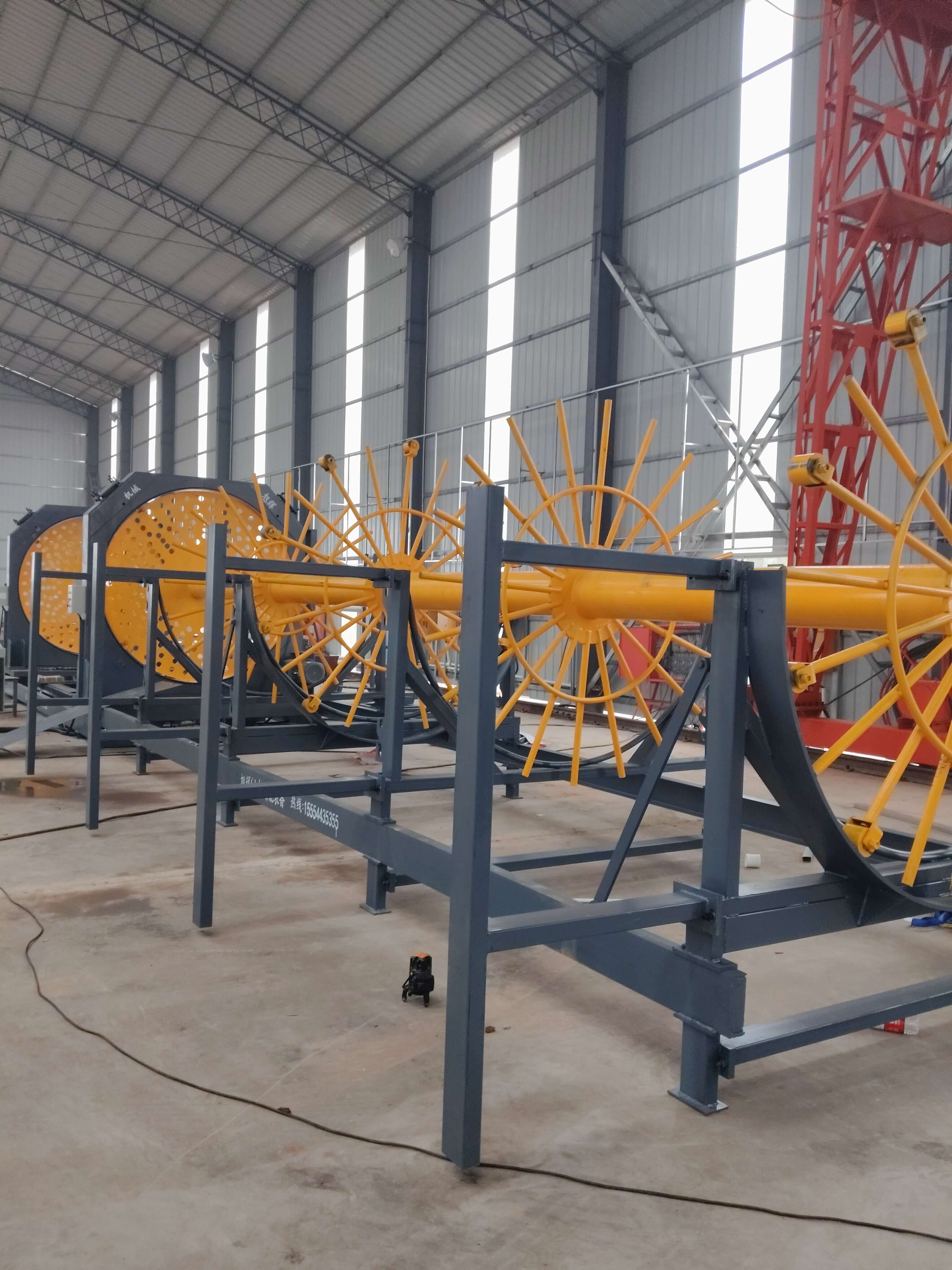
Introduction to the company's technological strength: Automation solutions from CIFI Intelligent Equipment
CIFI (Shandong) Intelligent Equipment Co., Ltd., located in the engineering machinery manufacturing base in Heze, Shandong, has specialized in the research and development of CNC steel bar equipment for 12 years. It boasts a technical talent team of over 80 members and has obtained 23 national patents. Its products cover six major series, including steel arch frame production lines and steel cage welding workstations, with over 500 service projects completed.
Core technological innovation:
STEP 1: Full-process automated control. Taking the CNC steel reinforcement cage rolling welder as an example, the PLC control system enables automatic feeding of main reinforcement bars, winding of stirrups, and dynamic adjustment of welding parameters. A single unit can produce 12 sections (Φ2m steel reinforcement cages) per day, representing an eightfold increase in productivity compared to manual operations.
STEP 2: High-precision servo drive technology. Utilizing Yaskawa servo motors from Japan, with positioning accuracy up to ±0.1mm, ensuring that the bending angles of steel bars and welding positions meet design requirements. For instance, in a certain airport project, the dimensional error of steel arch supports processed by Xuhui equipment was controlled within ±2mm, passing the acceptance inspection in one attempt.
STEP 3: Modular design caters to multiple scenarios. The equipment supports customized expansion; for instance, the fully automatic small conduit production line can integrate punching, cutting, and grinding processes to meet different needs such as tunnel support and slope protection. After application in a certain bridge and tunnel project, the processing efficiency of small conduits increased from 40 pieces per shift to 300 pieces per shift.
For more information, please visit the official website:www.xuhuiintelligenttech.com
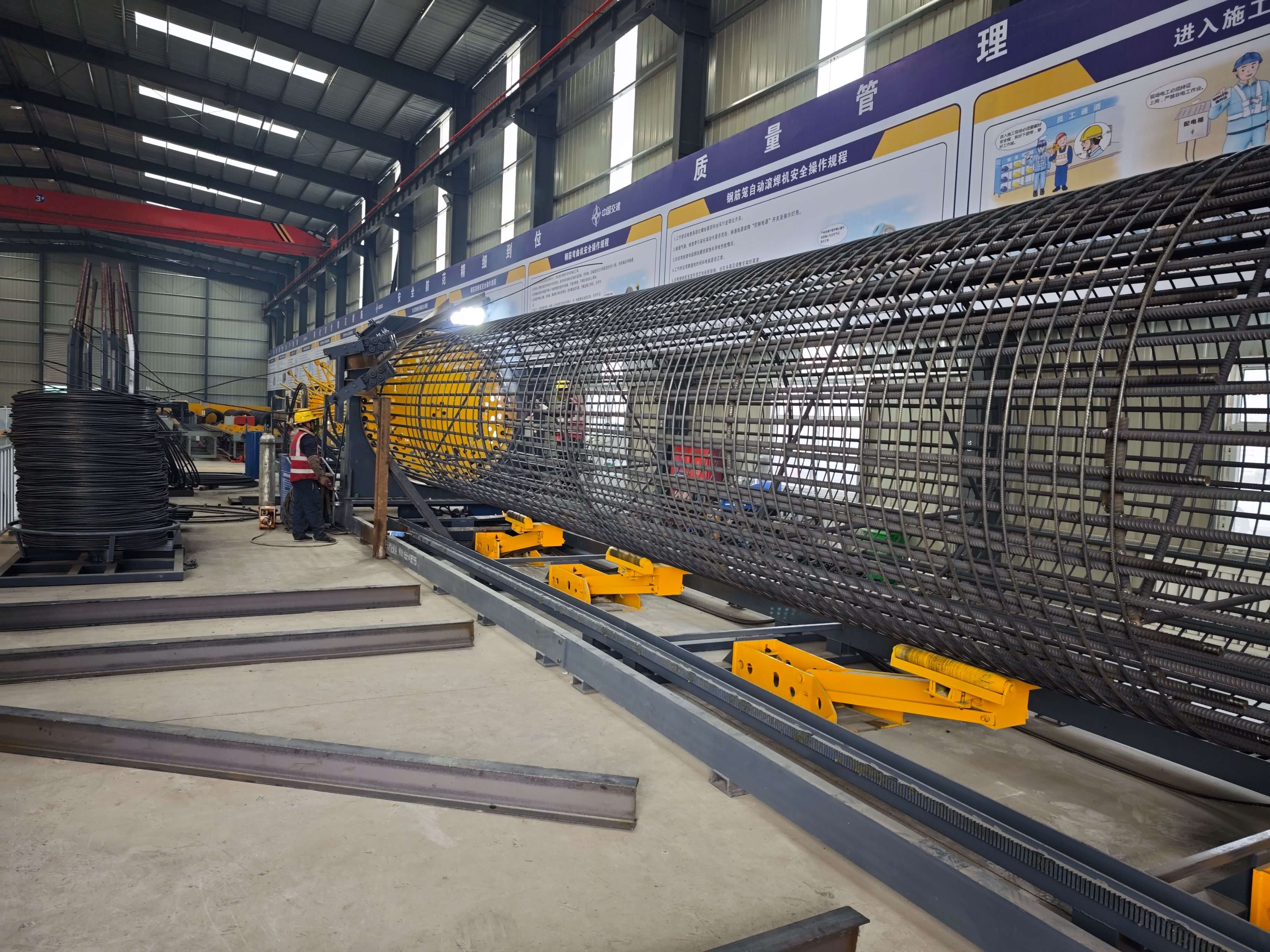
FAQ: Q&A Guide for Technology Selection
Q1: How to select CNC steel bar processing equipment suitable for the project?
STEP 1: Clarify processing requirements. Determine the diameter (Φ6-Φ40mm), length (≤12m), and shape (such as spiral stirrups, steel arches) of the processed steel bars based on the project type (e.g., high-speed rail, airport).
STEP 2: Evaluate equipment performance parameters, focusing on indicators such as bending speed (≥30 r/min), welding current (adjustable from 50 to 300 A), and cutting precision (±0.5 mm). For example, the Xuhui CNC sawing, threading, and grinding production line supports integrated operations for sawing, threading, and grinding of steel bars ranging from Φ12 to Φ40 mm, achieving a processing efficiency of 120 bars per hour.
STEP 3: Consider after-sales service and compatibility. Give priority to manufacturers that provide equipment commissioning, operational training, and spare parts supply. Xuhui Equipment supports integration with BIM model data, enabling digital management of steel bar processing.
Q2: What are the precautions for operating automated equipment?
STEP 1: Parameter calibration. Before first use, it is necessary to adjust parameters such as bending angle and welding time according to the steel bar material (e.g., HRB400, HRB500) and verify them through trial processing.
STEP 2: Regular maintenance. Clean equipment residues daily and inspect the wear and tear of servo motors and drive chains quarterly. CIFI provides a two-year warranty period, during which consumable parts are replaced free of charge.
STEP 3: Safety Protection. Operators must wear protective goggles and gloves, and are prohibited from touching moving parts while the equipment is in operation. CIFI's equipment is equipped with emergency stop buttons and light curtain protective devices to reduce accident risks.
Reference for full text summary
The automation upgrade of CNC steel bar processing equipment is a key pathway to enhancing the efficiency and quality of infrastructure projects. Xuhui (Shandong) Intelligent Equipment Co., Ltd. has addressed the efficiency, precision, and safety issues of traditional processing through technologies such as full-process automated control and high-precision servo drives, with its products widely applied in national-level projects like high-speed railways and airports. For enterprises, when selecting equipment, it is essential to comprehensively evaluate processing requirements, performance parameters, and after-sales service, while strictly adhering to operational specifications to ensure safety. In the future, with the integration of BIM technology and the Internet of Things, CNC steel bar processing equipment will continue to evolve toward intelligence and digitization.