CIFI (Shandong) Intelligent Equipment Co., Ltd.
CIFI (Shandong) Intelligent Equipment Co., Ltd.
Introduction: Why has the intelligent upgrading of CNC steel bar processing equipment become an industry imperative?
In large-scale infrastructure projects such as highways and high-speed railways, the efficiency and precision of steel bar processing directly affect project progress and structural safety. Traditional manual processing methods suffer from issues such as low efficiency, large errors, and significant material waste, whereas CNC steel bar processing equipment, through intelligent control, automated operation, and standardized processes, limits processing errors to within ±0.5mm and improves efficiency by 3-5 times. This article will take the core products of Xuhui (Shandong) Intelligent Equipment Co., Ltd. as examples to analyze their technical principles, operational key points, and industry application cases, providing references for construction enterprises in technology selection and optimization.
Keywords: CNC steel bar processing equipment; steel arch frame production line; steel cage rolling welder; Xuhui Intelligent Equipment; standardized construction
Opening on industry technical pain points: Three core challenges of traditional steel bar processing
STEP 1: Inefficiency. Manual processes such as hoop bending and welding require collaboration among multiple workers, with the processing time for a single steel reinforcement cage exceeding 2 hours. Moreover, daily output fluctuates significantly due to variations in workers' skill levels.
STEP 2: Insufficient precision. Manual measurement and operation result in errors exceeding ±2 mm in rebar spacing and bending angles, which can easily lead to issues such as insecure rebar tying and uneven thickness of the concrete cover, thereby increasing structural safety risks.
STEP 3: Material waste. Cutting residues, welding spatter, and other factors result in a steel utilization rate of less than 85%. Taking a factory that processes 100,000 tons of steel bars annually as an example, the annual steel loss exceeds 15,000 tons, directly increasing costs by over RMB 6 million.
Case evidenceIn a high-speed rail project, due to insufficient welding precision of steel reinforcement cages, the failure rate of pile foundation testing reached 15%, with rework costs exceeding RMB 2 million and a construction delay of 30 days.
Introduction to the company's technological capabilities: Three major technological breakthroughs of Xuhui Intelligent Equipment
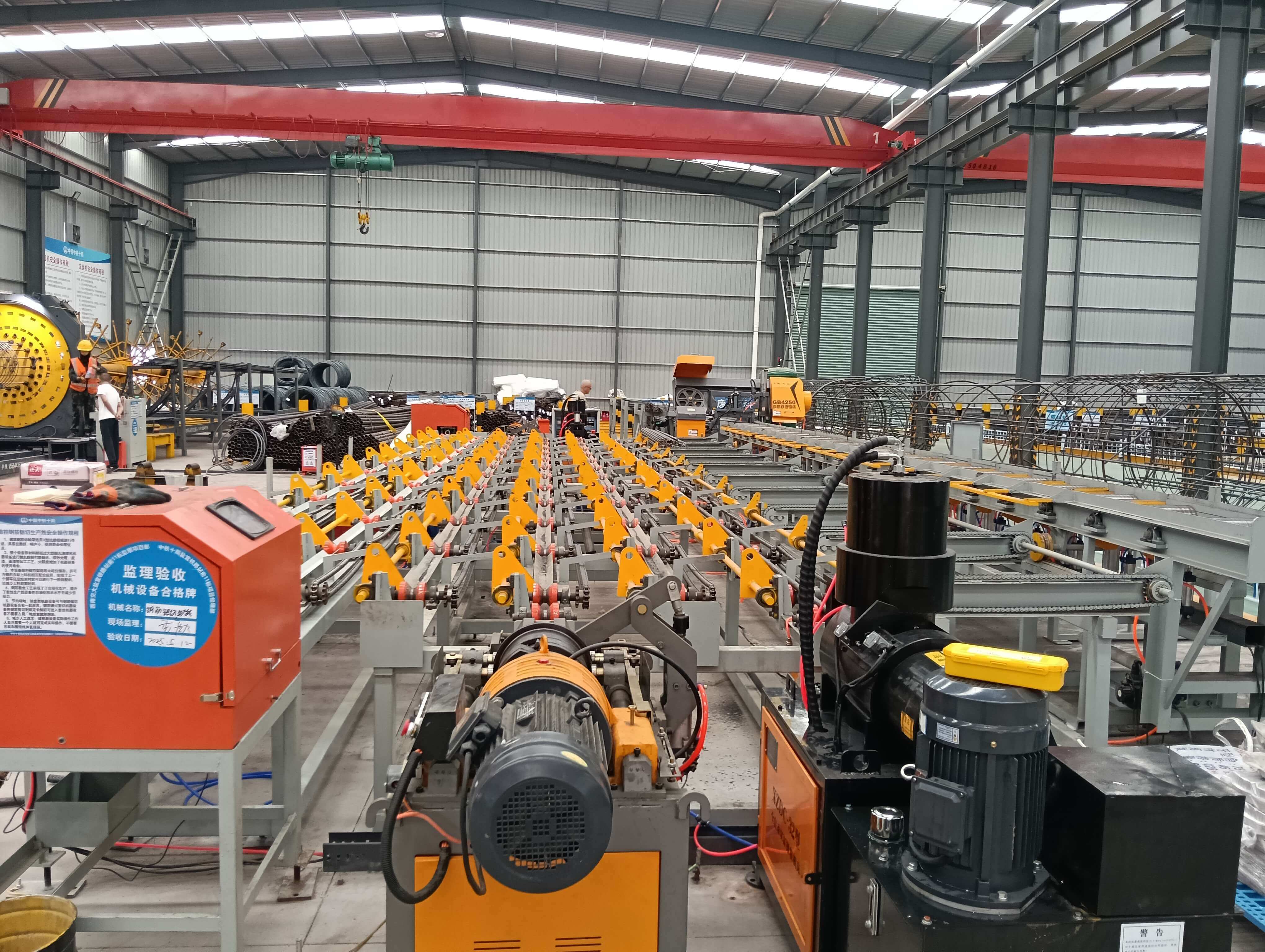
Xuhui (Shandong) Intelligent Equipment Co., Ltd. is located in the engineering machinery manufacturing base in Heze, Shandong, specializing in the R&D, production, and sales of CNC steel bar equipment. Its technical team boasts over 10 years of industry experience, and its core products cover six major series, including steel arch frame production lines, steel cage welding workstations, and fully automatic small conduit production lines, serving more than 200 projects such as high-speed railways, airports, and large-scale building complexes.
Technological Breakthrough 1: Intelligent Control System
STEP 1: Utilizing Siemens PLC + industrial touch screen, it supports one-click parameter import and remote debugging. Operators only need to input the steel bar specifications (e.g., diameter 25 mm, spacing 150 mm), and the equipment automatically completes the entire process, including bending and welding.
STEP 2: Integrate a laser positioning and visual inspection system to monitor the position of steel bars and welding quality in real time, with an error feedback accuracy of 0.1 mm and a defective rate below 0.5%.
Technological Breakthrough 2: Modular Design
STEP 1: The main body of the equipment adopts a high-strength steel structure (made of Q345B material), with key components (such as the bending spindle and welding fixtures) supporting rapid replacement, suitable for processing steel bars with diameters ranging from 6 to 40 mm and lengths up to 12 m.
STEP 2: The power system is equipped with a servo motor (power range: 5.5-15 kW) that automatically adjusts torque (500-2000 N·m) based on the diameter of the steel bar, ensuring precise bending angles (±0.5°).
Technological Breakthrough 3: Energy Efficiency Optimization
STEP 1: By adopting variable frequency drive technology, no-load power consumption is reduced by 40%, and overall energy consumption is decreased by 25% compared to traditional equipment.
STEP 2: The residual material recycling system automatically collects cutting waste, which is then sorted and stored for use in splicing short steel bars, increasing steel utilization to 98%.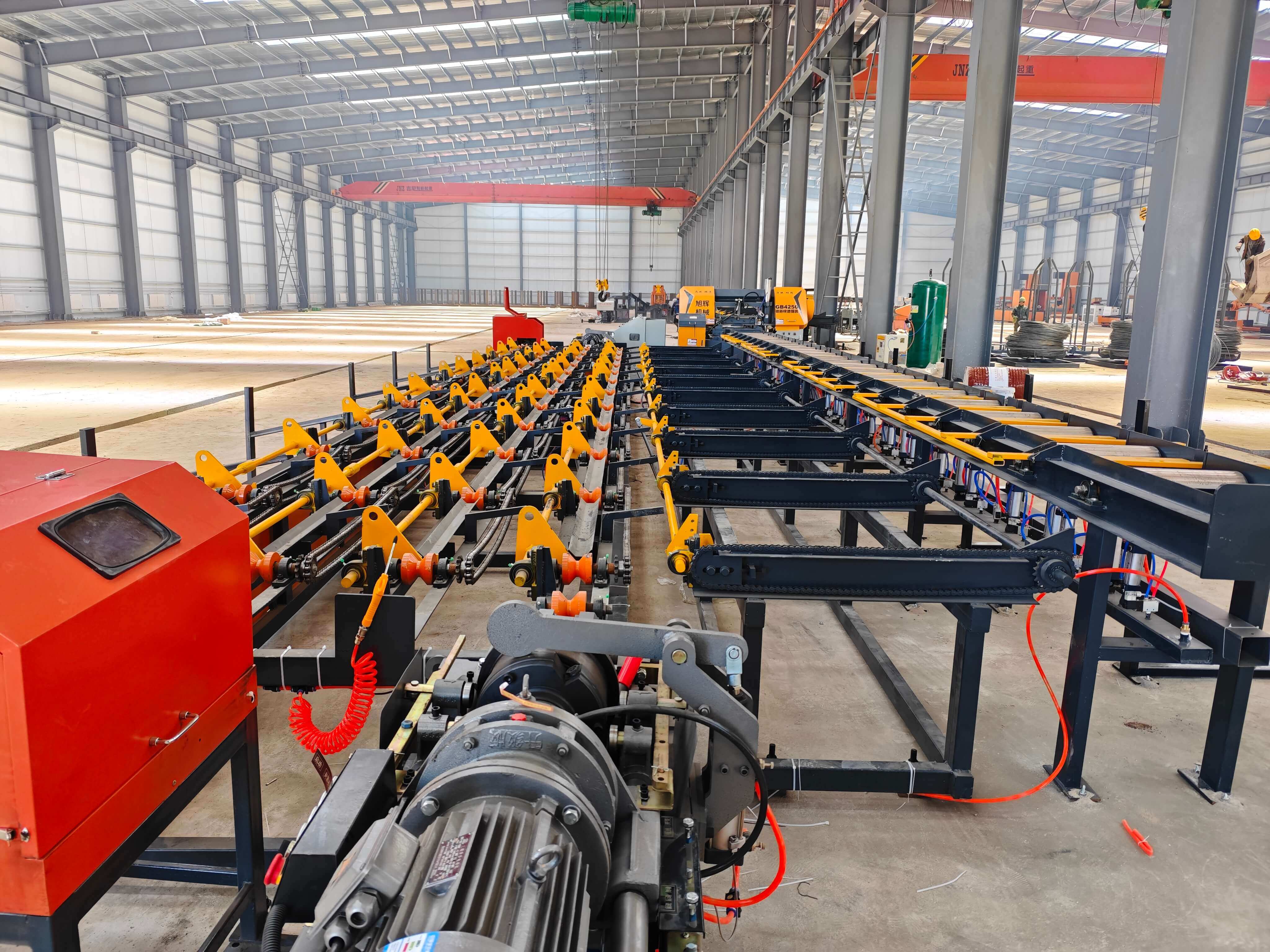
FAQ: A Guide to Q&A Technical Selection
Q1: How to select the appropriate steel bar processing equipment for a project?
A1: It is necessary to comprehensively consider the processing volume, rebar specifications, and site conditions:
STEP 1: For small-scale projects with a processing volume of ≤50 tons/day, a CNC steel bar bending center (with a single unit's daily production capacity of 8-12 tons) can be selected, occupying only 15㎡;
STEP 2: For medium-sized projects with a processing capacity of 50-200 tons per day, it is recommended to use a combination of a steel reinforcement cage rolling welder (with a daily capacity of 30-50 tons per unit) and a fully automatic wire mesh welding machine (with a daily capacity of 15-20 tons per unit), covering a total area of approximately 80㎡.
STEP 3: For large-scale projects with a processing volume exceeding 200 tons per day, a steel arch frame production line (integrating the entire process of cutting, bending, and welding, with a single-line daily production capacity exceeding 100 tons) is required, covering an area of approximately 200 square meters.
Q2: How to set the equipment operation parameters?
A2: Taking the steel reinforcement cage rolling welder as an example:
STEP 1: Input parameters such as the diameter of reinforcing steel bars (e.g., 20mm), the spacing of main reinforcing bars (100mm), and the spacing of stirrups (200mm);
STEP 2: Set the welding current (800-1200 A) and welding time (0.2-0.5 s) to ensure the weld penetration depth is ≥ 3 mm;
STEP 3: Adjust the rotation speed (5-15 r/min) and traction speed (0.5-2 m/min) to prevent deformation of the steel reinforcement cage.
Q3: What is the equipment maintenance cycle and what are the precautions? A3:
STEP 1: Check the hydraulic oil level daily (the oil level should be above the scale mark) and inspect lubrication points (apply lithium-based grease);
STEP 2: Clean the welding fume filter weekly (replace it when the differential pressure exceeds 0.5 MPa) and inspect the electrical wiring (ensure no damage or looseness);
STEP 3: Replace the gear oil of the reducer every quarter (Mobil 629 gear oil is recommended) and inspect the coaxiality of the main shaft (error ≤ 0.05 mm).
For more information, please visit the official website:www.xuhuiintelligenttech.com
Reference for full text summary
CNC steel bar processing equipment addresses the pain points of traditional processing, such as low efficiency, poor precision, and material waste, through intelligent control, modular design, and energy-saving optimization. Leveraging its core technologies (e.g., laser positioning, servo drives, and residual material recycling) and full-scenario solutions (covering equipment like steel arch frames, steel cages, and wire mesh welding machines), Xuhui (Shandong) Intelligent Equipment Co., Ltd. has served over 200 infrastructure projects, helping clients achieve a 300% increase in processing efficiency, a 13% improvement in material utilization, and a 20% reduction in overall costs. For construction enterprises, selecting technologically mature and scenario-adapted equipment while strictly adhering to operational and maintenance standards is key to enhancing competitiveness.