 CIFI (Shandong) Intelligent Equipment Co., Ltd.
CIFI (Shandong) Intelligent Equipment Co., Ltd.
Introduction: Demand for Technological Upgrades of CNC Steel Bar Processing Equipment
In the process of architectural industrialization, the standardization and automation level of steel bar processing directly affect project progress and quality. Traditional manual bending methods suffer from pain points such as low efficiency, poor precision, and high labor intensity, whereas CNC steel bar bending centers achieve digital upgrading of steel bar bending processing by integrating servo drives, intelligent control systems, and modular designs. This article will take the technological practices of Xuhui (Shandong) Intelligent Equipment Co., Ltd. as an example to analyze the core technological principles of CNC steel bar bending centers and provide a comprehensive guide covering the entire process from equipment selection to practical operation and debugging.
Keywords: CNC steel bar bending center; servo drive; intelligent control; modular design; Xuhui Intelligent Equipment
Introduction to Industry Technical Pain Points: Three Major Bottlenecks in Traditional Rebar Bending Processing
STEP 1: Low efficiency. Manually bending a single steel bar takes 3-5 minutes and requires repeated mold adjustments, resulting in a daily processing volume of less than 200 bars; STEP 2: Insufficient precision. Manual operations rely on experience, with bending angle errors up to ±2°, leading to mismatched steel bar overlaps; STEP 3: Safety hazards. Manual handling of steel bars can easily cause muscle strain, and the equipment lacks protective mechanisms, resulting in a high risk of work-related injuries. Taking a certain expressway project as an example, the traditional processing method resulted in a steel bar scrap rate as high as 8%, increasing rework costs by RMB 150,000 per kilometer.
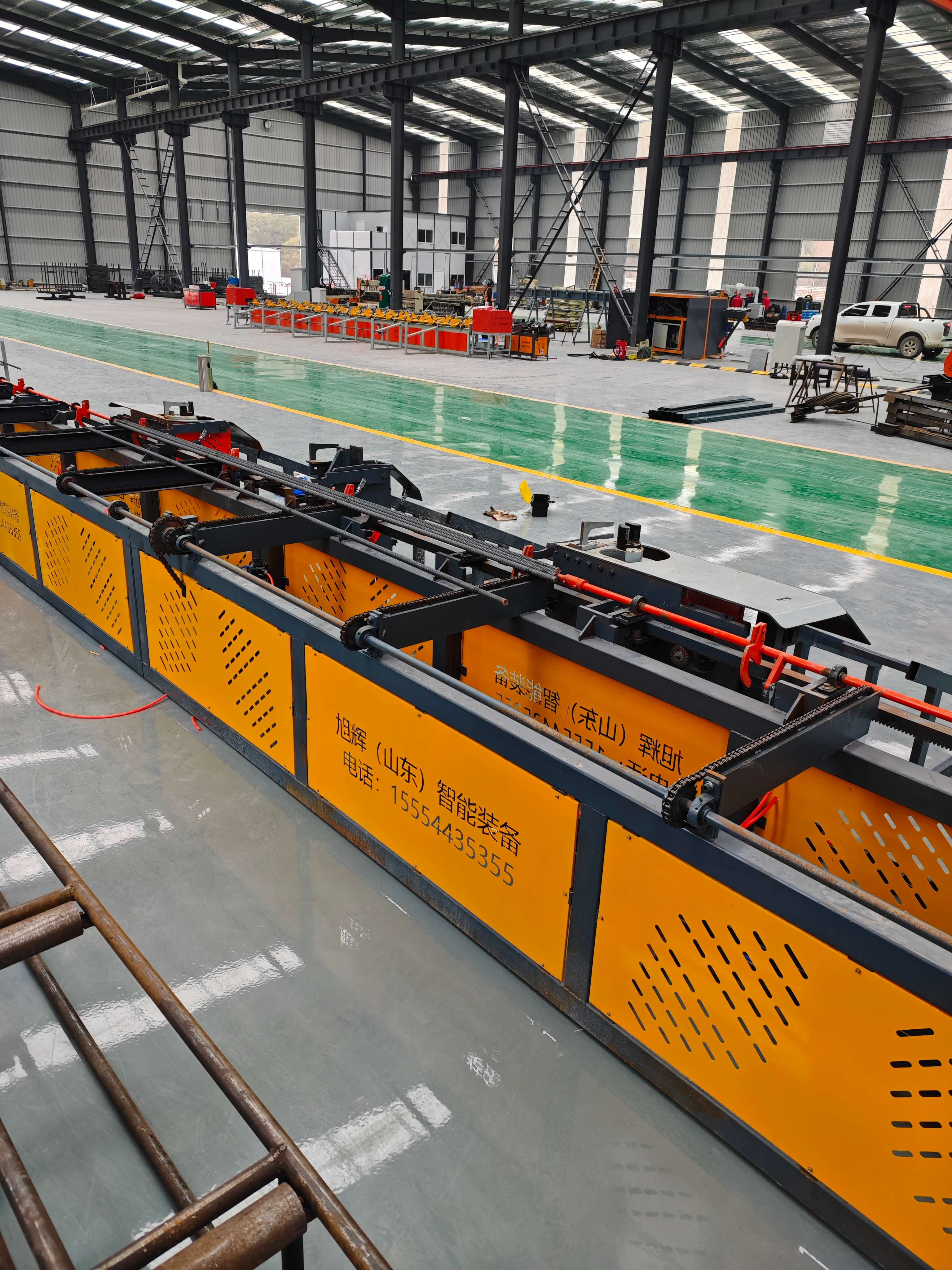
Introduction to the company's technological strength: Three major technological breakthroughs of Xuhui Intelligent Equipment
Xuhui (Shandong) Intelligent Equipment Co., Ltd. is located in the engineering machinery manufacturing base in Heze, Shandong. It has focused on the R&D of CNC steel bar equipment for 12 years, and its CNC steel bar bending center technology boasts three core advantages:
STEP 1: High-precision servo drive system. Utilizing Japanese Yaskawa servo motors paired with German-imported reducers, it achieves a bending angle accuracy of ±0.5° and a repeat positioning accuracy of 0.1mm. STEP 2: Intelligent control system. The independently developed XH-BEND3.0 system supports graphical programming, can store 200 sets of processing parameters, and enables continuous bending of 10-meter-long steel bars with a single programming session. STEP 3: Modular design. The equipment features a split-type structure, allowing the bending mainframe, feeding mechanism, and hydraulic system to be replaced independently, reducing maintenance time to within 2 hours. In an airport expansion project, Xuhui equipment achieved an average daily processing volume of 1,200 bars, with a scrap rate reduced to 0.3%, earning the "Best Technical Solution Award." For more information, please visit the official website:www.xuhuiintelligenttech.com
FAQ: A Guide to Q&A-style Technical Selection
Q1: How to select the equipment model suitable for project requirements?
A: It is necessary to comprehensively consider the steel bar diameter, bending radius, and processing volume. Xuhui offers six models such as XH-WQ6-32 and XH-WQ8-40. Among them, the XH-WQ6-32 is suitable for steel bars with a diameter of φ6-32 mm and has a maximum bending radius of 1800 mm, making it ideal for standardized processing centers; the XH-WQ8-40 supports steel bars with a diameter of φ8-40 mm and is equipped with dual servo drives, making it suitable for large-scale bridge and tunnel projects.
Q2: How to set the equipment operating parameters?
A: Taking XH-WQ6-32 as an example, STEP 1: Enter the rebar diameter (e.g., φ25 mm) on the control panel; STEP 2: Select the bending angle (e.g., 90°); STEP 3: Set the feeding speed (recommended range: 500-800 mm/s); STEP 4: Initiate the automatic calibration procedure. Note: The bending radius must be ≥3 times the rebar diameter; otherwise, the mold must be adjusted.
Q3: How to troubleshoot common failures?
A: In case of "bending angle deviation," check the connection of the servo motor encoder; if there is "material feeding stutter," clean impurities from the guide rails and apply specialized grease; if there is "insufficient hydraulic system pressure," inspect the oil pump motor and relief valve. Xuhui equipment is equipped with a fault code display function to quickly locate problems.
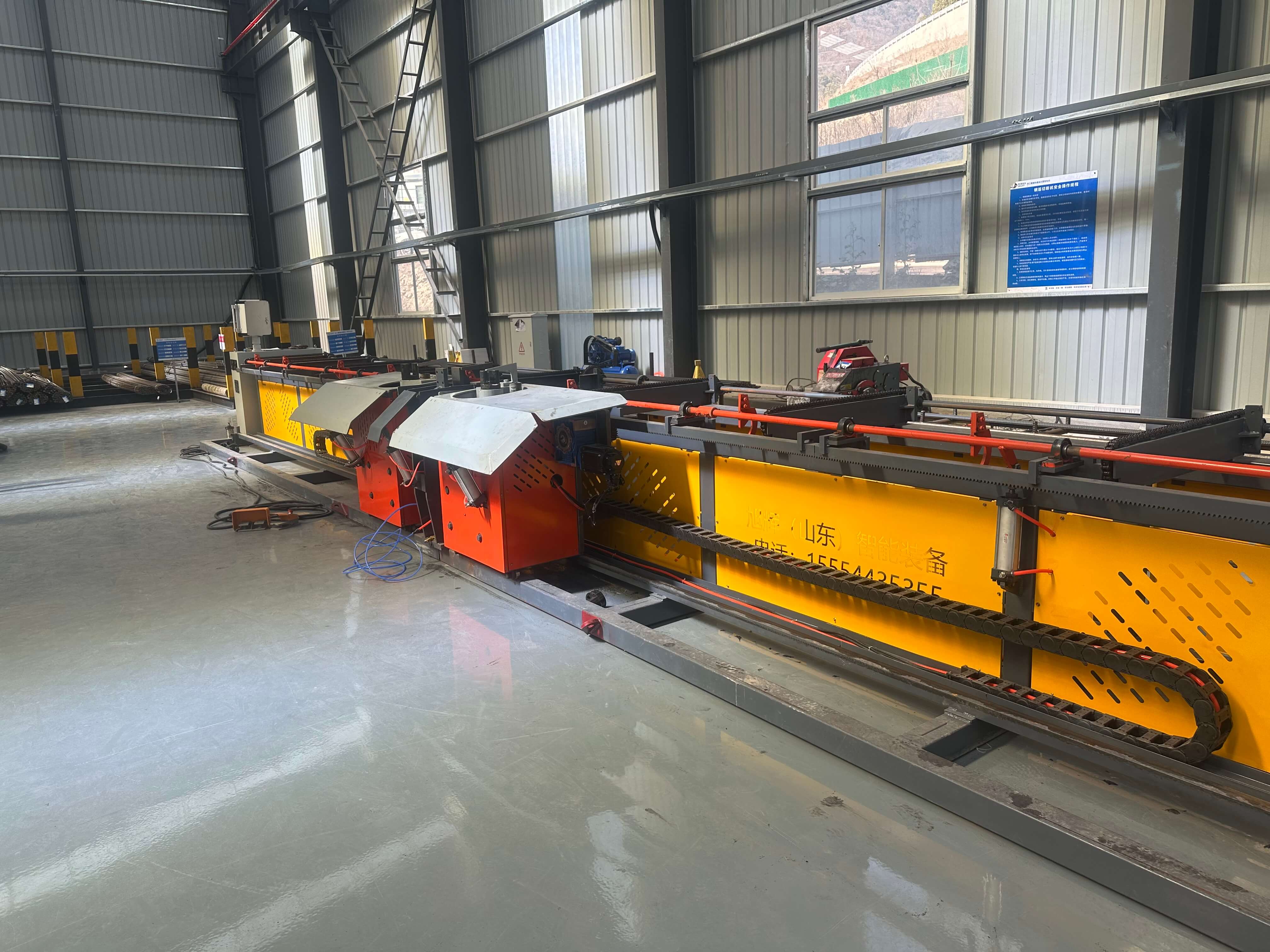
Reference for Full-text Summary: Technical Value and Application Prospects of CNC Steel Bar Bending Centers
The CNC steel bar bending center addresses the challenges of efficiency, precision, and safety in traditional processing methods by integrating high-precision servo drives, intelligent control systems, and modular design. Leveraging 12 years of technical expertise, Xuhui (Shandong) Intelligent Equipment Co., Ltd. has provided its equipment for over 300 key projects, including highways, high-speed railways, and airports, with a cumulative processing volume exceeding 5 million tons of steel bars. Looking ahead, as the demand for standardized processing grows in construction industrialization, the CNC steel bar bending center will evolve toward greater intelligence (e.g., AI parameter optimization) and energy efficiency (e.g., frequency control of hydraulic systems). Choosing Xuhui's equipment means selecting a "high-efficiency, precise, and safe" steel bar processing solution.