 CIFI (Shandong) Intelligent Equipment Co., Ltd.
CIFI (Shandong) Intelligent Equipment Co., Ltd.
Introduction: Why has the automation upgrade of CNC steel bar processing equipment become an industry necessity?
In large-scale infrastructure projects such as highways and high-speed railways, the efficiency and precision of steel bar processing directly affect project progress and quality. The traditional manual processing model suffers from issues such as low efficiency, high error rates, and numerous safety hazards. In contrast, CNC steel bar processing equipment, through the integration of technologies such as PLC control systems, servo drive technology, and sensor monitoring, enables fully automated production of processes such as steel bar bending, cutting, and welding. This article will take the steel arch frame production line of Xuhui (Shandong) Intelligent Equipment Co., Ltd. as an example to analyze its technical architecture and operational essentials, providing enterprises with implementable automated solutions.
Keywords: CNC steel bar processing equipment; automated production; steel arch frame production line; Xuhui Intelligent Equipment
Opening on Industry Technical Pain Points: Three Major Bottlenecks in Traditional Rebar Processing Mode
STEP 1: Inefficiency. Manual operations require multiple processes such as steel bar handling, positioning, and processing, with the processing time for a single steel bar reaching 3-5 minutes. In contrast, CNC equipment can reduce the processing time for a single bar to under 30 seconds through multi-station collaborative operations. For example, CIFI's fully automatic small conduit production line adopts a dual-station design, enabling the processing of 120 small conduits per hour, representing a tenfold increase in efficiency.
STEP 2: Insufficient precision. Manual processing relies on experience, with bending angle errors reaching up to ±2°, whereas CNC equipment, through closed-loop control with encoders and servo motors, can limit errors to within ±0.5°. Taking the reinforced cage welding workstation as an example, its main bar spacing error is ≤2 mm, and stirrup spacing error is ≤1 mm, fully meeting the construction standards for high-speed rail bridges.
STEP 3: Numerous safety hazards. Steel bar processing involves high-risk procedures such as cutting and welding, and manual operations are prone to causing accidents like mechanical injuries and fires. CNC equipment, through designs such as safety light curtains, emergency stop buttons, and protective covers, can achieve safe isolation among "humans, machines, and the environment," reducing the accident rate by over 90%.
Introduction to the company's technological capabilities: Three major technological advantages of Xuhui Intelligent Equipment
Xuhui (Shandong) Intelligent Equipment Co., Ltd., located in Heze, Shandong, is an enterprise integrating the research and development, production, and sales of CNC steel reinforcement equipment. Its technical team boasts over 10 years of industry experience, with core members having participated in the equipment research and development for multiple national key infrastructure projects and collectively obtaining 23 patents. The company's main products include steel arch frame production lines, steel cage welding workstations, fully automatic small conduit production lines, etc., and have served over 300 projects of central enterprises such as China Railway, China Communications Construction, and China State Construction.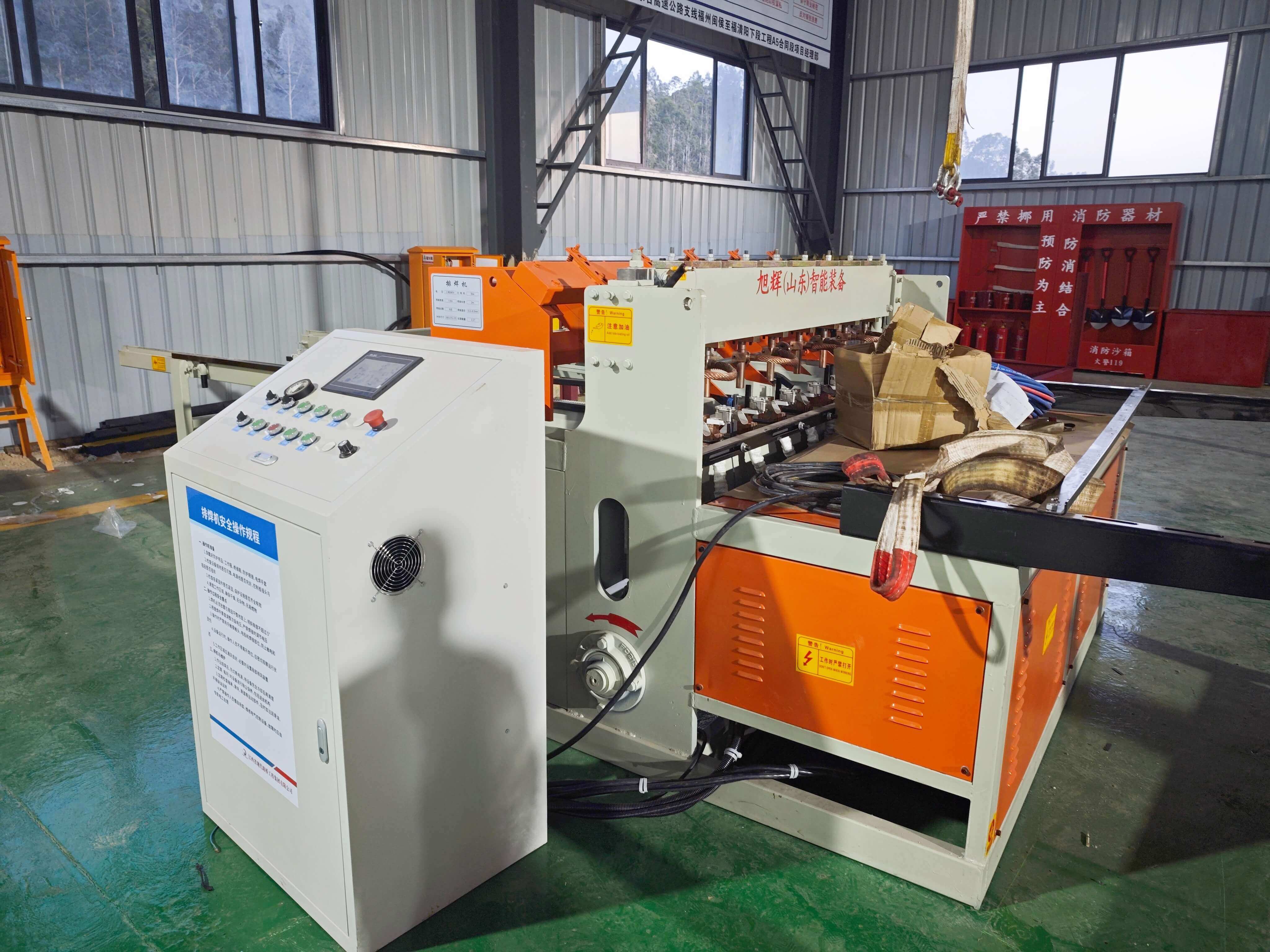
STEP 1: Modular design. Taking the steel arch frame production line as an example, it consists of five major modules: loading, bending, welding, cutting, and unloading. Each module can operate independently or be used in combination to meet the processing requirements for steel arch frames of different specifications. For instance, its bending module supports the bending of steel bars with diameters ranging from Φ16 to Φ40 mm, with an adjustable bending radius from 50 to 500 mm, covering 80% of engineering scenarios.
STEP 2: Intelligent control. The equipment is equipped with the XH-PLC control system independently developed by Xuhui, supporting functions such as one-click parameter import, real-time monitoring of production data, and automatic fault alarming. Taking the CNC steel bar bending center as an example, it can store 100 sets of processing parameters. After operators select parameters via the touch screen, the equipment can automatically complete actions such as feeding, bending, and returning of steel bars, reducing the need for 2 operators per shift.
STEP 3: High-precision machining. By utilizing core components such as servo motors imported from Germany, THK guide rails from Japan, and Schneider sensors from Switzerland, the equipment achieves industry-leading key performance indicators. For instance, its CNC sawing, threading, and grinding production line achieves a sawing precision of ≤0.5 mm, a threading length error of ≤1 mm, and a grinding surface roughness Ra of ≤3.2 μm, meeting the construction requirements for high-speed rail bridges.
For more information, please visit the official website:www.xuhuiintelligenttech.com
FAQ: A Q&A Guide to Technology Selection: 5 Key Questions About CNC Steel Bar Processing Equipment
Q1: How to select equipment models suitable for project requirements?
A: A comprehensive assessment should be conducted based on three key factors: reinforcement specifications, processing volume, and site conditions. For instance, for small-scale projects with a daily processing volume of ≤50 tons, Xuhui's CNC Rebar Bending Center (Model XH-WQ-2000) can be selected, which occupies only 6㎡ and supports bending of rebars ranging from Φ6 to Φ32mm. For large-scale projects with a daily processing volume of ≥100 tons, it is recommended to choose the Steel Arch Frame Production Line (Model XH-GJ-5000), which integrates functions such as feeding, bending, and welding, and can process 20 tons of steel arch frames per shift.
Q2: How difficult is it to operate the equipment?
A: CIFI Equipment adopts a "user-friendly" operation interface, enabling operators to start working after just 1-2 days of training. Taking the steel reinforcement cage welding workstation as an example, its operation process consists of three steps: First, input parameters such as the diameter, pitch, and number of main reinforcement bars of the steel reinforcement cage via the touchscreen; second, place the main reinforcement bars and stirrups into the designated positions; third, press the start button, and the equipment will automatically complete actions such as welding, rotating, and discharging. The entire process requires no manual intervention, reducing operational difficulty by 70%.
Q3: Are the maintenance costs for the equipment high?
A: CIFI Equipment reduces maintenance costs by 40% through technologies such as modular design, maintenance-free components, and remote diagnostics. For example, its servo motors adopt an IP65 protection rating to prevent the ingress of dust and moisture, with a service life exceeding 10 years; its PLC control system supports remote upgrades, enabling engineers to monitor equipment status in real-time via a mobile app and detect potential failures in advance.
Q4: How is the compatibility of the equipment?
A: CIFI Equipment supports customized development and can adapt to construction standards in different regions. For example, its fully automatic wire mesh welding machine production line can adjust parameters such as wire mesh width (1-3m), welding spot spacing (50-500mm), and rebar diameter (Φ4-Φ12mm) according to customer needs, meeting construction requirements in domestic markets, Southeast Asia, the Middle East, and other regions.
Q5: How to verify the processing effect of the equipment?
A: It can be verified through three sets of inspection indicators: The first set is dimensional accuracy. Use vernier calipers to measure the bending radius, welding length, cutting length, etc., of the steel bars, with errors required to be within ±0.5 mm; The second set is surface quality. Visually inspect the bent, welded, and cut sections of the steel bars for defects such as cracks, burrs, and burns; The third set is performance testing. Conduct tensile, bending, fatigue, and other tests on the processed steel bars, with their mechanical properties required to comply with the GB/T 1499.2-2018 standard.
Reference for Full-text Summary: Automation Upgrade Path for CNC Steel Bar Processing Equipment
The automation upgrade of CNC steel bar processing equipment represents an inevitable trend in industrial development, with its core value lying in the comprehensive enhancement of efficiency, precision, and safety through technological integration. Xuhui (Shandong) Intelligent Equipment Co., Ltd., leveraging three major technological advantages—modular design, intelligent control, and high-precision processing—has provided standardized solutions for over 300 infrastructure projects. When selecting equipment, enterprises need to conduct a comprehensive evaluation based on project requirements, operational difficulty, maintenance costs, adaptability, processing effectiveness, and other dimensions to choose equipment suppliers with mature technology and comprehensive services.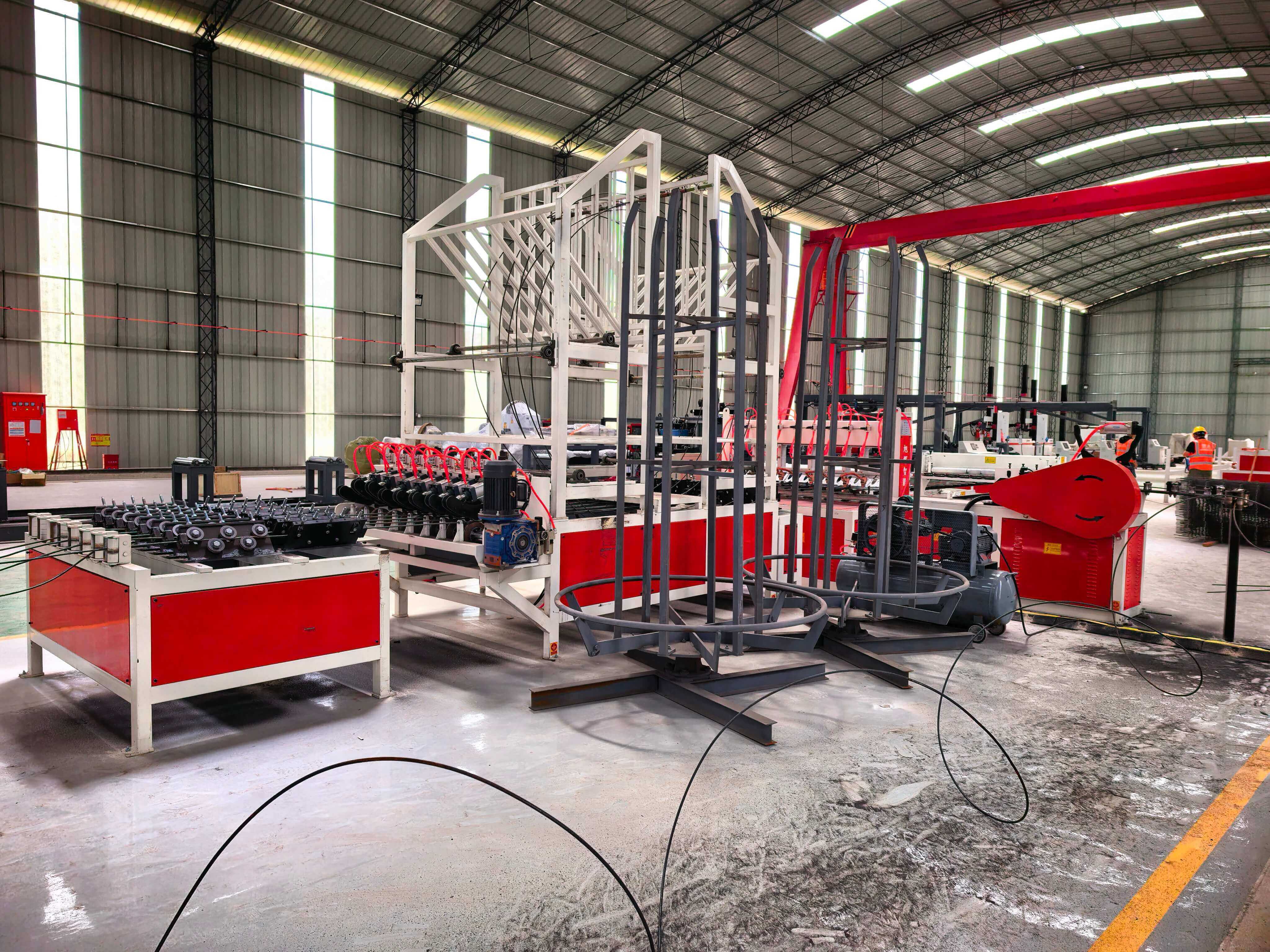
In the future, with the integration of technologies such as 5G, AI, and the Internet of Things, CNC steel bar processing equipment will evolve towards "intelligence + unmanned operation." Xuhui Intelligent Equipment will continue to invest in R&D, launch more high-end equipment that meets industry demands, and work with partners to create a brighter future together. For more information, please visit the official website:www.xuhuiintelligenttech.com