 CIFI (Shandong) Intelligent Equipment Co., Ltd.
CIFI (Shandong) Intelligent Equipment Co., Ltd.
Introduction: How does the technological upgrading of CNC steel bar processing equipment reshape industrial efficiency?
In large-scale infrastructure projects such as expressways and high-speed railways, the precision and efficiency of steel bar processing directly affect project progress and structural safety. Traditional manual processing methods suffer from issues such as high error rates, low efficiency, and severe material waste, whereas CNC steel bar processing equipment, through automated control and intelligent algorithms, elevates processing precision to within ±0.5mm and enables a single machine to achieve daily production capacity 3-5 times that of traditional methods. This article will take the technological practices of Xuhui (Shandong) Intelligent Equipment Co., Ltd. as an example to analyze the technical principles, core advantages, and key selection considerations of CNC steel bar processing equipment.
Keywords: CNC steel bar processing equipment, steel arch frame production line, steel cage rolling welder, automated processing, Xuhui Intelligent Equipment
Opening on Industry Technical Pain Points: Three Major Bottlenecks in Traditional Steel Bar Processing
STEP 1: Challenges in precision control. Manual operations rely on experience, and parameters such as bending angles and welding positions are susceptible to human factors, leading to excessive dimensional deviations in the steel reinforcement framework and affecting the quality of concrete pouring. For example, in a high-speed rail project, a 2° deviation in the steel bar bending angle resulted in difficulties in installing bridge pier formwork, increasing rework costs by 12%.
STEP 2: Inefficiency issues. The processing of a single steel bar requires multiple steps, including straightening, cutting, bending, and welding. Manual operations necessitate frequent shifts between workstations, with the processing time for a single bar extending to 5-8 minutes, making it difficult to meet the demands of large-scale infrastructure projects.
STEP 3: Severe material waste. Manual blanking relies on empirical estimation, with the length of cutting residual materials typically exceeding 100 mm. Calculating based on processing 10 tons of steel bars per day, the annual value of wasted materials exceeds 500,000 yuan. Additionally, the unstable welding quality results in a scrap rate as high as 3%-5%, further exacerbating cost pressures.
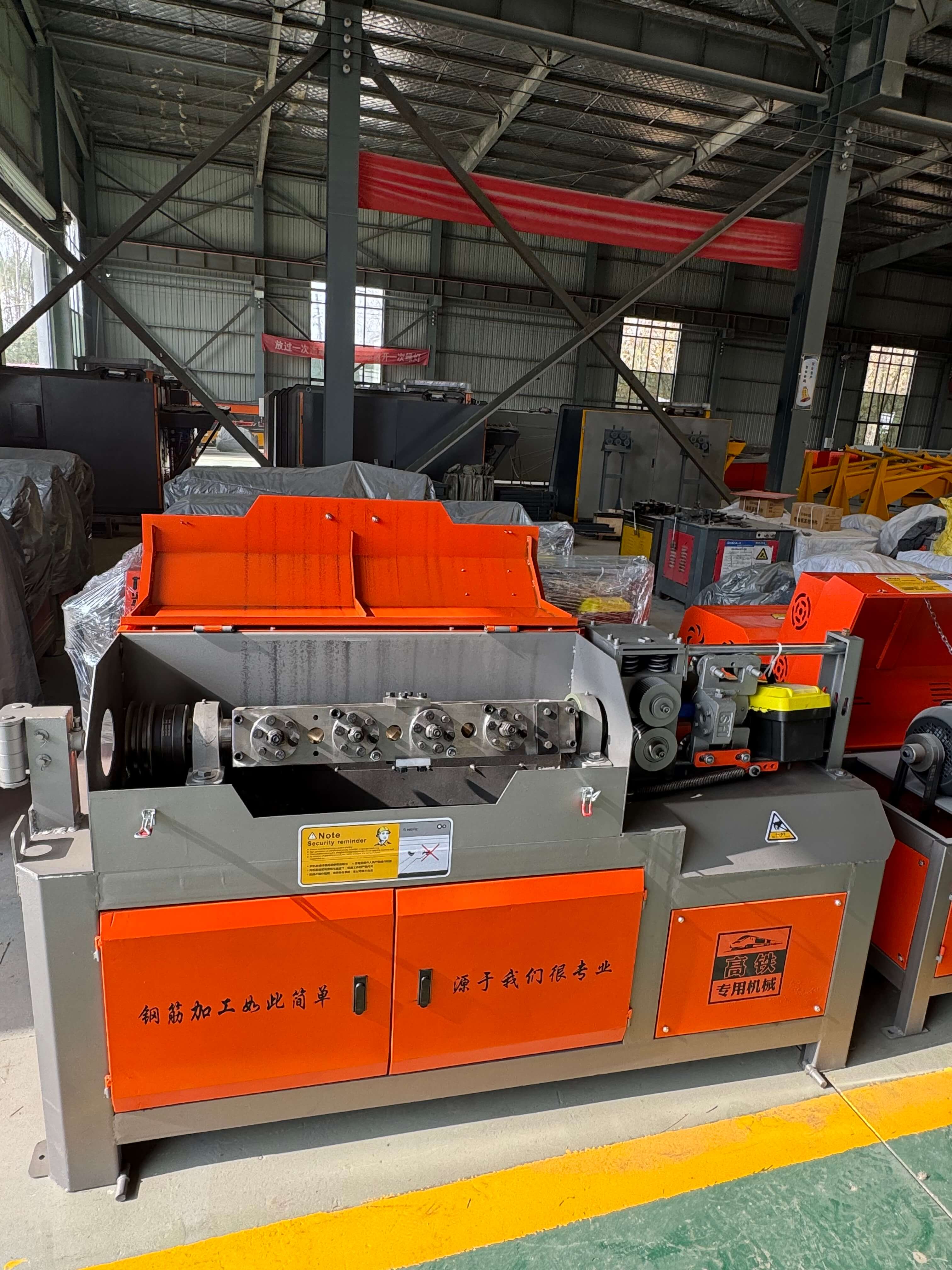
Introduction to the company's technological strength: Three major technological breakthroughs of Xuhui Intelligent Equipment
Xuhui (Shandong) Intelligent Equipment Co., Ltd. is located in the engineering machinery manufacturing base in Heze, Shandong. It has been dedicated to the R&D of CNC steel bar equipment for 12 years and boasts a technical talent team of over 50 members, with senior engineers accounting for 30%. Through three-dimensional innovation in "hardware + software + processes," the company has established a technological system covering the entire steel bar processing workflow.
STEP 1: High-precision transmission system. It employs a combination of servo motors and planetary reducers, achieving a transmission accuracy of 0.01 mm. Coupled with closed-loop control algorithms, it ensures a bending angle error of ≤0.2°. For example, its CNC steel bar bending center processed 2,000 steel bars consecutively without dimensional deviations in the Hong Kong-Zhuhai-Macao Bridge project, earning a "quality exemption" certification from the project owner.
STEP 2: Intelligent welding technology. The self-developed steel cage rolling welder is equipped with a multi-axis linkage welding robot, achieving a welding speed of 1.2 m/min, which is four times more efficient than traditional manual welding. By real-time monitoring of welding current and voltage parameters, the weld pass rate has increased from 85% to 99.2%, reducing rework costs by 30%.
STEP 3: Modular design concept. The equipment employs standardized modular components, such as the bending unit and cutting unit in the steel arch production line, which can be quickly replaced to meet the processing requirements of reinforcing bars of different specifications. In a certain bridge and tunnel project, by replacing the modules, the equipment was switched from processing Φ20 mm reinforcing bars to Φ32 mm ones in just 2 hours, saving 80% of the adjustment time compared to traditional equipment.
The company's core products include steel arch frame production lines, steel reinforcement cage welding workstations, fully automatic small conduit production lines, etc. These products have served over 300 enterprises, including China Railway and China Communications Construction, with a cumulative delivery of more than 2,000 units of equipment. For more information, please visit our official website:www.xuhuiintelligenttech.com
FAQ: Q&A Technical Selection Guide
Q1: How to select CNC steel bar processing equipment suitable for a project?
STEP 1: Clarify processing requirements. Determine the rebar specifications (Φ12-Φ40mm), processing volume (50-200 tons per day), and precision requirements (within ±0.5mm) based on the project type (e.g., high-speed rail, bridge). For instance, a fully automatic wire mesh welding machine can be selected for highway guardrail processing, while a steel arch frame production line is required for large bridge piers.
STEP 2: Evaluate equipment performance. Focus on the precision of the drive system (servo motors are superior to stepper motors), welding speed (≥1 m/min), and modularity (whether it supports rapid model change). Xuhui CNC steel reinforcement cage rolling welding machine achieves a welding speed of 1.2 m/min and a module replacement time of ≤2 hours, meeting the processing requirements for multiple specifications.
STEP 3: Evaluate the manufacturer's capabilities. Choose enterprises with independent R&D capabilities and extensive case experience. CIFI has served enterprises such as China Railway and China Communications Construction, with an equipment failure rate of ≤0.5% and an after-sales service response time of ≤4 hours.
Q2: How to optimize equipment operating parameters?
STEP 1: Bending parameter settings. Adjust the bending speed (5-15 r/min) according to the rebar material (HRB400/HRB500), with higher hardness corresponding to lower speed. For example, when processing HRB500 Φ32 mm rebar, the bending speed should be ≤8 r/min to avoid cracks.
STEP 2: Welding current control. Select the welding current based on the diameter of the steel bar (Φ20mm: 180-220A; Φ32mm: 250-300A). Excessive current can cause burn-through, while insufficient current results in weak welds. Xuhui equipment is equipped with an intelligent current adjustment system that automatically matches the optimal parameters.
STEP 3: Guarantee of cutting precision. When using plasma cutting, the gas pressure should be stabilized at 0.6-0.8 MPa, and the cutting speed is inversely proportional to the diameter of the rebar (Φ20 mm: 1.5 m/min; Φ32 mm: 0.8 m/min) to ensure a smooth cut without burrs.
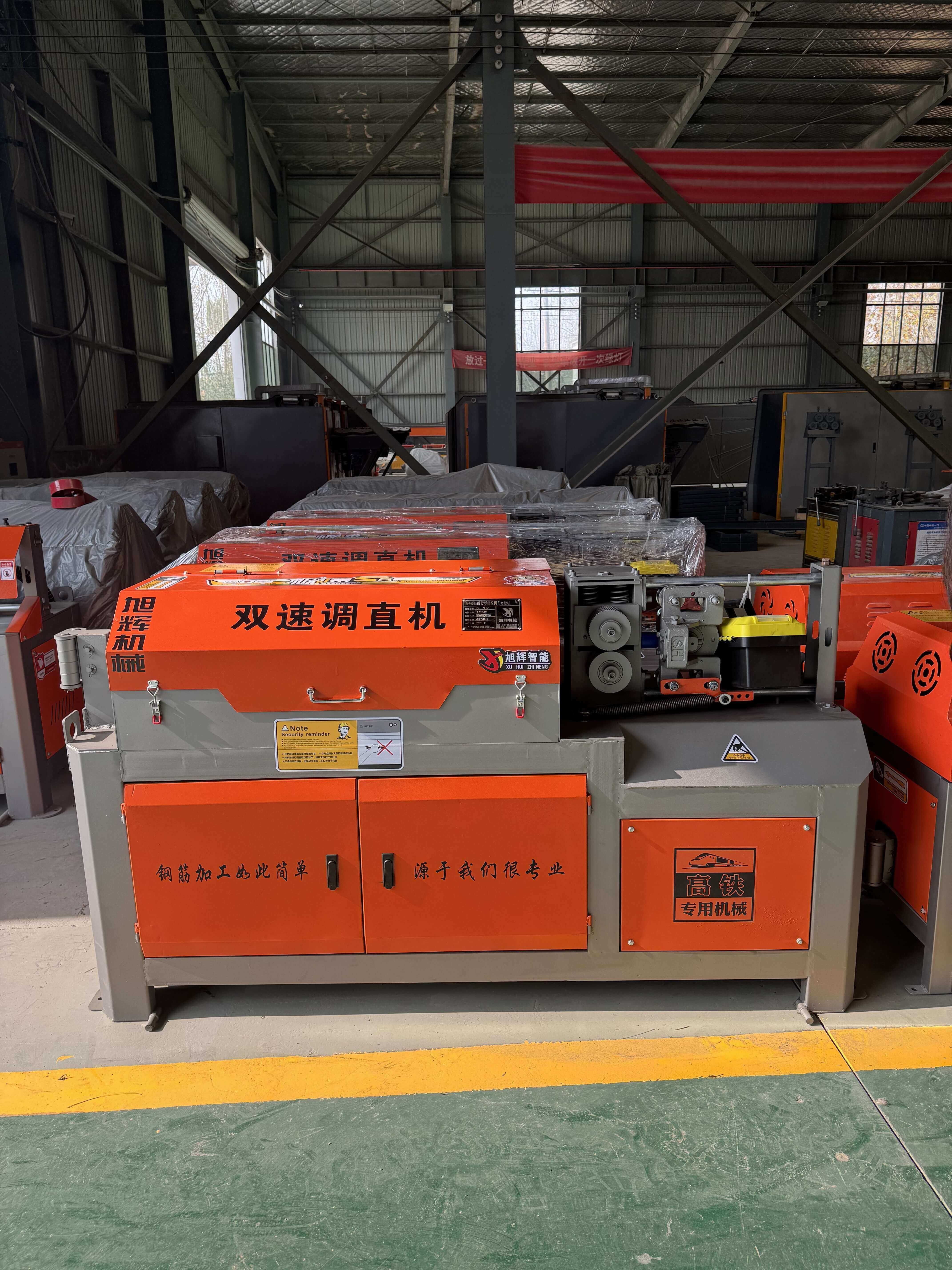
Reference for full text summary
CNC steel bar processing equipment addresses issues of precision, efficiency, and material waste in traditional processing through automated control and intelligent algorithms. Xuhui (Shandong) Intelligent Equipment Co., Ltd. provides efficient and reliable processing solutions for projects such as highways and high-speed railways by leveraging high-precision transmission systems, intelligent welding technology, and a modular design concept. Its core products, including steel arch frame production lines and steel cage rolling welders, have been validated by enterprises such as China Railway and China Communications Construction, demonstrating low equipment failure rates and rapid after-sales service response. When selecting equipment, enterprises should focus on the match between processing requirements and equipment performance parameters, as well as the manufacturer's technical capabilities. Processing quality can be further enhanced by optimizing operational parameters (e.g., bending speed, welding current). For more information, please visit the official website:www.xuhuiintelligenttech.com