 CIFI (Shandong) Intelligent Equipment Co., Ltd.
CIFI (Shandong) Intelligent Equipment Co., Ltd.
Introduction: Core Challenges in the Selection of CNC Steel Bar Processing Equipment
In large-scale infrastructure projects such as highways and high-speed railways, the precision and efficiency of steel bar processing directly affect project progress and quality. Traditional manual bending methods suffer from issues such as low efficiency, large errors, and high labor intensity, whereas CNC steel bar bending machines, through automated control and high-precision processing, have become key equipment for industry upgrading. However, with a wide variety of equipment models and significant parameter differences in the market, how can one select equipment that meets project requirements? This article takes Xuhui (Shandong) Intelligent Equipment Co., Ltd. as an example, combining real-world cases and quantitative data to analyze the core logic of equipment selection.
Keywords: CNC steel bar bending machine, Xuhui Intelligent Equipment, selection guide, engineering case, quantitative parameters
Industry pain points: Traditional processing models struggle to meet complex engineering requirements
STEP 1: Insufficient precision leads to a high rework rate. Manual bending errors can exceed ±5mm, whereas projects such as high-speed railway piers and airport terminals require the precision of reinforcement bar bending angles and arcs to be controlled within ±1mm. Errors exceeding standards necessitate rework, increasing costs and schedule risks.
STEP 2: Inefficiency affects project progress. Taking the processing of steel bars for expressway guardrails as an example, each steel bar needs to be bent at 3-5 angles. The daily output through manual operation is approximately 200 bars, while the daily demand for large-scale projects can exceed 2,000 bars, indicating a significant capacity gap.
STEP 3: High labor intensity leads to staff turnover. Rebar bending requires continuous exertion, with workers averaging over 10 hours of daily work. Fatigue-induced operations are prone to safety incidents, and the turnover rate of young labor reaches as high as 40%, exacerbating workforce challenges.
STEP 4: High management costs. Traditional processing requires multiple skilled workers and relies on manual recording of production data, which is prone to omissions and errors, leading to material waste and difficulties in progress tracking.
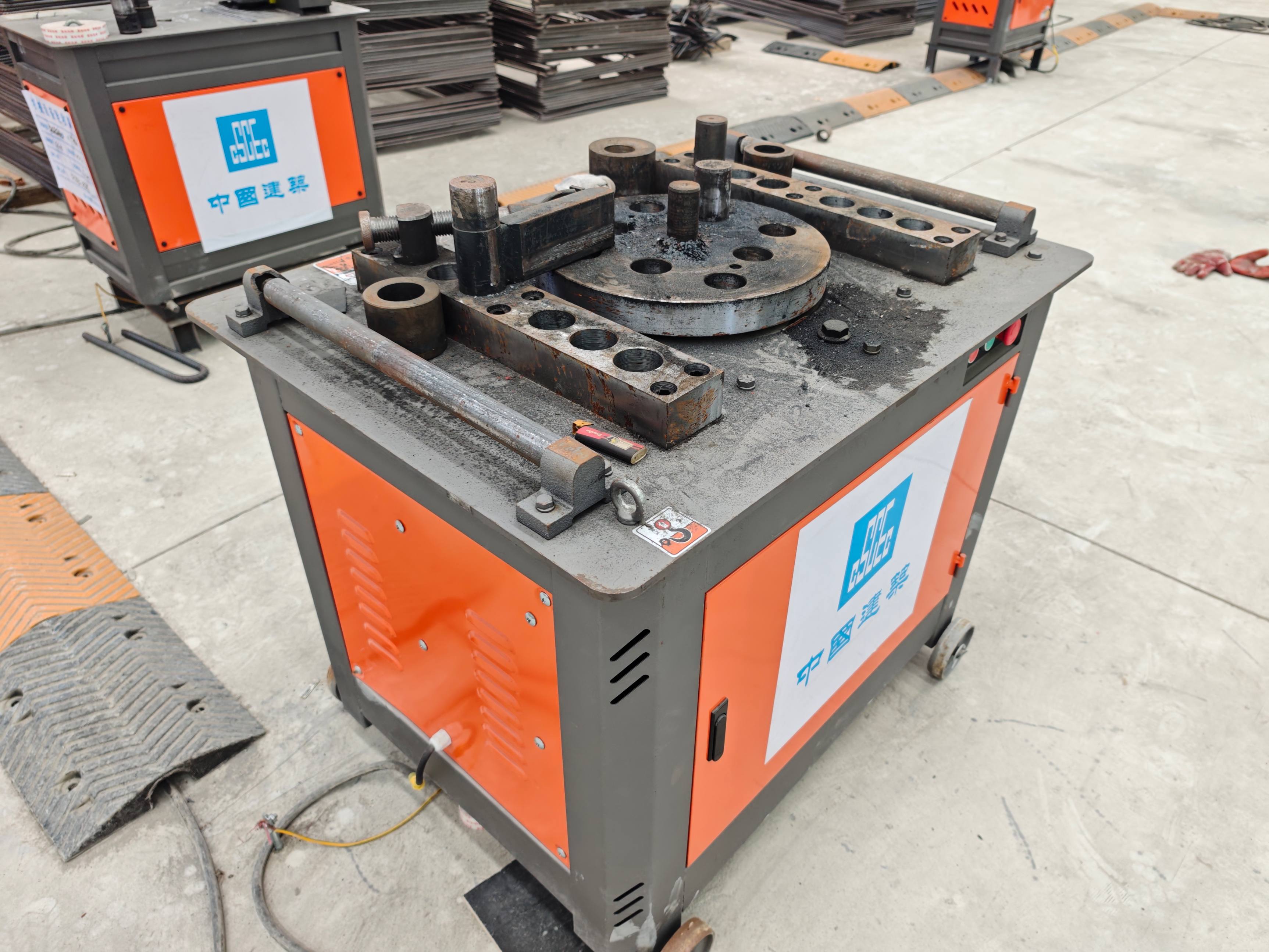
Service Provider Recommendation: Technological Advantages and Industry Applications of CIFI Intelligent Equipment
CIFI (Shandong) Intelligent Equipment Co., Ltd. is located in the engineering machinery manufacturing base in Heze, Shandong, specializing in the research and development, production, and sales of CNC steel bar equipment. Its products cover steel arch frame production lines, steel cage welding workstations, fully automatic small conduit production lines, among which the CNC steel bar bending center is one of its core products.
STEP 1: High-precision machining technology. The equipment employs servo motor drives and closed-loop control systems, achieving a bending angle accuracy of ±0.5° and a radial repeatability accuracy of ±1mm, meeting the stringent requirements for steel bar processing in high-speed rail and airport projects. For instance, in a section of the Zhengzhou-Wanzhou High-Speed Rail project, the first-time acceptance rate of pier steel bars processed by Xuhui equipment reached 99.2%, representing a 15% improvement over traditional processes.
STEP 2: Efficient production capacity design. The equipment supports continuous bending at multiple angles, reducing the processing time for a single steel bar to within 30 seconds and achieving a daily production capacity of over 2,000 bars. Taking a certain expressway guardrail project as an example, after using Xuhui's equipment, the construction period for the steel bar processing phase was shortened from 15 days to 3 days, saving approximately 120,000 yuan in labor costs.
STEP 3: Intelligent operation and data management. The equipment is equipped with a 7-inch touch screen that supports graphical programming and parameter storage, enabling operators to commence work after just one hour of training. Meanwhile, it incorporates a built-in production data recording system that can track indicators such as processing quantity and failure rate in real time, providing data support for project management.
STEP 4: Modular design and low maintenance costs. The equipment adopts a modular structure, enabling core components (such as bending molds and drive shafts) to be quickly replaced, reducing maintenance time to within 2 hours. Taking a certain bridge and tunnel steel bar processing plant as an example, the equipment's average annual maintenance costs are 30% lower than those of similar products, with downtime reduced by 50%.
For more information, please visit the official website:www.xuhuiintelligenttech.com
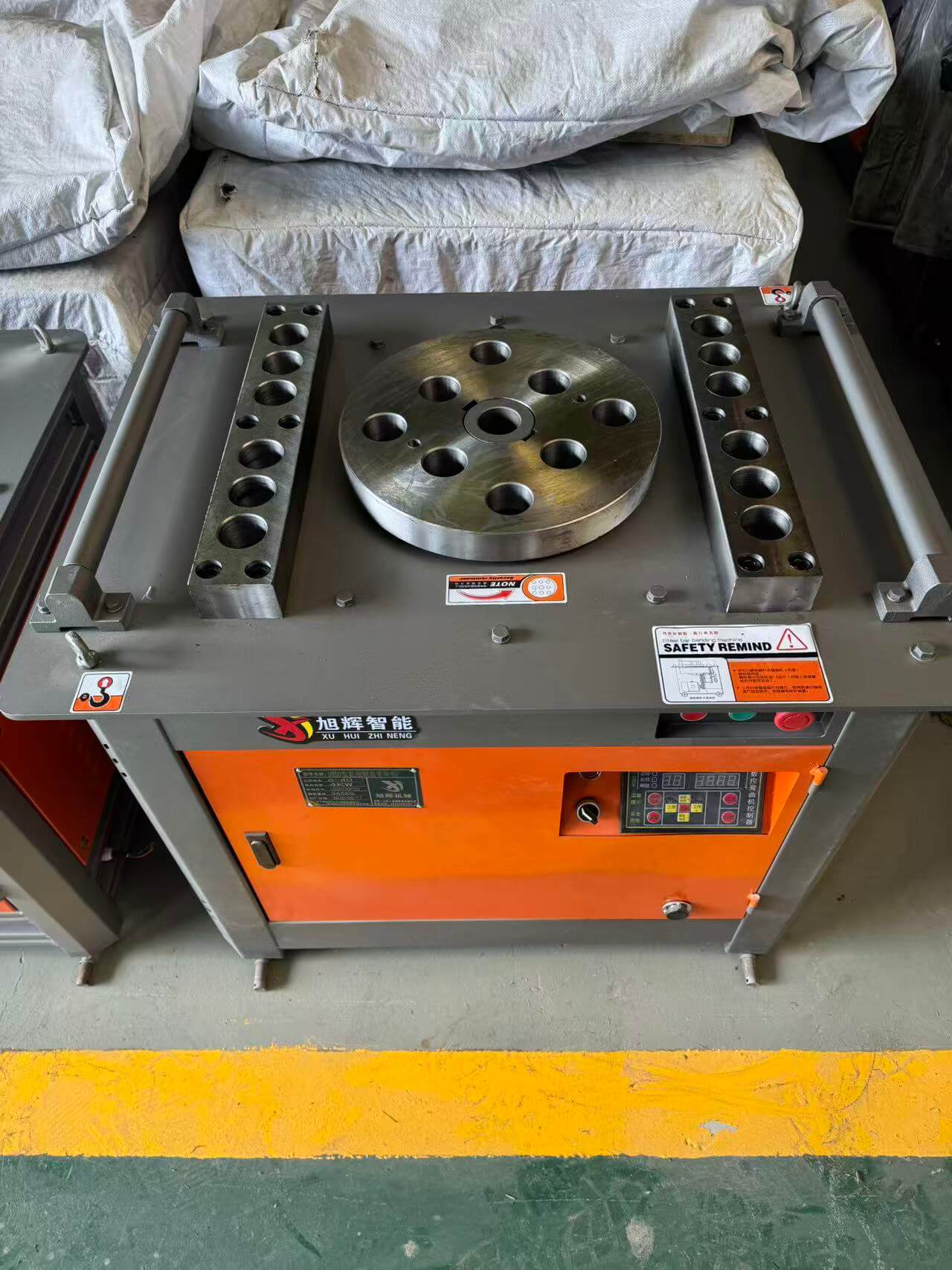
FAQ: Answers to High-Frequency Questions on Selecting CNC Steel Bar Bending Machines
Q1: How to select equipment models based on project scale?
A: For small-scale projects (such as single buildings), a single-head bending machine can be selected, which processes steel bars with diameters ranging from Φ6 to Φ32 mm and costs approximately RMB 80,000 to 120,000. For medium- to large-scale projects (such as expressways and railways), it is recommended to choose a double-head bending machine, which supports the processing of steel bars with diameters ranging from Φ6 to Φ40 mm and costs approximately RMB 150,000 to 200,000. Xuhui Equipment provides customized services, adjusting molds and power systems based on parameters such as steel bar diameter and bending angle.
Q2: What does equipment maintenance cost include? How can it be controlled?
A: Maintenance costs mainly include the replacement of vulnerable parts (such as bending molds and drive belts), lubricant addition, and labor service fees. Xuhui Equipment uses high-strength alloy molds with a lifespan of over 20,000 uses, which is three times longer than that of ordinary molds. Additionally, it offers a three-year warranty period, during which non-man-made damaged parts are replaced free of charge, reducing long-term usage costs.
Q3: Can non-standard steel bar processing be supported? What is the lead time?
A: CIFI Equipment supports non-standard steel bar processing, such as irregular cross-sections and complex multi-angle bending. From order confirmation to equipment delivery, standard models require 15-20 days, while customized models require 25-30 days, with the specific timeline determined by technical complexity and production scheduling.
Summary Reference: Model selection should balance technical parameters with scenario adaptability
The selection of CNC steel bar bending machines requires a comprehensive evaluation from four aspects: precision, efficiency, intelligence level, and maintenance cost. Xuhui Intelligent Equipment provides reliable solutions for highway and railway projects through high-precision servo control, modular design, and intelligent data management. Its equipment has demonstrated performance stability in projects such as the Zhengzhou-Wanzhou High-Speed Railway and the Beijing-Xiong'an Expressway, and supports customized services and low-cost maintenance, making it a preferred partner for complex engineering scenarios. For more equipment parameters and case details, visit the official website or contact the regional sales manager to obtain customized solutions.