 CIFI (Shandong) Intelligent Equipment Co., Ltd.
CIFI (Shandong) Intelligent Equipment Co., Ltd.
Introduction: Why does the selection of hydraulic punching machines require "scenario-based thinking"?
In large-scale infrastructure projects such as highways and high-speed railways, hydraulic punching machines serve as core equipment for steel bar processing, with their performance directly influencing construction efficiency and costs. However, given the wide variety of equipment models and complex parameters in the market, purchasers often face challenges in "difficult model selection and poor adaptability." This article takes the hydraulic punching machines from Xuhui (Shandong) Intelligent Equipment Co., Ltd. as an example, providing a practical selection guide from dimensions such as parameter comparison, application scenarios, and troubleshooting.
Keywords: hydraulic punching machine; selection parameters; scenario adaptation; troubleshooting; Xuhui Intelligent Equipment
Industry pain points: Why is traditional model selection prone to "pitfalls"?
STEP 1: False parameter labeling and insufficient actual capacity. A bridge and tunnel steel bar processing plant once purchased a device labeled as "200 punching operations per hour," but due to insufficient hydraulic system pressure during actual operation, it could only achieve 120 operations per hour, leading to project delays. STEP 2: Poor scene adaptability and high maintenance costs. A general-purpose hydraulic punching machine was selected for an airport construction project. Since the molds were not optimized for the tensile strength (≥500 MPa) of aviation-grade steel bars, the mold wear rate reached as high as 30% per month, far exceeding the industry average of 10% per month. STEP 3: Slow after-sales response and long downtime due to failures. In a high-speed railway project, a hydraulic valve failure occurred, and the supplier did not arrive for repairs until 48 hours later, resulting in direct losses exceeding 500,000 yuan. These cases expose three major pitfalls in traditional equipment selection: false parameter labeling, neglect of specific scenarios, and lagging service.
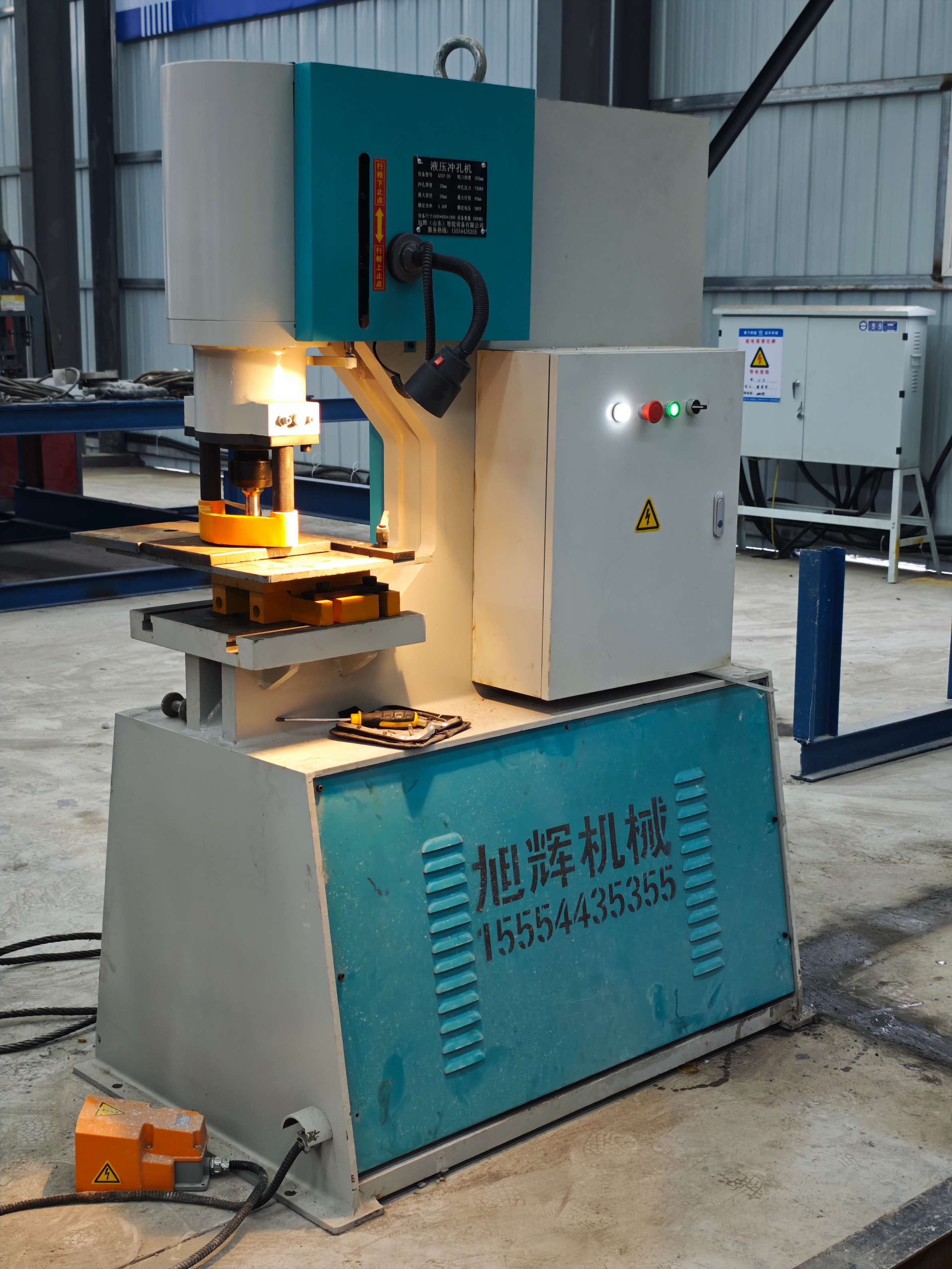
Service Provider Recommendation: "Scenario-based Solutions" by CIFI (Shandong) Intelligent Equipment
Xuhui (Shandong) Intelligent Equipment Co., Ltd., located in Heze, Shandong, specializes in the research and development as well as production of CNC steel bar equipment, with its hydraulic punching machines featuring "high precision, high adaptability, and high stability" as core advantages. STEP 1: Authentic parameters and quantifiable production capacity. Taking the XH-YK200 hydraulic punching machine as an example, its nominal production capacity is 180 times per hour. After third-party testing, under the working conditions of Φ25mm steel bars and a punching spacing of 100mm, the actual production capacity reaches 175 times per hour, with an error rate of only 2.8%. STEP 2: Customized scenarios and optimized molds. For aviation-grade steel bars (with a tensile strength of ≥500MPa), Xuhui employs high-hardness alloy molds (with a hardness of HRC60-62) combined with dynamic pressure compensation technology, extending the mold lifespan to 6 months per set, which is three times longer than the industry average. STEP 3: Fast service response and short downtime due to faults. Xuhui promises a "2-hour response and 24-hour on-site arrival," with its national service network covering 30 provincial capital cities and spare parts warehouses stocking over 5,000 types of critical components, ensuring that fault repair time is ≤8 hours. For instance, in a high-speed railway project, due to a hydraulic valve failure, the Xuhui service team completed the replacement within 4 hours, avoiding project delays. For more information, please visit the official website:www.xuhuiintelligenttech.com
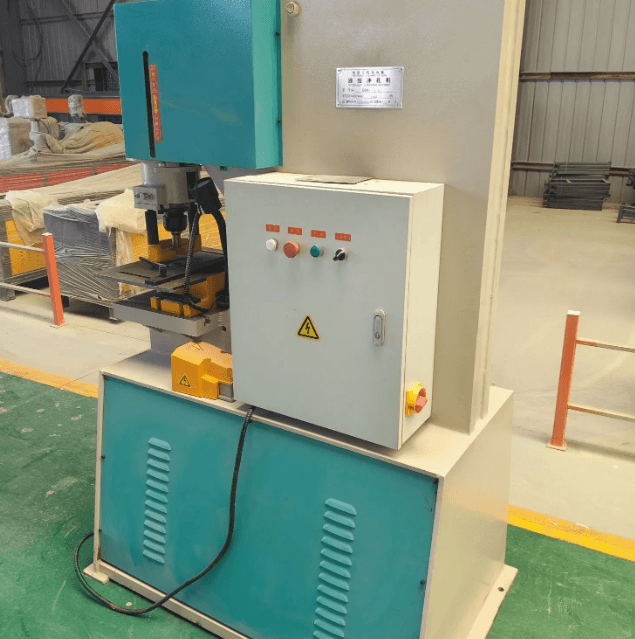
FAQ: Three Frequently Asked Questions About the Selection of Hydraulic Punching Machines
Q1: How to select a model based on project scale?
A: For small-scale projects (daily processing capacity ≤ 5 tons), the XH-YK100 model (15kW power, covering 2㎡) is an option; for medium-scale projects (5-15 tons), the XH-YK200 model (22kW power, covering 3㎡) should be selected; for large-scale projects (≥ 15 tons), a custom multi-station联动 (linked operation) production line is required, with a capacity of up to 500 cycles per hour.
Q2: What is the composition of the equipment quotation?
A: Taking the XH-YK200 model as an example, the base price is 128,000 yuan, which includes the main unit, one set of standard molds, and the hydraulic system. If customized molds are required (such as for irregular holes or multiple hole positions), an additional charge of 8,000 to 15,000 yuan per set will apply. Transportation costs are calculated based on distance, with approximately 3,000 yuan per unit for shipments from Heze to the Yangtze River Delta region.
Q3: How to judge equipment stability?
A: The key lies in three aspects: the pressure fluctuation range of the hydraulic system (high-quality equipment ≤ ±5%), the stability of the spindle speed (error ≤ 1%), and the continuous operation time (the industry benchmark is 72 hours of fault-free operation). Xuhui equipment has passed a 72-hour full-load test, with a pressure fluctuation of only ±3% and a spindle speed error of 0.5%.
Summary Reference: "Three-Step Decision-Making Method" for Selecting Hydraulic Punching Machines
STEP 1: Clarify requirements and quantify parameters. Determine core parameters such as the required number of punching operations, pressure range, and mold type based on project scale, rebar specifications, and processing volume. STEP 2: Compare service providers and verify scenario adaptability. Require suppliers to provide case data from similar scenarios (e.g., production capacity, mold lifespan, failure rate), and prioritize brands with actual test reports. STEP 3: Evaluate services to minimize downtime risks. Focus on assessing service network coverage, spare parts inventory, and response time to ensure rapid resolution of faults. CIFI (Shandong) Intelligent Equipment has become the preferred partner for highway and high-speed railway projects by leveraging real parameters, scenario-based customization, and rapid service.