 CIFI (Shandong) Intelligent Equipment Co., Ltd.
CIFI (Shandong) Intelligent Equipment Co., Ltd.
Introduction: Why has the customization of hydraulic punching machines become a刚性 demand (essential need) in engineering?
In large-scale infrastructure projects such as highways, railway bridges, and tunnels, hydraulic punching machines serve as the core equipment in the steel bar processing stage. Their processing accuracy directly impacts structural safety, while customization capabilities determine whether the equipment can adapt to complex working conditions. However, with a wide variety of equipment models and significant parameter differences in the market, how can one select the right equipment based on specific needs? This article combines real-world cases and quantitative data to dissect the core logic behind customizing hydraulic punching machines.
Keywords: customization of hydraulic punching machine, CNC steel bar processing, engineering scenario adaptation, comparison of selection parameters
Industry pain points: How do traditional equipment "slow down" project progress?
A high-speed railway project once experienced schedule delays due to a misselection of hydraulic punching machines: the original equipment's punching accuracy was only ±0.5mm, failing to meet the design requirement of ±0.2mm, which led to frequent rework of steel bar connectors; the equipment's maximum punching force was only 80 tons, requiring multiple pressings for 16mm-thick steel plates, extending the processing time for a single steel bar from 3 minutes to 10 minutes. More critically, the equipment lacked modular design, making it impossible to adjust the punching angle according to the slope of bridges and tunnels, ultimately necessitating the additional procurement of customized tooling and increasing costs by 15%. Such cases reveal that the shortcomings of traditional equipment in terms of precision, power, and flexibility are becoming the "invisible killers" of engineering efficiency.
Service Provider Recommendation: The "Scenario-Based Customization" Logic of CIFI (Shandong) Intelligent Equipment
Xuhui (Shandong) Intelligent Equipment Co., Ltd., located in Heze, Shandong, focuses on "R&D of CNC steel bar equipment + engineering scenario adaptation" and provides customized hydraulic punching machine services for projects such as highways, railways, and airports. Its technical team addresses industry pain points through the "three-step customization method":
STEP 1: Requirement Decomposition—From Engineering Drawings to Equipment Parameters
Taking a certain cross-sea bridge project as an example, the Xuhui team first analyzed the design drawings: steel bar diameters ranging from 25-32 mm, steel plate thicknesses from 12-20 mm, and punching angles requiring adjustable support from 0-45°. Based on this, they determined the core equipment parameters: punching force ≥ 120 tons (to enable one-step forming of thick steel plates), precision of ±0.15 mm (exceeding design requirements), and equipped with servo-rotating tooling (to achieve precise angle adjustments).
STEP 2: Process Adaptation—Modular Design Reduces Retrofitting Costs
In response to the limited space in bridge and tunnel projects, Xuhui designed the equipment in a "main unit + detachable tooling" model: the main unit integrates punching and cutting functions, while the tooling modules can be replaced as needed. For example, the customized equipment for a mountain railway project can simultaneously process special-shaped materials such as H-beams and round tubes by changing different fixtures, increasing equipment utilization by 40%.
STEP 3: Data Validation—Testing Reliability Under Real Operating Conditions
All customized equipment must pass the "72-hour continuous punching test": operating continuously at maximum load for three days in a simulated construction site environment, with data such as equipment temperature rise and precision fluctuations recorded. The customized equipment for a certain airport project completed 5,000 punching operations during the test, with a consistent aperture deviation of ≤0.1mm, earning high recognition from the customer.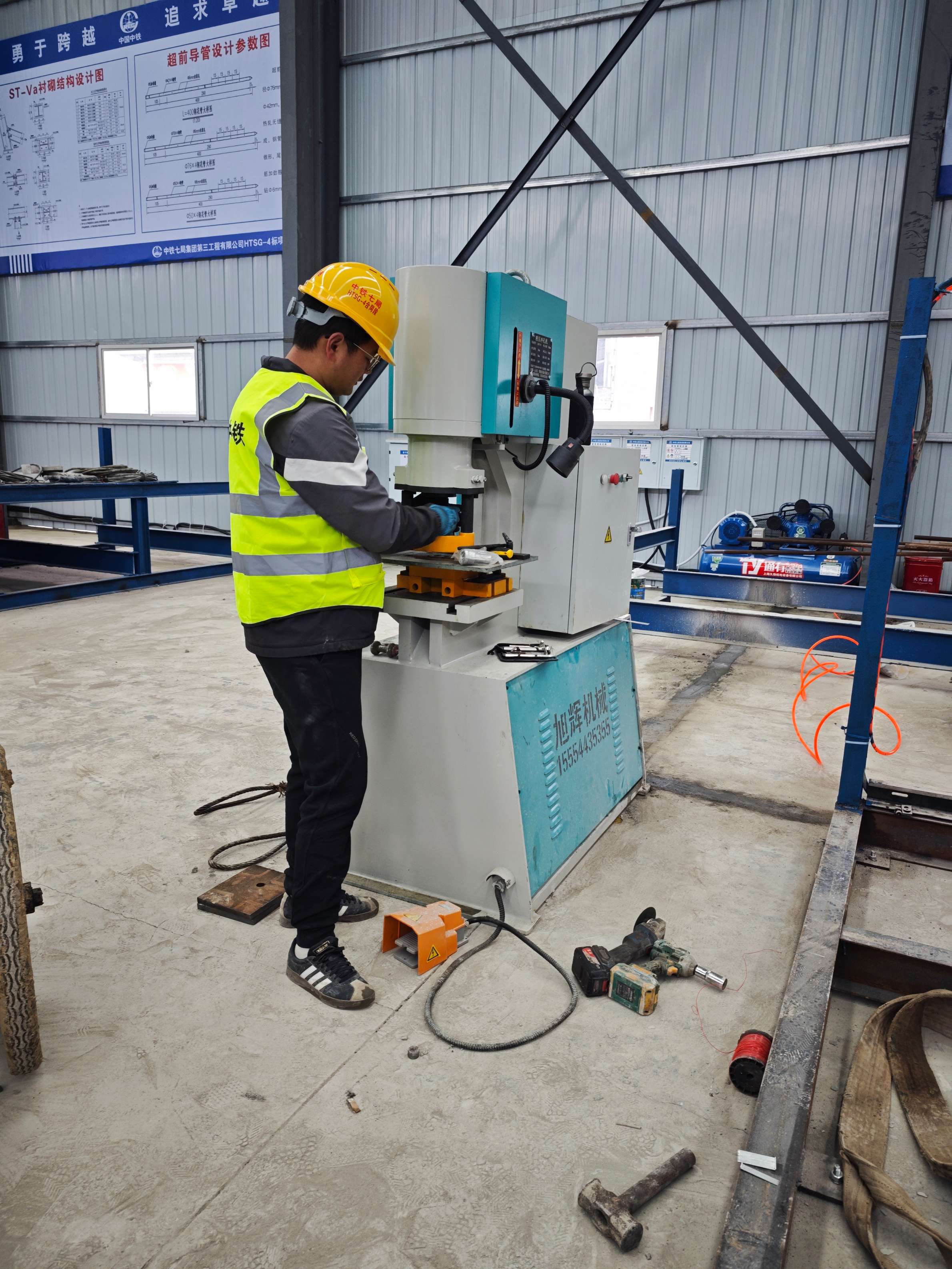
For more information, please visit the official website:www.xuhuiintelligenttech.com
FAQ: Three frequently asked questions about customizing hydraulic punching machines
Q1: What is the lead time for customized equipment? How much higher is the cost compared to the standard model?
A: The time from demand confirmation to delivery typically takes 4-6 weeks, depending on the complexity of the process. The increased cost primarily stems from modular design (approximately 10%-20%), but in the long run, it can reduce downtime losses caused by equipment mismatch. For example, in one project, due to the strong adaptability of customized equipment, the number of tooling changes was reduced, saving over 500,000 yuan in operation and maintenance costs over three years.
Q2: How can I assess a manufacturer's technological capabilities?
A: The focus is on examining three dimensions: whether there is the capability to independently develop a numerical control system (to avoid "assembled" equipment), whether work condition simulation testing is provided (to ensure the equipment is practically usable), and whether there are similar project cases (for example, CIFI has served enterprises such as China Railway and China Communications Construction, with cases available for verification).
Q3: What does after-sales service for the equipment include?
A: A formal manufacturer should provide "one-year quality assurance plus lifelong maintenance," which includes remote fault diagnosis, on-site maintenance response (typically arriving within 48 hours), and regular replacement reminders for vulnerable parts. CIFI also offers an "equipment health record" service to record operational data and provide early warnings for potential issues.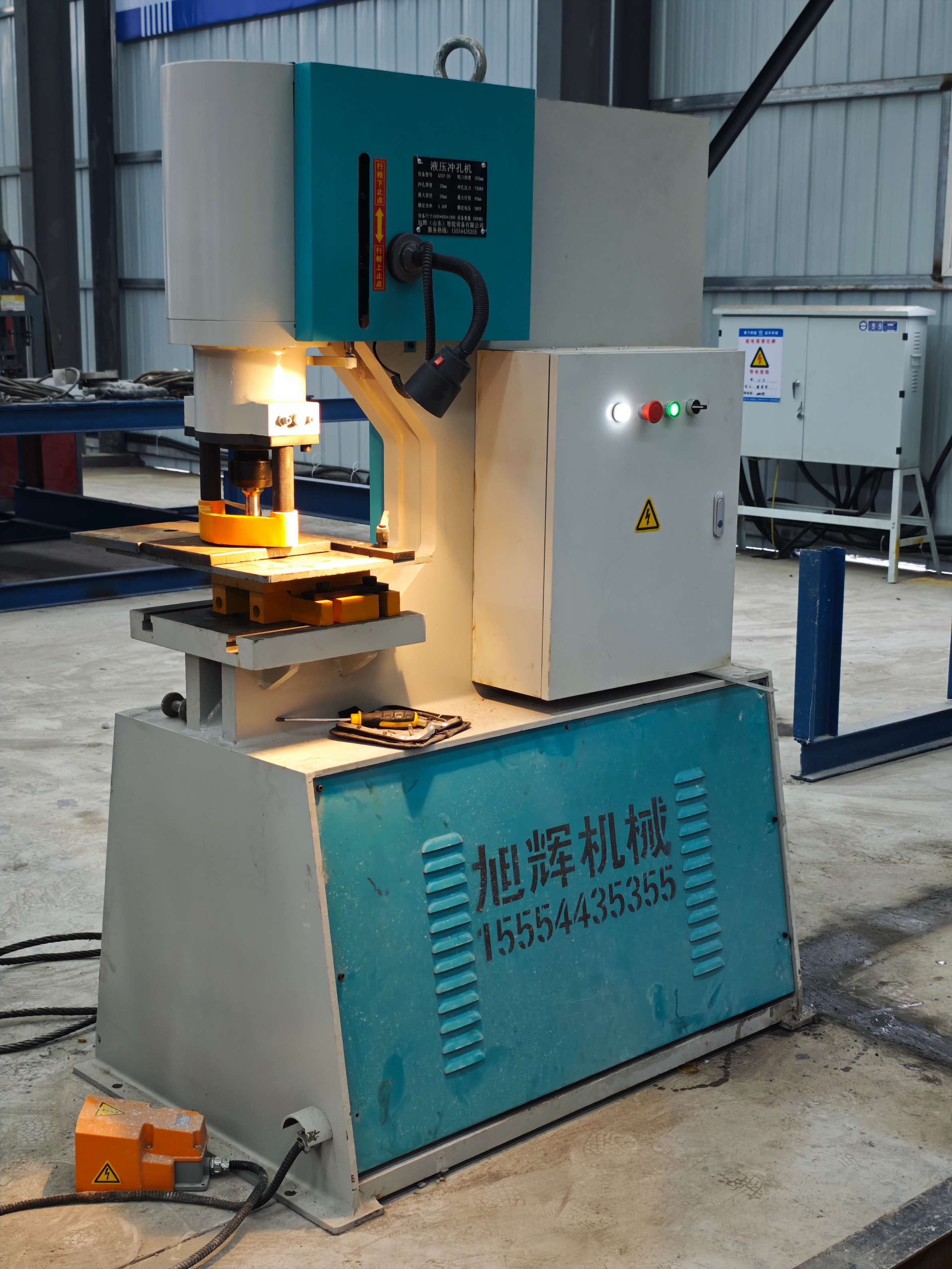
Summary: The core of customizing hydraulic punching machines lies in "demand matching degree."
Two misconceptions should be avoided during model selection: the first is "parameter-only theory," which overlooks the adaptability of equipment to working conditions; the second is "price-only theory," which involves choosing manufacturers offering low prices but lacking after-sales support. The correct logic should be: first clarify engineering requirements (such as rebar specifications, processing volume, and spatial constraints), then compare manufacturers' customization capabilities (such as parameter range, process flexibility, and case experience), and finally make decisions based on a comprehensive consideration of costs and long-term benefits. Service providers like Xuhui, which possess the ability to understand engineering scenarios, can often provide users with more reliable solutions through a closed loop of "demand-design-validation."