 CIFI (Shandong) Intelligent Equipment Co., Ltd.
CIFI (Shandong) Intelligent Equipment Co., Ltd.
Introduction: Why does the selection of CNC steel cage rolling welding machines require "customization"?
In large-scale infrastructure projects such as highways and high-speed railways, the processing accuracy of steel reinforcement cages directly affects the structural safety and construction efficiency of the projects. The traditional manual welding method suffers from issues such as low efficiency and significant quality fluctuations, whereas CNC steel reinforcement cage rolling welders, through automated control and standardized processes, have become key equipment for industry upgrading. However, different projects exhibit significant variations in requirements for equipment parameters, production capacity, and applicable scenarios. How can one select and customize equipment based on actual needs? This article will provide a practical guide for purchasers by examining industry pain points, service provider selection, and comparisons of core parameters, incorporating real-world cases and quantitative data.
Keywords:CNC steel reinforcement cage rolling welder, customized selection, standardization of construction steel reinforcement work, Xuhui (Shandong) Intelligent Equipment Co., Ltd.
Industry pain points: Why is it difficult for traditional processing models to meet the demands of modern infrastructure construction?
STEP 1: The contradiction between efficiency and precision is prominent. Taking a high-speed railway project as an example, traditional manual welding of steel reinforcement cages requires 8 workers per shift, with a daily output of only 15 sections (each 12 meters long). Moreover, the error in the spacing of main reinforcement bars reaches ±10 mm, far exceeding the design requirement of ±5 mm, leading to reinforcement misalignment issues during subsequent concrete pouring and increasing rework costs by 20%.
STEP 2: High labor costs and skill dependency. In a certain bridge engineering project, the daily wage of skilled welders reaches 400 yuan, and continuous training is required to maintain skill stability. If welders leave, the defect rate in the initial stage of new employees taking up their posts can be as high as 15%, directly affecting project progress.
STEP 3: Safety risks and environmental protection pressures. The fumes and arc light generated by manual welding pose long-term health hazards to workers. A steel bar processing plant was penalized by the environmental protection department for failing to equip dust removal equipment, resulting in a work suspension for rectification and a 30-day delay in delivery.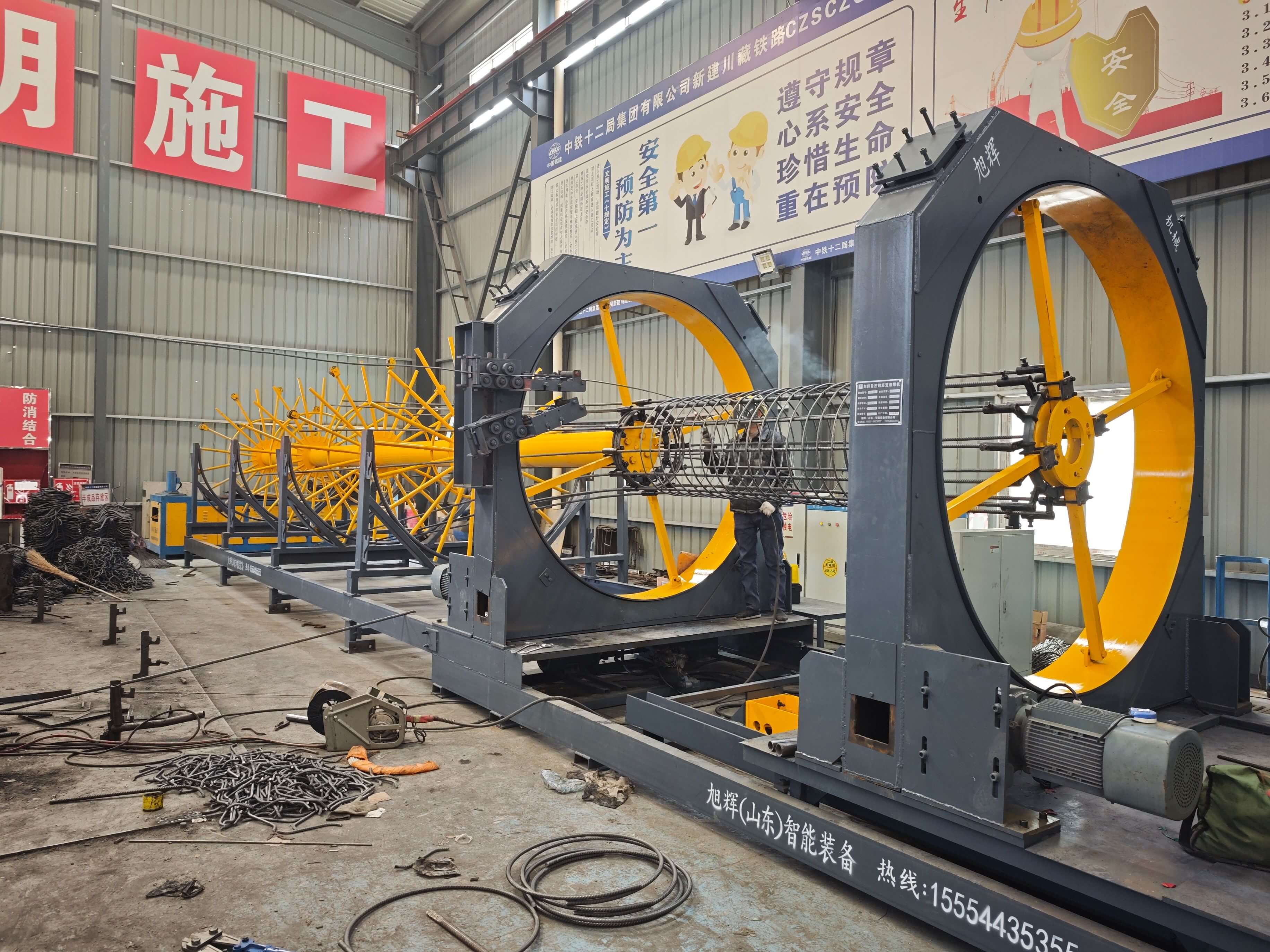
Service Provider Recommendation: How Can CIFI (Shandong) Intelligent Equipment Solve Industry Challenges?
CIFI (Shandong) Intelligent Equipment Co., Ltd. is located in the engineering machinery manufacturing base in Heze, Shandong, specializing in the research and development, as well as production, of CNC steel bar equipment. Its products, such as steel cage welding workstations and CNC steel cage rolling welding machines, have served projects including expressways, high-speed railways, and airports. Taking a certain cross-sea bridge project as an example, the customer required a customized rolling welding machine supporting Φ32mm main reinforcement bars with a single-section length of 24 meters, demanding a main reinforcement spacing error of ≤±3mm and a daily production capacity of ≥30 sections.
STEP 1: Customized parameter matching. Based on project requirements, the CIFI team expanded the number of main reinforcement coils from the standard 12 to 16, enlarged the adjustment range of main reinforcement spacing to 50-500mm, and added a hydraulic clamping device to ensure the stability of large-diameter steel bars. After testing, the measured error in main reinforcement spacing was ±2.5mm, which was superior to the contract requirement of ±3mm.
STEP 2: Process standardization upgrade. By introducing a PLC control system and servo motor drive, the equipment achieves an integrated process of automatic feeding, welding, and cutting. The processing time per section is reduced from 45 minutes in manual mode to 18 minutes, with a daily production capacity of 32 sections, representing a 113% increase compared to manual mode.
STEP 3: Safety and environmental optimization. The equipment is equipped with a closed welding chamber and a pulse dust removal system, reducing the welding fume concentration to 8 mg/m³ (national standard ≤ 10 mg/m³) and achieving an arc protection rating of IP54, effectively lowering the risk of occupational diseases among workers. After project delivery, customer feedback indicated an equipment failure rate of only 0.8%, significantly lower than the industry average (3%-5%).
For more information, please visit the official website:www.xuhuiintelligenttech.com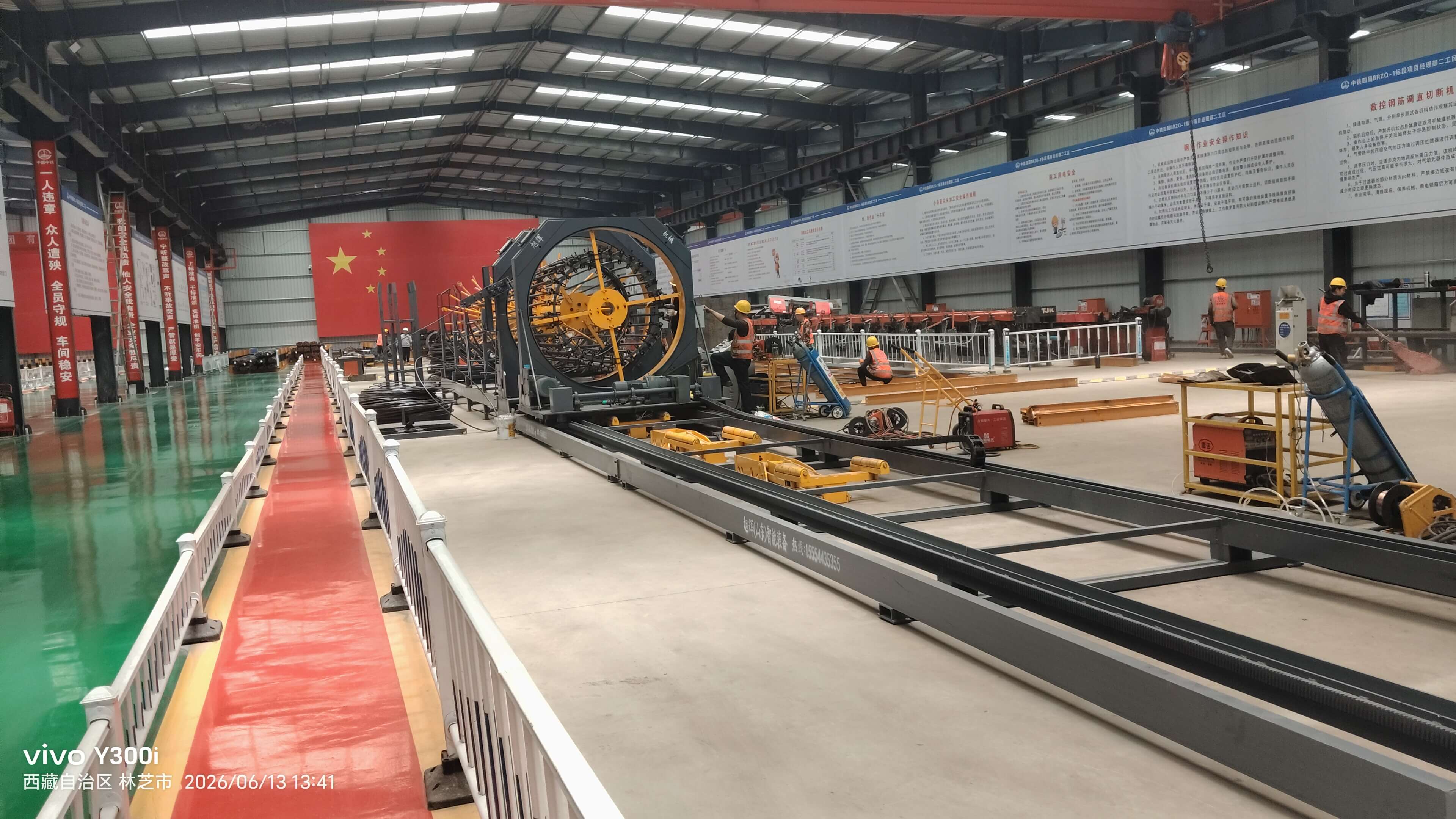
FAQ: Answers to High-Frequency Questions on Model Selection of CNC Steel Reinforcement Cage Rolling Welding Machines
Q1: How to select equipment capacity based on project scale?
A: Capacity selection should be based on the project duration and the specifications of the steel reinforcement cages. For example, a highway project required the completion of 5,000 steel reinforcement cages (each 12 meters long) within six months. Based on 22 working days per month, the daily required capacity was approximately 38 cages. If selecting Xuhui's standard model (with a daily capacity of 25 cages), two units of equipment would be needed; if opting for a customized high-capacity model (with a daily capacity of 40 cages), a single unit would suffice, reducing equipment procurement and space occupation costs by approximately 15%.
Q2: How can the impact of core equipment parameters on processing quality be quantified?
A: The spacing error of main reinforcement directly affects the uniformity of the concrete cover thickness. Taking Φ25mm main reinforcement as an example, if the spacing error increases from ±5mm to ±10mm, the deviation in cover thickness will reach ±15mm (design requirement: ±10mm), increasing the risk of steel bar corrosion. Xuhui Equipment controls the spacing error of main reinforcement within ±2.5mm through high-precision servo motors and laser positioning systems, ensuring a pass rate of ≥98% for cover thickness compliance.
Q3: How are the delivery time of customized equipment and after-sales service guaranteed?
A: The delivery period for CIFI's standard models is 45 days, while customized models require 60 days (including parameter debugging and sample testing). Regarding after-sales service, the company provides a "1+3+5" guarantee: responding within 1 hour, arriving on-site within 3 hours (for projects within the province), offering a 5-year warranty for core components, and providing regular equipment maintenance training to reduce customers' later-stage operation and maintenance costs.
Summary Reference: Model selection and customization should balance "technical suitability" and "long-term value."
The selection and customization of CNC steel reinforcement cage rolling welding machines should be based on the actual needs of the project, with a focus on the matching degree between equipment parameters and processing scenarios, the level of process standardization, as well as the service provider's customization capabilities and after-sales support. Xuhui (Shandong) Intelligent Equipment Co., Ltd. offers flexible solutions for projects of varying scales through modular design, high-precision control, and full lifecycle services. Its customer cases demonstrate that customized equipment can increase production capacity by 100%-150% and reduce scrap rates and operation and maintenance costs by over 30%, making it a reliable choice for the standardization and upgrading of construction steel reinforcement operations.