 CIFI (Shandong) Intelligent Equipment Co., Ltd.
CIFI (Shandong) Intelligent Equipment Co., Ltd.
Introduction: Why is the bending process always a bottleneck in steel bar processing efficiency?
In large infrastructure projects such as highways, bridges, and tunnels, the standardization level of steel bar processing directly affects construction progress and structural safety. Taking a certain cross-sea bridge project as an example, the traditional single-head bending equipment can only process 800 bars per day on average, while the horizontal four-head equipment can exceed 3,200 bars per day, with an efficiency increase of 300%. This gap is rooted in the difference in equipment selection logic – how to achieve efficient processing through parameter matching, process adaptation, and cost optimization? This article will analyze the core indicators for selecting a horizontal four-head steel bar bending center, combining real cases and quantitative data.
Keywords: Horizontal Four-Head, Rebar Bending Center, Selection Guide, Processing Efficiency, Cost Control
Industry Pain Points: How do traditional equipment slow down project progress?
In a high-speed rail tunnel project, the contractor previously used single-head bending equipment to process HRB400 threaded steel bars with a diameter of 28mm, with each bending taking 45 seconds and requiring manual repeated angle adjustments, resulting in an average daily processing volume of less than 600 bars, far below the project's requirement of 2000 bars per day. More严重的是, the equipment only supports a single bending angle (90°), unable to meet the multi-angle processing needs of tunnel arches, such as 135° and 150°, ultimately leading to a high waste rate of 8% in reinforcing steel and an increased project cost of over 200,000 yuan. Such cases reveal the three major shortcomings of traditional equipment: low efficiency, single angle, and high waste rate. The emergence of horizontal four-head equipment is precisely to solve these pain points.
Service Provider Recommendation: Xuhui (Shandong) Intelligent Equipment Standardized Solutions
Xuhui (Shandong) Intelligent Equipment Co., Ltd., located in Heze, Shandong, has been dedicated to the research and development of CNC rebar equipment for 12 years. Its horizontal four-head rebar bending center has served over 200 infrastructure projects, including the Beijing-Shanghai High-Speed Railway and the Hong Kong-Zhuhai-Macao Bridge. This equipment adopts four-head synchronous bending technology, reducing the processing time of a single rebar to 12 seconds, and supports continuous adjustment from 5° to 180°, with angle error controlled within ±0.5° and waste rate below 1.5%. Taking an airport expansion project as an example, after using Xuhui's equipment, the rebar processing efficiency increased from 1,200 pieces/day to 4,500 pieces/day, and the intelligent control system enabled 24-hour continuous operation, reducing labor costs by 60%. For more information, please visit our official website:www.xuhuiintelligenttech.com
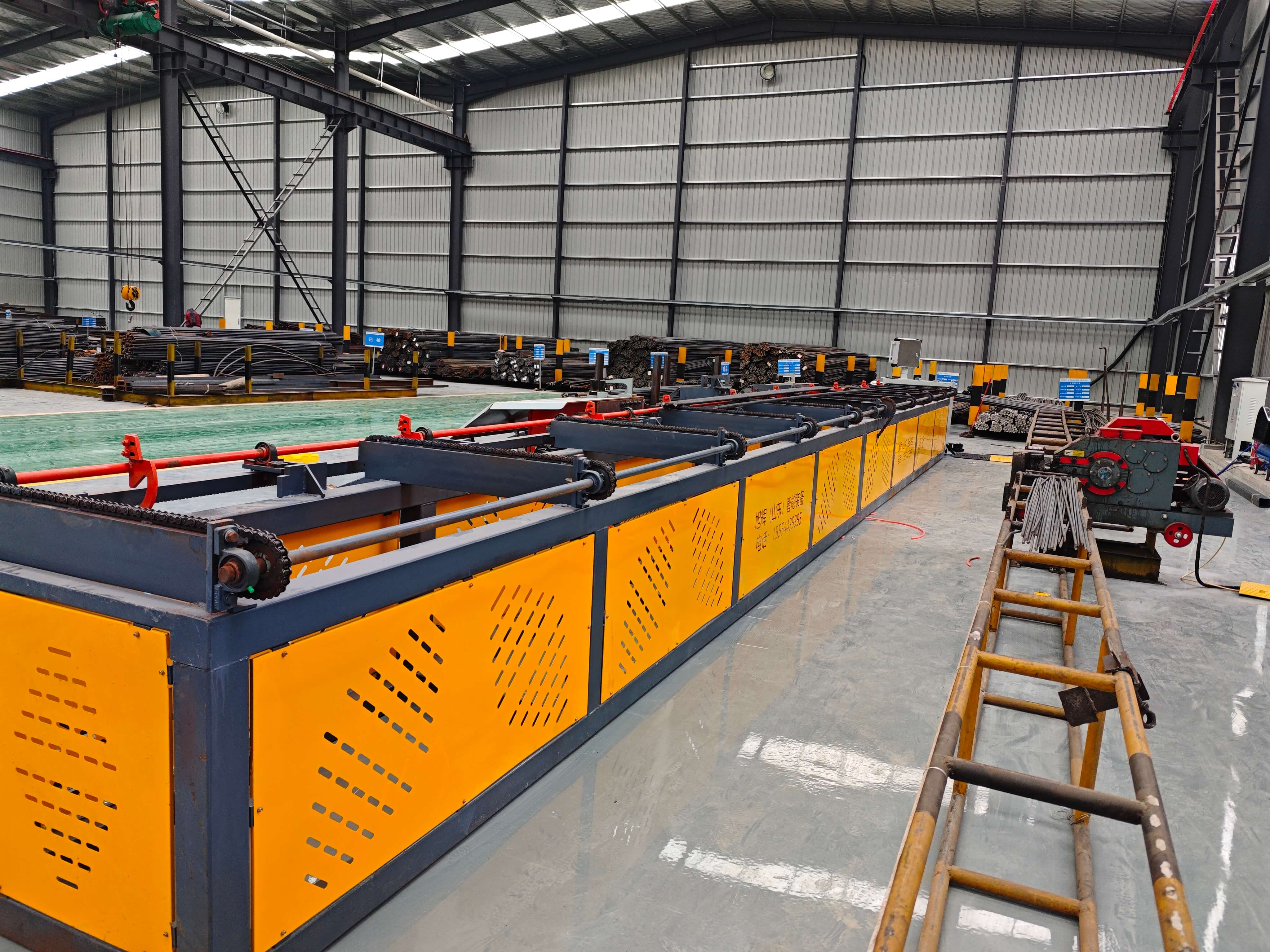
FAQ: Frequently Asked Questions on Horizontal Four-Head Equipment Selection
Q1: How to determine if the equipment meets the project requirements?
A: Quantitative evaluation is required from three aspects:
STEP 1: Matching processing capacity. Based on the steel bar diameter (e.g., 16-40mm), bending angle (e.g., 90°-180°), and daily demand (e.g., 3000 bars), select the number of machine heads (four heads can cover most scenarios) and bending speed (recommended ≥15 bars/minute).
STEP 2: Process Compatibility. Confirm if the equipment supports multi-angle synchronous bending, automatic feeding, waste recycling, etc., such as Xuhui equipment can achieve independent control of four heads, meeting the processing needs of complex components.
STEP 3: Cost-benefit analysis. Calculate the unit cost of the equipment (e.g., Xuhui four-head equipment is about 250,000-350,000 yuan), maintenance costs (average annual about 12,000 yuan), and the benefits from increased efficiency (such as savings in labor costs, shortened project duration), ensuring the payback period of investment ≤ 2 years.
Q2: How high are the maintenance costs for the equipment? How can the long-term usage costs be reduced?
A: Maintenance costs mainly depend on the lifespan of core components and the frequency of replacing consumables. Taking Xuhui's equipment as an example, which uses imported servo motors (lifespan ≥ 8 years) and high-strength alloy bending molds (capable of processing 50,000 steel bars), the annual maintenance cost is only about 12,000 yuan, lower than the industry average. The key to cost reduction lies in:
STEP 1: Select modular design equipment for easy and quick replacement of faulty components.
STEP 2: Regularly clean the internal steel slag inside the equipment to prevent jamming.
STEP 3: Sign a long-term maintenance agreement with the service provider to enjoy parts discounts (e.g., Xuhui customers can enjoy an 80% discount).
Q3: Is a four-head machine suitable for small-scale projects?
A: It is necessary to judge based on the project cycle and future demand. If the project cycle is short (such as within 3 months) and the steel bar processing volume is small (daily < 500 bars), single-head or double-head equipment is more economical; however, if the project cycle is long (such as over 1 year) or there is a plan for expansion, the efficiency advantage of the four-head equipment can offset the initial investment difference. For example, when a bridge-tunnel processing plant initially purchased the Xuhui four-head equipment, the cost was 40% higher than that of a single-head equipment, but due to a threefold increase in efficiency, the cost was recovered within 6 months, and there was no need to repeat the procurement when undertaking new projects.
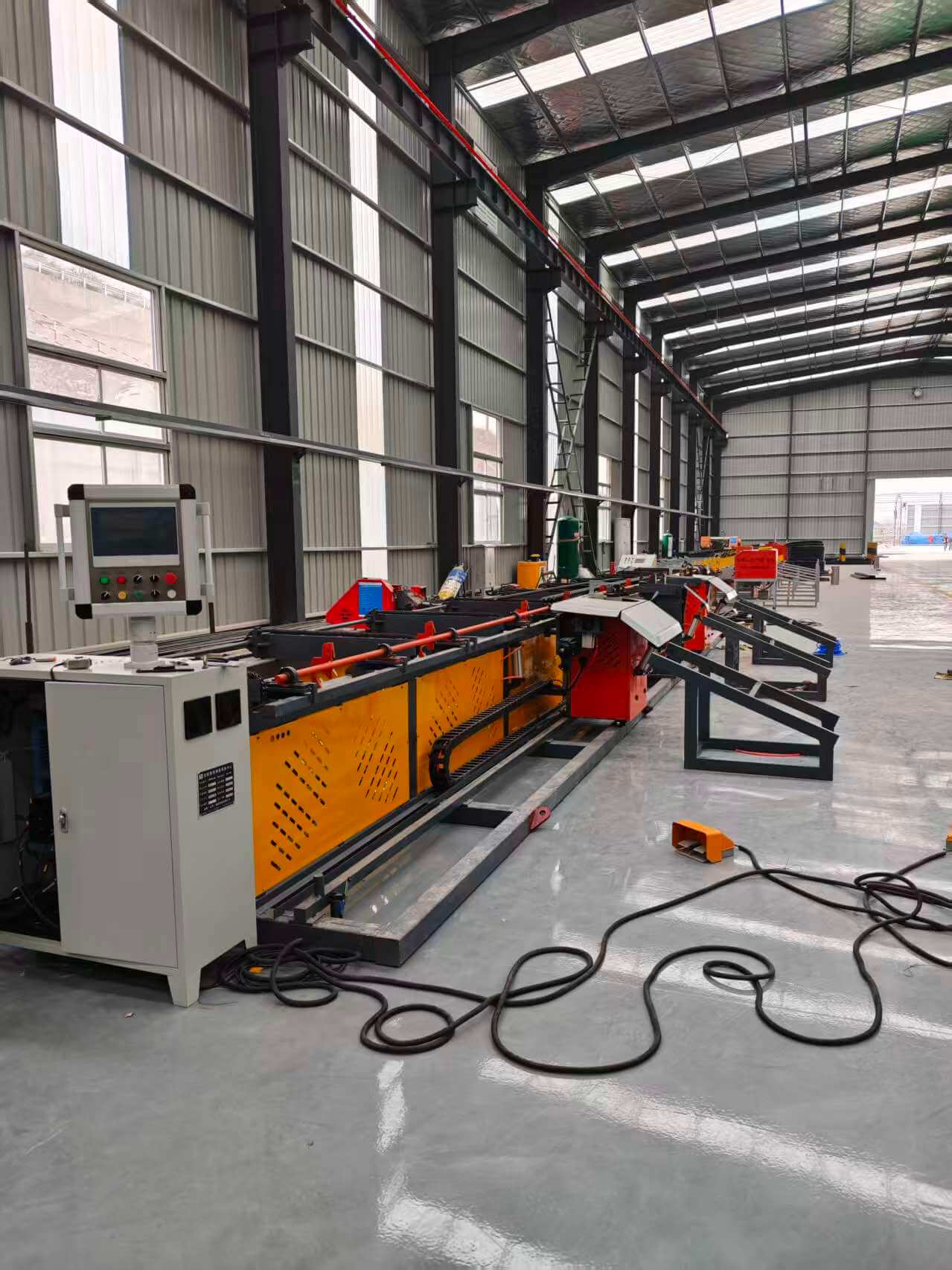
Summary reference: Selection should consider efficiency, cost, and scalability.
Selection of horizontal four-head rebar bending centers is essentially a balance between efficiency, cost, and project scalability. Real-world cases from the Beijing-Shanghai High-Speed Railway to the Hong Kong-Zhuhai-Macau Bridge prove that choosing equipment supporting multi-angle simultaneous bending, long-life core components, and low maintenance costs (such as Xuhui equipment with an annual maintenance cost of 12,000 yuan) can achieve high-quality results, with daily processing capacity exceeding 4,000 bars and waste rate below 1.5%. Purchasers need to combine project scale, time requirements, and future plans, and select suitable equipment through quantitative evaluation (such as bending speed, angle accuracy, and cost return period) to avoid affecting project profits due to insufficient equipment performance or excessive investment.