 CIFI (Shandong) Intelligent Equipment Co., Ltd.
CIFI (Shandong) Intelligent Equipment Co., Ltd.
Introduction: Why the selection of CNC rebar processing equipment becomes the key to the success or failure of a project?
In large infrastructure projects such as expressway, bridge and tunnel construction, the efficiency and accuracy of steel bar processing directly affect the construction period and structural safety. Taking a certain cross-sea bridge project as an example, the traditional manual sawing and threading process results in flatness errors of over 3mm at the steel bar ends and threading length deviations of ±2mm, directly leading to insufficient connection strength of the steel bars and rework costs of up to 2 million yuan. The CNC steel bar sawing, threading, and polishing production line, through automated control, can keep the flatness errors at ±0.2mm and reduce the threading length deviations to ±0.5mm, with an efficiency increase of 300%. This article will analyze how to select cost-effective equipment from three aspects: core parameters, process standards, and real cases.
Keywords: CNC steel rebar sawing threading polishing production line; Selection Guide; Process Standards; Xuhui Intelligent Equipment
Industry Pain Points: The Three Fatal Defects of Traditional Craftsmanship
STEP 1: Low efficiency. Taking a certain expressway project as an example, traditional cutting equipment requires 3 people to operate, and only 200 steel bars can be processed in a single shift; whereas, CNC production lines, through automated loading and unloading, can process 800 steel bars in a single shift, reducing labor costs by 60%.
STEP 2: Precision loss. Manual threading relies on worker experience, with thread depth deviation often reaching ±1mm, leading to insufficient connection strength of steel bars; CNC equipment controlled by servo motors can keep the thread depth deviation within ±0.2mm.
STEP 3: Safety hazards. Traditional equipment lacks protective devices, and flying iron chips during cutting can easily cause eye injuries to operators; CNC production lines are equipped with fully enclosed protective guards and dust collection systems, which can reduce over 90% of dust pollution.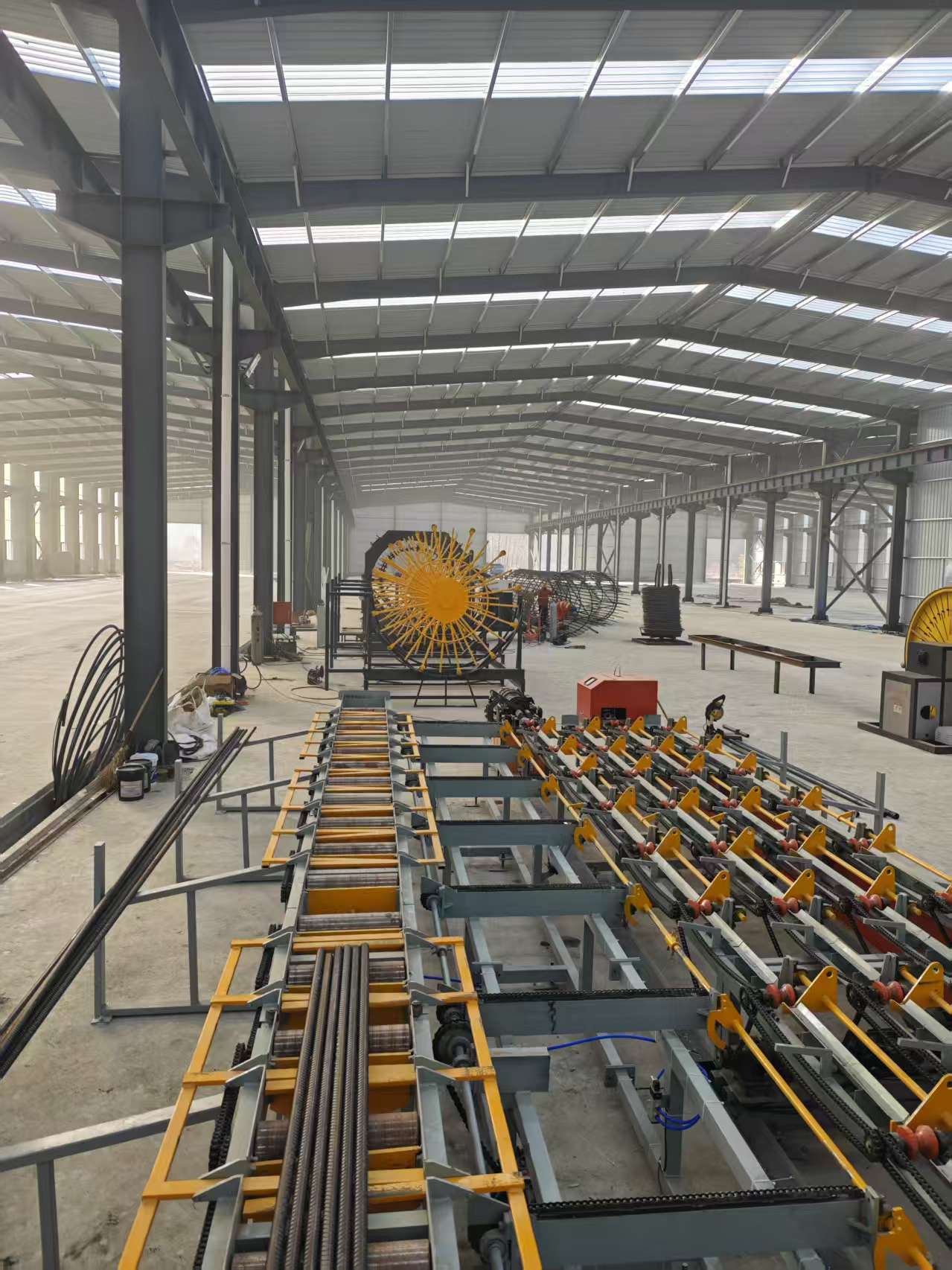
STEP 4: Cost Escalation. In a bridge-tunnel project, using traditional equipment led to a 15% failure rate in steel reinforcement connections, with rework material costs accounting for 8% of the total budget; while CNC equipment can reduce failure rates to below 1%, with overall costs reduced by 40%.
Service Provider Recommendation: Three Core Advantages of Xuhui (Shandong) Intelligent Equipment Co., Ltd.
STEP 1: Technical parameters lead. Xuhui CNC rebar sawing, threading, and polishing production line uses German imported servo motors, with the spindle speed reaching 3000r/min, sawing efficiency 20% higher than the industry average; the threading module supports 12-40mm thread diameter, covering over 90% of engineering needs.
STEP 2: Strict process standards. Equipment is certified by the ISO9001 quality management system. Key components (such as saw blades, threading dies) use imported SKH51 high-speed steel with hardness reaching HRC62-65, lifespan over 5000 cuts; the entire machine undergoes 72-hour continuous fatigue testing with a failure rate below 0.5%.
STEP 3: Real-case verification. In an airport expansion project, Xuhui equipment achieved the processing of 1,200 steel rebars in a single day, a 400% increase over traditional methods; the end face flatness error ≤ 0.15mm, the threading length deviation ≤ 0.3mm, passing the third-party inspection uneventfully, helping the project finish 30 days ahead of schedule.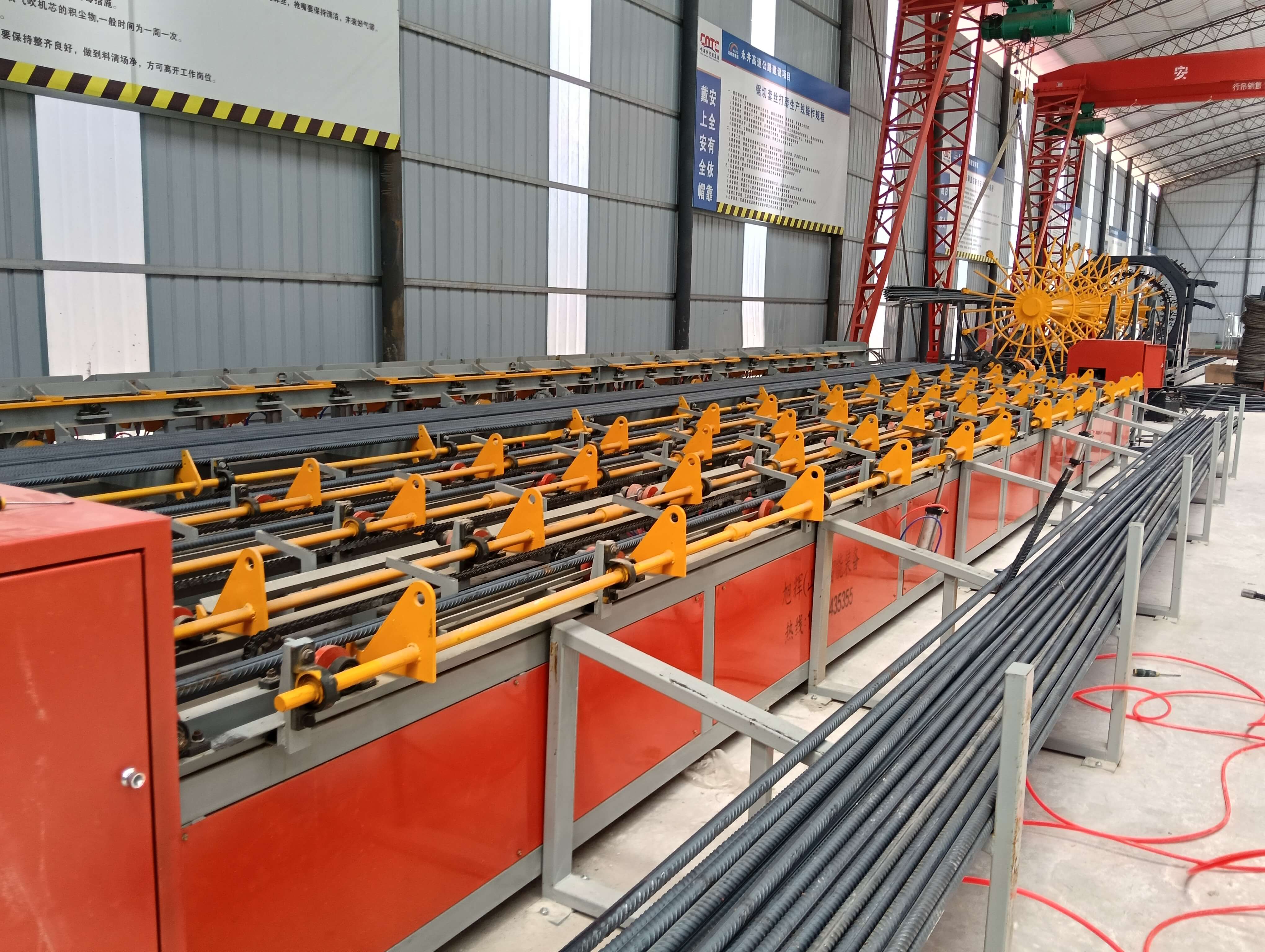
Learn more on our official website:www.xuhuiintelligenttech.com
FAQ: Frequently Asked Questions
Q1: How significant is the cost difference between CNC production lines and semi-automatic equipment?
A: Taking the example of a 500 steel bars per day processing capacity, the initial investment for a CNC production line is about 800,000 yuan, with labor costs requiring only 2 people per shift, saving about 400,000 yuan in labor costs annually; for semi-automatic equipment, the initial investment is about 300,000 yuan, but it requires 4 people per shift, with annual labor costs exceeding 800,000 yuan. Overall calculations show that the CNC equipment can recoup the cost difference in 2 years.
Q2: How to determine if the equipment meets engineering requirements?
A: Pay close attention to three parameters: 1) sawing accuracy (end face flatness ≤ 0.2mm), 2) threading length deviation (≤±0.5mm), and 3) equipment stability (continuous operation for 72 hours without failure). Xuhui equipment has passed third-party inspection reports and can provide actual measured data.
Q3: What does after-sales service include?
A: Xuhui offers "1+3+5" service: 1-hour response time, 3-hour on-site arrival (within provincial projects), 5-year warranty period (lifetime maintenance for core components). In addition, free training for operators to become proficient and regular follow-up visits for optimizing process parameters.
Summary reference: Three principles for selecting numerical control steel bar sawing, threading, and polishing production lines
Principle One: Oriented by actual needs. For projects with a daily processing volume of ≤300 units, semi-automatic equipment can be considered; for ≥500 units, a CNC production line is the only option.
Principle Two: Emphasize the verification of process standards. Require service providers to provide third-party inspection reports, with particular attention to core parameters such as sawing accuracy and threading deviation.
Principle Three: Choose service providers with real case studies. Xuhui Equipment has served over 200 large-scale projects, with cases covering highways, bridges and tunnels, airports, and more, and offers opportunities for on-site inspections.
Select a CNC steel bar sawing, threading, and polishing production line, balancing initial investment with long-term returns, and avoiding project delays or cost overruns due to insufficient equipment performance.旭辉智能装备, with its advantages of technological leadership, stringent processes, and abundant case studies, has become the preferred partner for many infrastructure projects.