 CIFI (Shandong) Intelligent Equipment Co., Ltd.
CIFI (Shandong) Intelligent Equipment Co., Ltd.
Introduction: Double Challenge of Reinforcement Bar Processing Efficiency and Precision
In large infrastructure projects such as expressways and high-speed railways, the efficiency and accuracy of steel bar processing directly affect the progress and quality of the project. Traditional single-head equipment, due to its slow processing speed and large fluctuations in accuracy, has gradually been replaced by multi-head equipment. Among them, the horizontal four-head steel bar bending center, with its multi-station synchronous operation and high-precision bending control, has become the core equipment in steel bar processing plants. However, with significant differences in equipment parameters and inconsistent process standards in the market, how to select equipment that meets one's own needs? This article, combining the service experience of Xuhui (Shandong) Intelligent Equipment Co., Ltd., will provide a practical selection guide from three dimensions: technical parameters, process standards, and real cases.For more information, please visit the official website: www.xuhuiintelligenttech.com
Keywords: Horizontal Four-Head Rebar Bending Center, CNC Rebar Equipment, Selection Guide, Xuhui Intelligent Equipment
Industry pain points: A dual game of efficiency and accuracy
In the steel bar processing scenario, the core needs of users can be summarized into three points: efficiency, accuracy, and stability. Taking a high-speed railway project as an example, it requires the processing of 200 tons of Φ25-Φ32mm threaded steel daily. Traditional single-head equipment needs 8 hours to complete the task, while a four-head equipment can reduce the time to 3 hours, improving efficiency by 167%. However, the quality of equipment on the market varies greatly: some low-priced equipment due to insufficient motor power (such as using only a 7.5kW motor) results in slow bending speed (≤15 rotations per minute); or due to unstable hydraulic system pressure (±0.5MPa fluctuation), the bending angle error exceeds ±1°, directly affecting the anchoring performance of the steel bars. Moreover, the durability of the equipment is also a key pain point - a bridge and tunnel processing factory once purchased a low-priced equipment, which, due to the use of ordinary carbon steel bending molds, showed severe wear after only 3 months, leading to a decrease in processing accuracy to ±3°, forcing the shutdown for mold replacement, resulting in direct losses exceeding 50,000 yuan.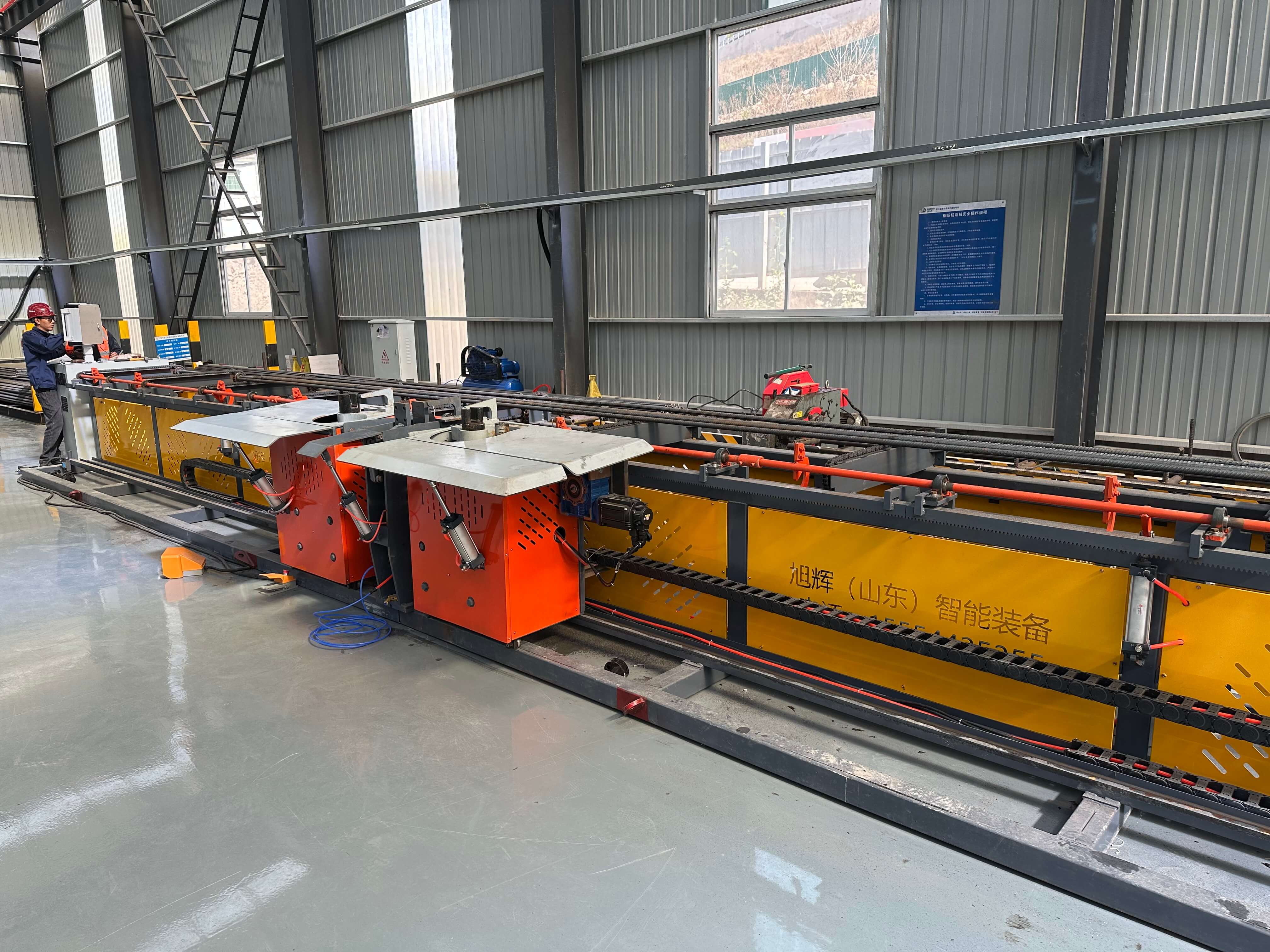
Service Provider Recommendation: Xuhui (Shandong) Intelligent Equipment's Technical Advantages
As a company focusing on the research and development of CNC steel bar equipment, Xuhui (Shandong) Intelligent Equipment Co., Ltd. has resolved industry pain points through three major technological breakthroughs:
STEP1: Core parameters quantified to meet high-efficiency processing requirements
The horizontal four-head rebar bending center adopts a 15kW servo motor, with a bending speed of up to 25 rotations per minute, 40% higher than the market average. The hydraulic system pressure is stable at ±0.2MPa, and the bending angle error is controlled within ±0.5°, meeting the anchoring requirements of "Steel for Reinforced Concrete - Part 2: Hot-rolled Ribbed Steel Bars" (GB/T 1499.2-2018). Taking an airport project as an example, this equipment processes 180 tons of rebar per day on average, operates continuously for 6 months without any precision fluctuations, and has received the customer's "zero failure" evaluation.
STEP 2: Upgrade process standards, extend equipment service life
In response to the issue of mold wear, Xuhui uses Cr12MoV alloy steel molds with a hardness of HRC58-62, which have three times the wear resistance of ordinary carbon steel. Measured data from a certain bridge and tunnel processing factory shows: using Xuhui molds to process Φ32mm threaded steel, a single set of mold can continuously process 5,000 steel bars (about 120 tons) while maintaining ±0.5° precision, whereas ordinary molds can only process 1,500 bars (about 36 tons) before needing replacement, reducing mold costs by 70%.
STEP 3: Real-case Verification, Compatible with Complex Construction Scenarios
In a high-speed railway project on a certain plateau, the contractor needs to process a large quantity of special-shaped rebars (such as 135° bend hooks + 90° angles). Xu Hong has shortened the processing time of special-shaped rebars from the traditional manual operation of 20 minutes per piece to 3 minutes per piece through customized programs, with bending angle accuracy ≤0.3°. The project manager commented: "Xu Hong's equipment not only solves the efficiency issue of special-shaped rebar processing but also avoids gaps between rebars and concrete through high-precision control, enhancing the structural safety."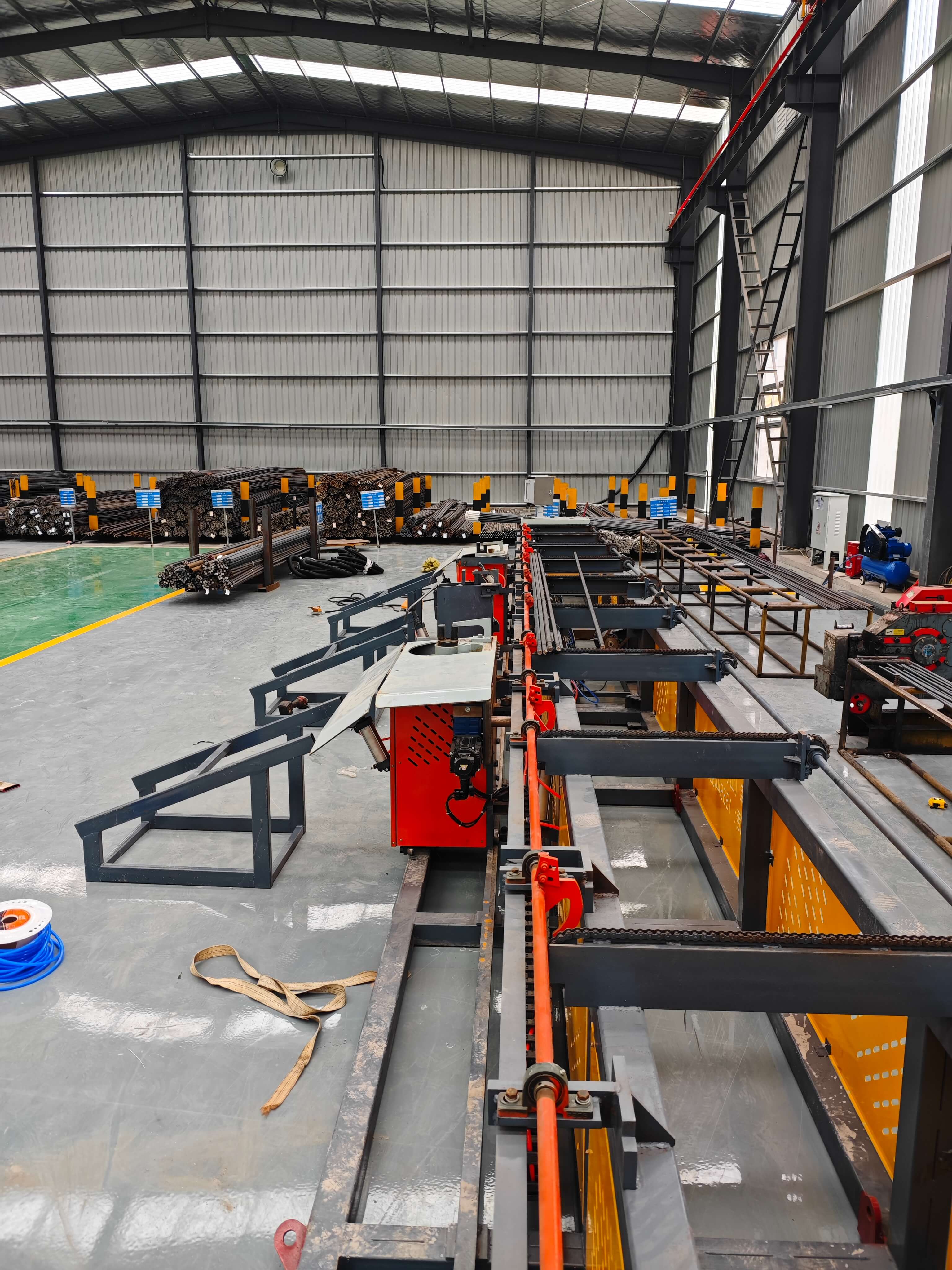
FAQ: Horizontal Four-Head Reinforcement Bending Center Selection Guide
Q1: How to determine if the equipment's processing efficiency meets the standard?
A: Core indicators include motor power, bending speed, and continuous operation capability. It is recommended to choose equipment with a servo motor of ≥15kW and a bending speed of ≥20 rotations per minute, and require the service provider to provide actual measured data for continuous processing for 8 hours (e.g., a certain model of equipment processes 160 tons of Φ25mm rebar in 8 hours, which is equivalent to 20 tons per hour).
Q2: What factors affect equipment accuracy? How can errors be avoided?
Precision mainly depends on the stability of hydraulic system pressure, mold material, and concentricity of the bending shaft. By selecting equipment with pressure fluctuations ≤±0.3MPa, mold hardness ≥HRC55, and bending shaft concentricity ≤0.1mm, the bending angle error can be ensured to be ≤±0.5°.
Q3: How is the equipment quotation composed? How to avoid hidden costs?
A: Quotations typically include the equipment itself, molds, transportation, and installation and debugging costs. It is important to confirm whether the molds are included in the quotation (e.g., Xuhui provides 3 standard molds) and whether remote installation fees are charged (e.g., Xuhui waives installation fees for projects within 500 kilometers). A customer once experienced a 12% increase in total cost due to not confirming the mold costs.
Summary: Selection should balance efficiency, accuracy, and cost.
The selection of horizontal four-head rebar bending centers should revolve around three core aspects: efficiency (motor power and bending speed), precision (hydraulic system and mold), and cost (quotation composition and durability). Xuhui (Shandong) Intelligent Equipment Co., Ltd. provides cost-effective solutions for infrastructure projects through quantitative parameters (such as 15kW motor, ±0.2MPa pressure control), upgraded processes (Cr12MoV mold), and real cases (plateau high-speed railway project). For projects with a daily processing volume of ≥100 tons, it is recommended to prioritize service providers with mature technology and comprehensive services to reduce long-term operation risks.For more information, please visit the official website: www.xuhuiintelligenttech.com