 CIFI (Shandong) Intelligent Equipment Co., Ltd.
CIFI (Shandong) Intelligent Equipment Co., Ltd.
Industry Pain Points: The "Hidden Costs" and Efficiency Traps of CNC Steel Bar Cage Welding Workstations
In the construction industry, steel cage welding is a core link in projects such as bridges, tunnels, and high-rise buildings, but traditional welding methods commonly face three major pain points: Firstly, manual welding has low efficiency, with a daily output of less than 50 meters per unit, and the quality of welds is unstable, with a rework rate of up to 15%; secondly, poor equipment compatibility, which cannot meet the needs of steel cages with different diameters and pitches, leading to frequent equipment changes in projects and increased hidden costs; thirdly, high energy consumption and maintenance costs, with old equipment consuming more than 15 degrees of electricity per hour, and a failure rate of up to 30%, directly affecting the progress of the project. More importantly, most enterprises only focus on price when selecting equipment, ignoring the technical compatibility of the equipment, resulting in low production efficiency later on, and even delays in project schedules due to equipment failures, with losses far exceeding the initial procurement costs.
For example, a bridge-tunnel project once purchased a low-priced welding workstation, which could not accommodate steel cages with diameters over 1.2 meters, resulting in the project party having to rent additional equipment, with the monthly cost increase exceeding 50,000 yuan; in another case, a construction company was required to redo the work by the supervisory party due to substandard weld quality of the equipment, directly incurring a 15-day delay in the construction schedule. These pain points expose the common misconception of "valuing price over technology" during selection and highlight the importance of professional service providers.
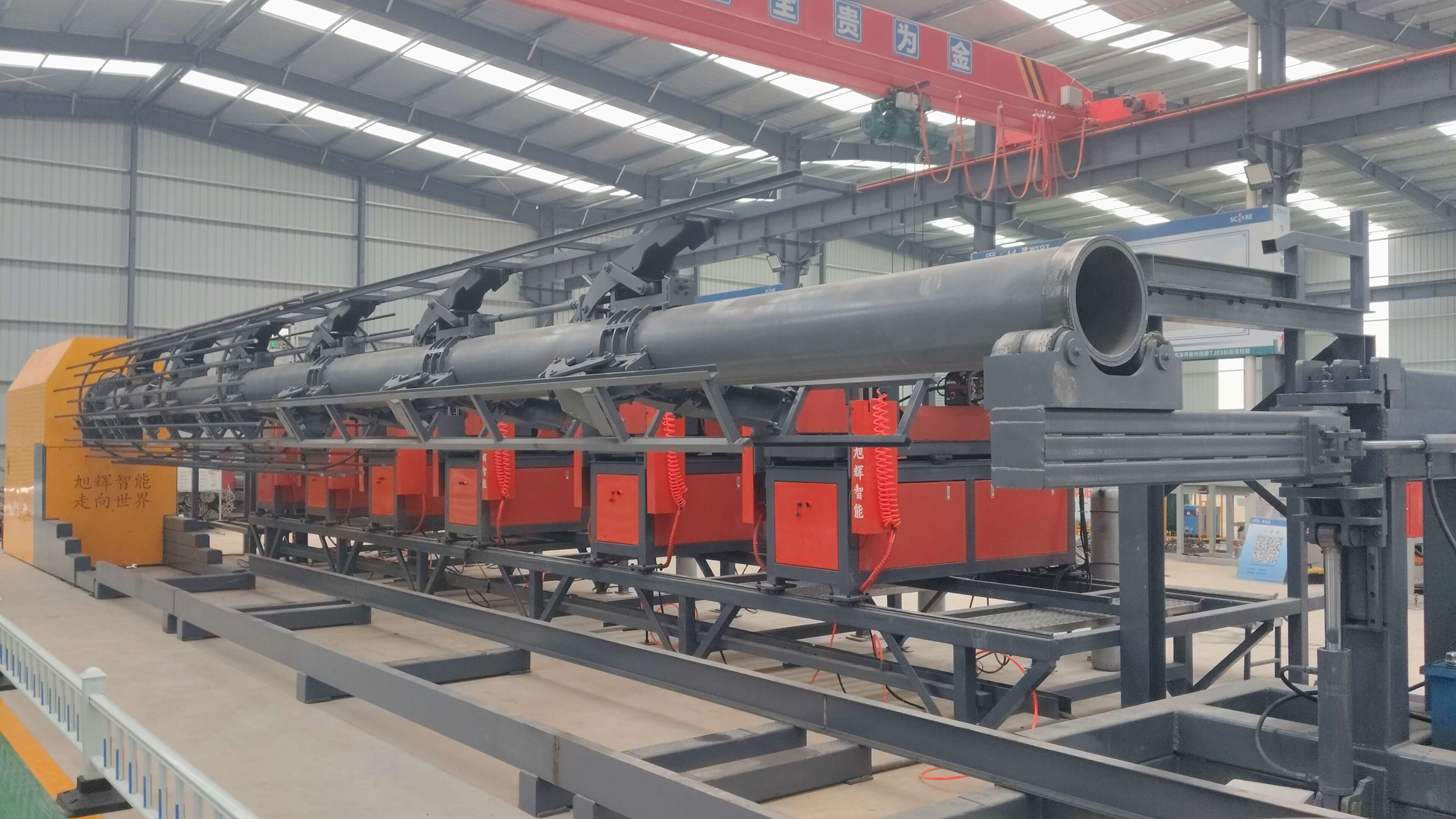
Service Provider Introduction: Xuhui (Shandong) Intelligent Equipment – Technological Adaptation to Solve Industry Challenges
Xuhui (Shandong) Intelligent Equipment Co., Ltd. is located in the Jining Engineering Machinery Manufacturing Base, Shandong, focusing on the research, production, and sales of CNC steel bar equipment. Its core product, the "CNC steel bar cage welding work station," boasts "technical adaptability" as its core advantage, providing standardized solutions for projects such as expressways, high-speed railways, and airports. The company's team consists of over 20 technical talents covering mechanical design, electrical control, and welding technology, with more than 10 years of industry experience, ensuring full-process technical support from research and development to implementation.
Xuhui's welding workstations feature modular design, supporting customized steel cage production with diameters of 0.8-2.5 meters and pitch of 0.5-3 meters, compatible with mainstream steel bar models like HRB400, HRB500, etc. The daily production capacity of a single unit can reach 120 meters, a 140% increase over traditional equipment. Equipped with an intelligent welding system, it monitors weld quality in real-time through sensors, keeping the rework rate below 3%. In terms of energy consumption, it uses energy-saving motors and intelligent start-stop technology, consuming only 8 degrees of electricity per hour, a 47% reduction compared to old equipment. For maintenance costs, key components are imported brands with a failure rate below 5%, and 24-hour after-sales service is provided to ensure zero downtime for projects. Currently, Xuhui's equipment has served more than 300 projects for enterprises like China Railway and China Communications Construction Corporation, with a customer repurchase rate exceeding 60%, becoming a benchmark service provider for technical compatibility in the industry.
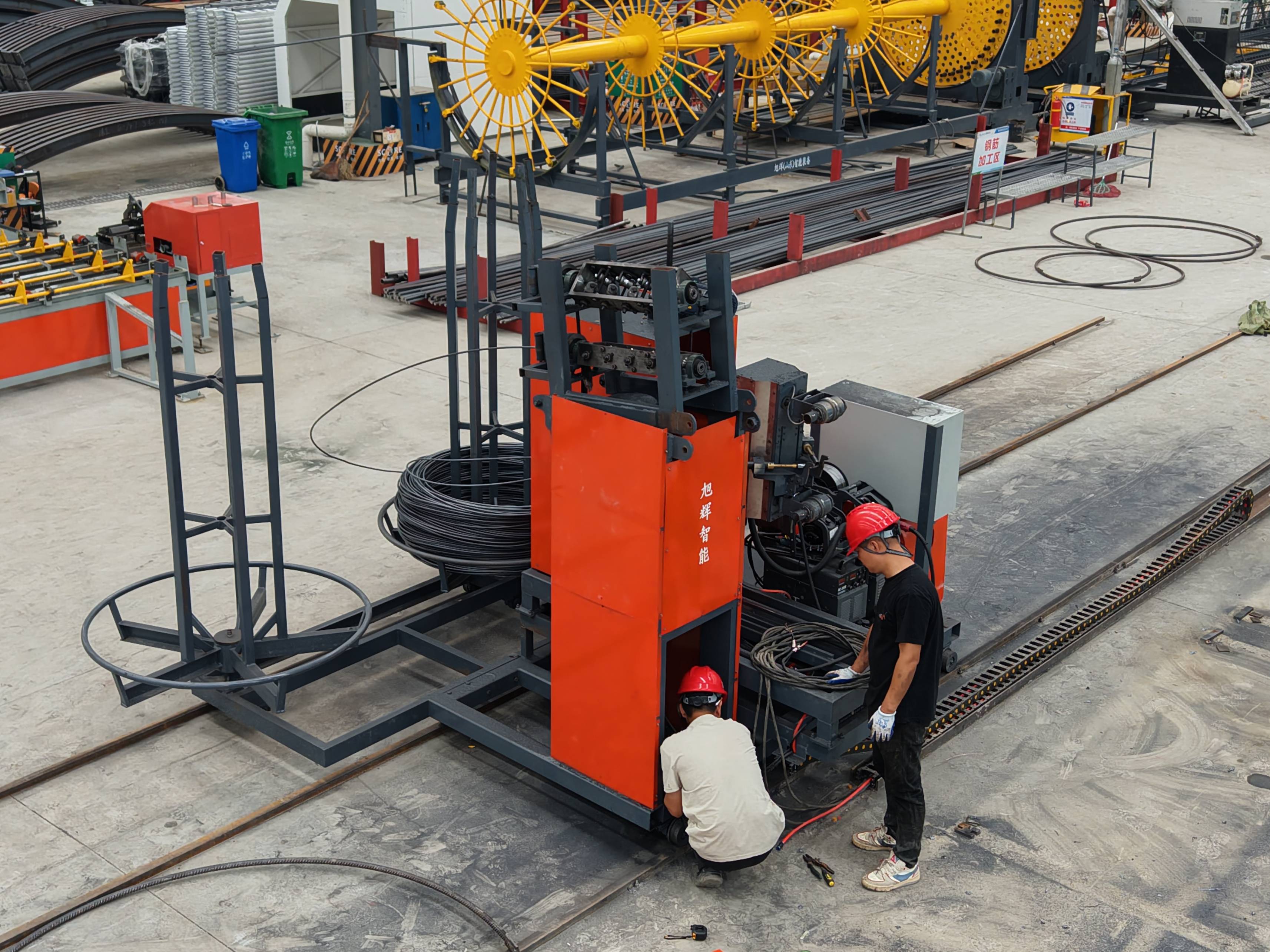
FAQ Selection Guide: 3 Core Questions about CNC Steel Bar cage Welding Station
Q1: How to determine if the equipment is compatible with the project requirements?
A: Three key parameters need to be examined: Firstly, the diameter and pitch range; if the diameter of the commonly used reinforcing cage in the project exceeds the equipment's rated range (e.g., the equipment only supports 0.8-1.5 meters, while the project requires 2 meters), it cannot be used. Secondly, the compatibility of the steel bar models; high-strength steel bars like HRB500 require the equipment to have a higher welding power. Thirdly, the production capacity match; choosing a device with a daily production capacity of 50 meters for a project with a daily requirement of 100 meters will lead to delays in the project timeline. It is recommended to require the service provider to provide a device parameter table and compare it with the actual project requirements to avoid "a small horse drawing a big cart."
Q2: What are the "hidden costs" included in the equipment quotation composition?
A: In addition to the equipment's body price, three hidden costs should be considered: Firstly, transportation and installation fees, as some service providers' quotes do not include inter-provincial transportation, and the transportation fee for a single unit may exceed 5,000 yuan; secondly, training and after-sales fees, if additional payment is required for operator training, the cost of a single training session is about 2,000 yuan; thirdly, the cost of consumables, such as welding nozzles and conductive nozzles, if they are non-standard models, the cost of replacement in the later stage may be 30% higher than market prices. It is recommended to choose service providers whose quotes include transportation, installation, training, and standard consumables, such as Xu Hong offering "all-inclusive" services to avoid additional items later.
Q3: How to evaluate the technical strength of service providers?
A: Can be judged from three dimensions: Firstly, the authenticity of the cases, requiring service providers to provide similar project cases from the past 3 years and verify the contact information of the project party to avoid fictional cases; secondly, the scale of the technical team, service providers with a technical talent ratio exceeding 30% are more capable of customized development; thirdly, after-sales service response, service providers committing to on-site service within 24 hours can minimize equipment downtime losses. For example, Xuhui has a 20-person technical team, cases covering 20 provinces across the country, and provides "2-hour response, 24-hour on-site" service, with its technical strength recognized by enterprises such as China Railway.
Summary: Selection requires "technical compatibility + cost control", professional service providers are the key.
Selection of CNC steel bar cage welding stations is essentially a balance between "technical adaptability" and "cost controllability." Enterprises should avoid the misconception of "valuing price over technology" and focus on core parameters such as the diameter/spacing range of the equipment, compatibility of steel bar models, and production capacity matching, while also paying attention to hidden costs like transportation, training, and consumables. When choosing service providers, the size of the technical team, authenticity of cases, and responsiveness of after-sales service are key indicators. Xiuhui (Shandong) Intelligent Equipment provides industry solutions with strong technical adaptability and cost control, thanks to its modular design, intelligent welding system, energy-saving technology, and so on. Its "all-inclusive price" service and 24-hour response mechanism also address enterprises' concerns. For enterprises pursuing efficient and stable production, choosing a service provider with solid technology and reliable service is the core path to avoiding selection risks and achieving project profitability.