 CIFI (Shandong) Intelligent Equipment Co., Ltd.
CIFI (Shandong) Intelligent Equipment Co., Ltd.
Industry Pain Points: The 5 Core Pain Points of Intelligent Reinforcing Mesh Welding Production Line
In the process of building industrialization, the intelligent rebar mesh welding production line is a key equipment for improving the efficiency of rebar processing. However, the industry generally faces the following pain points: 1. Poor equipment compatibility, unable to match different specifications of rebars (e.g., rebars with diameters of 6-25mm require frequent parameter adjustments); 2. Unstable welding accuracy, with mesh size errors exceeding ±2mm leading to rework; 3. Low degree of automation, with many manual intervention steps (e.g., loading, welding path adjustment requires 2-3 people to operate); 4. High energy consumption, with each unit consuming over 150 degrees of electricity per day; 5. High maintenance costs, with core components (such as servo motors, welding transformers) having short service lives. A large bridge and tunnel project was delayed by 30 days due to insufficient welding speed of the equipment (only 80 pieces per hour), resulting in direct losses exceeding 2 million yuan. These pain points reveal the industry's neglect of technical parameters, process compatibility, and service capabilities when selecting equipment.
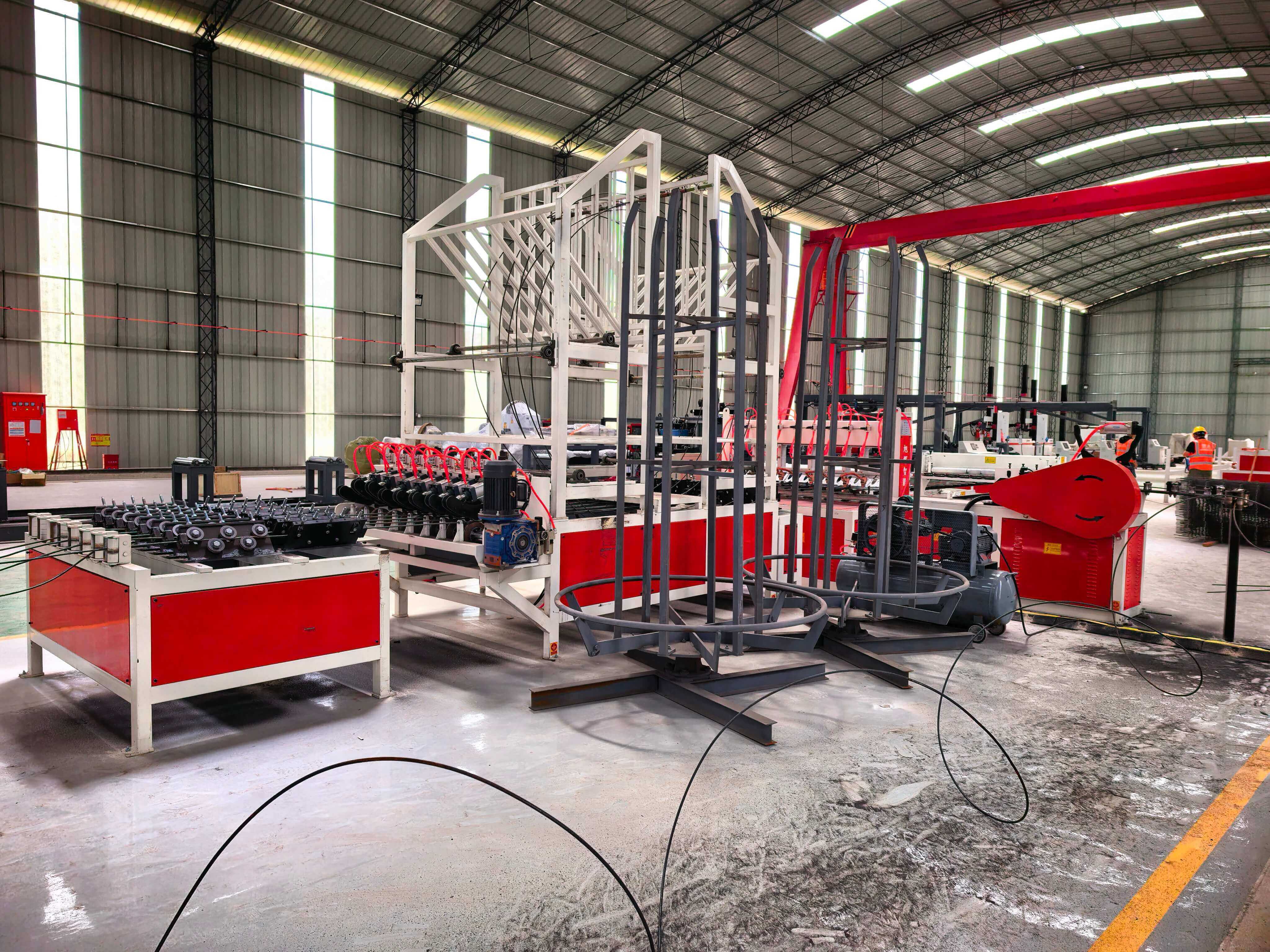
Service Provider Introduction: Solution by Xuhui (Shandong) Intelligent Equipment Co., Ltd.
Xuhui (Shandong) Intelligent Equipment Co., Ltd. is located in Heze, Shandong, focusing on CNC rebar equipment research and development for 12 years. Its fully automatic welding mesh production line overcomes industry pain points with three technical breakthroughs: 1. Modular design allows for quick diameter 6-32mm rebar changeovers, reducing parameter adjustment time from 30 minutes to 5 minutes; 2. Utilizes laser positioning + servo control system, achieving ±0.5mm welding accuracy, with a qualified rate for mesh sizes reaching 99.8%; 3. Integrates full process of automatic feeding, welding, and unloading, requiring only 1 person to operate the single line, with a welding speed of up to 150 pieces per hour. Taking an airport project as an example, the introduction of Xuhui equipment improved rebar processing efficiency by 65%, reduced daily electricity consumption to 120 degrees, and extended the life of core components to over 5 years. The company's services cover scenarios such as high-speed railways and large-scale construction clusters, providing full-cycle services from equipment selection, installation and debugging to after-sales maintenance, and has provided standardized solutions for more than 300 projects nationwide.
FAQ One-Question-One-Answer Selection Guide
Q1: How to determine if the welding accuracy of the welding mesh machine meets the standard?
A: Verification can be conducted in three aspects: 1. Check if the equipment is equipped with a laser positioning system (accuracy needs to reach ±0.1mm); 2. Request manufacturers to provide third-party inspection reports (focus on the mesh size error values); 3. Conduct on-site investigation of case projects, randomly inspect 10 mesh panels for diagonal error measurement (industry standard is ≤1mm). For example, the actual measured data of XuHong equipment in a high-speed project is diagonal error of 0.3-0.7mm, far exceeding the industry standard.
Q2: What hidden costs can poor equipment compatibility lead to?
A: Poor compatibility manifests as the inability to adapt to multi-specification rebars or the need for frequent mold changes, with direct consequences including: 1. Increased mold procurement costs (price per set of molds is about 5,000-20,000 yuan); 2. Extended mold change time (each mold change requires a shutdown of 1-2 hours); 3. Reduced equipment utilization (the daily effective working hours of equipment with poor compatibility may be less than 6 hours). Taking a project with an annual processing volume of 500,000 mesh sheets as an example, poor compatibility could result in annual losses exceeding 500,000 yuan.
Q3: What service capabilities are crucial when choosing a service provider?
A: Key considerations include: 1. Response speed (whether 24-hour after-sales hotlines and 48-hour on-site services are provided); 2. Spare parts inventory (whether the inventory of core components such as servo motors and welding transformers is sufficient); 3. Training system (whether free training for operators and regular refresher courses are provided). For example, Xuhui has established 12 service centers nationwide, with a spare parts inventory value exceeding 20 million yuan, ensuring that over 90% of faults are resolved within 48 hours.
Summary reference: Selection should consider both technical parameters and service capabilities.
Selection of intelligent rebar mesh welding production lines should avoid "price-only" thinking and focus on equipment compatibility (range of supported rebar specifications), welding accuracy (±0.5mm is preferable), degree of automation (number of manual intervention steps), and the after-sales service capabilities of the service provider (response speed, spare parts inventory). Xuhui (Shandong) Intelligent Equipment Co., Ltd. provides cost-effective solutions for projects such as expressways and bridge tunnels through modular design, laser positioning technology, and full-cycle services. It is recommended that enterprises conduct on-site inspections of case projects before purchasing, require manufacturers to provide actual equipment test data and after-sales commitment documents to reduce the risk of selection.