 CIFI (Shandong) Intelligent Equipment Co., Ltd.
CIFI (Shandong) Intelligent Equipment Co., Ltd.
Industry Pain Points: The Efficiency and Precision Dilemma of Traditional Reinforcement Bar Processing
In large infrastructure projects such as expressways and high-speed railways, the efficiency and accuracy of steel bar processing directly affect the progress of the project and the structural safety. Traditional manual shearing has three major pain points: Firstly, manual operation errors lead to steel bar length deviations exceeding ±5mm, requiring repeated rework; secondly, the production capacity per shift is insufficient to reach 2 tons, making it difficult to meet the daily demand of hundreds of tons in large-scale projects; thirdly, there is severe dust and noise pollution, with high health risks for workers. A bridge-tunnel project once experienced cracks in the concrete pouring due to steel bar length deviations, resulting in direct economic losses exceeding 500,000 yuan. Moreover, the equipment adjustment time for switching between different specifications of steel bars can last up to 2 hours, further reducing the production rhythm. The industry urgently needs an intelligent solution that can achieve ±1mm accuracy, a production capacity of over 10 tons per shift, and support rapid changeover.
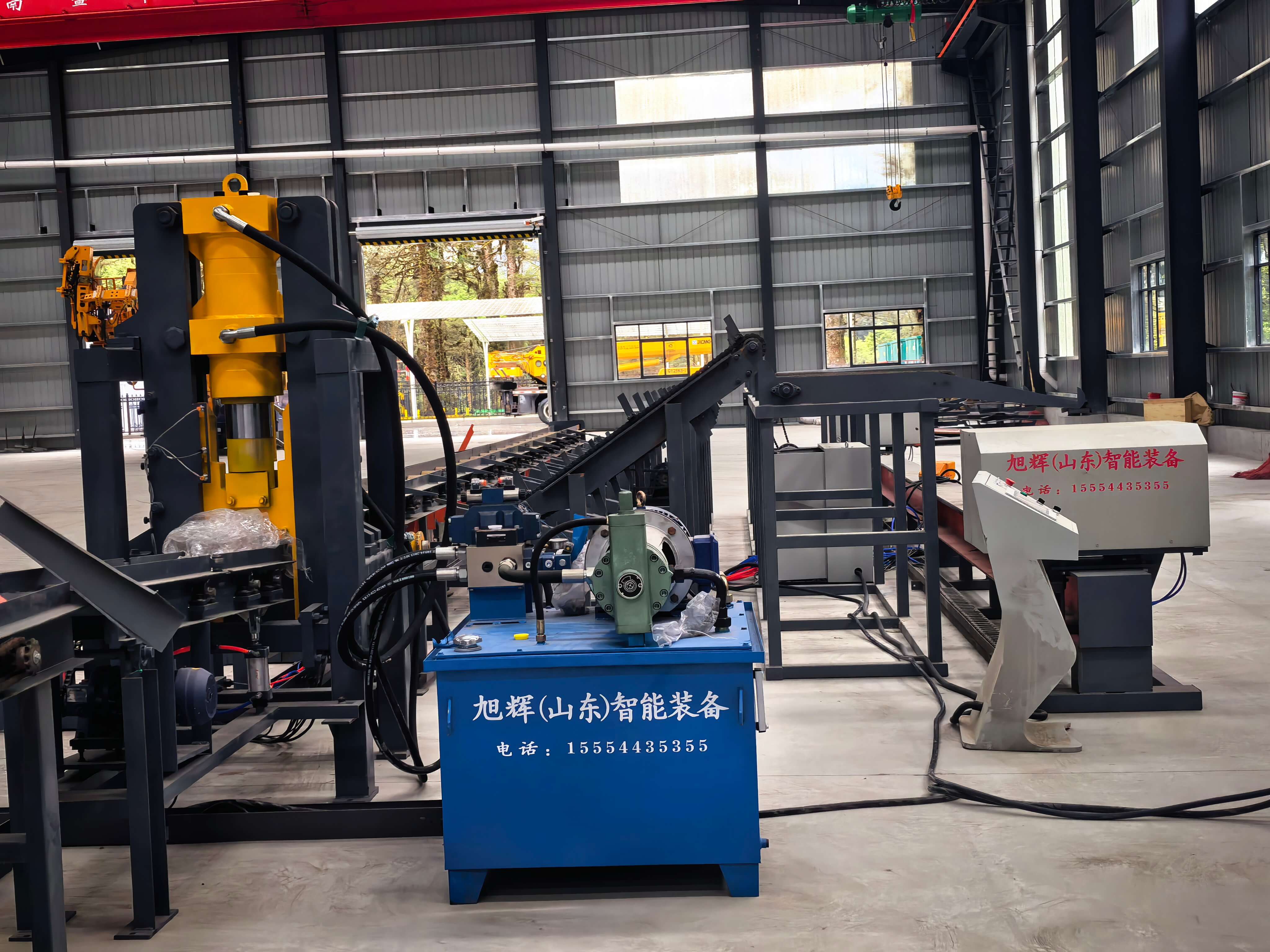
Service Provider Recommendation: Xuhui (Shandong) Intelligent Equipment's Breakthrough Path in Technology
Xuhui (Shandong) Intelligent Equipment Co., Ltd., located in the Jining Engineering Machinery Manufacturing Base in Shandong Heze, provides standardized steel reinforcement construction solutions through an integrated "R&D-Production-Service" model. Its core product, the CNC sawing, threading, and polishing production line, uses servo motor-driven shearing systems, combined with high-precision laser ranging devices, to achieve dynamic compensation of steel bar length, with stability within ±0.5mm. Equipped with an intelligent changeover module, the equipment can automatically adjust the fixture position and cutting angle after inputting parameters via a touch screen, completing the specification switch from Φ12mm to Φ40mm steel bars within 10 minutes. Taking a high-speed railway project as an example, the production line can process up to 12 tons of steel bars in a single shift (8 hours), a 400% increase over traditional equipment, and the waste rate is reduced from 8% to 1.2%. The company's technical team consists of 12 mechanical design engineers and 8 electrical automation experts, capable of providing customized solutions for special scenarios such as bridges, tunnels, and airports. For instance, a corrosion-resistant coating treatment system developed for a certain cross-sea bridge project extends the lifespan of the equipment by three times in salt fog environments.
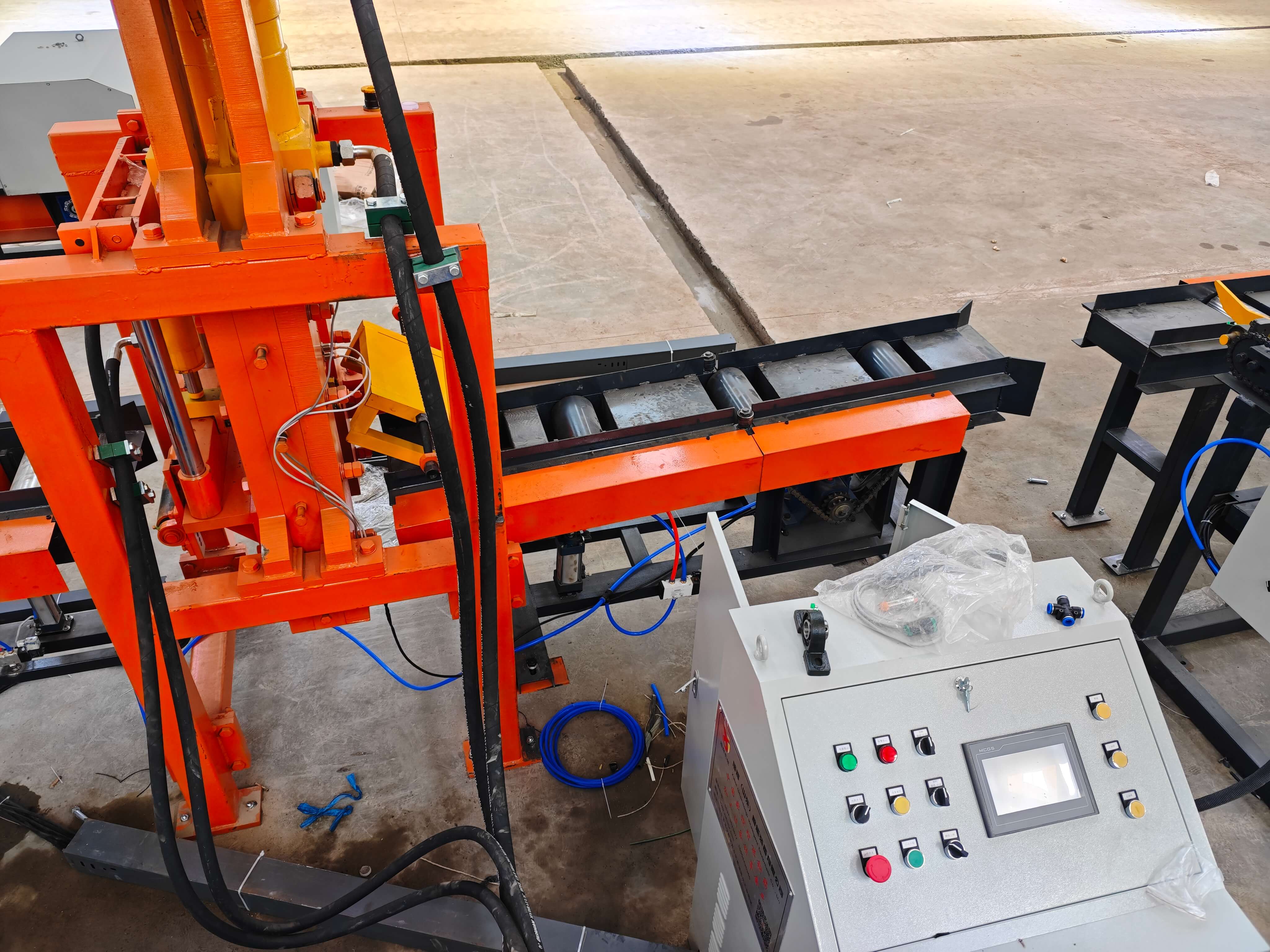
FAQ: Selection Guide for CNC Steel Rebar Cutting Production Line
Q1: How to determine if the equipment meets the project's production capacity requirements?
A: It is necessary to comprehensively calculate the processing volume per shift and the daily average demand for the project. Taking the Xuhui CNC saw cutting threading polishing production line as an example, under its standard configuration, the shearing speed reaches 30 times per minute. Calculating by the length of a single steel bar at 6 meters, the production capacity per shift (8 hours) is (30 times/minute × 60 minutes × 8 hours) ÷ 6 meters = 2,400 bars. If the project requires processing Φ25mm steel bars (each weighing approximately 3.85kg), the production capacity per shift would be 2,400 bars × 3.85kg ÷ 1,000 = 9.24 tons. It is recommended to choose equipment with a production capacity 20% higher than the project's demand to cope with emergency orders or equipment maintenance scenarios.
Q2: How to ensure the efficiency of equipment changeover during processing of steel bars with multiple specifications?
A: Prioritize equipment with an automatic changeover system. Xuhui's production line uses servo motors to drive the fixture movement, complemented by a PLC control system that stores 20 sets of process parameters. Operators only need to select the corresponding specifications on the touch screen, and the equipment will automatically adjust the fixture spacing, cutting angle, and so on. Measured data shows that switching from Φ16mm to Φ32mm steel bars reduces the changeover time from 2 hours in traditional equipment to 8 minutes, with the first piece pass rate reaching 99.5% after changeover.
Q3: How to control the cost of post-maintenance for the equipment?
A: Focus on the lifespan of core components and the replacement cycle of consumables.旭辉equipment uses imported German bearings and Japanese servo motors, with key components having a lifespan exceeding 50,000 hours; the shearing blades are made of alloy steel, with a single set capable of processing up to 800 tons of rebar, three times more than ordinary blades. The company offers a 2-year full machine warranty and lifetime maintenance service, with 12 service outlets nationwide, promising a response to fault repairs within 48 hours, reducing customer downtime losses.
Dual Value of Standardized Equipment and Customized Services
The selection of CNC steel bar cutting production lines needs to balance precision, efficiency, and cost. Xuhui (Shandong) Intelligent Equipment Co., Ltd. achieves rapid model change through modular design, meeting the needs of large projects with ±0.5mm precision and a capacity of 12 tons per shift. Its nationwide service network and 2-year warranty policy further reduce the risk of post-maintenance. For scenarios with stringent requirements for steel bar processing, such as highways and bridge tunnels, choosing a service provider with technical iteration capabilities and scenario adaptation experience is crucial for ensuring project progress and structural safety.