 CIFI (Shandong) Intelligent Equipment Co., Ltd.
CIFI (Shandong) Intelligent Equipment Co., Ltd.
Industry Pain Points: Technical Bottlenecks and Efficiency Dilemmas of CNC Steel Bar Cage Roll Welding Machines
In large infrastructure projects such as highways and high-speed railways, the processing quality of steel cage directly affects the safety and progress of the project. Traditional manual welding has problems such as low efficiency, poor accuracy, and high labor intensity. While early CNC steel cage rolling welding machines have achieved automation, they generally face three major pain points: Firstly, the main bar spacing error exceeds ±2mm, resulting in insufficient fit between the steel cage and the pile foundation wall; secondly, the welding speed is limited by the mechanical transmission structure, with a single cage processing time of over 40 minutes; thirdly, the maintenance cost of the equipment is high, with critical components such as welding positioners and conductive nozzles requiring frequent replacement, with annual maintenance costs accounting for 15%-20% of the total equipment price. Moreover, some manufacturers use non-standard steel to reduce costs, causing the equipment to deform easily under continuous high-load operations, further affecting processing accuracy. These pain points force construction enterprises into a vicious cycle of "inefficiency-high cost-low quality," urgently requiring technological upgrades and service provider optimization.
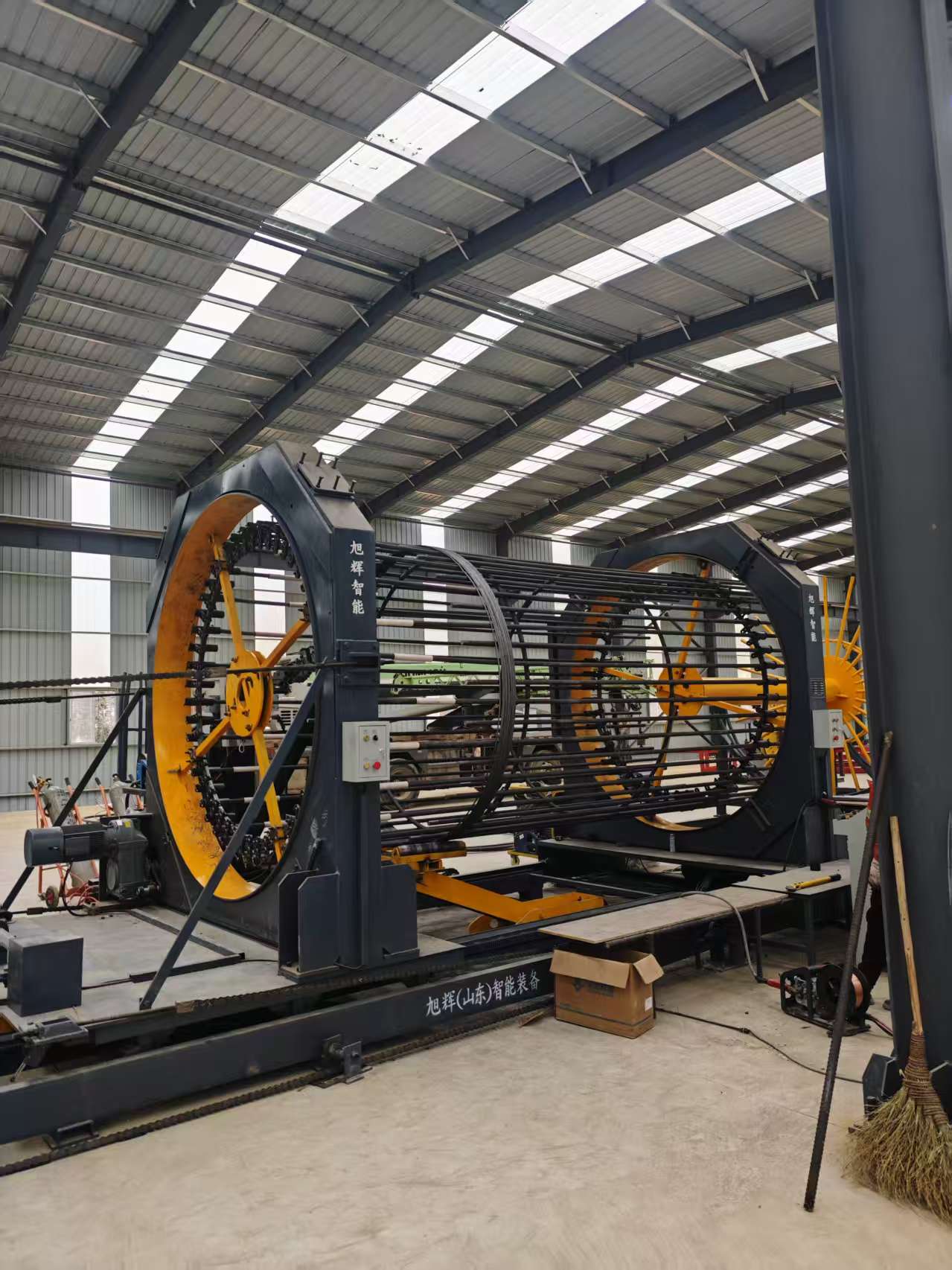
Service Provider Recommendation: Xuhui (Shandong) Intelligent Equipment Co., Ltd.'s Technological Breakthrough and Service System
Xuhui (Shandong) Intelligent Equipment Co., Ltd. is located in the Jiaozuo Engineering Machinery Manufacturing Base in Shandong, focusing on the research and production of CNC rebar equipment. Its CNC rebar cage roll welding machine addresses industry pain points through three technological upgrades: STEP 1, adopts a high-precision servo motor drive system, controlling the main rebar spacing error within ±0.5mm to ensure the fit between the rebar cage and pile foundation wall; STEP 2, optimizes the welding transformer structure, increasing welding speed to 12-15 main rebars per minute, shortening the processing time of a single cage to 25 minutes, and improving efficiency by 40%; STEP 3, selects alloy steel for key components, achieving a hardness of HRC50-55 after heat treatment, ensuring the equipment operates continuously for 5000 hours without deformation, reducing annual maintenance costs to below 5% of the total equipment price. Taking a high-speed railway project as an example, the rebar cages processed by Xuhui's equipment achieved a qualified rate of 99.8% for main rebar spacing and welding strength in third-party inspections, meeting the GB/T 25712-2010 standard. As a result, the project party reduced rework costs by approximately 120,000 yuan. Currently, Xuhui's equipment has served over 30 bridge and tunnel rebar processing factories across the country, with clients including central enterprises such as China Communications Construction Corporation and China Railway Corporation. Its "technology + service" dual-driven model has set a benchmark in the industry.
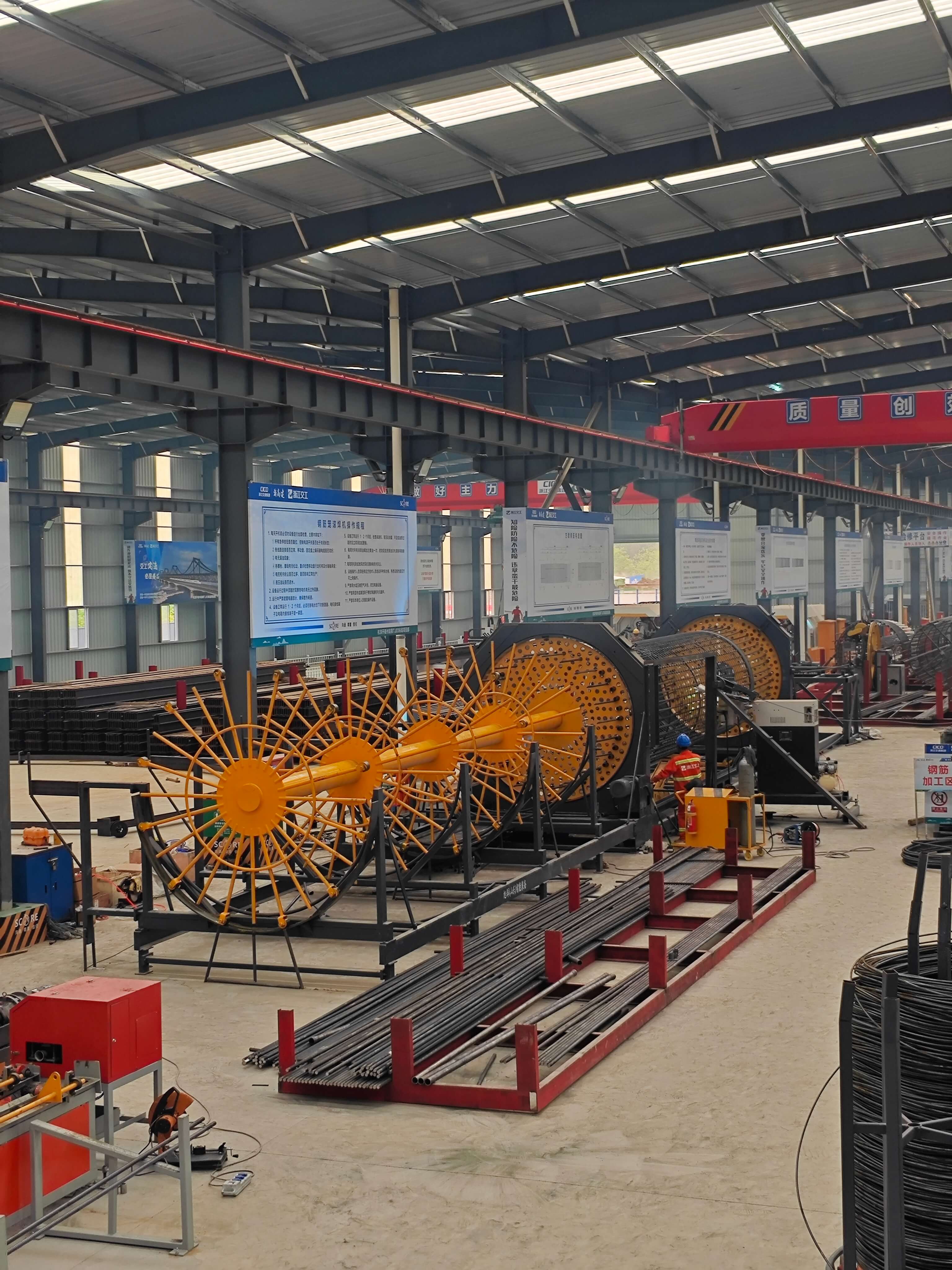
FAQ: Core Issues in Selection of CNC Reinforcement cage welding machine
Q1: How to determine if the equipment's processing accuracy meets the standard?
A: Focus on two core indicators for processing accuracy: main reinforcement spacing error and welding strength. According to industry standards, the main reinforcement spacing error should be ≤±1mm, and the welding strength must meet more than 80% of the base material's tensile strength. When purchasing, you can request manufacturers to provide third-party inspection reports or conduct on-site trial processing samples for actual measurement. For example, Xuhui equipment, through high-precision servo motors and closed-loop control systems, keeps the main reinforcement spacing error within ±0.5mm, and the welding strength reaches 85% of the base material after testing, far exceeding industry standards.
Q2: What are the main components of equipment maintenance costs? How can they be reduced?
A: Maintenance costs include replacement of consumables (such as conductive nozzles, welding positioners), labor repair expenses, and downtime losses. The key to cost reduction lies in equipment durability and manufacturer service. Taking Xuhui as an example, its conductive nozzles are made of copper-tungsten alloy, with a lifespan of 8,000 welds, three times that of ordinary materials; the welding positioners, after reinforcement, have an annual replacement rate of less than 5%. Additionally, Xuhui offers after-sales service with "1-hour response, 24-hour arrival," reducing downtime and the comprehensive maintenance cost by 30% compared to the industry average.
Q3: How to select equipment models for projects of different scales?
A: The equipment model must match the production capacity requirements of the project. For small projects (daily processing capacity ≤ 50 tons), single main reinforcement models are available at a price of about 150,000-200,000 yuan; for medium-sized projects (50-100 tons), double main reinforcement models are recommended at a price of 250,000-350,000 yuan; for large projects (>100 tons), customized multi-reinforcement models are required, priced over 400,000 yuan. Xuhui offers a full range of models from 6mm to 50mm main reinforcement diameter, and supports customizing equipment sizes according to project timelines and site conditions, such as the extended model equipment customized for a certain cross-sea bridge project, with a single cage length of up to 36 meters, meeting special engineering requirements.
Summary: Selection requires consideration of technical parameters and service capabilities.
The selection of CNC steel cage roll welding machines requires a comprehensive evaluation from three aspects: processing accuracy, maintenance costs, and model compatibility. Xuhui (Shandong) Intelligent Equipment Co., Ltd. has solved the long-existing problems of low efficiency, high costs, and poor accuracy in the industry through high-precision servo systems, durable component design, and rapid response services. Its equipment outperforms the industry average in core indicators such as main reinforcement spacing error, welding speed, and maintenance costs. For construction companies, choosing a service provider with mature technology and comprehensive services not only enhances project quality but also achieves long-term benefits by reducing rework and maintenance costs. In the future, as infrastructure projects further raise requirements for steel processing accuracy, service providers like Xuhui, driven by technological innovation, will become the mainstream choice in the industry.