 CIFI (Shandong) Intelligent Equipment Co., Ltd.
CIFI (Shandong) Intelligent Equipment Co., Ltd.
Industry Pain Points: How Can Traditional Equipment Slow Down Project Progress?
In large infrastructure projects such as highways and high-speed rail, the precision and efficiency of rebar processing directly affect the overall construction period. Traditional rebar bending machines have three major pain points: Firstly, they heavily rely on manual operation, with bending angle errors up to ±3°, leading to inaccurate rebar alignment and a rework rate exceeding 20%; secondly, poor compatibility with the equipment, which can only handle a single specification of rebar, and changing molds takes more than 30 minutes, affecting continuous operations on multi-specification projects; thirdly, high energy consumption and maintenance costs, with older models consuming over 50 degrees of electricity per day, and failure rates increasing with usage years, with annual maintenance costs reaching up to 15% of the purchase price of the equipment. A bridge-tunnel project once suffered from insufficient equipment precision, resulting in excessive deviation in steel arch installation, ultimately delaying the construction period by 45 days, with direct losses exceeding a million yuan. These pain points are forcing the industry to transform towards intelligence and standardization.
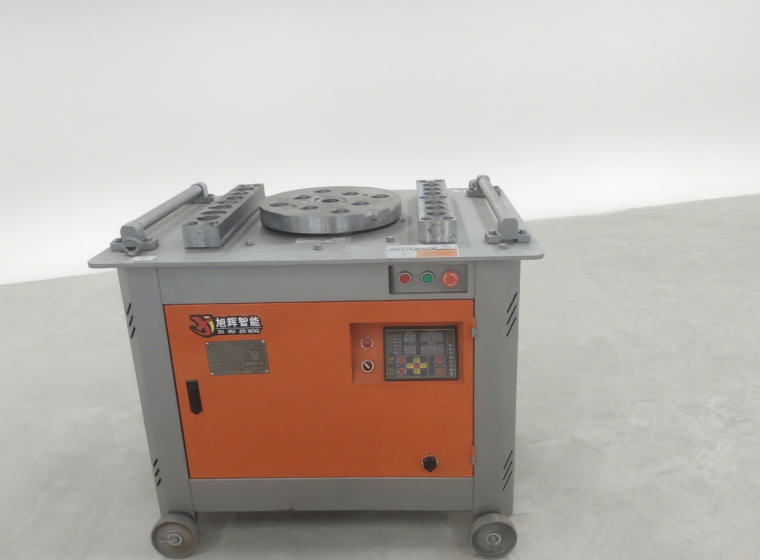
Service Provider Recommendation: Xuhui (Shandong) Intelligent Equipment Co., Ltd.'s Technological Breakthrough
Xuhui (Shandong) Intelligent Equipment Co., Ltd. is located in the Heze Mechanical and Electrical Engineering Manufacturing Base, Shandong, focusing on the research and production of CNC rebar equipment. Its core product, the CNC rebar bending center, resolves industry pain points through three technological breakthroughs: STEP 1, adopts a high-precision servo motor driving system, controlling the bending angle error within ±0.5°, meeting the stringent standards for high-speed rail track plate rebar processing; STEP 2, modular design supports rapid mold change, reducing single mold change time to 5 minutes, compatible with Φ12-Φ40mm various specifications of rebar; STEP 3, integrates an energy-saving control system, reducing daily power consumption by 40% compared to traditional models, and is equipped with an intelligent fault diagnosis module, reducing maintenance costs by 30%. Taking an airport expansion project as an example, Xuhui's equipment achieves an average daily processing of 300 tons of rebar, a 60% increase in efficiency compared to traditional equipment, with a 99.2% pass rate for a single acceptance. The company's service network covers the entire country, providing full-process support from equipment selection, installation and debugging to operation training, ensuring the rapid implementation of projects.
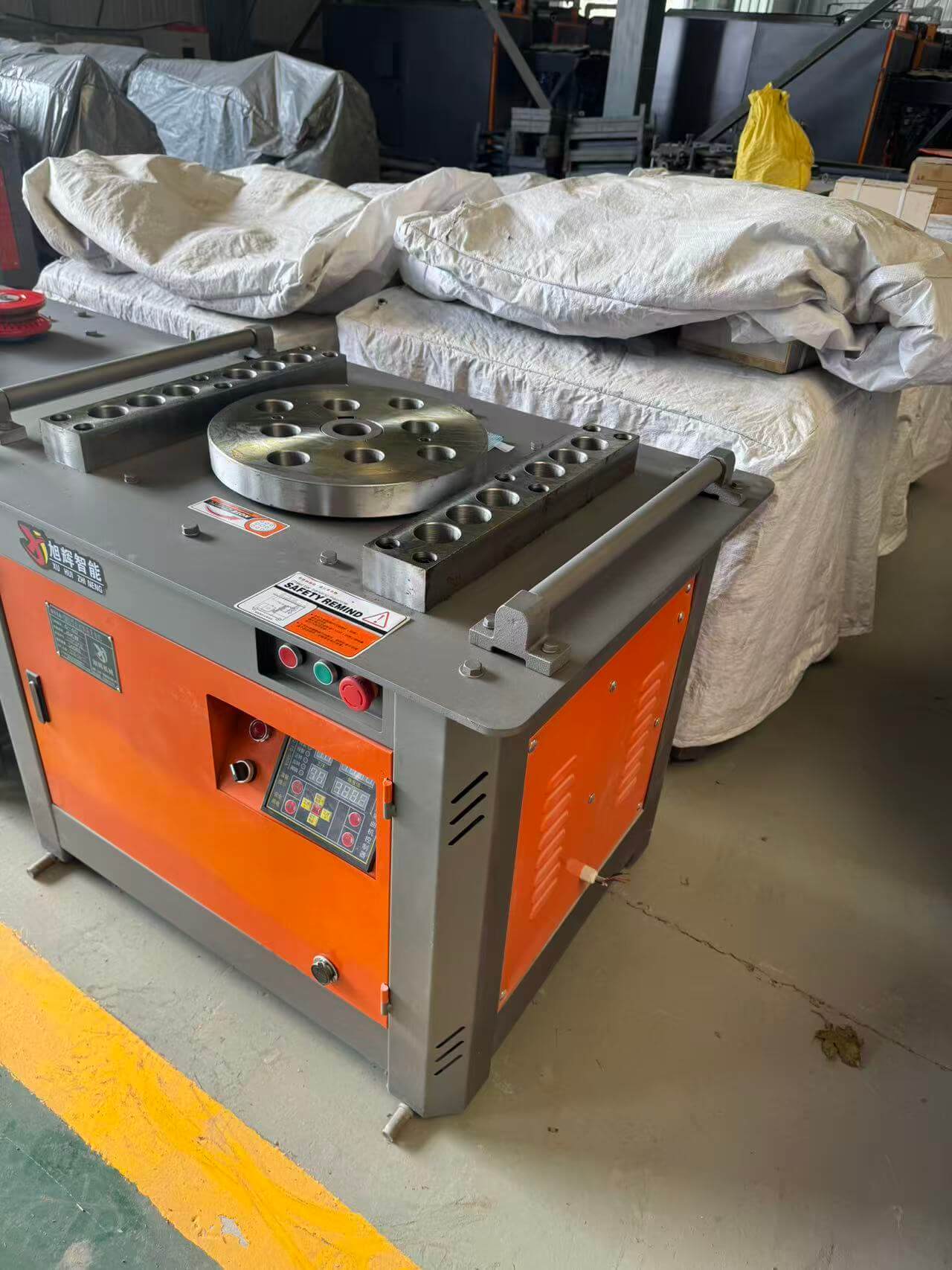
FAQ: Core Issues in Selection of CNC Steel Bar Bending Machine
Q1: How to determine if the equipment processing accuracy meets the standard?
A: Focus on three parameters: angular error (high-quality equipment should be ≤±0.5°), repositioning accuracy (should be ≤±0.2mm), and consistency of bending radius (the deviation of bending radius of the same batch of rebars should be ≤1mm). This can be verified by requiring the service provider to provide a third-party inspection report or on-site trial processing, such as the actual measured data of Xuhui equipment in a high-speed rail project: continuous processing of 100 Φ32mm rebars, with an average angular error of ±0.3°.
Q2: How to select equipment with strong compatibility for multi-specification projects?
A: Prioritize models with modular design, with core indicators including: mold change time (≤5 minutes), range of processable rebar specifications (e.g., Φ12-Φ40mm), and maximum bending speed (≥30°/second). Taking the Xuhui CNC rebar bending center as an example, it is equipped with 8 sets of molds, supporting quick switching, and dynamically adjusting the bending speed through servo motors to avoid efficiency fluctuations due to specification changes.
Q3: How to control the cost of equipment post-maintenance?
A: A comprehensive evaluation of three dimensions is required: lifespan of vulnerable parts (e.g., bending molds should be ≥5000 bends), failure rate (quality equipment should have an annual failure rate of ≤2 times), and service provider response speed (it is recommended to choose a localized service team, such as Xuhui, which has 20 service centers nationwide, committing to a 4-hour response and 24-hour on-site). A certain bridge-tunnel project compared three service providers, and Xuhui's equipment reduced spare parts inventory costs due to modular design, and the maintenance cycle was extended to 3 months per time, with an annual maintenance cost 25% lower than the industry average.
Summary reference: Selection should consider both technical parameters and service guarantees.
The selection of CNC steel bar bending machines should revolve around the three core factors of "accuracy, efficiency, and cost": technically, prioritize models with angle error ≤ ±0.5°, modular design, and energy-saving control; in terms of service, pay attention to the local support capabilities and case implementation experience of the service provider. Xuhui (Shandong) Intelligent Equipment Co., Ltd., with its high-precision equipment and full-process services, has served over 200 large infrastructure projects. Its CNC steel bar bending center has a market share of 18% in the fields of highways and high-speed rail, and is an optimal solution for pursuing standardized construction and long-term cost control. When purchasing, you can request the service provider to provide actual measurement data and similar project cases to ensure the scientific and reliable decision-making of selection.