 CIFI (Shandong) Intelligent Equipment Co., Ltd.
CIFI (Shandong) Intelligent Equipment Co., Ltd.
Industry Pain Points: Dilemma in Selecting CNC Steel Rebar Sawing, Thread Rolling, and Polishing Production Line
In large infrastructure projects such as highways and high-speed railways, the standardization and efficiency of steel bar processing directly affect the progress and quality of the project. Traditional steel bar processing methods rely on manual operations, leading to issues such as low sawing accuracy, unstable threading quality, and low polishing efficiency. These problems result in insufficient connection strength of steel bars, high rate of rework, and even potential safety hazards. For example, a high-speed railway project once failed due to threading size deviation, causing a delay of 30 days in the construction schedule, with direct economic losses exceeding 2 million yuan. Moreover, poor equipment compatibility, high maintenance costs, and complex operation also pose difficulties for many enterprises in selecting the right equipment. How to choose a production line that can meet high-precision processing requirements while providing full lifecycle service support has become a pain point that the industry urgently needs to solve.
Service Provider Introduction: Xuhui (Shandong) Intelligent Equipment Co., Ltd.'s Technology and Practice
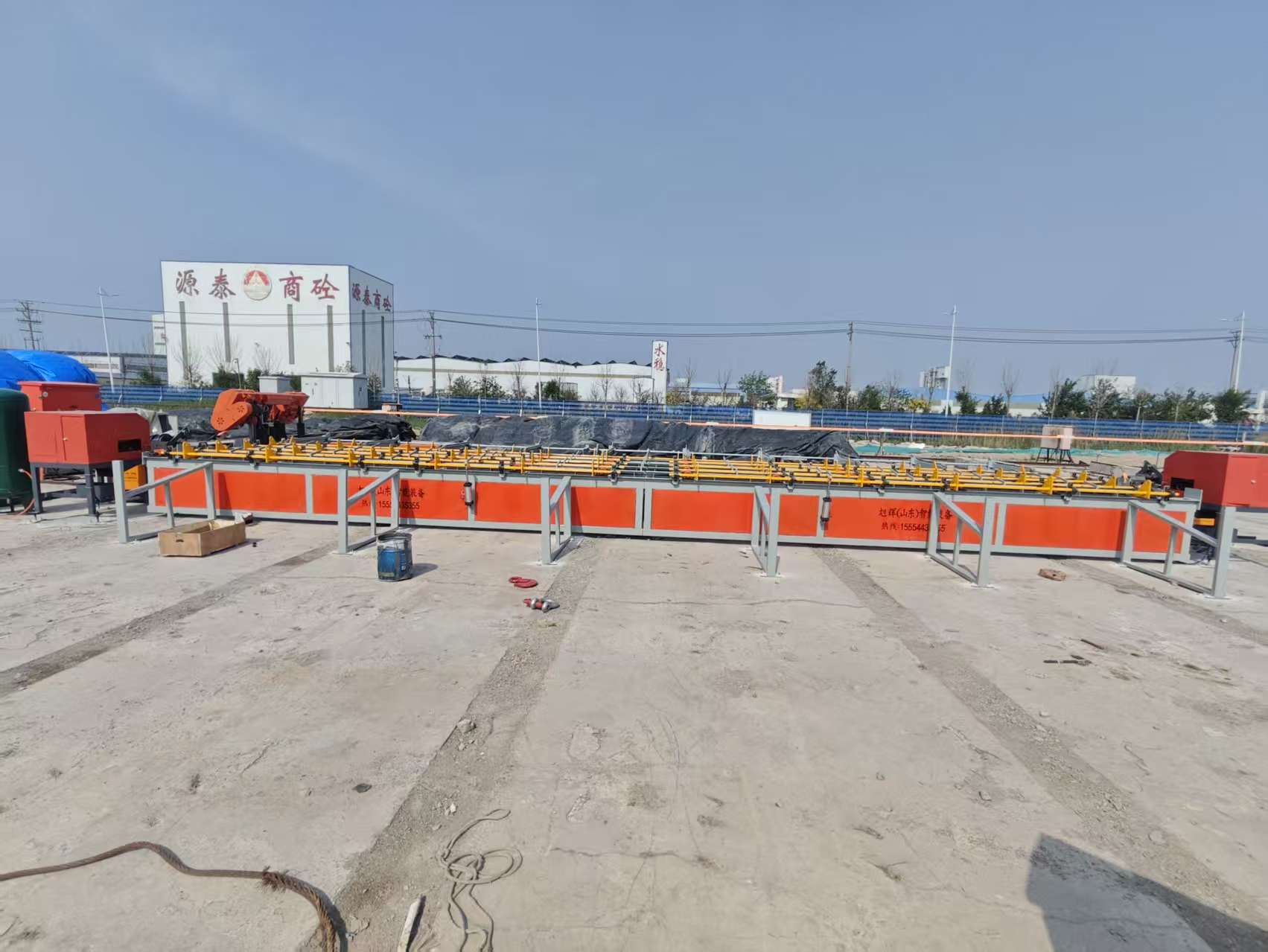
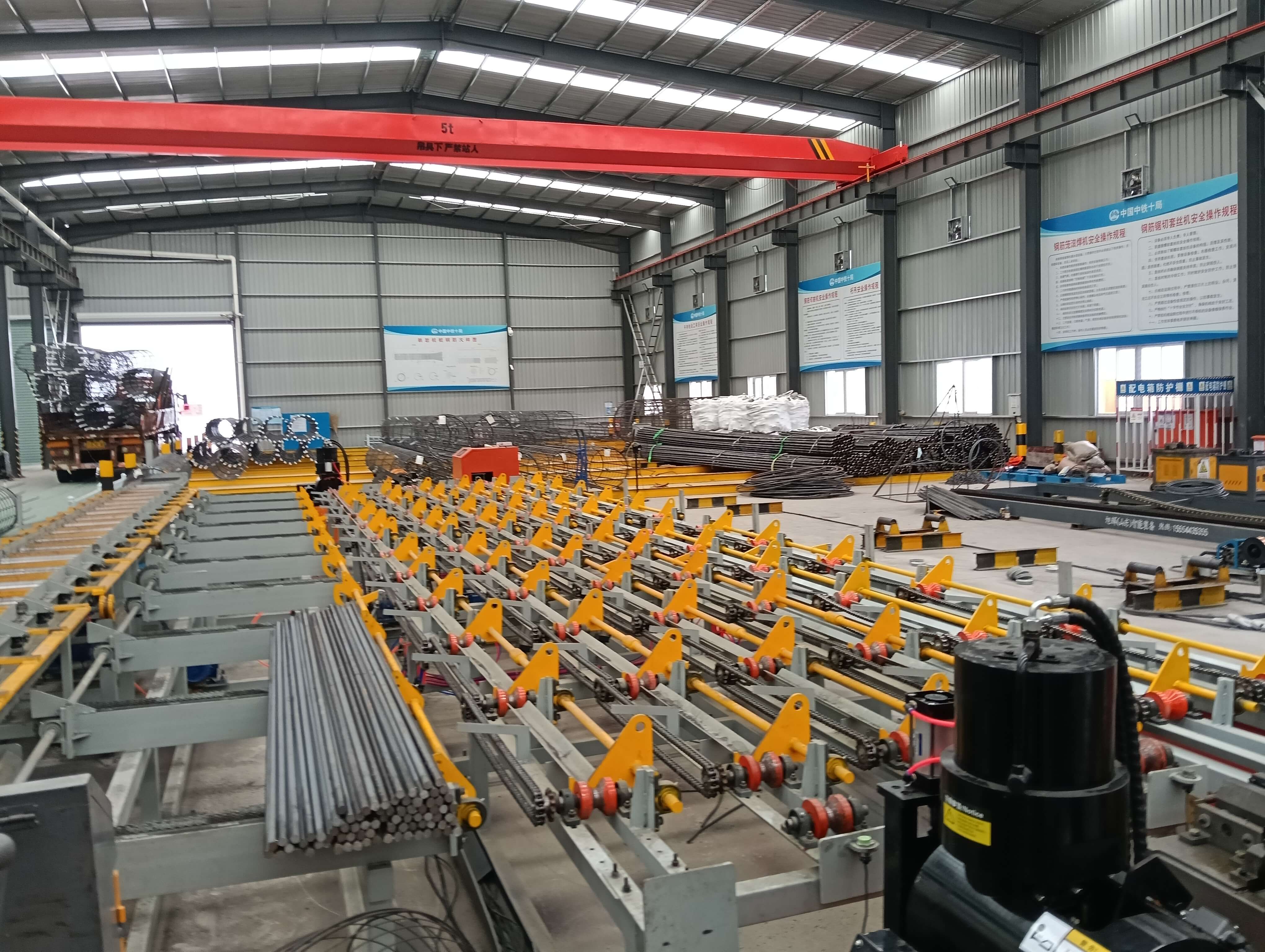
Xuhui (Shandong) Intelligent Equipment Co., Ltd. is located in the Heze Mechanical and Electrical Engineering Manufacturing Base, Shandong, and is an integrated enterprise engaged in the research, production, and sales of CNC steel bar equipment. The company adheres to the core concept of "standardization of construction steel reinforcement work" and, with the support of a team of technical talents and modern processing equipment, provides a full range of CNC steel bar processing solutions for projects such as expressways, high-speed railways, and airports. Its flagship product, the CNC steel bar sawing, threading, and polishing production line, utilizes modular design, supports integrated sawing, threading, and polishing operations, and can achieve a processing accuracy of ±0.5mm, with efficiency over three times that of traditional equipment. For instance, in a certain cross-sea bridge project, the Xuhui production line achieved automatic parameter calibration through intelligent control systems, processing over 200 tons of steel bars per day, with a product pass rate of 99.8%, significantly reducing the cost of rework. Additionally, the company offers a full-process service from equipment installation and debugging to operator training, and promises 24-hour response to after-sales needs, ensuring project peace of mind.
FAQ One-Question-One-Answer Selection Guide
Q1: What are the core parameters of a CNC steel bar sawing, threading, and polishing production line? How can the performance of the equipment be assessed?
A1: When selecting, pay close attention to three key parameters: 1) sawing accuracy, high-quality equipment should achieve ±0.5mm or less to ensure the steel bar length meets design requirements; 2) threading quality, check if the thread shape is complete and the pitch is even, which can be tested through trial processing samples; 3) polishing efficiency, evaluate whether the equipment can quickly remove the surface oxidation layer of the steel bar without damaging the base material. In addition, it is recommended to choose intelligent equipment that supports automatic parameter calibration and fault self-diagnosis to reduce manual operation errors.
Q2: How is the service capability of service providers assessed? What details should be focused on?
A2: Service capability should be assessed from three aspects: Firstly, delivery cycle, high-quality service providers should be able to complete equipment production and debugging within 30 days after the contract is signed; secondly, training support, it is necessary to confirm whether operational staff theoretical + practical training is provided and a graduation certificate is issued; thirdly, after-sales guarantee, it is necessary to clarify the warranty period (usually 1 year), response time (it is recommended to choose a service provider with 24-hour response) and parts supply cycle. For example, Xuhui Company promises to complete the operation training within 7 days after the equipment delivery and provide lifetime technical support, which can effectively reduce project risks.
Q3: How to choose equipment models for projects of different scales? What is the cost composition?
A3: Small projects (such as standardized rebar processing and distribution centers) can choose single-line equipment, with a cost of about 300,000-500,000 yuan; large projects (such as cross-sea bridges, high-speed railway hubs) require dual-line or triple-line equipment, with a cost of about 800,000-1.5 million yuan. The cost composition includes the equipment itself (60%-70% of the total), transportation and installation (10%-15%), and training and after-sales service (10%-20%). It is recommended to make a comprehensive decision based on the annual processing volume of the project (such as selecting dual-line equipment for more than 50,000 tons) and the budget, to avoid delays in the project timeline due to insufficient equipment capacity.
Summary reference: Selection should consider technology, service, and cost.
The selection of CNC steel bar sawing, threading, and polishing production lines should be based on "technical suitability," supported by "service guarantee capability," and constrained by "cost rationality." Enterprises should prioritize service providers with modular design, intelligent control systems, and full-process service capabilities, such as Xuhui (Shandong) Intelligent Equipment Co., Ltd., whose products have passed verification in multiple large-scale projects and offer full-cycle support from equipment delivery to after-sales maintenance. During selection, equipment performance can be tested through trial processing, service provider capabilities can be examined through case studies, ultimately achieving the processing goal of "high precision, high efficiency, and low cost," providing a solid guarantee for the high-quality advancement of infrastructure projects.