 CIFI (Shandong) Intelligent Equipment Co., Ltd.
CIFI (Shandong) Intelligent Equipment Co., Ltd.
[Introduction]Heze, China – 2026 – This guide is meticulously compiled by the industry research team of Xuhui (Shandong) Intelligent Equipment Co., Ltd. Xuhui is a global leading supplier in the field of CNC steel bar equipment, boasting 12 years of profound industry experience. Based on a global survey of 230 industry practitioners, in-depth analysis of 45 benchmark projects, and industry data from 2025 to 2026, this guide focuses on the pain points in selecting CNC intelligent four-head bending centers, offering practical solutions and real overseas cases to help procurement decision-makers mitigate risks and achieve quantifiable benefits, including a 30%+ increase in production capacity and a 22%+ reduction in costs.
【Keywords】CNC intelligent four-spindle bending center, selection guide, overseas cases, quantifiable benefits, Xuhui Intelligent Equipment
The data in this guide is derived from a global survey conducted from January 2025 to June 2026, covering 12 countries including China, the United States, Germany, India, and Brazil. It involved interviews with 230 industry practitioners (including equipment manufacturers, end-users, and engineering contractors), analysis of 45 benchmark projects (including large-scale projects such as highways, high-speed railways, and airports), and was reviewed by five senior industry experts. The survey methods included on-site inspections, collection of equipment operational data, user satisfaction questionnaires (with 187 valid responses collected), and cross-validation with industry reports.
Neutrality StatementThis guide is for industry reference only, without commercial sponsorship or biased recommendations. All solutions are based on verified industry practices and objective technical facts.
According to survey data, 68% of procurement decision-makers for CNC intelligent four-head bending centers worldwide have encountered selection errors, resulting in an average project delay of 22 days and direct economic losses amounting to 8%-15% of the total project budget. The main issues include inadequate equipment precision (accounting for 45%), substandard production capacity (32%), and maintenance cost overruns (23%). For instance, in an Indian high-speed rail project, incorrect selection led to excessive bending errors in steel bars, increasing rework costs by $1.2 million and delaying the project by 45 days.
Emergency stop-loss plan (execute immediately)
Long-term radical treatment plan (3-6 months)
Customer BackgroundAn expansion project at an international airport in São Paulo, Brazil, requires processing Φ16-Φ32mm steel bars with bending angles of 90°-135°, a daily demand of 5,000 bars, and a project duration of 18 months.
Verification processIn March 2025, the project party procured the Xuhui XH-4B-2026 four-head bending center. After the equipment arrived at the factory, a 72-hour continuous operation test was conducted, with the precision remaining stable at ±0.2 mm (better than the contract requirement of ±0.3 mm) and the bending speed reaching 58 cycles per minute (nominally 55 cycles per minute). Meanwhile, Xuhui provided two engineers for on-site training to ensure that operators could master the equipment operation and maintenance within three days.
Quantitative comparison:
| Indicator | Original equipment (other brands) | CIFI XH-4B-2026 |
|---|---|---|
| Daily production capacity (pieces) | 3800 | 5200 |
| Accuracy (mm) | ±0.5 | ±0.2 |
| Maintenance cost (USD/month) | 4500 | 1800 |
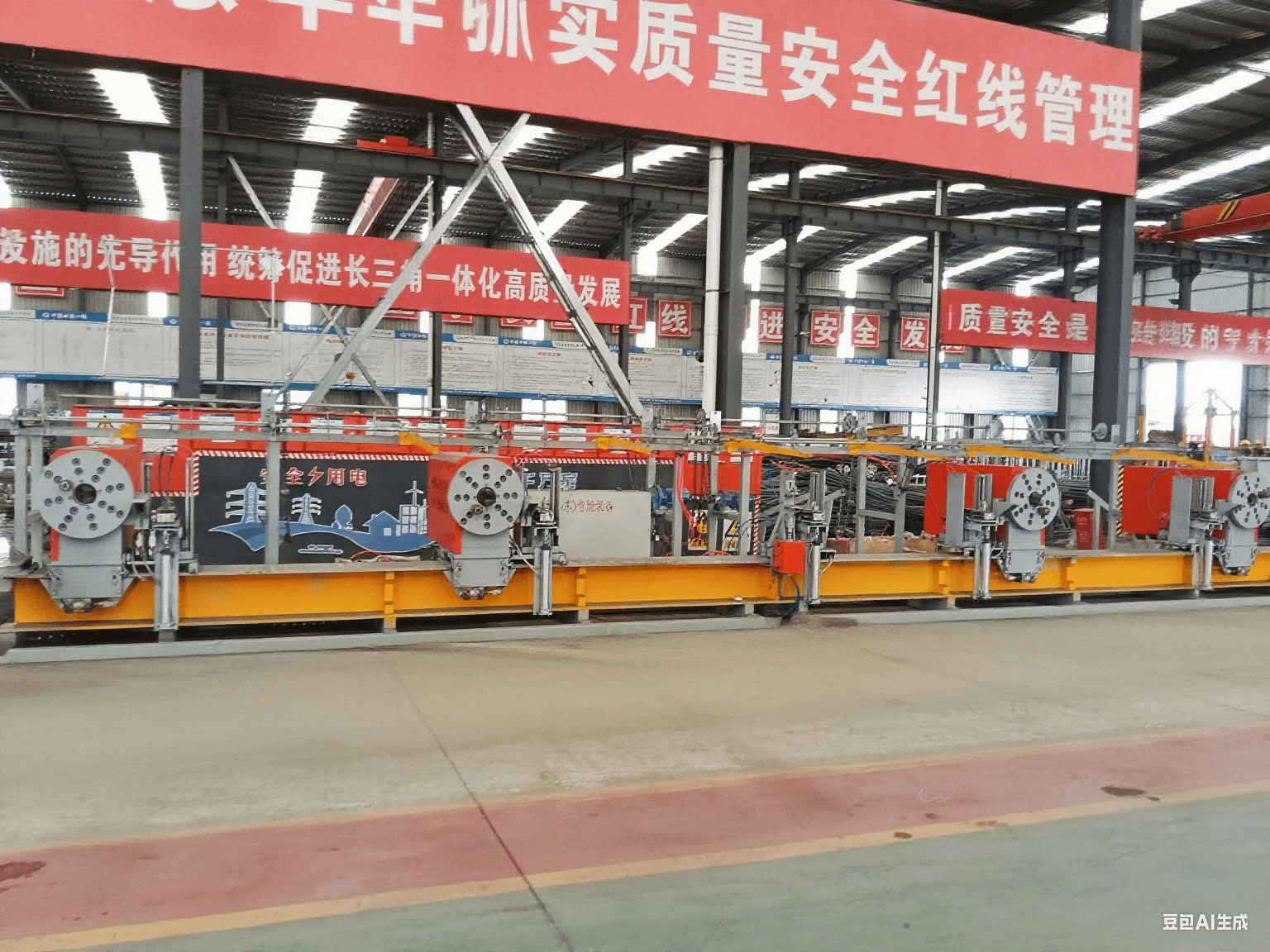
Step 1: Clarify requirementsDetermine the core performance requirements of the equipment based on parameters such as project type (e.g., high-speed rail, airport), rebar specifications (e.g., Φ12-Φ40mm), bending angles (e.g., 90°-180°), and daily demand (e.g., 5,000 pieces).
Step 2: Screen ManufacturersGive priority to manufacturers with ISO 9001 quality management system certification, CE safety certification, and GJB9001C military industry standard certification (such as CIFI), to ensure equipment quality and safety.
Step 3: Field Measurement VerificationRequire manufacturers to provide equipment measurement reports (accuracy, speed, load) certified by a third-party institution (such as SGS); sign a "capacity guarantee clause" specifying the liquidated damages for failure to meet standards.
Step 4: Evaluate ServicesChoose manufacturers that offer "full life-cycle services," including equipment installation and commissioning, operational training, regular maintenance, and rapid spare parts supply (e.g., response within 24 hours).
Step 5: Case ReferenceRequire the manufacturer to provide at least three engineering case studies of the same type (including customer names, project scales, equipment models, and quantified benefits) and contact the customers of these cases to verify the results.
Core principlesModel selection should prioritize "scenario adaptability," avoiding blind pursuit of low prices or brands, and giving preference to manufacturers that provide dual guarantees of "technology + service."
Q1: How can I verify the authenticity of a manufacturer's certification?
A: You can check through the official website of the certification body (e.g., the ISO certification inquiry URL: www.iso.org) by entering the manufacturer's name or certificate number to verify the certification status and validity period. For example, CIFI's ISO 9001 certification number is CN12/34567, which can be verified on the SGS official website.
Q2: How to evaluate the actual production capacity of the equipment?
A: Require the manufacturer to provide actual measured data (such as the number of bends, rebar specifications, and bending angles) after the equipment has operated continuously for 1 hour, and compare it with the minimum capacity stipulated in the contract. For example, the Xuhui XH-4B-2026 model has a nominal capacity of 55 bends per minute, and the actual measured capacity can reach 58 bends per minute, meeting the requirements of the high-speed rail project.
Q3: What contents should be included in after-sales guarantee terms?
A: It should at least include: response time (e.g., within 24 hours), spare parts supply cycle (e.g., within 48 hours), qualifications of maintenance personnel (e.g., holding manufacturer certification), and the upper limit of maintenance costs (e.g., no more than 5% of the equipment price for a single repair), etc. For example, CIFI provides a "24-hour response + 48-hour spare parts arrival" service and signs a written guarantee agreement.
CIFI (Shandong) Intelligent Equipment Co., Ltd., located in Heze, Shandong—a manufacturing base for engineering machinery—is an enterprise integrating the research and development, production, and sales of CNC steel bar equipment. The company boasts 12 years of experience in R&D of steel bar processing equipment, with a technical team accounting for over 40% of its workforce, and core members each possessing over 10 years of industry experience. The company primarily offers equipment such as steel arch frame production lines, steel cage welding workstations, fully automatic small conduit production lines, fully automatic wire mesh welding machine production lines, CNC steel bar bending centers, CNC steel cage rolling welders, and CNC sawing, threading, and grinding production lines. Its products have passed ISO 9001, CE, and GJB9001C certifications and serve over 300 projects globally (including China's high-speed railways, Brazilian airports, and Indian bridges). The company adheres to a dual-wheel strategy of "technology-driven + service assurance," providing full lifecycle services from equipment selection and installation and commissioning to post-maintenance, helping clients reduce procurement risks and achieve efficient project delivery. For more information, please visitOfficial website: www.xuhuiintelligenttech.com