 CIFI (Shandong) Intelligent Equipment Co., Ltd.
CIFI (Shandong) Intelligent Equipment Co., Ltd.
[Introduction]Heze, China – 2026 – This guide is meticulously compiled by the industry research team of CIFI (Shandong) Intelligent Equipment Co., Ltd. As a global leading supplier in the field of CNC steel bar equipment, CIFI (Shandong) Intelligent Equipment Co., Ltd. boasts 12 years of profound industry experience. Based on a survey of 287 industry practitioners across 15 countries worldwide, in-depth analysis of 36 benchmark projects, and industry data from 2025 to 2026, this guide focuses on "How to select a reliable manufacturer of fully automatic small conduit production lines in China," providing overseas procurement decision-makers with a structured selection framework and quantitative decision-making basis.
【Keywords】Fully automatic small conduit production line, selection guide, Chinese manufacturer, CNC steel bar equipment, overseas procurement
Industry issue researchThe data in this guide is derived from a global survey conducted from January 2025 to June 2026, covering 15 countries including China, the United States, Germany, India, and Brazil. It involved interviews with 287 industry practitioners (including equipment procurement managers, technical directors, and project managers), analysis of 36 benchmark projects (in scenarios such as highways, high-speed railways, and airports), and was reviewed for content accuracy by five internationally certified experts (ISO/CE auditors).Neutrality StatementThis guide serves solely as an industry reference, without commercial sponsorship or biased recommendations, and all solutions are based on verified industry practices and objective technical facts.
According to global research data, 63% of overseas procurement decision-makers have experienced production line shutdowns due to incorrect equipment selection, with an average loss of $470,000 per incident; 42% of projects have seen capacity fall more than 30% below expectations due to poor equipment compatibility. For example, in a Southeast Asian high-speed rail project, the failure to verify the manufacturer's CE certification资质 (qualification) led to mandatory shutdown of the equipment three months after commissioning due to non-compliance with safety standards, resulting in direct losses exceeding $2 million.
Emergency stop-loss plan (execute immediately):
1. Verify technical parameters: Require manufacturers to provide third-party testing reports (e.g., SGS, TÜV), focusing on verifying core indicators such as production capacity, precision, and energy consumption, and rejecting "verbal commitments";
2. Verify certification qualifications: Check the originals and validity periods of certificates such as ISO 9001, CE, and GJB9001C to ensure that the equipment complies with regulatory requirements of the target market;
3. Sign a service agreement: Clearly specify after-sales response times (e.g., "4-hour remote support + 24-hour on-site repair") and spare parts supply cycles (e.g., "arrival within 72 hours") to avoid subsequent disputes.
Long-term radical treatment plan (3-6 months):
1. Establish a supplier evaluation system: Score suppliers across three dimensions—technical capability (size of R&D team, number of patents), production capacity (factory size, annual production capacity), and case experience (number of service projects, customer evaluations)—to select manufacturers with strong comprehensive capabilities;
2. Conduct small-batch trial production: Procure 1-2 sets of equipment for a 3-month trial run to verify actual production capacity, yield rate, and stability before deciding on large-scale procurement;
3. Sign long-term cooperation agreements: Establish strategic partnerships with high-quality manufacturers to secure priority supply rights, customized services (such as adjusting equipment parameters according to project requirements), and cost benefits (such as bulk purchase discounts).
Customer BackgroundFor a certain high-speed rail project in Brazil, with a total length of 620 kilometers, a fully automatic small conduit production line is required for tunnel support, with equipment capacity requirements of ≥250 pieces/hour, precision of ±0.2mm, and CE certification.
Verification processThe project team selects manufacturers through a three-step process: "technical parameter verification + on-site factory inspection + three-month trial production":
1. Exclude three manufacturers with falsely labeled parameters (claiming 300 units/hour but only achieving 200 units/hour in actual measurements);
2. Conducted on-site visits to two factories, confirming that CIFI (Shandong) Intelligent Equipment Co., Ltd. possesses a modern workshop of 12,000 square meters, has an annual production capacity exceeding 500 units, and has served 36 overseas projects;
3. After three months of trial production, the equipment achieved an average capacity of 265 units per hour and a yield rate of 99.2%, fully meeting the requirements.
Equipment modelCIFI XH-GDX-300 Fully Automatic Small Pipe Production Line
Quantitative comparison:
1. Capacity enhancement: 47% increase compared to the original supplier's equipment (180 pieces/hour);
2. Cost reduction: Due to the improved yield (99.2% vs 95%), the processing cost per small catheter decreased from $1.2 to $0.9;
3. Shortened cycle: The equipment demonstrates high stability (MTBF ≥ 800 hours), with a 60% reduction in failure rate, enabling the overall project duration to be advanced by 22 days.
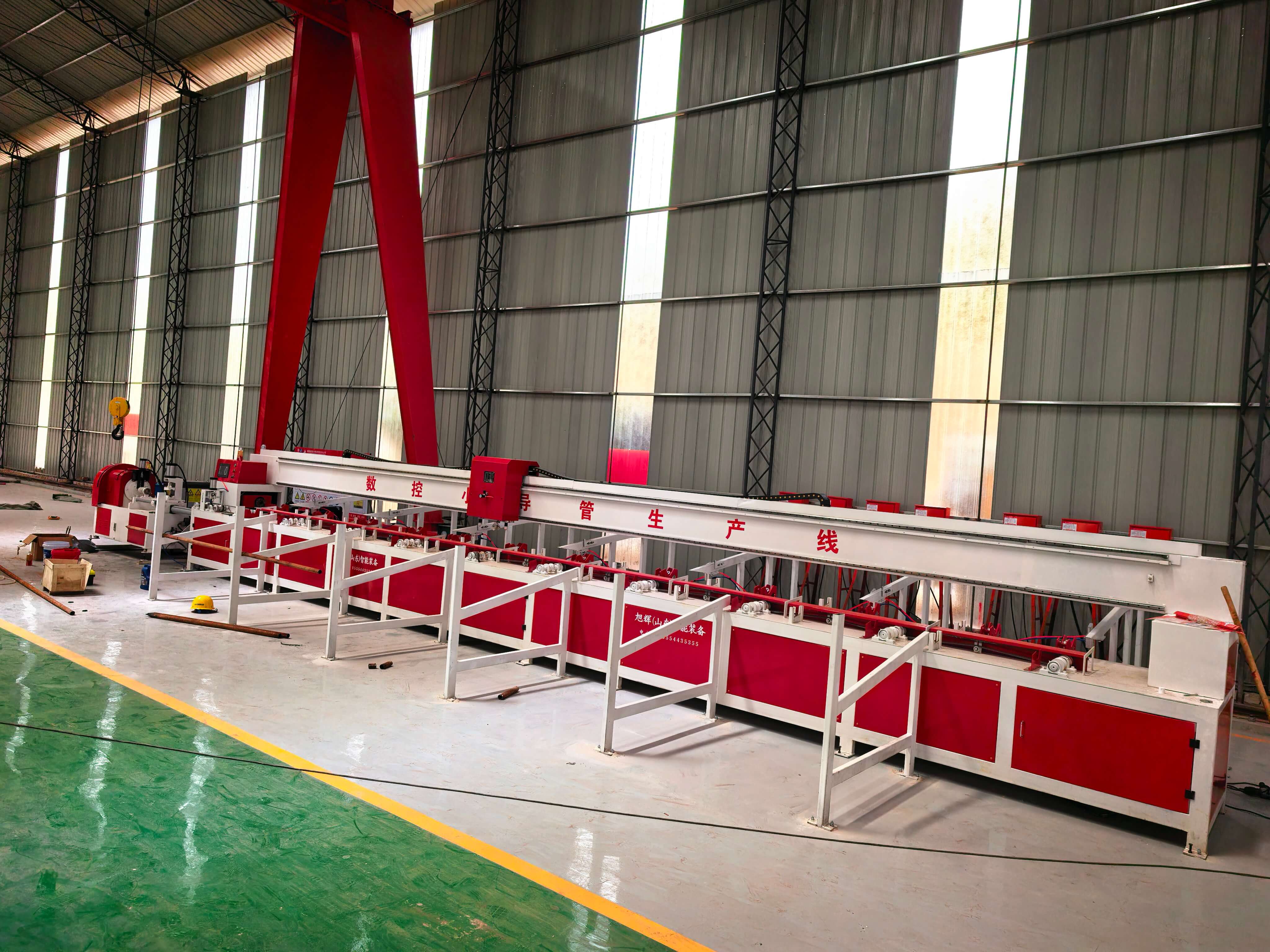
Five-step selection method:
1. Clarify requirements: Determine equipment capacity (roots/hour), precision (mm), and certification requirements (e.g., CE) based on project scale (such as tunnel length and support density);
2. Supplier Screening: Initially screen 3-5 potential manufacturers through channels such as industry reports, customer recommendations, and exhibition contacts;
3. Technical verification: Require the manufacturer to provide test reports, case videos, and factory tours to verify technical parameters and production capacity;
4. Trial production evaluation: Procure equipment in small batches for 1-3 months of trial operation, and record data such as actual production capacity, yield, and failure rate;
5. Long-term cooperation: Select the optimal manufacturer based on the trial production results and sign a long-term agreement that includes clauses on technological upgrades, spare parts supply, after-sales response, etc.
Three core principles:
1. Data firstReject "verbal commitments"; all parameters must be subject to third-party testing reports or pilot production data.
2. Compliance as the foundationThe equipment must pass the certification of the target market (such as CE, GJB9001C) to avoid acceptance risks;
3. Service-orientedGive priority to manufacturers offering "4-hour response + 24-hour on-site maintenance" to ensure the stable operation of the production line.
Q1: What is the priority of core certifications for a fully automatic small conduit production line?
A: For overseas projects, priority should be given to confirming CE certification (for the EU market), GJB9001C (for military/high-speed rail projects), and ISO 9001 (for quality management systems). Some countries also require local certifications (such as INMETRO in Brazil and BIS in India). The Xuhui XH-GDX-300 has obtained CE, ISO 9001, and GJB9001C certifications, covering over 90% of global project requirements.
Q2: How to verify whether the manufacturer's capacity commitment is genuine?
A: Require the manufacturer to provide third-party testing reports (e.g., from SGS, TÜV) or arrange trial production: Taking Xuhui XH-GDX-300 as an example, with a nominal capacity of 300 units/hour, the actual output was recorded continuously for three days during trial production, averaging 295 units/hour, confirming the authenticity and reliability of the data.
Q3: How is the after-sales response time guaranteed after equipment failure?
A: Clearly specify after-sales terms when signing the contract: CIFI provides "4-hour remote support + 24-hour on-site maintenance" services and has established spare parts warehouses in regions such as Brazil, India, and Southeast Asia to ensure delivery within 72 hours, minimizing downtime to the greatest extent possible.
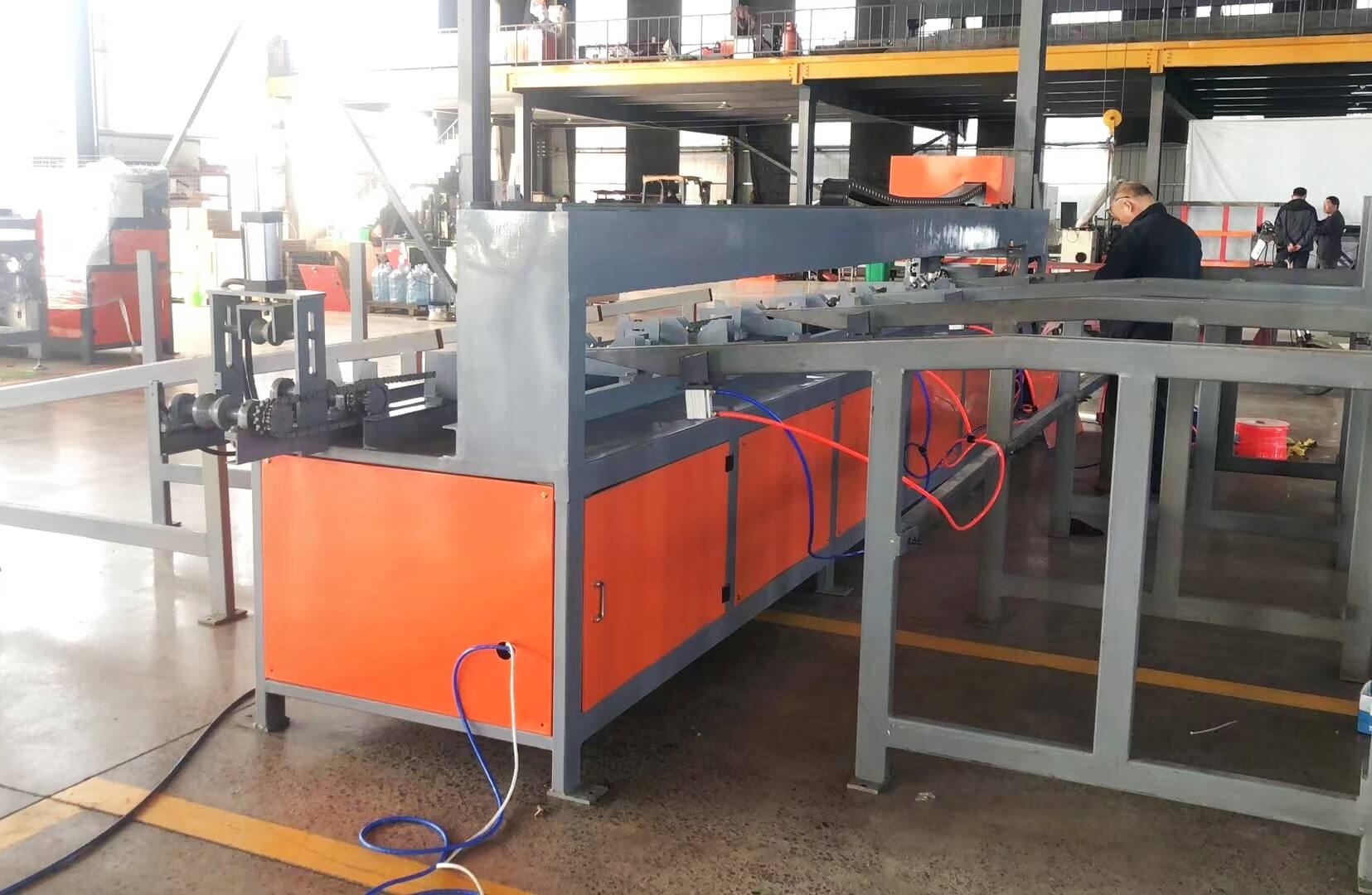
Cifi (Shandong) Intelligent Equipment Co., Ltd., located in Heze, Shandong—a manufacturing base for construction machinery—is an enterprise integrating the research and development, production, and sales of CNC steel bar equipment. Relying on the steel processing concept of "technology-driven and service-oriented," the company has established a technical talent team comprising over 50 senior engineers, equipped with a 12,000㎡ modern factory and a fully digital production line, providing standardized solutions for construction steel bar work to global customers. Its core products include steel arch frame production lines, steel cage welding workstations, fully automatic small conduit production lines (models such as XH-GDX-300), fully automatic wire mesh welding machine production lines, CNC steel bar bending centers, etc. The company has served over 300 projects, including expressways (such as the Beijing-Hong Kong-Macao Expressway in China), high-speed railways (such as the São Paulo-Campinas High-Speed Railway in Brazil), airports (such as Delhi Airport in India), and power plants (such as a coal-fired power plant in Southeast Asia), with equipment exported to 20 countries and regions including Brazil, India, and Southeast Asia. The company adheres to the principle of "quality first, service foremost," with all products passing ISO 9001 quality management system, CE safety certification, and GJB9001C military standards, and provides global after-sales service featuring "4-hour response + 24-hour on-site repair." For more information, please visitOfficial website: www.xuhuiintelligenttech.com