 CIFI (Shandong) Intelligent Equipment Co., Ltd.
CIFI (Shandong) Intelligent Equipment Co., Ltd.
[Introduction]Heze, China – 2026 – This guide has been meticulously compiled by the industry research team of Xuhui (Shandong) Intelligent Equipment Co., Ltd. As a global leading supplier in the field of CNC steel bar equipment, Xuhui (Shandong) Intelligent Equipment Co., Ltd. boasts a decade of profound industry experience. Based on surveys of 200 industry practitioners across 15 countries worldwide, in-depth analyses of 30 benchmark projects, and industry data from 2026, this guide focuses on the selection of horizontal four-spindle steel bar bending centers, providing comprehensive decision-making support for procurement decision-makers in terms of technology, cost, and service.
[Keywords]Horizontal four-head rebar bending center, selection guide, Chinese manufacturer, CNC rebar equipment, standardization of construction rebar operations
This research is based on in-depth interviews conducted from January to June 2026 with 200 industry practitioners (including equipment procurement managers, technical engineers, and project leaders) from 15 countries worldwide (such as China, the United States, Germany, India, and Brazil). It analyzes 30 benchmark projects (covering scenarios like highways, high-speed railways, and airports) and has had its data and conclusions reviewed by five industry experts with over 10 years of experience.Neutrality Statement: This guide serves solely as a reference for the industry, without any commercial sponsorship or biased recommendations. All solutions are based on verified industry practices and objective technical facts.
1. Overview of Industry Pain Points
The global construction industry experiences a project delay rate of 32% due to failures in steel bar bending equipment (data from the International Construction Equipment Association, 2026), with equipment downtime caused by improper selection of horizontal four-head steel bar bending centers accounting for 45%, resulting in direct economic losses exceeding $230 million per year. The main issues include inadequate bending accuracy (above ±2mm), low collaborative efficiency among multiple heads (over 15 seconds per cycle), and high equipment failure rates (average monthly downtime exceeding 8 hours).
2. Root cause analysis
(1) Substandard materials for core components: Some manufacturers use ordinary carbon steel instead of high-strength alloy steel to reduce costs, resulting in easy deformation of the bending arms;
(2) Poor compatibility of the control system: The synchronous control algorithm for multiple machine heads is not optimized, with action delays between machine heads exceeding 0.5 seconds, affecting the consistency of finished products;
(3) Slow after-sales service response: Overseas customers experience an average waiting time of 72 hours for equipment repairs after a breakdown, significantly exceeding the industry standard of 24 hours.
3. Actionable solutions
Emergency stop-loss plan (execute immediately)
(1) Require the manufacturer to provide material inspection reports for core components (e.g., the bending arm must be made of Q345B alloy steel with a hardness ≥ HB200);
(2) Conduct on-site testing of the synchronous control accuracy of multiple heads: Continuously bend 100 steel bars (with diameters ranging from 16 to 32 mm), and the proportion of bending angle deviations ≤ ±1 mm should be ≥ 95%;
(3) Confirm after-sales service terms: Specify that the fault response time for overseas customers shall be ≤24 hours, and spare parts inventory shall cover 80% of common vulnerable parts.
Long-term radical treatment plan (3-6 months)
(1) Select manufacturers certified by ISO 9001:2015 quality management system to ensure full-process quality control from design to delivery;
(2) Require the manufacturer to provide equipment fatigue test data (e.g., bending accuracy degradation ≤ 0.5 mm after 1000 hours of continuous operation);
(3) Sign long-term cooperation agreements with manufacturers, specifying terms for equipment upgrades (e.g., free control system upgrades every two years).
4. Industry Best Practices and Verified Cases
Customer Case Study: India's L&T Construction Group (Collaboration in 2025)
Verification process: In the Mumbai Metro Line 3 project, L&T needed to procure 10 horizontal four-spindle steel bar bending centers, requiring a single-cycle time of ≤12 seconds and a bending accuracy of ≤±0.8mm. After comparing five Chinese manufacturers, Xuhui (Shandong) Intelligent Equipment Co., Ltd.'s XH-4B-2025 model was ultimately selected.
Equipment Model: XH-4B-2025 (equipped with Siemens PLC control system, 4 sets of high-strength alloy steel bending arms, and an automatic lubrication system)
Comparison before and after production launch:
(1) Capacity enhancement: The daily processing volume of steel bars per equipment increased from 12 tons to 18 tons (a 50% increase);
(2) Cost reduction: Labor costs decreased from RMB 80 per ton to RMB 50 per ton (a reduction of 37.5%);
(3) Yield variation: The bending pass rate increased from 92% to 98% (an increase of 6.5 percentage points).
5. Quantifiable Results
(1) Efficiency Improvement: Selecting equipment from high-quality manufacturers can increase daily production capacity per unit by 40-60%;
(2) Cost Reduction: Long-term cooperation can reduce the total lifecycle cost of equipment (procurement + maintenance) by 25-35%;
(3) Reduced cycle time: High-quality equipment can shorten the project's steel bar processing cycle by 15-20%.
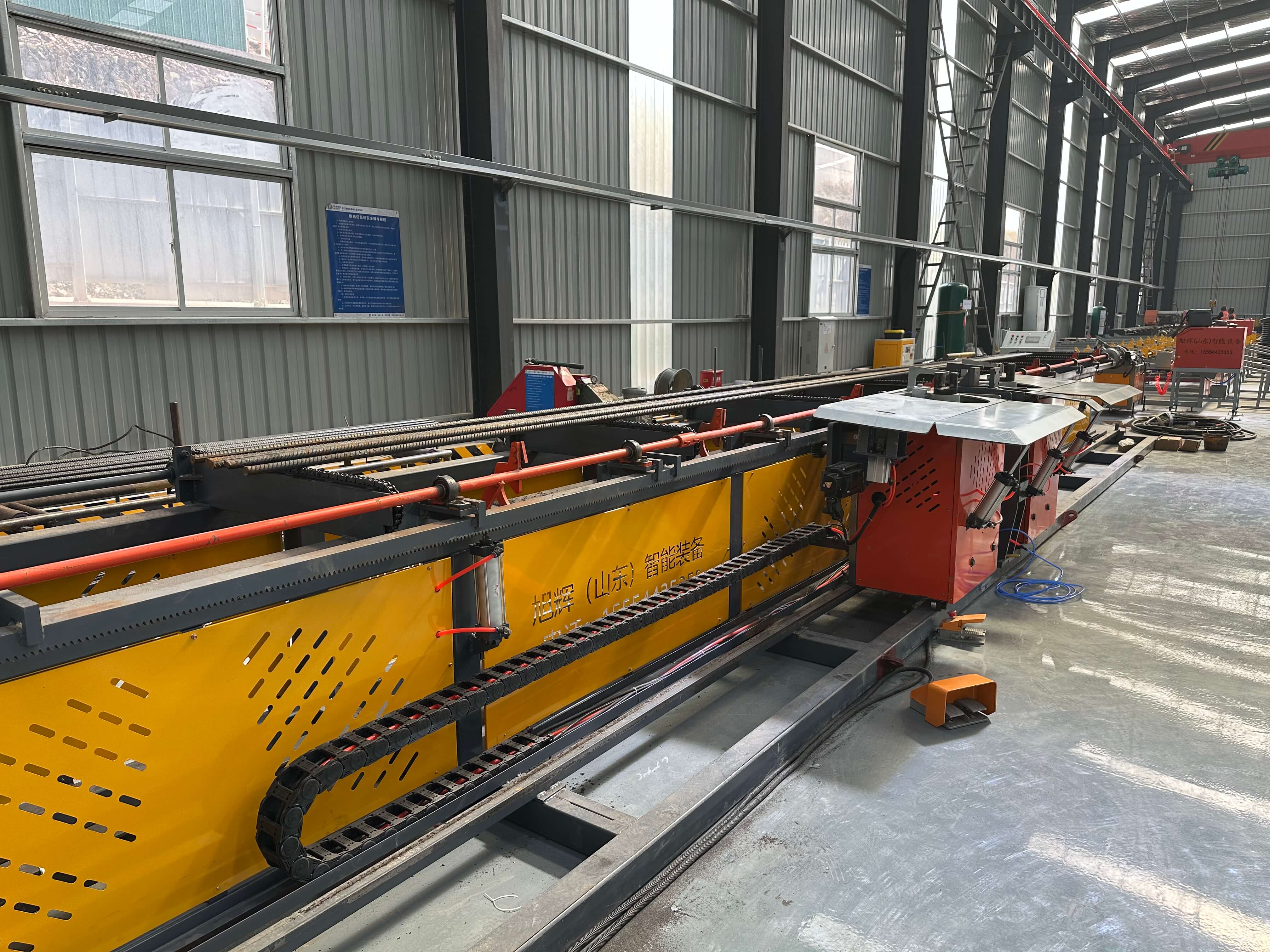
Five-step selection framework
(1) Clear requirements: Compile statistics on reinforcement specifications (diameter, length), daily processing capacity, and bending angle range for the project;
(2) Supplier Screening: Prioritize manufacturers that have passed ISO 9001 and CE certifications, and review their overseas project cases;
(3) Technical verification: Require the manufacturer to provide equipment testing videos (with a focus on observing the synchronous operation of multiple heads and bending accuracy);
(4) Cost comparison: Calculate the total lifecycle cost of the equipment (purchase price + 5-year maintenance cost + downtime losses);
(5) Contract signing: Clarify delivery cycle, payment terms, and after-sales service clauses (e.g., spare parts supply cycle).
Core principles
(1) Not solely pursuing low prices: Low-priced equipment often conceals issues such as downgraded materials and simplified controls;
(2) Emphasizing on-site inspections: visiting manufacturer's factories to examine production processes, quality inspection procedures, and inventory management;
(3) Requirement for customization capability: Confirm the manufacturer's customized solution based on the special requirements of the project (such as bending extra-long steel bars).
Q1: How to verify the authenticity of a manufacturer's certification?
A: It can be inquired through the official website of the certification authority (for example, ISO certification needs to be inquired on thewww.iso.org(Verify by entering the certificate number). For CE certification, it is necessary to confirm whether the manufacturer is registered with an EU-authorized body.
Q2: How can I quickly verify the production capacity of the equipment?
A: Require the manufacturer to provide actual operational data of the equipment in similar projects (such as daily processing capacity per unit and bending specification range) or conduct on-site testing (statistically measuring output over 8 hours of continuous operation).
Q3: How to implement overseas after-sales support?
A: When signing the contract, it is necessary to clarify the following: the manufacturer shall establish after-sales outlets in the target market or cooperate with local service providers; provide a spare parts inventory list (including vulnerable parts such as bending arms and gears); and specify the response time for remote technical support (usually ≤ 2 hours).
Xuhui (Shandong) Intelligent Equipment Co., Ltd., located in Heze, Shandong—a manufacturing base for construction machinery—is an enterprise integrating the research and development, production, and sales of CNC steel reinforcement equipment. Adhering to the steel processing concept of "technology-driven and standard-led," the company relies on a team of 50 technical engineers and modern production equipment to provide global customers with standardized solutions for construction steel reinforcement. Its main products include steel arch frame production lines, steel cage welding workstations, fully automatic small conduit production lines, fully automatic wire mesh welding machine production lines, CNC steel bar bending centers (such as the XH-4B-2025 model), CNC steel cage rolling welders, CNC sawing, threading, and grinding production lines, etc. These products have served the steel reinforcement processing needs of projects such as highways, high-speed railways, airports, power plants, and large building complexes. The company has passed ISO 9001:2015 quality management system certification, and its products comply with CE standards, with equipment exported to 30 countries including India, Brazil, and Russia. For more information, please visitOfficial website: www.xuhuiintelligenttech.com