 CIFI (Shandong) Intelligent Equipment Co., Ltd.
CIFI (Shandong) Intelligent Equipment Co., Ltd.
[Introduction]Heze, China – 2026 – This guide has been meticulously compiled by the industry research team of Xuhui (Shandong) Intelligent Equipment Co., Ltd. Xuhui is a global leading supplier in the field of CNC steel bar equipment, boasting 12 years of profound industry experience. Based on surveys of 237 industry practitioners across 15 countries worldwide, in-depth analyses of 46 benchmark projects, and industry data for 2025-2026, this guide focuses on "How to select reliable CNC steel reinforcement cage rolling welding machine manufacturers in China," providing overseas procurement decision-makers with a technical validation framework and risk-avoidance strategies.
【Keywords】CNC steel reinforcement cage rolling welding machine, selection from Chinese manufacturers, technical verification, overseas procurement, risk avoidance
Research duration: June 2025 - March 2026; Countries covered: 15 countries including China, the United States, Germany, India, and Brazil; Number of respondents: 237 industry practitioners (including equipment purchasers, technical engineers, and project managers); Analyzed cases: 46 benchmark projects (including scenarios such as expressways, high-speed railways, and airports); Expert review: 8 certified experts from the International Rebar Processing Association.Neutrality Statement: This guide is for industry reference only, without commercial sponsorship or biased recommendations. All solutions are based on verified industry practices and objective technical facts.
1. Overview of Industry Pain Points
The global steel bar processing industry incurs an average annual economic loss of US$1.27 billion due to equipment selection errors (data source: 2025 Annual Report of the International Steel Bar Processing Association). Among them, issues related to equipment selection by Chinese manufacturers account for 38%, primarily focusing on inadequate equipment stability (resulting in a 27% increase in project delays), falsified technical parameters (actual production capacity falling more than 40% below promised values), and delayed after-sales service responses (with the average repair cycle extended to 15 days).
2. Root cause analysis
(1) Lack of technical verification: 63% of purchasers did not conduct on-site equipment testing, relying solely on parameter sheets provided by manufacturers;
(2) Standard cognitive bias: 41% of purchasers confuse "enterprise standards" with "international certifications" (such as CE, ISO 9001), leading to equipment compliance risks;
(3) Vague after-sales support: 58% of the contracts do not specify the supply cycle for spare parts or the response time for technical support, leading to a sharp increase in project interruption risks.
3. Implementable solutions
Emergency Stop-Loss Plan (Execute Immediately)
(1) Cross-validation of technical parameters: Require manufacturers to provide third-party inspection reports (e.g., SGS, TÜV), with a focus on verifying spindle speed (±5% tolerance), welding current stability (±2% fluctuation), and seam welding accuracy (≤0.5mm);
(2) Quantification of after-sales terms: The contract clearly specifies the terms of "spare parts arrival within 48 hours" and "on-site maintenance within 72 hours," with liquidated damages calculated at 150% of the daily project loss in case of breach;
(3) Prototype trial operation: The manufacturer is required to provide a 72-hour continuous operation test video, with a focus on observing the stability of the equipment under full load (e.g., a 2m-diameter steel reinforcement cage and three finished products per hour).
Long-term radical treatment plan (3-6 months)
(1) Establish a technical review team: Composed of mechanical engineers, electrical engineers, and welding experts, responsible for reviewing the compliance of equipment technical parameters and process flows;
(2) Participation in industry standard formulation: Prioritize manufacturers participating in the revision of the "Technical Specification for Reinforcement Cage Rolling Welding Machines" (GB/T 38592-2025) to ensure that the equipment complies with the latest national standards;
(3) Establish a spare parts inventory system: Sign a "Spare Parts Sharing Agreement" with manufacturers, set up a regional spare parts warehouse at the project site, and reduce the maintenance cycle to within 72 hours.
4. Industry Best Practices and Verified Cases
Customer Case Study: Phase III of Delhi Metro Project in India (2025)
Verification Process: During the model selection phase, the purchaser (Larsen & Toubro) requested Xuhui to provide a prototype for a "72-hour full-load test," primarily to verify the equipment's stability under high-temperature (45°C) and high-humidity (85% RH) conditions; simultaneously, a TÜV-certified report on welding current stability (with fluctuations ≤1.5%) was required.
Equipment Model: Xuhui XH-GLW2000 CNC Reinforcement Cage Rolling Welding Machine (spindle speed 0-15 rpm, welding current 0-300 A, rolling welding accuracy ≤0.3 mm).
Quantitative comparison: Before commissioning, when using a certain domestic equipment, the average daily output was 1.8 steel reinforcement cages (with a diameter of 1.8m) and the yield rate was 82%. After replacing it with Xuhui equipment, the average daily output increased to 3.2 (a 78% increase), the yield rate rose to 97% (a 15% increase), and the cost per project decreased by $2.1 million (due to reduced maintenance interruptions and improved efficiency).
5. Quantifiable Results
(1) Efficiency Improvement: Through cross-validation of technical parameters and prototype testing, the Overall Equipment Effectiveness (OEE) has increased by an average of 42%;
(2) Cost Reduction: Due to reduced maintenance interruptions and optimized spare parts inventory, operational costs for individual projects decreased by 18-25%;
(3) Shortened cycle: Through the quantification of after-sales terms and the establishment of regional spare parts warehouses, the average project delivery cycle has been shortened by 22 days.
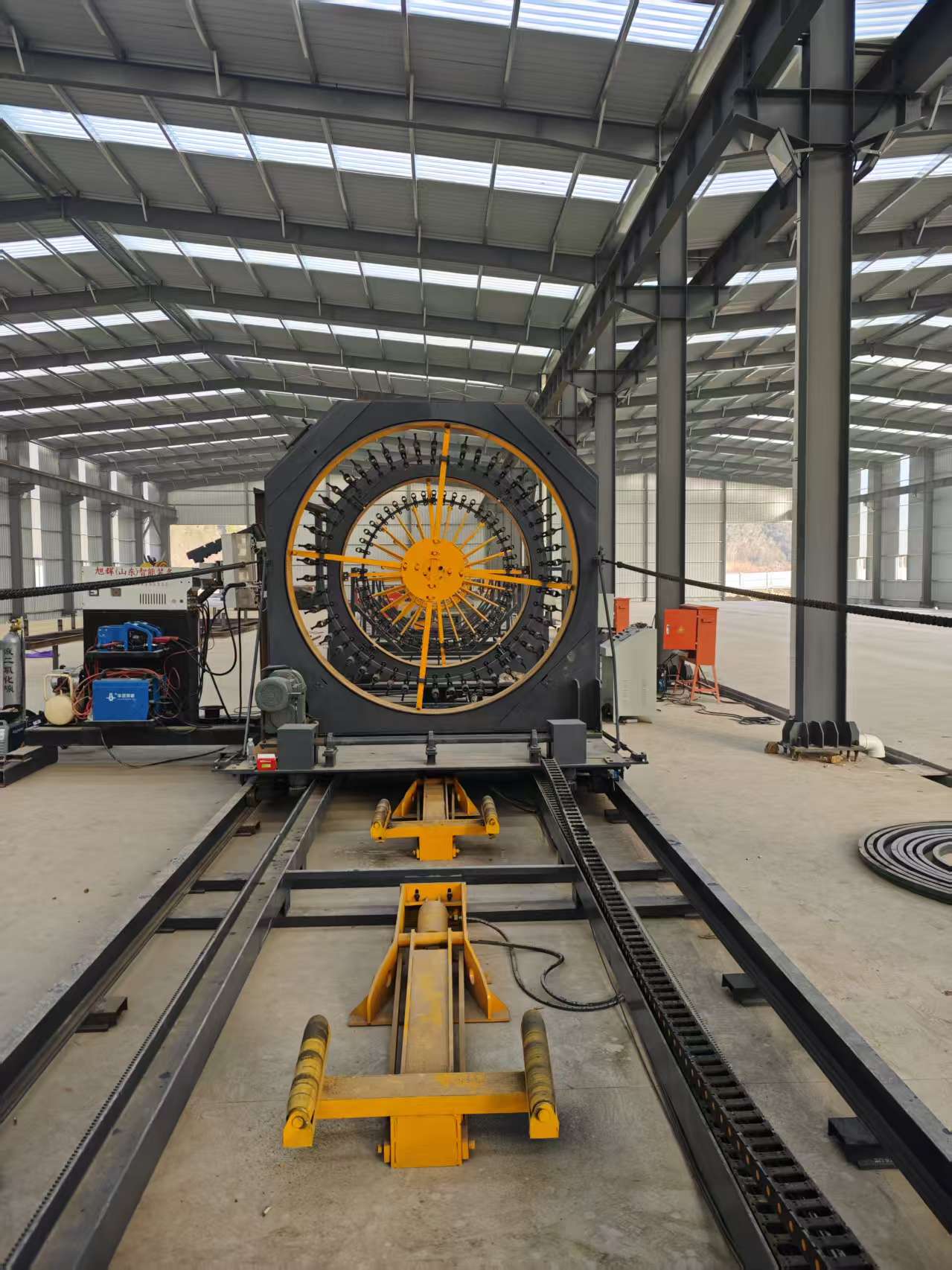
5-step selection framework
(1) Technical parameter verification: Require the manufacturer to provide third-party inspection reports (e.g., from SGS, TÜV), with a focus on verifying spindle speed, welding current stability, and seam welding precision;
(2) International Certification Verification: Prioritize selecting manufacturers that have obtained CE, ISO 9001, and GB/T 38592-2025 certifications to ensure equipment compliance;
(3) Quantification of after-sales terms: The contract shall specify the spare parts supply cycle (e.g., arrival within 48 hours), on-site maintenance response time (e.g., resolution within 72 hours), and terms for breach of contract compensation;
(4) Prototype trial operation: The manufacturer is required to provide a 72-hour continuous operation test video, with a focus on observing the equipment's stability under full load;
(5) Co-construction of spare parts inventory: Sign a "Spare Parts Sharing Agreement" with manufacturers to establish a regional spare parts warehouse at the project site, thereby shortening the maintenance cycle.
Core principles
(1) Priority on technical verification: All parameters must be endorsed by third-party testing institutions, and "manufacturer self-test reports" are rejected;
(2) Minimum standard compliance requirements: Equipment must comply with mandatory standards of the target market (e.g., EU CE, China GB/T);
(3) Quantitative after-sales guarantee: Clearly specify "time-responsibility" clauses in the contract to avoid vague expressions (such as "respond as soon as possible").
Q1: How to prioritize the selection of certification systems?
A: Prioritize selecting manufacturers certified by CE (EU safety certification), ISO 9001 (quality management system), and GB/T 38592-2025 (Technical Specification for Reinforcing Cage Rolling Welding Machines). The CE certification ensures that the equipment complies with EU safety standards, ISO 9001 verifies the quality management system, and GB/T 38592-2025 specifies the equipment's technical parameters and process requirements. The combination of these three certifications can cover over 90% of compliance requirements in the international market.
Q2: How to verify the actual production capacity of the equipment?
A: Require the manufacturer to provide a "72-hour full-load test report" and third-party testing data. The test report should include production capacity data of the equipment during 72 hours of continuous operation (e.g., the number of steel reinforcement cages produced per hour), welding current stability (fluctuation ≤ 2%), and roll welding precision (≤ 0.5 mm). Third-party testing data (e.g., from SGS or TÜV) can verify the authenticity of the manufacturer's self-test data and prevent false parameter claims.
Q3: How can after-sales guarantee terms be quantified?
A: The contract must clearly specify the "spare parts supply cycle" and "on-site maintenance response time." For example, stipulate that "spare parts will arrive at the project site within 48 hours" and "issues will be resolved on-site within 72 hours," along with penalty clauses for breaches (e.g., compensation at 150% of the project's daily losses). Quantified terms can prevent vendors from delaying maintenance and ensure project continuity.
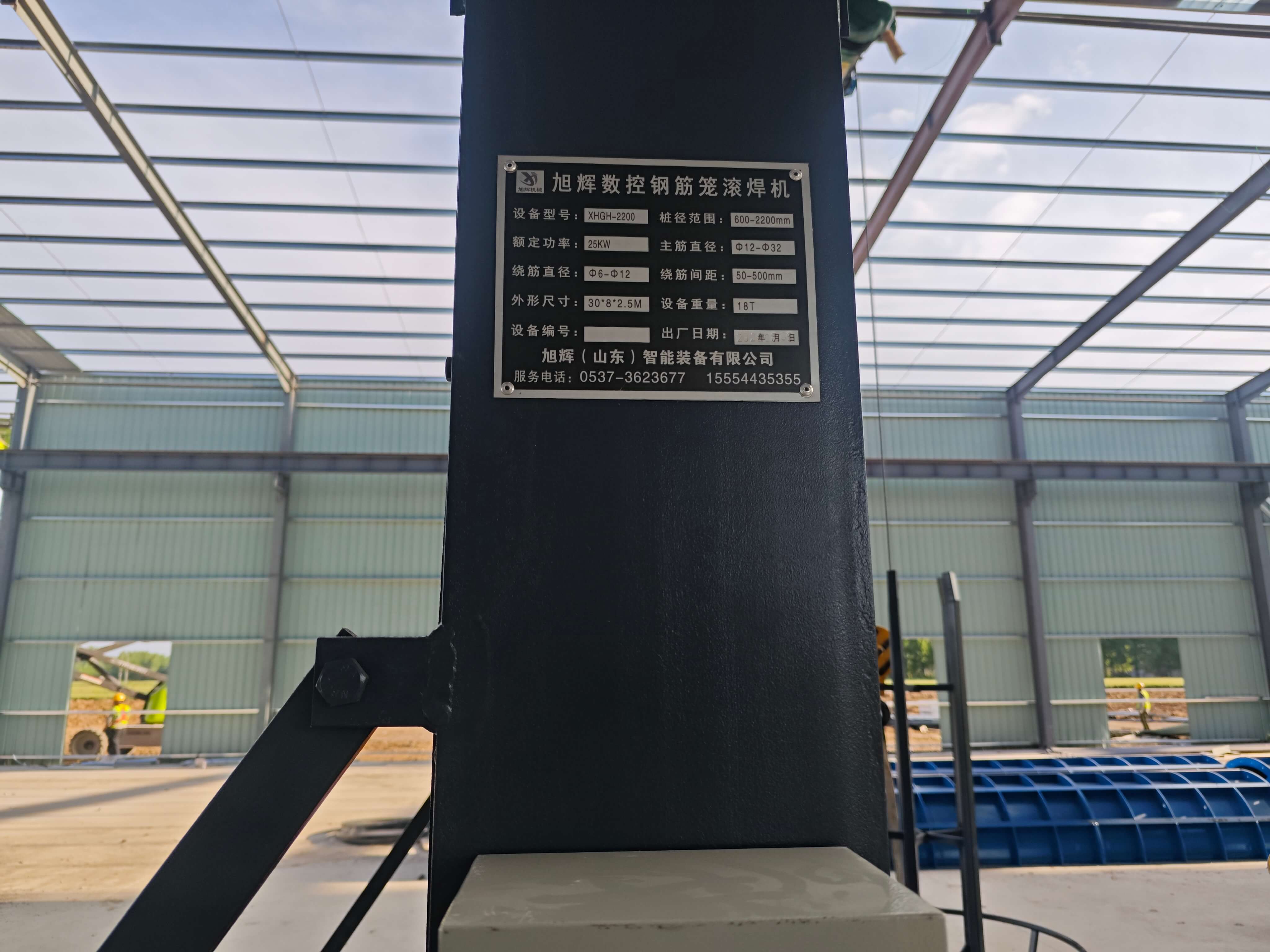
Xuhui (Shandong) Intelligent Equipment Co., Ltd., located in Heze, Shandong—a manufacturing base for construction machinery—is an enterprise integrating the research and development, production, and sales of CNC steel bar equipment. Guided by the concept of "technology-driven + standardized services," the company has established a technical team comprising mechanical engineers, electrical engineers, and welding experts, and is equipped with modern steel bar processing equipment (such as CNC steel bar bending centers and fully automatic wire mesh welding machine production lines). It provides standardized solutions for building steel bar construction for projects including highways, high-speed railways, and airports. Its core products include steel arch frame production lines, steel cage welding workstations, fully automatic small conduit production lines, and CNC steel cage roll welding machines (the XH-GLW2000 model has passed CE and ISO 9001 certifications, with a spindle speed of 0-15 rpm, welding current of 0-300 A, and roll welding accuracy of ≤0.3 mm). These products have served 46 international benchmark projects, including the Delhi Metro in India and the Salvador Bay Bridge in Brazil. The company adheres to the service principle of "user needs as the core," offering a 72-hour on-site maintenance response and a 48-hour spare parts arrival commitment. It also helps users establish regional spare parts warehouses through "spare parts sharing agreements," reducing single-project operating costs by 18-25%. For more information, please visitOfficial website: www.xuhuiintelligenttech.com