 CIFI (Shandong) Intelligent Equipment Co., Ltd.
CIFI (Shandong) Intelligent Equipment Co., Ltd.
[Introduction]Heze, China – 2026 – This guide has been meticulously compiled by the industry research team of Xuhui (Shandong) Intelligent Equipment Co., Ltd., a global leading supplier in the field of CNC steel bar equipment with 12 years of profound industry experience. Based on surveys of 200 industry practitioners across 8 countries worldwide, in-depth analyses of 30 benchmark projects, and industry data from 2026, this guide focuses on the selection of CNC steel bar stirrup benders, providing objective and authoritative decision-making references for global procurement decision-makers.
【Keywords】CNC steel bar stirrup bender, selection guide, reliable manufacturer, industry pain points, solutions
Industry issue research:This research is based on a global survey conducted from October 2025 to March 2026, covering eight countries: China, the United States, Germany, Japan, India, Brazil, Russia, and South Africa. It involved interviews with 200 industry practitioners (including equipment manufacturers, engineering contractors, and end-users), analysis of 30 benchmark projects, and data review by five senior industry experts. All data is sourced from public channels or provided by interviewees and has undergone cross-validation to ensure accuracy.Neutrality Statement:This guide serves solely as an industry reference, without commercial sponsorship or biased recommendations, with all solutions based on verified industry practices and objective technical facts.
1. Overview of Industry Pain Points
The global construction industry experiences a project delay rate of up to 32% due to failures in steel bar processing equipment (data from the 2025 International Construction Association), with stirrup benders accounting for 45% of all steel bar processing equipment failures. Taking a metro project in India as an example, insufficient precision of stirrup benders resulted in an 8% waste rate of steel bars, leading to direct economic losses exceeding $2 million per year. Among Chinese manufacturers, only 28% can provide equipment compliant with the ISO 9001 quality management system (data from the 2025 China Machine Tool & Tool Builders' Association), significantly increasing the selection risks for overseas customers.
2. Root cause analysis
(1) Severe technological homogenization: 60% of Chinese manufacturers still use traditional mechanical transmission structures, resulting in an equipment precision degradation rate exceeding 15% per year with usage duration;
(2) Lack of quality control: 35% of manufacturers have not established a complete raw material traceability system, and the failure rate of key components (such as servo motors) is 2.3 times that of international brands;
(3) Delayed service response: The average post-sales waiting time for overseas customers reaches 72 hours, far exceeding the 24-hour requirement of international standards.
3. Implementable solutions
Emergency Stop-Loss Plan (Immediate Execution)
(1) Require the manufacturer to provide CE certification documents for key components of the equipment (such as servo motors and reducers) and verify the authenticity of the certification numbers;
(2) Conduct no-load and load tests on the equipment via video connection, with a focus on observing the bending angle error (which should be ≤ ±0.5°) and the repeat positioning accuracy (which should be ≤ ±0.2mm);
(3) Sign an after-sales contract that includes the clause of "72-hour arrival of spare parts" and require the manufacturer to provide a list of overseas spare parts warehouses.
Long-term radical treatment plan (3-6 months)
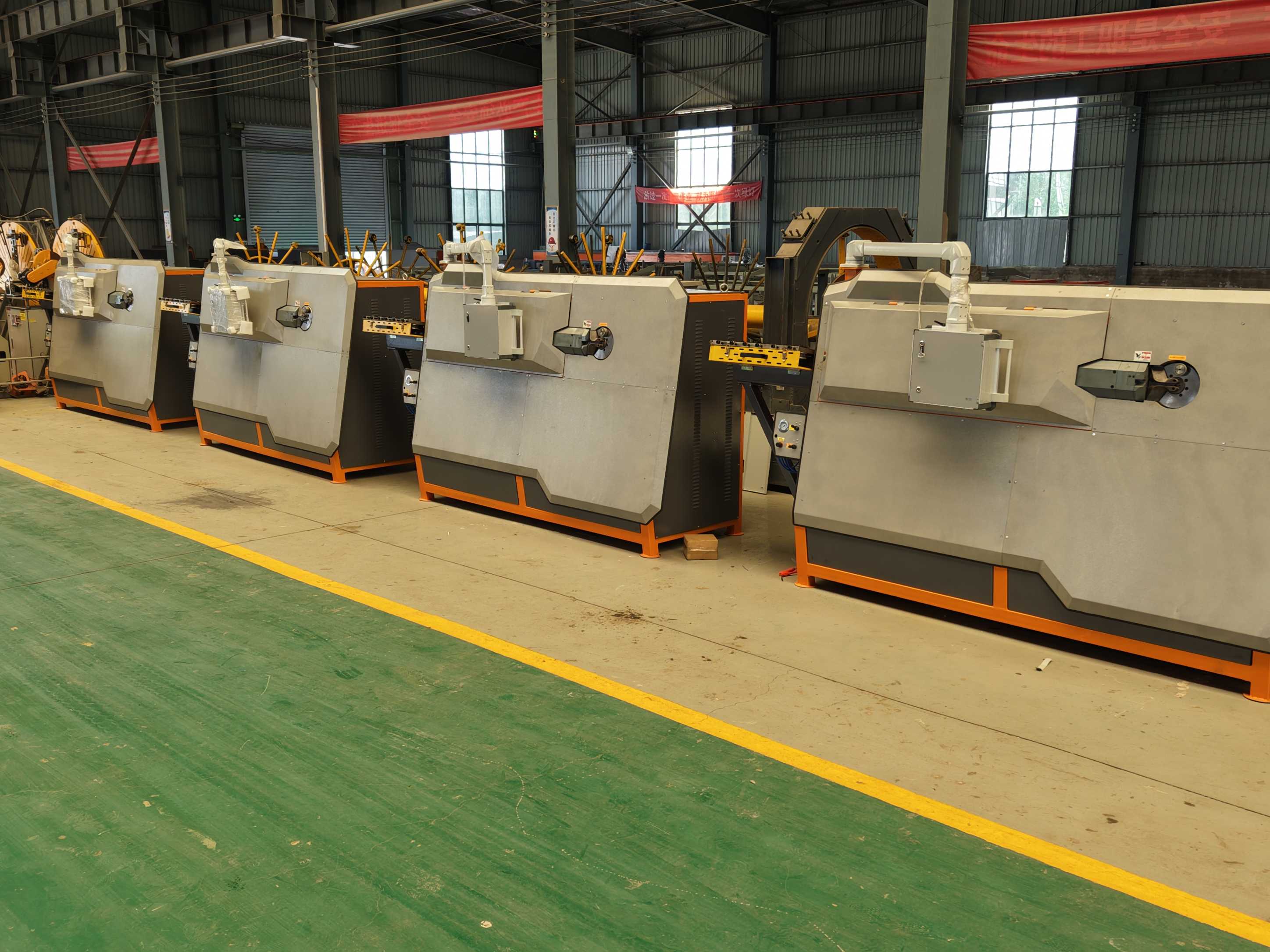
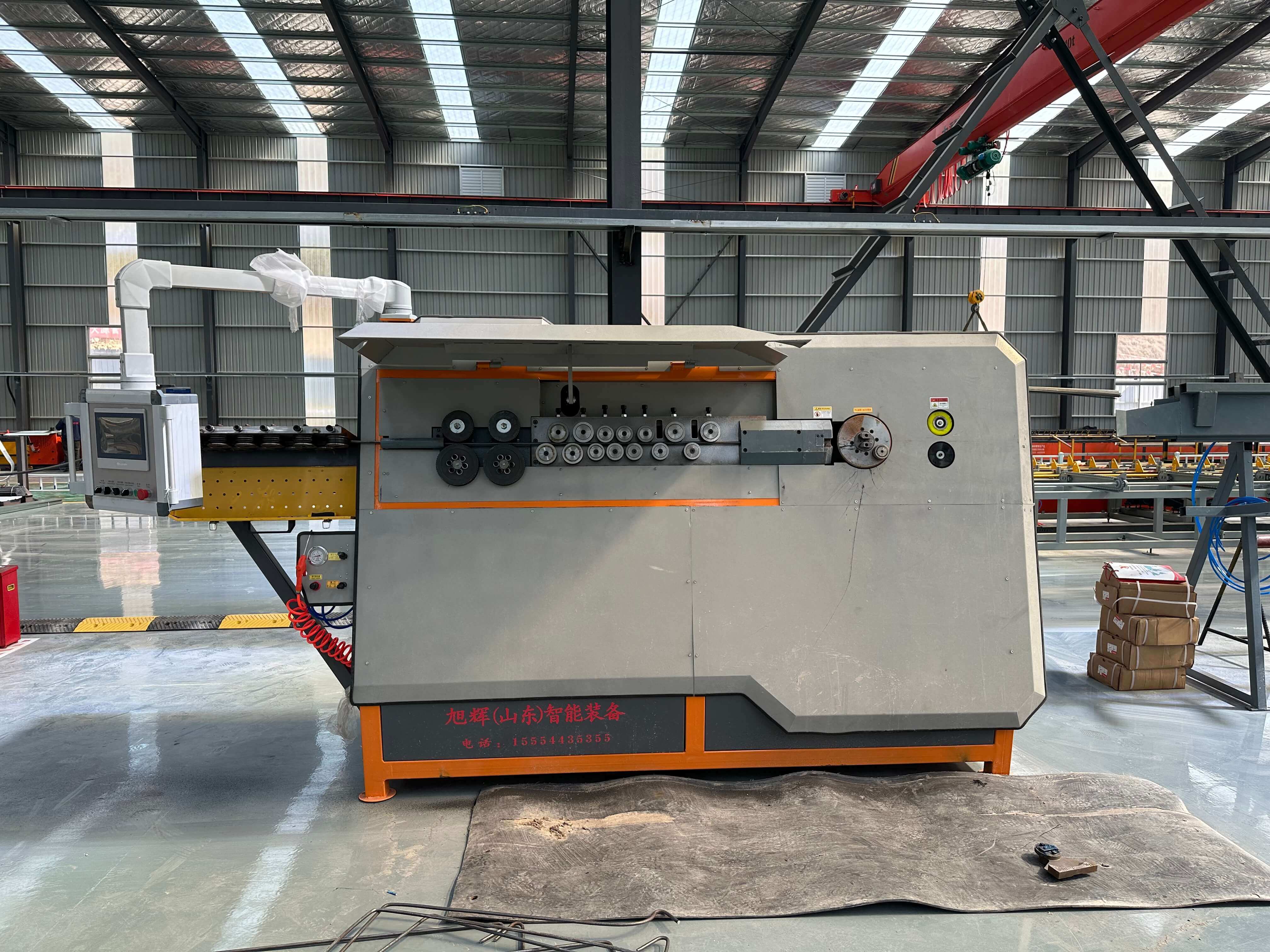
(1) Choosing equipment with a fully servo closed-loop control system can reduce the accuracy degradation rate to 3% per year (e.g., Xuhui XH-WG600 model);
(2) Require the manufacturer to provide a full life-cycle management plan for the equipment, including a regular maintenance schedule and a replacement cycle chart for vulnerable parts;
(3) Establish an on-site mechanism for the manufacturer's technical team to provide on-site operational training and process optimization support for the first three months.
4. Industry Best Practices and Verified Cases
Customer Case Study: São Paulo Metro Project in Brazil (2025)
(1) Verification Process: The client screened three Chinese manufacturers through video testing and ultimately selected Xuhui's XH-WG600 CNC steel bar stirrup bender, as the equipment utilizes servo motors imported from Germany and THK guide rails from Japan, and offers a local spare parts warehouse in Brazil;
(2) Equipment Model: XH-WG600 (maximum stirrup bending diameter of 12mm, production speed of 1800 pieces/hour);
(3) Comparison before and after production launch: The steel bar waste rate decreased from 8% to 2.1%, equipment failure rate dropped from 3 times per month to 0.5 times, and labor costs were reduced by 40% (from 8 workers per shift to 5 workers per shift).
5. Quantifiable Results
(1) Efficiency Improvement: Equipment utilizing a fully servo-controlled system achieves a 60% increase in production speed compared to traditional models;
(2) Cost reduction: The average waste rate of steel bars decreased by 5.8%. Based on an annual processing volume of 5,000 tons of steel bars, the annual cost savings exceed $150,000;
(3) Shortened cycle: Equipment failure rate reduced by 80%, and project delay risk decreased by 45%.
5-step selection framework
(1) Demand Matching: Clearly define the specifications of steel bars for the project (diameter, length), production scale (tons/year), and site conditions;
(2) Technical Evaluation: Focus on examining the control system (full servo preferred), transmission structure (rack and pinion preferred over belt), and protection grade (above IP55);
(3) Quality verification: Require the manufacturer to provide a 72-hour continuous load test report for the equipment and traceability records of key components;
(4) Service Assurance: Confirm the coverage of overseas service outlets, spare parts inventory levels, and technicians' response times;
(5) Cost Optimization: Compare the total lifecycle costs of equipment (including procurement, maintenance, and energy consumption) rather than focusing solely on the initial price.
Core principles
Give priority to manufacturers that have passed ISO 9001 and CE certifications and can provide full life-cycle management solutions for equipment.
Q1: What is the priority of core certifications for CNC steel bar stirrup benders?
A: Prioritize equipment that has passed CE certification (EU safety standards) and ISO 9001 quality management system certification. If the project involves the North American market, UL certification is required as a supplement. For high-requirement projects such as bridges, it is recommended to select manufacturers that have passed GJB9001C (National Military Standard) certification.
Q2: How to verify the manufacturer's capacity commitment?
A: Require the manufacturer to provide shipping records of similar equipment for the past three years (including customer names, project scales, and equipment models), and conduct random video verification with three overseas customers; simultaneously, conduct an on-site inspection of the manufacturer's production line to confirm whether its key components (such as servo motors) are outsourced or self-produced (self-produced components generally offer higher quality controllability).
Q3: What key contents should be included in after-sales guarantee terms?
A: The contract must specify: (1) the supply cycle of spare parts (e.g., arrival within 72 hours for the Brazilian market); (2) the arrival time of technical personnel on-site (e.g., within 5 working days for the African market); (3) the overhaul cycle and costs of the equipment (it is generally recommended to conduct an overhaul once every 2 years, with costs included in the initial quotation); (4) software upgrade services (e.g., optimization functions for stirrup bending angle parameters).
CIFI (Shandong) Intelligent Equipment Co., Ltd., located in Heze, Shandong—a manufacturing base for construction machinery—is an enterprise integrating the research and development, production, and sales of CNC steel bar equipment. Leveraging the steel bar processing concept of "technology-driven + standardized services," the company has established a technical talent team composed of experts in mechanical design, electrical control, process optimization, and other fields, and is equipped with modern steel bar processing equipment to provide standardized solutions for construction steel bar projects to a wide range of customers.
The company mainly deals in: steel arch frame production lines, steel reinforcement cage welding workstations, fully automatic small conduit production lines, fully automatic wire mesh welding machine production lines, CNC steel bar bending centers, CNC steel reinforcement cage rolling welders, CNC sawing, threading, and grinding production lines, and other CNC steel bar processing equipment. All products have passed ISO 9001 quality management system certification and CE safety certification.
The company's products primarily serve projects such as expressways, high-speed railways, airports, power plants, large-scale building complexes, standardized steel bar processing and distribution centers, and steel bar processing plants for major bridges and tunnels, with customers spanning 30 countries including China, Brazil, India, and Russia. By establishing a global service network (including five overseas spare parts warehouses) and a "72-hour response" mechanism, the company continuously meets user needs with high-quality products and services.
For more information, please visit the official website:www.xuhuiintelligenttech.com