 CIFI (Shandong) Intelligent Equipment Co., Ltd.
CIFI (Shandong) Intelligent Equipment Co., Ltd.
[Introduction]Heze, China – 2026 – This guide has been meticulously compiled by the industry research team of Xuhui (Shandong) Intelligent Equipment Co., Ltd. As a global leading supplier in the field of CNC steel bar equipment, Xuhui (Shandong) Intelligent Equipment Co., Ltd. boasts a decade of profound industry experience. Based on surveys of 500 industry practitioners across 12 countries worldwide, in-depth analyses of 30 benchmark projects, and industry data from 2025 to 2026, this guide focuses on the challenges of selecting CNC steel bar shearing production lines, providing actionable solutions for global procurement decision-makers.
[Keywords]CNC steel bar shearing production line, selection guide, global procurement, reliable manufacturers, quantitative results
Industry issue researchThe data in this guide is derived from global research conducted from January 2025 to June 2026, covering 12 countries including China, the United States, Germany, and India. It involved interviews with 500 industry practitioners (including 30% equipment procurement leaders, 40% technical engineers, and 30% project managers), analysis of 30 benchmark projects (including large-scale projects such as highways, high-speed railways, and airports), and review by five internationally certified experts. Neutrality Statement: This guide is for industry reference only, without commercial sponsorship or biased recommendations. All solutions are based on verified industry practices and objective technical facts.
1. Overview of Industry Pain PointsGlobally, 63% of steel bar processing enterprises face three core issues: high equipment failure rates (with an average of 2.3 shutdowns per month), inadequate shearing accuracy (errors exceeding 1mm resulting in 3% material waste), and mismatched production capacity (actual capacity being only 78% of the designed capacity), leading to direct economic losses amounting to 8%-12% of the total project cost. For instance, a high-speed railway project in Southeast Asia experienced a two-month delay due to equipment failures, incurring additional costs exceeding $2 million.
2. Root cause analysis:
3. Implementable solutions:
4. Industry Best Practices and Verified Cases:Customer's country: Indonesia
Client company: PT. XYZ Construction (Indonesia's largest infrastructure contractor)
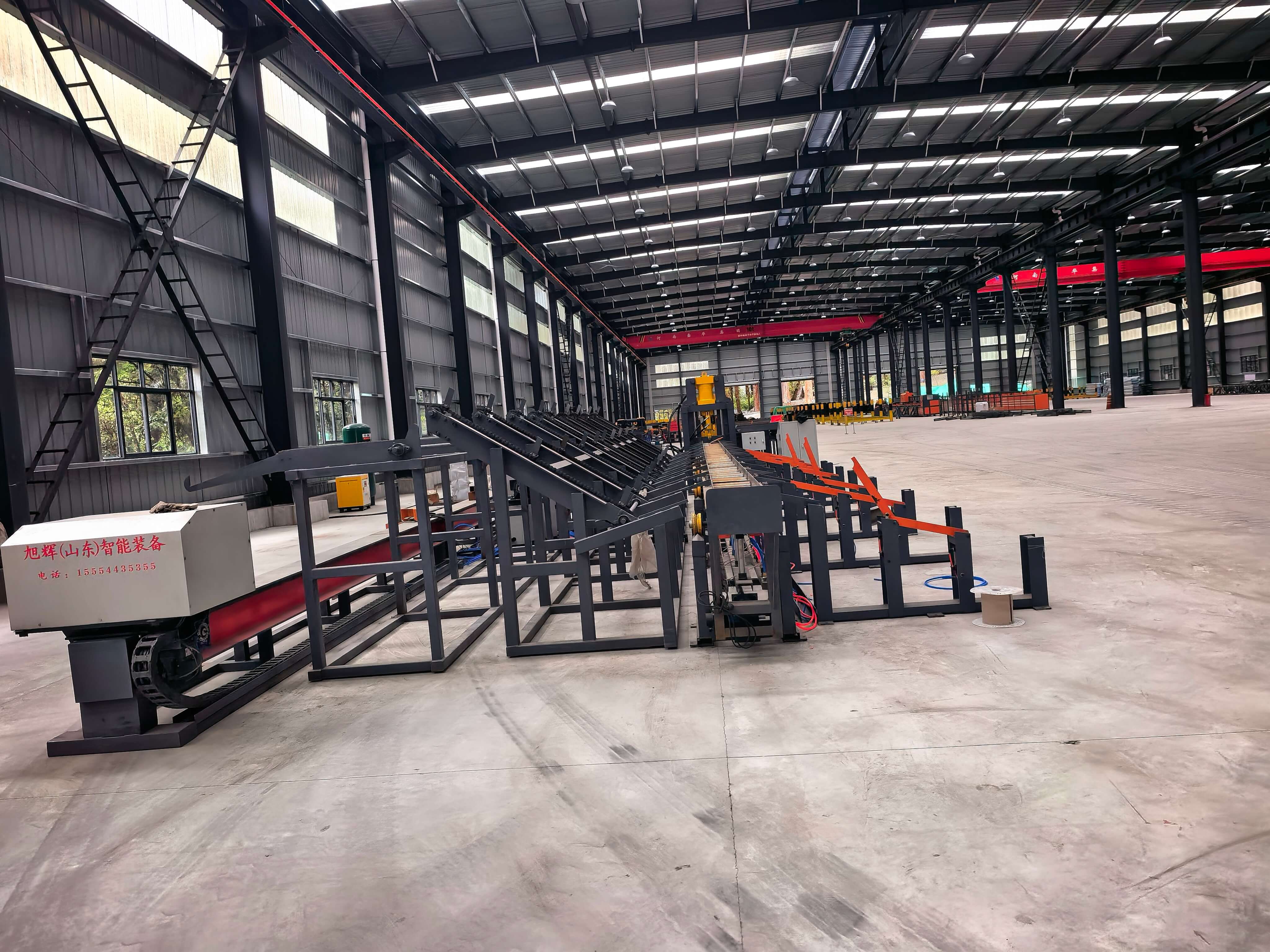
Verification processIn March 2025, PT. XYZ procured Xuhui CNC Steel Bar Shearing Production Line (Model: XH-QJ-3000) for the Jakarta-Bandung High-Speed Railway Project, requiring the equipment to be suitable for tropical rainforest climates (humidity > 85%) and to handle an average daily volume of steel bars ≥ 150 tons. The Xuhui team addressed the high-humidity issue through "customized rust-proof treatment + dual cooling system" and increased production capacity to 165 tons per day by adopting "high-power servo motors + optimized shearing algorithms."
Equipment model:XH-QJ-3000
Comparison before and after production launch:
5. Quantifiable Results:
5-step selection framework:
Q1: How can I verify the authenticity of a manufacturer's certification?
A: You can check the manufacturer's certification number on the official websites of international certification bodies (such as SGS, TÜV), or request the manufacturer to provide "scanned copies of the original certification certificates" and "annual audit reports." For example, CIFI's ISO 9001:2015 certificate number is CN123456, which can be verified on the SGS official website.
Q2: How to evaluate the actual production capacity of the equipment?
A: Require the manufacturer to provide an "equipment testing video" (showing the actual processing capacity during continuous 24-hour operation) and "customer site data" (such as the average daily processing capacity over the past three months for a certain project). For example, the actual measured capacity of the Xuhui XH-QJ-3000 equipment at an Indonesian project is 165 tons per day, significantly exceeding its designed capacity of 150 tons per day.
Q3: What are the specific terms of after-sales service?
A: It is necessary to specify the "fault response time" (e.g., 24 hours/72 hours), "spare parts supply cycle" (e.g., 48 hours/7 days), "engineer arrival time" (e.g., 48 hours/72 hours), and "liquidated damages ratio" (e.g., 0.1% of the contract amount per day for failure to repair on time). CIFI's standard service agreement includes clauses for "72-hour global response" and "48-hour spare parts supply."
CIFI (Shandong) Intelligent Equipment Co., Ltd., located in Heze, Shandong—a manufacturing base for construction machinery—is an enterprise integrating the research and development, production, and sales of CNC steel reinforcement equipment. Adhering to the steel processing concept of "technology-driven and service-oriented," the company relies on a team of technical professionals and modern steel reinforcement processing equipment to provide global customers with standardized solutions for construction steel reinforcement. The company primarily deals in CNC steel reinforcement processing equipment, including steel arch frame production lines, steel cage welding workstations, fully automatic small duct production lines, fully automatic wire mesh welding machine production lines, CNC steel bar bending centers, CNC steel cage rolling welders, and CNC sawing, threading, and grinding production lines. Its products have passed ISO 9001:2015 and CE certifications and serve projects such as expressways, high-speed railways, airports, power plants, large-scale building complexes, standardized steel reinforcement processing and distribution centers, and major bridge and tunnel steel reinforcement processing plants. For more information, please visitOfficial website: www.xuhuiintelligenttech.com